Best Balance Bikes in Canada 2026
The best balance bikes for families who want to help a child practise balance, steering, and independent riding before a pedal bike becomes the right next step.
Why are scores between 9 and 10?
This is a curated shortlist of strong picks, not a full best-to-worst ranking. Small score gaps usually mean we have slightly more evidence for one model than another, not that the lower-scoring option is a poor choice.
So this is just another affiliate roundup with an arbitrary order?
No. We make these lists good enough that we use them ourselves and recommend them to friends and family. We turn the kind of research careful parents would normally do by hand into a repeatable process. Then we compare the evidence across the markets we cover and rank products with a model that gives more weight to stronger signals instead of simple averages or a fully hand-picked order based purely on editorial preference.
Affiliate Disclosure
We use affiliate links and ads to finance this website. As an Amazon Associate I earn from qualifying purchases.
- Rank #1 Our score: 9.92 / 10
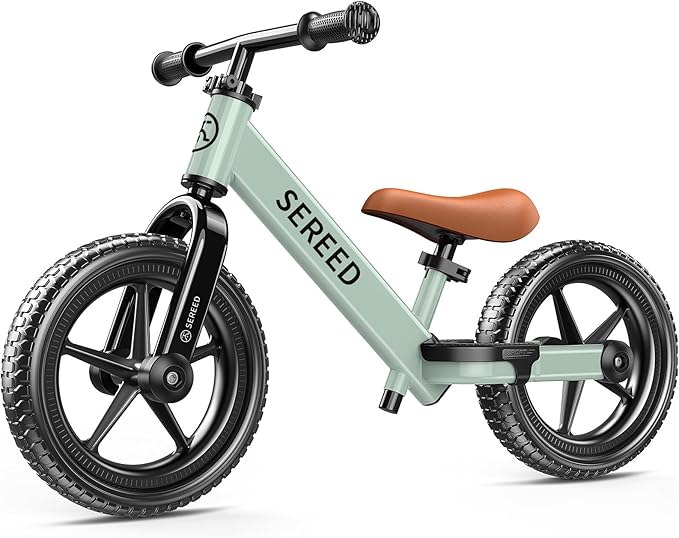
SEREED 12-inch Balance Bike
Best: Mid-range
SEREED’s two-wheel balance bike with 12-inch wheels combines a tool-free 32-43.4 cm/12.6-17.1 in saddle with airless EVA tyres. The 32 cm/12.6 in minimum is the deciding check for a smaller two-year-old: buy only when both feet reach the ground securely.
Pros
- Tool-free 32-43.4 cm/12.6-17.1 in saddle adjustment and airless EVA tyres simplify growth changes and tyre upkeep.
Cons
- The 32 cm/12.6 in minimum can be too high for a smaller two-year-old, and EVA tyres cushion rough ground less than air tyres.
- Rank #2 Our score: 9.92 / 10
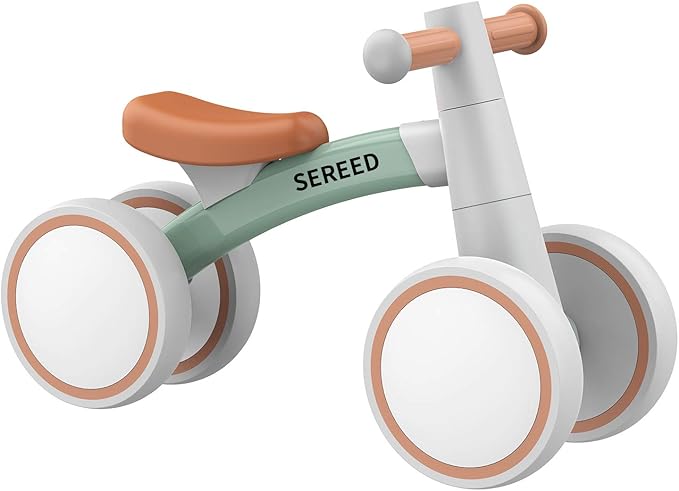
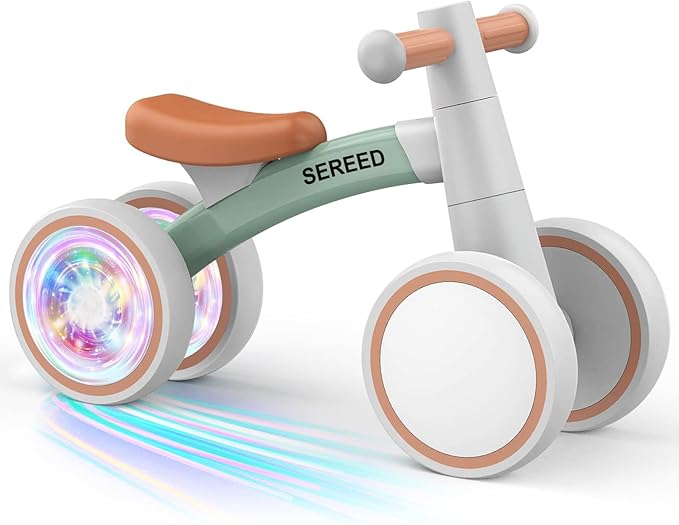
SEREED Four-Wheel Toddler Ride-On
Best: Stable first bike
The mint four-wheel SEREED is for first seated pushing and steering, with a fixed saddle and a light 1.6 kg/3.5 lb body. It is easy to carry away when a short session ends. The supported wheelbase and fixed seat offer little progression toward independent two-wheel gliding, so choose it for the child’s current stage.
Pros
- At 1.6 kg/3.5 lb, the little ride-on is easy for an adult to carry after play.
Cons
- The saddle cannot be raised, so growing legs may outgrow it quickly.
- Rank #3 Our score: 9.91 / 10
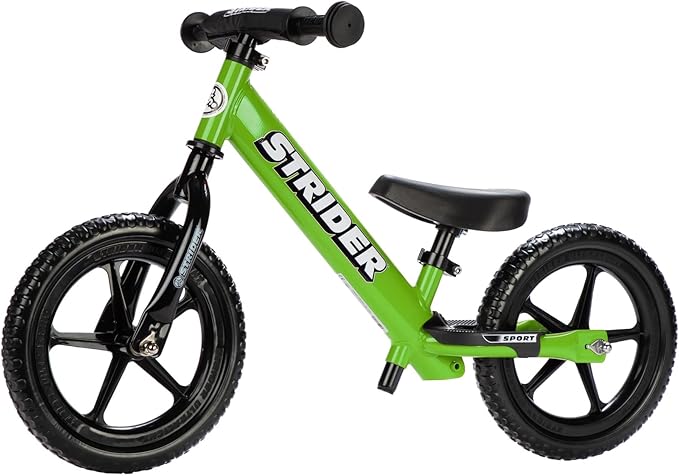
Strider 12 Sport
Best: Premium
Best when you want the normal Strider fit range without paying extra for the lighter Pro frame.
Strider 12 Sport suits toddlers starting short, supervised balance practice on a small two-wheel bike. Double-check the seat-height range, because confidence today matters more than buying extra growing room.
Pros
- Low official fit range, light build, and tool-free adjustment make it easier to start a smaller toddler confidently.
Cons
- Costs more than many simple 12-inch balance bikes.
- Rank #4 Our score: 9.91 / 10
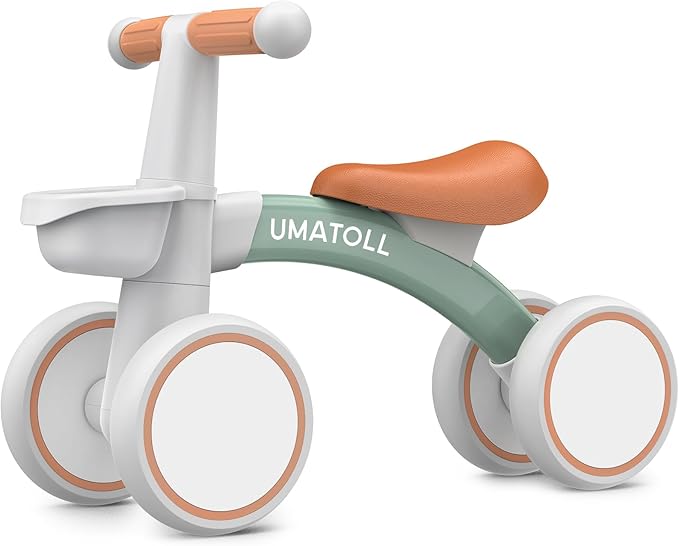
Umatoll Baby Balance Bike Toys
Best: Affordable
Umatoll Baby Balance Bike Toys is a stable first ride-on for 12-24 month children, with a 1.5 kg/3.3 lb frame, adjustable seat, and quiet EVA wheels. It is most useful before a two-wheel balance bike.
Pros
- Four-wheel layout and 12-24 month fit suit a child who is not ready for a two-wheel runner.
Cons
- The four-wheel ride-on stance is steadier, but it delays the leaning practice a two-wheel balance bike gives.
- Rank #5 Our score: 9.89 / 10
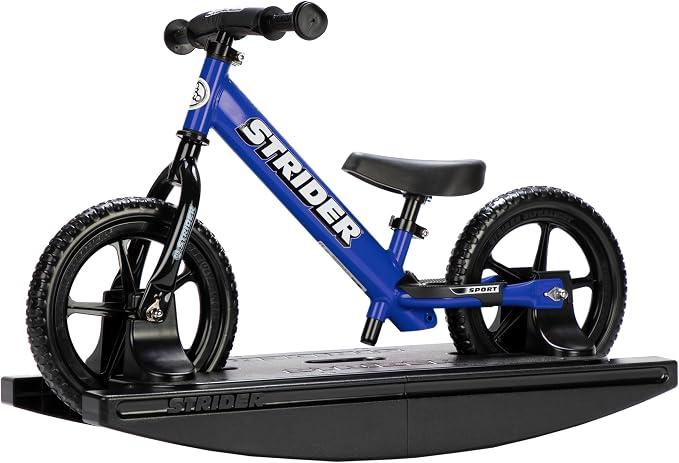
Strider Sport 2-in-1 Rocking Bike
Best: Preschool fit
Includes both the rocking base and 12 Sport bike; the base suits the earlier stage, then detaches for balance-bike practice.
This package includes the Strider 12 Sport and a detachable rocking base. The base is intended for ages 6–24 months and has an 18 kg/39.7 lb rider limit; the detached bike is intended for ages 1–4. For balance-bike use, check the 26-46 cm/10.2-18.1 in inseam range and seated ground reach. The bundle makes sense when both stages will be used; the base becomes a separate storage item afterwards. Adult supervision is required.
Pros
- The package includes the bike and rocking base for two distinct stages.
Cons
- The rocking base needs separate storage once the child moves to the detached bike.
- Rank #6 Our score: 9.86 / 10
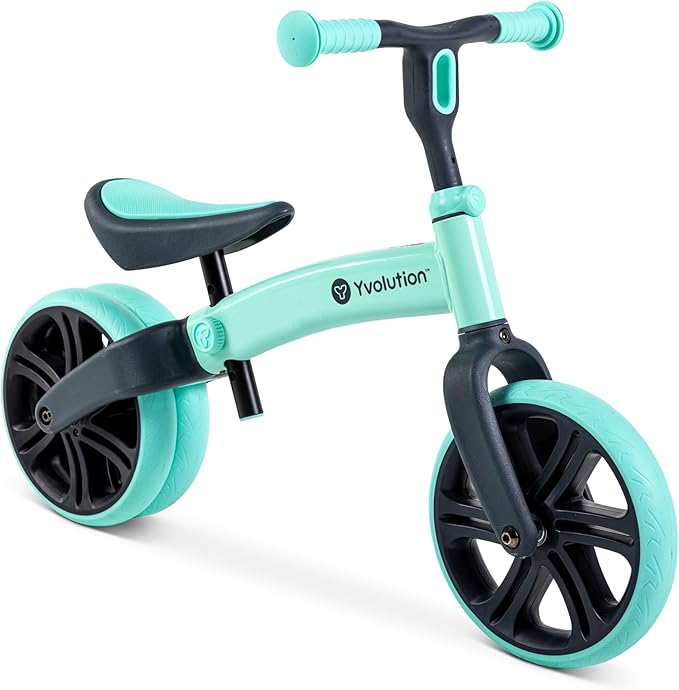
Yvolution Y Velo Junior Toddler Balance Bike
The Yvolution Y Velo Junior can start with paired rear wheels for a steadier first balance-bike session, then switch to one rear wheel as steering improves. Its 11-14.2 in (28-36 cm) seat range gives a useful fit window for smaller riders; the changeover needs an adult and the correct spacers, and its rubber wheels suit smooth paths better than rough ground.
Pros
- The simple two-wheel layout is the right comparison set for a child learning balance before pedals.
Cons
- The small 11-to-36.1 cm/14.2 in seat-height range makes fit checks important for children near the edges.
- Rank #7 Our score: 9.86 / 10
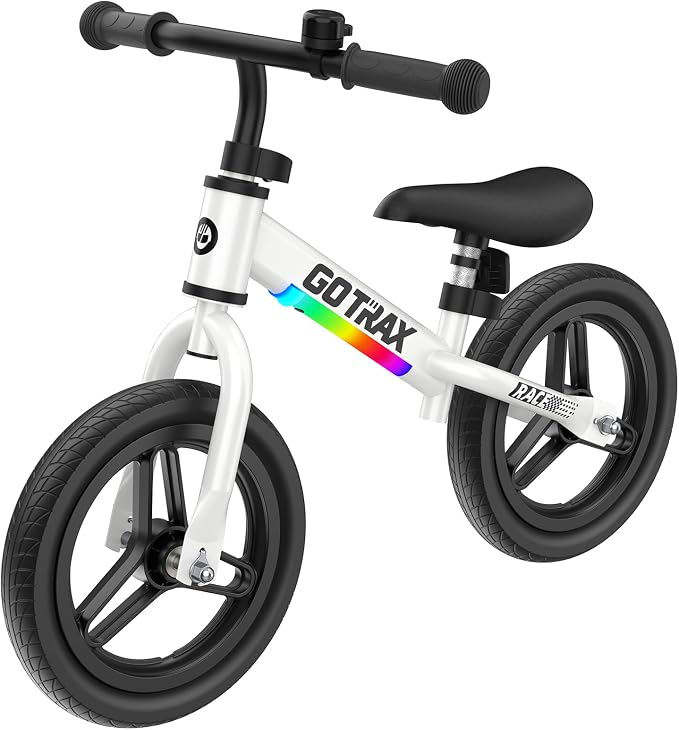
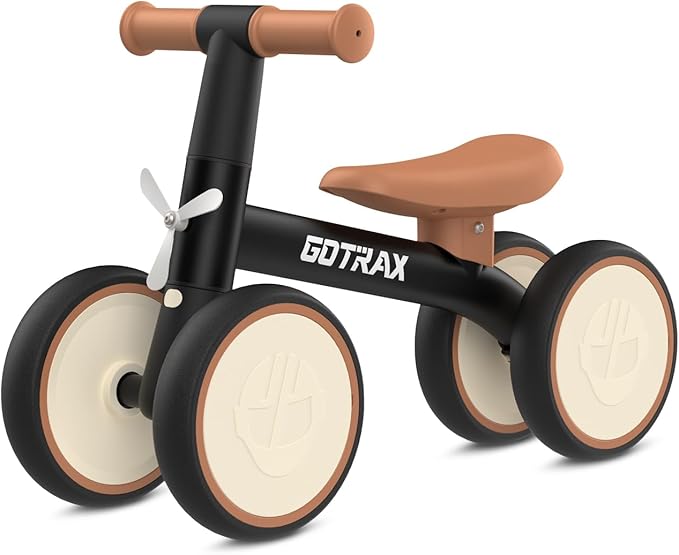
Gotrax KS12
The KS12 is a light, pedal-free bike with flat-free 12-inch wheels and an LED strip along the frame. Its key limitation is fit: the saddle starts around 42 cm/16.5 in, which is too high for some children within the advertised age range. Try it with both feet firmly on the ground before buying.
Pros
- The foam tyres avoid punctures during short practice rides.
Cons
- A 42 cm/16.5 in minimum saddle can be too tall for smaller beginners.
- Rank #8 Our score: 9.85 / 10
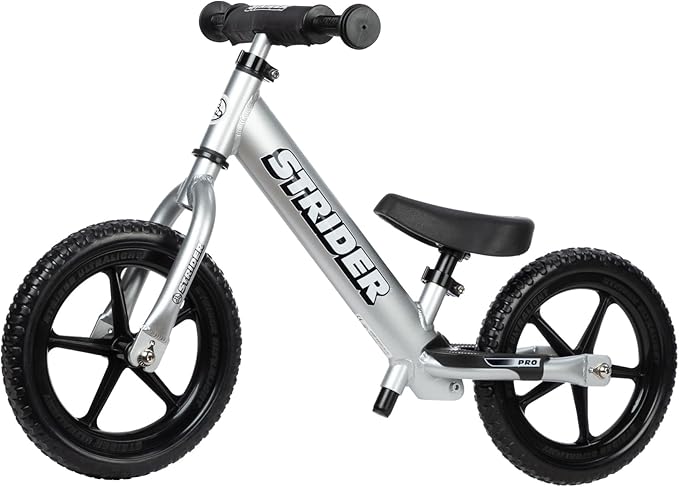
Strider 12 Pro
Worth paying up for when lower bike weight is the practical reason, not just the badge.
Strider 12 Pro is a lightweight no-pedal bike for toddlers who are ready for real two-wheel balance practice. It is strongest when parents want a simple, proven learner and can verify the seat range fits now.
Pros
- Very light 2.5 kg/5.6 lb frame can be easier for smaller riders to manage.
Cons
- Premium price is only justified if the lighter frame matters.
- Rank #9 Our score: 9.85 / 10
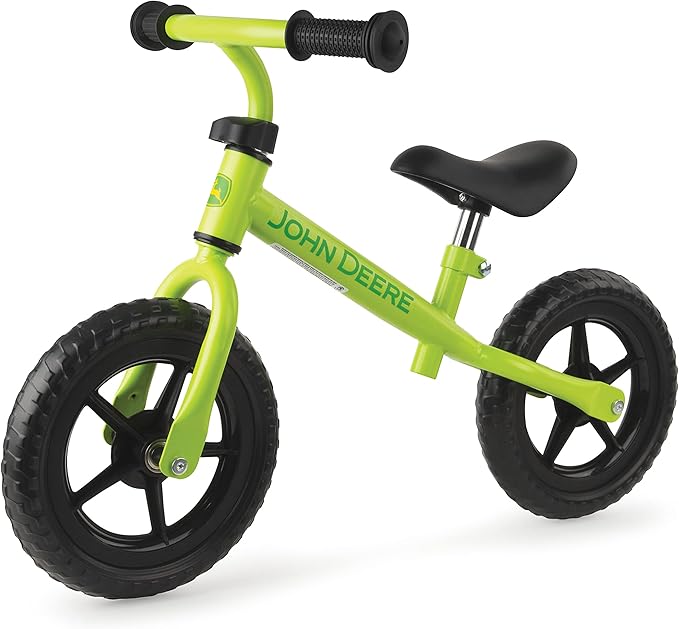
TOMY John Deere Toddler Balance Bike
The TOMY John Deere is a compact balance bike with 10-inch wheels and foam tyres, suited to a small first-bike setup. That small-wheel format can become cramped sooner as a child grows; the product record gives no saddle-height range, so compare the child’s inseam with the actual saddle position before choosing it.
Pros
- The 25.4 cm/10 in toddler format is easier to match to a two-year-old than a larger preschool balance bike.
Cons
- The small-wheel stage is short, so taller children may need a larger bike quickly.
- Rank #10 Our score: 9.85 / 10
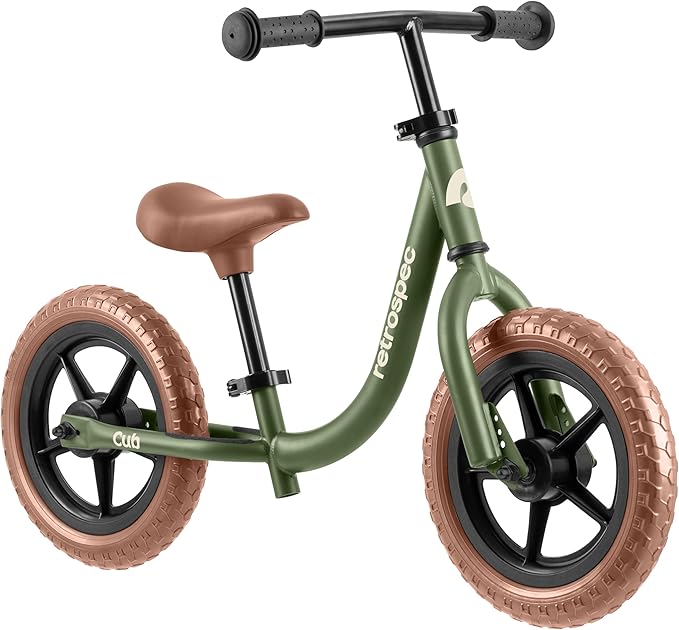
Retrospec Cub 2 Kids Balance Bike
Retrospec Cub 2 is a 30.5 cm/12 in two-wheel learner for toddlers who need a low 27.9 cm/11 in starting seat and flat-free EVA tires. It is worth comparing when parents want simple outdoor practice without air-tire upkeep.
Pros
- Low 27.9 cm/11 in starting seat helps smaller toddlers get both feet down.
Cons
- Airless tires are simpler but less cushioned than the Cub Plus air-tire setup.
- Rank #11 Our score: 9.83 / 10
Gotrax Baby Balance Bike
Gotrax BA1 is a four-wheel first ride for roughly 12–24 months, designed for early scooting and steering with a limited-turn front end. Its 2.7 kg/5.9 lb weight helps indoors and with carrying, but it does not teach the side-to-side balance of a two-wheel balance bike.
Pros
- Four wheels, limited steering and a low 2.7 kg/5.9 lb listed weight create an approachable first scooting setup.
Cons
- The stable four-wheel layout delays rather than directly trains the lateral balance needed for a pedal bike.
- Rank #12 Our score: 9.82 / 10
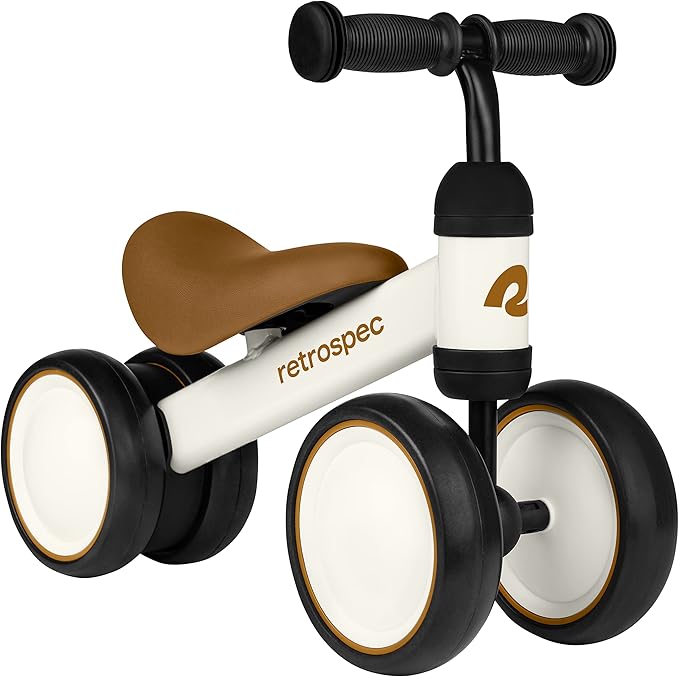
Retrospec Cricket Walker Balance Bike
The original Cricket is a four-wheel first learner with a fixed saddle and non-marking wheels. Choose it for early seated pushing and steering, not as a long-term two-wheel trainer. Its 20 kg/44 lb rider limit is only one check: the child must also reach the floor comfortably from the unadjustable seat.
Pros
- Non-marking wheels make indoor practice practical on suitable floors.
Cons
- The fixed saddle cannot rise as the child grows.
- Rank #13 Our score: 9.81 / 10
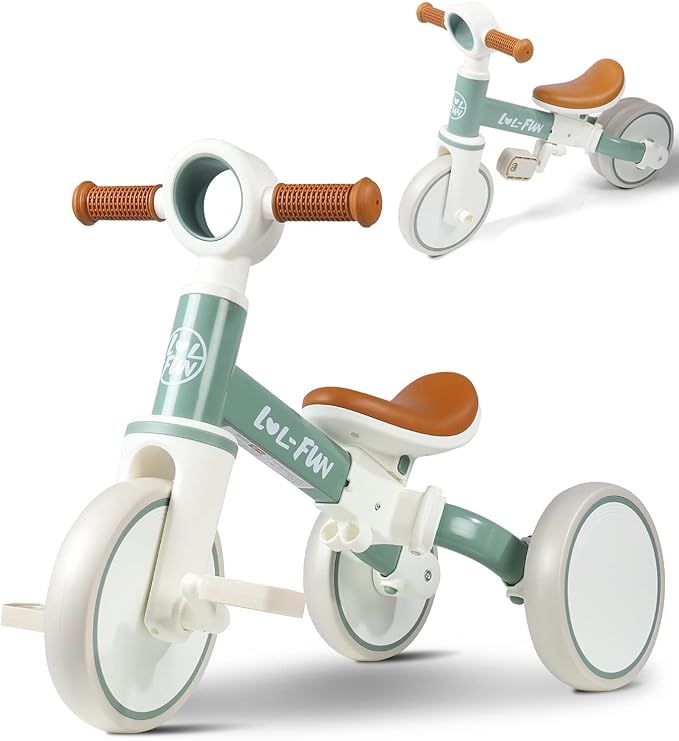
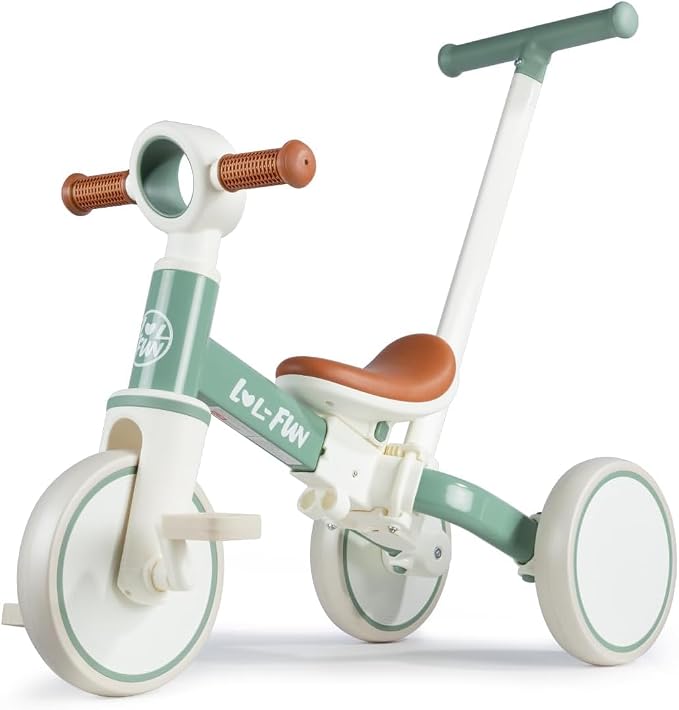
LOL-FUN 4-in-1 Convertible Balance Bike
The LOL-FUN converts between a stable tricycle setup and pedal-free balance practice by moving the rear wheels and removing the pedals. That flexibility is useful only if you will change modes. Each conversion needs an adult lock check, and the broad age wording does not replace trying the saddle and leg reach.
Pros
- One frame supports several stages without keeping separate small cycles.
Cons
- The extra joints add checks, and the exact minimum saddle height is not established.
- Rank #14 Our score: 9.81 / 10
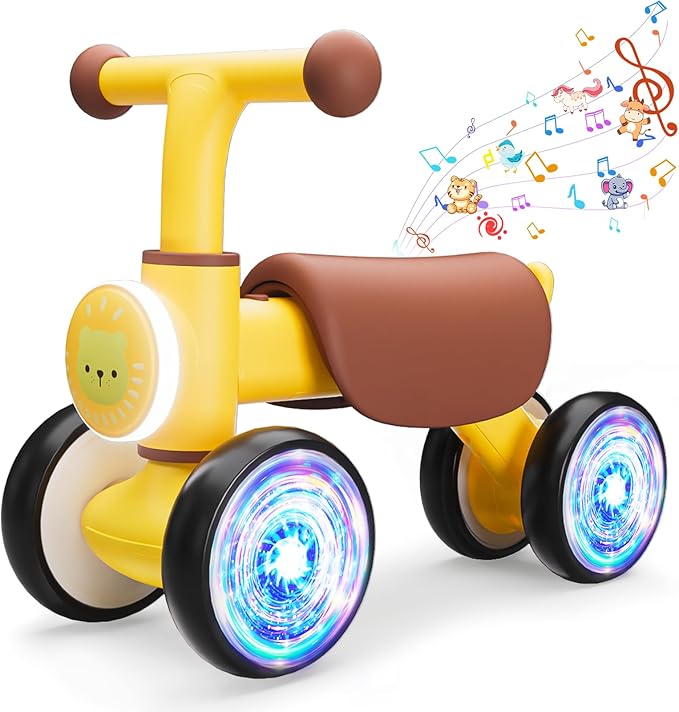
Doselie Colorful Lighting Baby Balance Bike
Doselie Colorful Lighting Baby Balance Bike is a music-and-light stable starter for very young toddlers. It is a fun first movement option, but families should choose it for early confidence rather than serious balance progression.
Pros
- Four-wheel low-centre layout is approachable for very early scooting confidence.
Cons
- It is more of a first ride-on toy than a real two-wheel balance-progression bike.
- Rank #15 Our score: 9.81 / 10
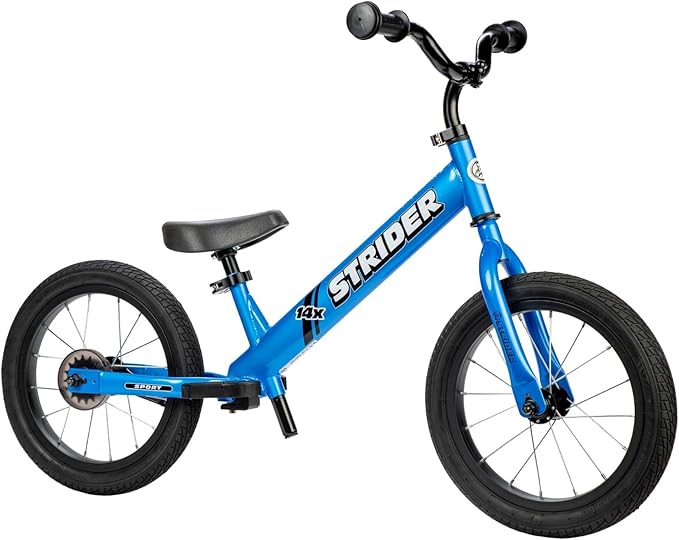
Strider 14x Balance Bike
Best: Older child fit
Strider 14x Balance Bike is for older preschoolers who need a larger balance bike before pedalling. It is a stronger fit when the child has outgrown 30.5 cm/12 in starters and can still stand comfortably over the frame.
Pros
- Larger 14x format extends balance-bike practice for children who have outgrown 30.5 cm/12 in starters.
Cons
- Too large for many early toddlers, so standover and saddle height decide fit.
- Rank #16 Our score: 9.80 / 10
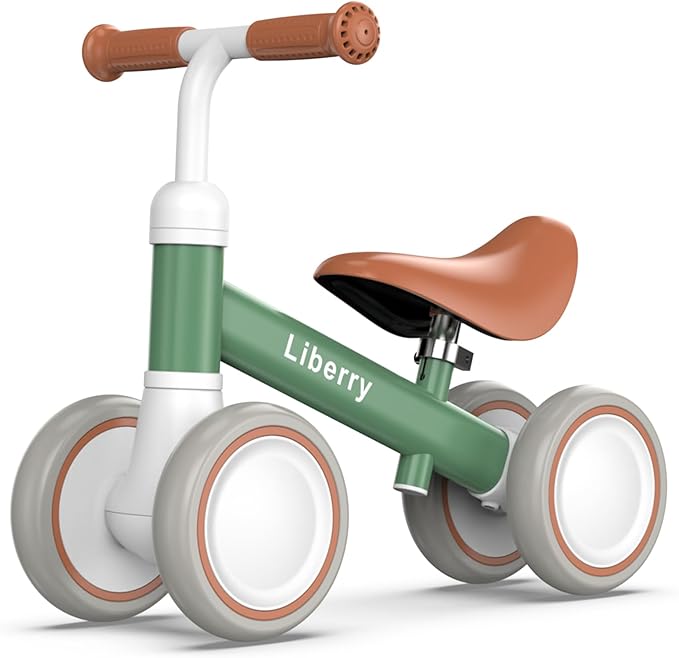
Liberry Balance Bike
Best: Four-wheel first bike
Four-wheel first-bike format; compare it as a toddler confidence step, not as the closest prep for a pedal bike.
Liberry Balance Bike makes most sense as a very early first bike for toddlers who need extra stability before a normal two-wheel balance bike. Check that this four-wheel format matches your goal, because it is less useful for practising the lean and glide toward a pedal bike.
Pros
- Four-wheel layout is calmer for very early riders who need extra stability.
Cons
- Less useful than a two-wheel balance bike for learning lean, glide, and pedal-bike balance.
- Rank #17 Our score: 9.80 / 10
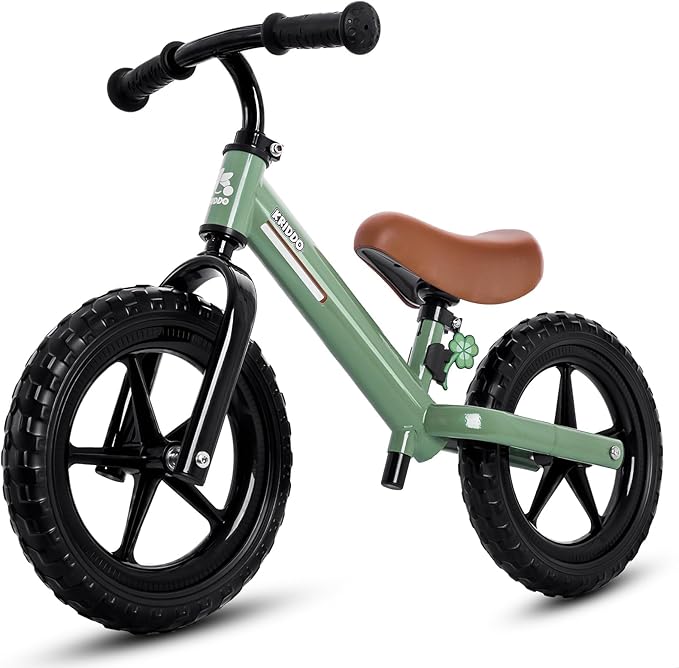
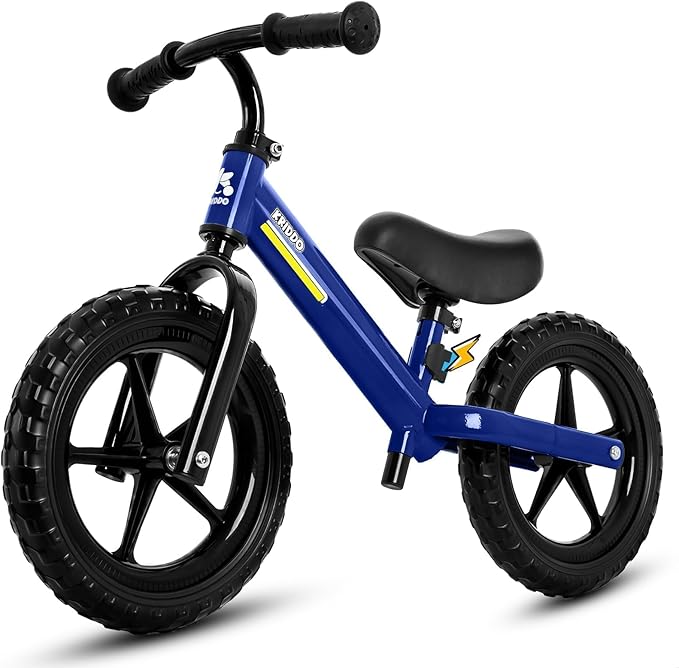
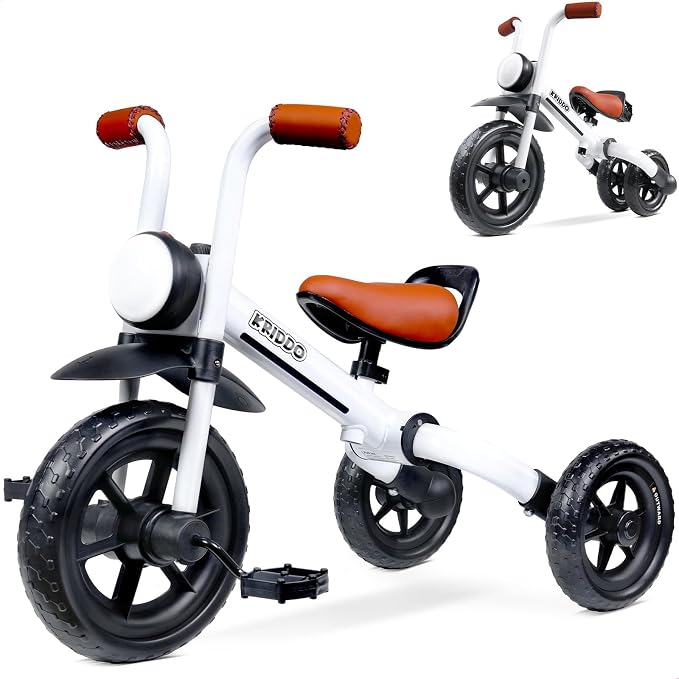
KRIDDO Dual Bearing Balance Bike
The Dual Bearing model keeps the frame light for short practice rides and the carry home afterward. The clover or flower clips are decorations; the useful checks are leg reach and stopping control. The Canadian listing gives a saddle range of about 36-47 cm/14.2-18.5 in, so try the lowest position before relying on the two-to-five-year age label.
Pros
- The stated 2.6 kg/5.7 lb weight makes carrying it home less demanding.
Cons
- There is no hand brake, so the rider must stop with their feet.
- Rank #18 Our score: 9.80 / 10
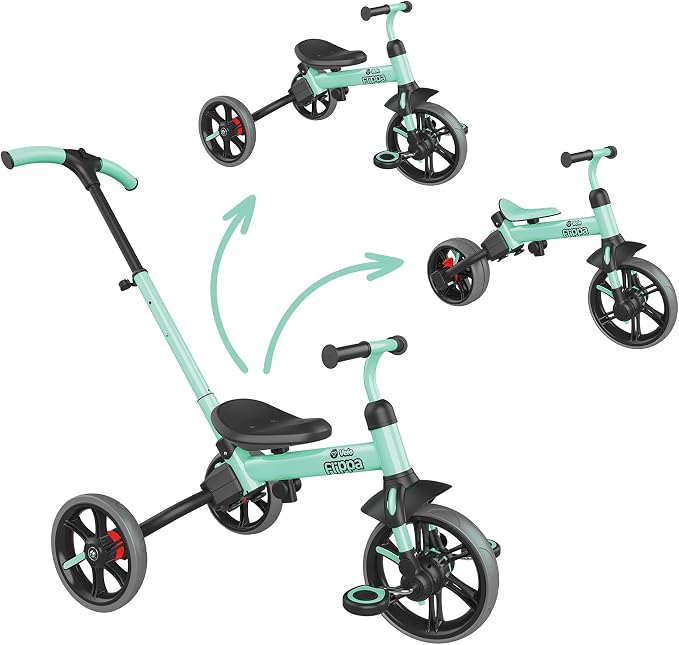
Yvolution Y Velo Flippa
The Y Velo Flippa fits a two to five year old who wants a trike now and a balance bike next: the frame twists and flips between four modes without tools, so one purchase tracks your child from first pedalling to gliding. Check storage space and leg reach first — the convertible frame is bulkier than a simple balance bike, and the seat range, not the modes, decides how long it fits.
Pros
- Tool-free trike-to-balance-bike conversion can carry one purchase across early riding stages.
Cons
- The convertible frame takes more room than a basic balance bike.
- Rank #19 Our score: 9.80 / 10
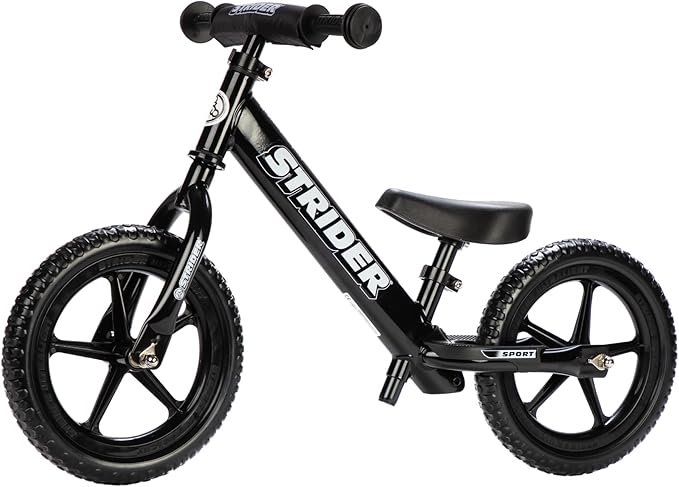
Strider 12 Sport Balance Bike
Strider 12 Sport is the benchmark two-wheel balance bike for families who want a very low starting seat and quick tool-free growth adjustment. It is strongest for early starters; the tradeoff is flat-free tyres rather than the cushier feel of air tyres.
Pros
- Very low starting fit and tool-free adjustment help it cover both toddler and preschool balance-bike stages.
Cons
- Flat-free tyres keep upkeep simple but are less cushioned than air tyres on rougher paths.
- Rank #20 Our score: 9.80 / 10
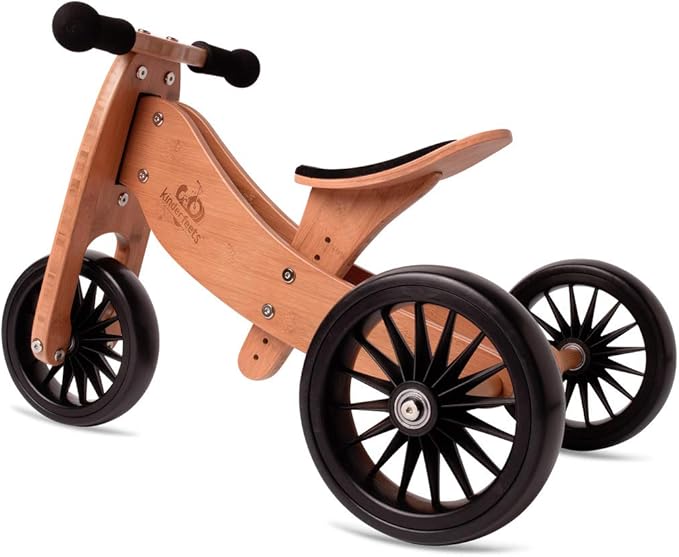
Kinderfeets Tiny Tot Plus Balance Bike
Tiny Tot Plus starts with three wheels and converts to two, with a saddle adjustable from 25-34 cm/9.8-13.4 in. Choose the Plus by that range, not by confusing it with the smaller Tiny Tot. The bamboo frame suits a gradual transition, but the 34 cm/13.4 in ceiling limits room for a taller preschooler.
Pros
- A conversion axle allows the same frame to continue beyond the trike stage.
Cons
- A 34 cm/13.4 in maximum saddle may be outgrown before the broad age range ends.
- Rank #21 Our score: 9.80 / 10
KRIDDO Riding Buddy Balance Bike
KRIDDO Balance Bike 2 Year Old is a playful two-wheel starter for toddlers who may respond to a themed accessory and footrest. Keep the buying decision centred on saddle fit and smooth-surface practice, not the decorative extras.
Pros
- The themed riding-buddy setup can motivate reluctant toddlers to practise more often.
Cons
- The accessory theme should not outweigh saddle-height and weight checks.
- Rank #22 Our score: 9.80 / 10
SEREED Colorful Lighting Baby Balance Bike
SEREED Colorful Lighting Baby Balance Bike is a four-wheel first-bike step for a very young toddler, with lights as the attention hook. It is useful for confidence on smooth surfaces, but it is not the same learning step as a two-wheel balance bike.
Pros
- Four-wheel layout is steadier for a one-year-old than a standard two-wheel balance bike.
Cons
- Lights add interest, not better progression toward two-wheel balance.
- Rank #23 Our score: 9.79 / 10
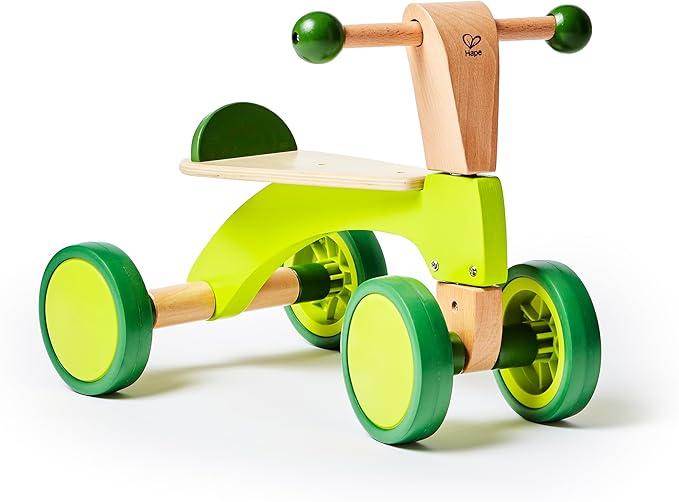
Hape Scoot Around Kid's Wooden Ride On Balance Bike
Hape Scoot Around Kid's Wooden Ride On Balance Bike is a first balance-bike candidate for very young toddlers who need extra stability before moving to a two-wheel runner. Check seat height, steering limits, and whether the four-wheel format fits the child's stage.
Pros
- Four-wheel wooden format gives a steadier first ride-on step before a child is ready for a two-wheel balance bike.
Cons
- It is a stability-first ride-on, so it will not teach leaning and gliding as directly as a two-wheel balance bike.
- Rank #24 Our score: 9.78 / 10
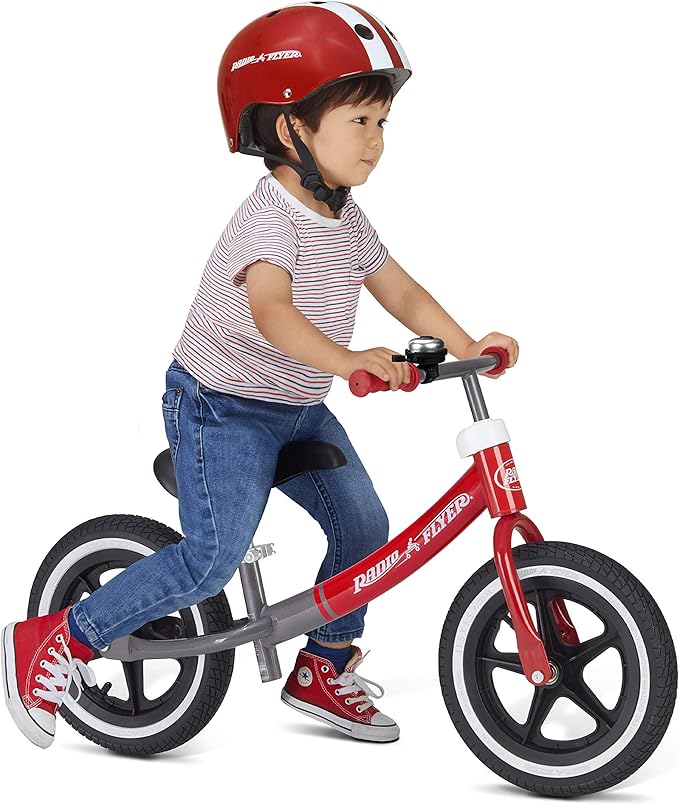
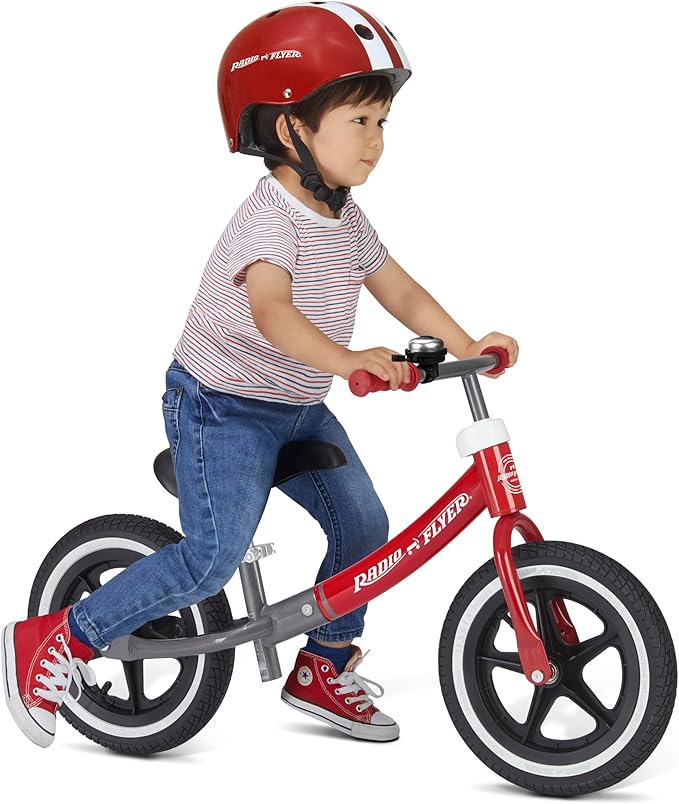
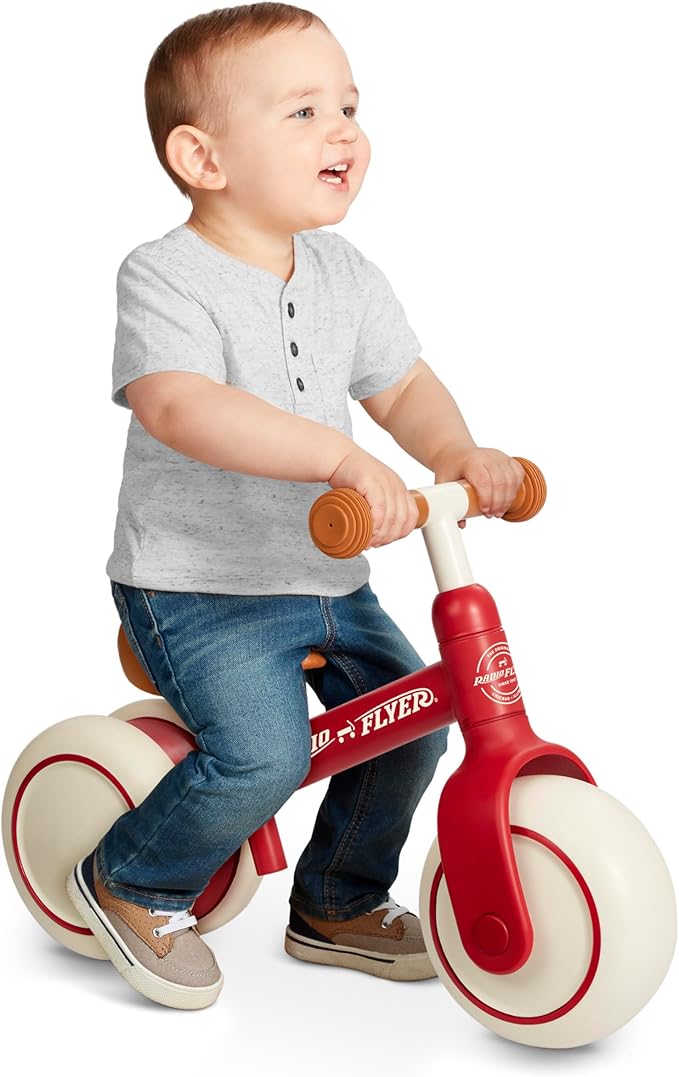
Radio Flyer Balance Bike
Radio Flyer Balance Bike is a familiar 30.5 cm/12 in air-tire starter for outdoor practice. It makes sense when sidewalk comfort and a tool-free seat matter, but a smaller toddler still needs the saddle low enough to stop confidently.
Pros
- Air tires are more forgiving on bumpy sidewalks than foam tires.
Cons
- Air tires add pump and puncture chores.
- Rank #25 Our score: 9.78 / 10
Radio Flyer Air Ride Balance Bike
A pedal-free bike with air tires, a frame footrest and an adjustable saddle.
The Air Ride is a pedal-free, 12-inch balance bike with air tires, an adjustable saddle and a frame footrest. It is for ages 18 months to 5 years; the manual rules out use by older children. Within that range, check seated foot reach and the 22.7 kg/50 lb rider limit. The tires need air checks, and the manual excludes wet weather, rough terrain and night riding.
Pros
- The saddle adjusts without tools from 32.4-41.6 cm/12.8-16.4 in.
Cons
- The 22.7 kg/50 lb rider limit and 12.75–16.38 in saddle range are worth checking against the child.
Local ratings context
If the local Amazon listing has less review depth, this may help: while reviewing this product, we found more rating context on Amazon US. The shortlist also weighs product fit, brand track record, and broader research; when buying, we recommend using your local Amazon store. View Amazon US listing
- Rank #26 Our score: 9.78 / 10
KRIDDO Buzz Rider Tricycle
Buzz Rider folds for storage and moves its rear wheels between a spread tricycle setup and balance practice. Removable pedals stow behind the seat. That combination is useful in a small home, but the 4.6 kg/10.2 lb weight and several locking points make it less simple than a fixed learner.
Pros
- Folding and on-bike pedal storage reduce the space needed between sessions.
Cons
- The 4.6 kg/10.2 lb cycle may be tiring to carry after a long outing.
- Rank #27 Our score: 9.77 / 10
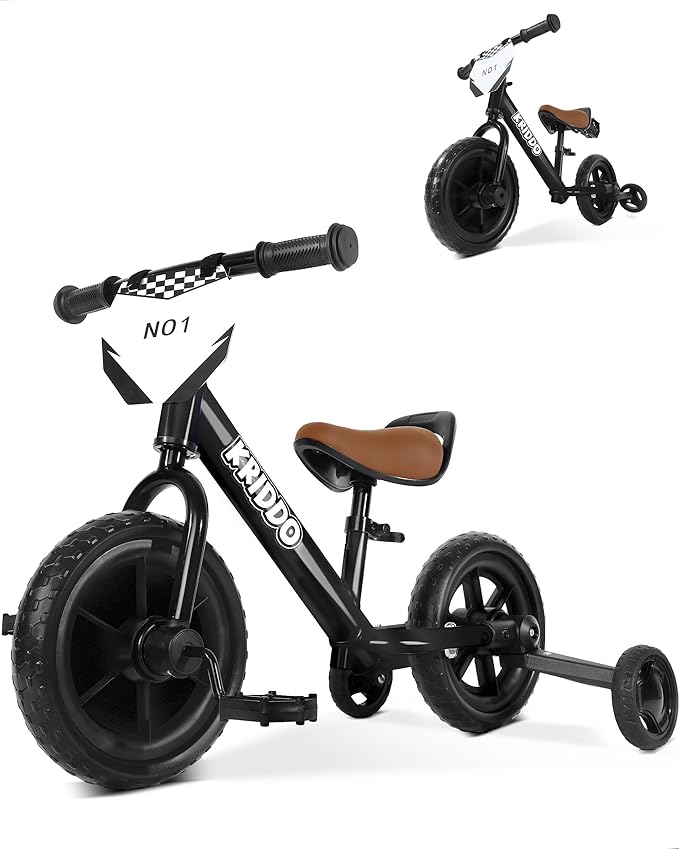
KRIDDO 2-in-1 Balance Trike
Safe Start combines front-wheel pedalling with a genuine pedal-free, two-wheel setup once the training wheels are removed. Pedal storage under the seat helps keep parts together. Choose it if you will use both configurations; at 4.5 kg/9.9 lb, it brings more weight and setup checks than a fixed balance bike.
Pros
- Removable pedals and training wheels let the rider practise different skills.
Cons
- Mode changes add attachment checks and loose parts.
- Rank #28 Our score: 9.75 / 10
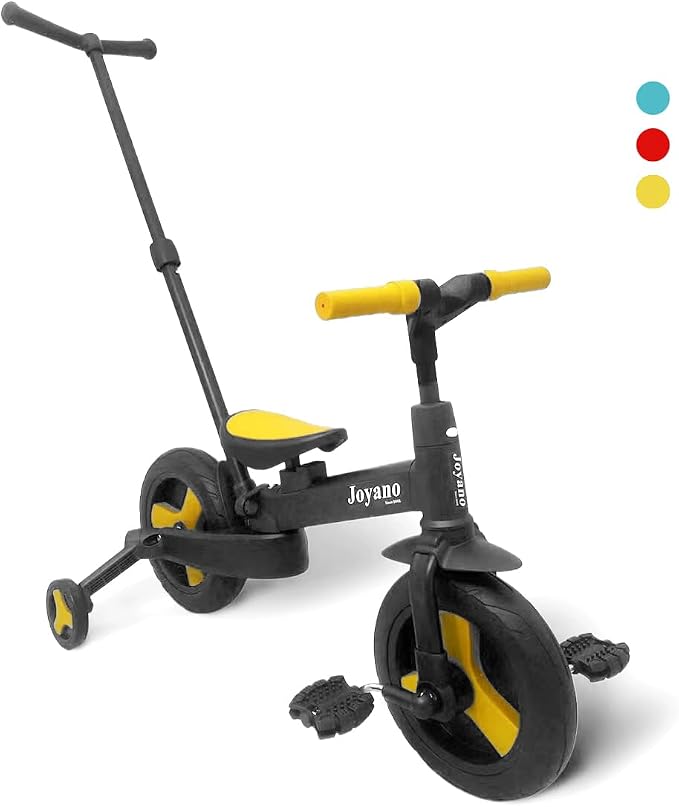
Joyano 5-in-1 Tricycle/Balance Bike
A folding convertible for families using both tricycle and balance-bike configurations.
The Joyano combines a folding frame and parent pushbar with tricycle and balance-bike configurations. The maker assigns balance-bike mode to ages 2–4; other modes extend the overall product range to age 8. Choose it if switching configurations is useful, and check seated ground reach in the intended setup.
Pros
- Several riding configurations include balance-bike use.
Cons
- Balance-bike mode is listed for ages 2–4; the overall 2–8 range applies across different configurations.
- Rank #29 Our score: 9.75 / 10
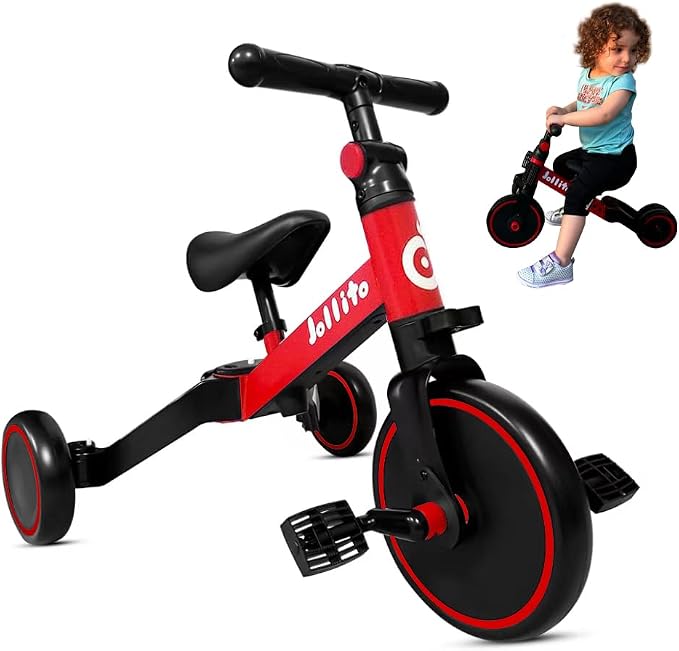
Jollito 5-in-1 Convertible Balance Bike
Jollito’s red JL-006 combines movable rear wheels with removable pedals, letting you switch between supported pushing and balance practice. The stated 2.8 kg/6.2 lb weight is manageable for short carries. Choose it for those mode changes; the extra joints bring more checks than a fixed two-wheel bike.
Pros
- The same frame supports removable-pedal and foot-powered setups.
Cons
- The advertised height range does not establish minimum saddle reach.
- Rank #30 Our score: 9.75 / 10
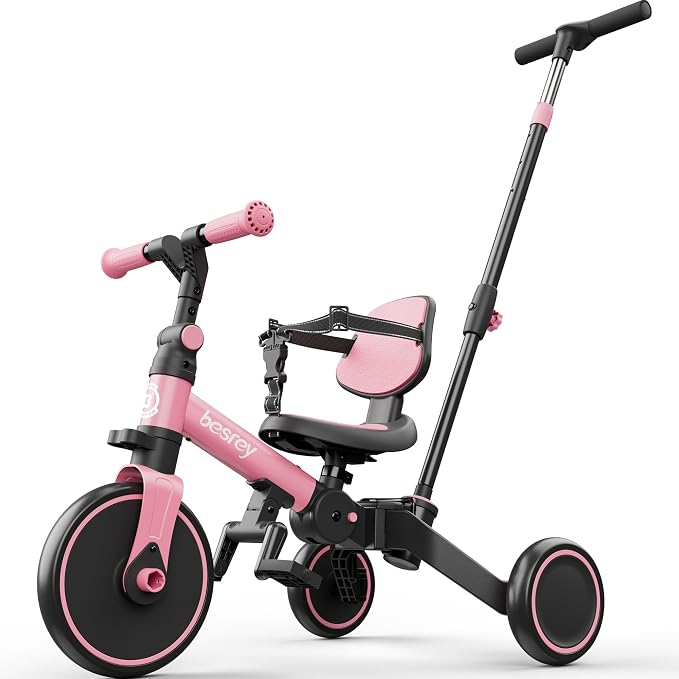
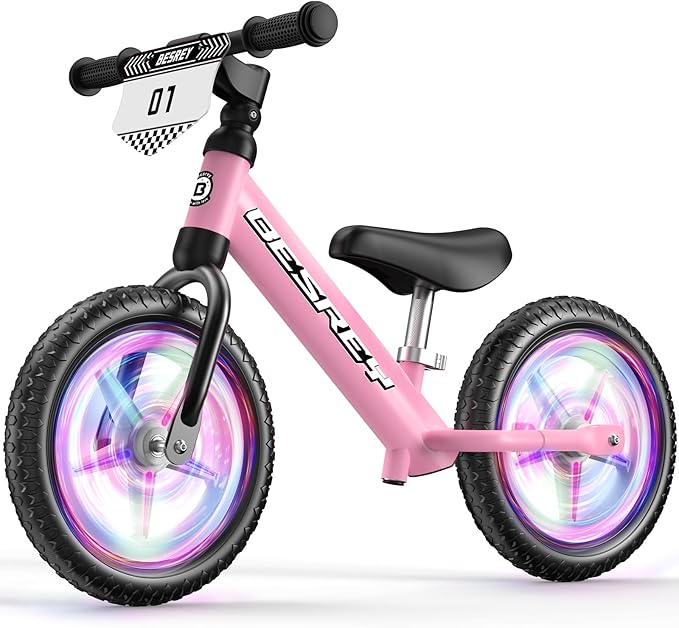
Besrey 5-in-1 Toddler Bike
A convertible first ride with a pedal-free balance-bike mode; fit depends on the selected configuration.
This Besrey combines pedal and foot-powered tricycle setups with a pedal-free balance-bike mode. Its adjustable seat and handlebar let you change the setup as your child grows. Choose it when those mode changes are useful; a fixed balance bike avoids the reconfiguration. Check fit in the intended mode, since Besrey gives conflicting overall age ranges.
Pros
- Five configurations include a pedal-free balance-bike mode.
Cons
- The maker gives slightly different overall age ranges and no age range for each mode; confirm fit and setup rather than relying on age alone.
- Rank #31 Our score: 9.74 / 10
Radio Flyer Early Balance Bike
Radio Flyer Early Balance Bike is for younger toddlers who need a small, stable first no-pedal ride before a true two-wheel preschool balance bike makes sense. Check seat height and growth room because the early stable fit is the point, not long use.
Pros
- Three-wheel stability makes it easier to start before a larger two-wheel preschool balance bike is comfortable.
Cons
- The stable early-size design teaches less leaning practice, so parents should check growth room and progression plans before buying.
- Rank #32 Our score: 9.74 / 10
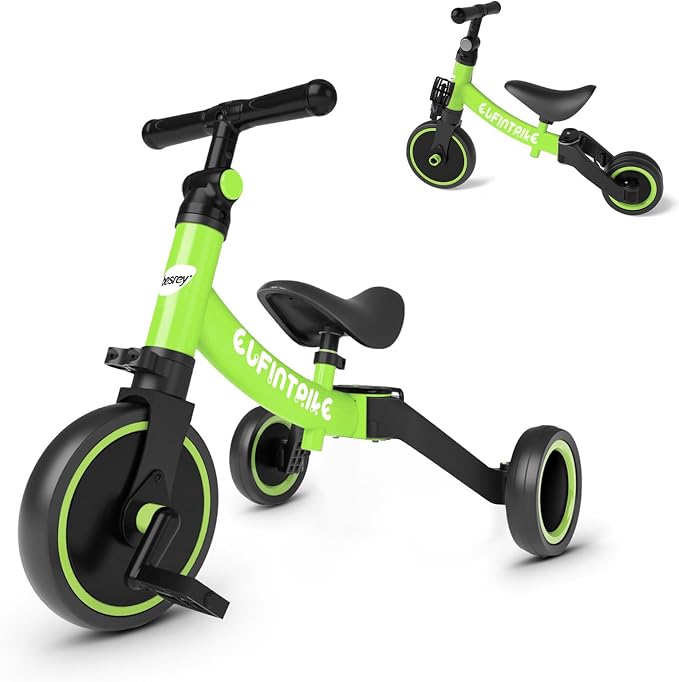
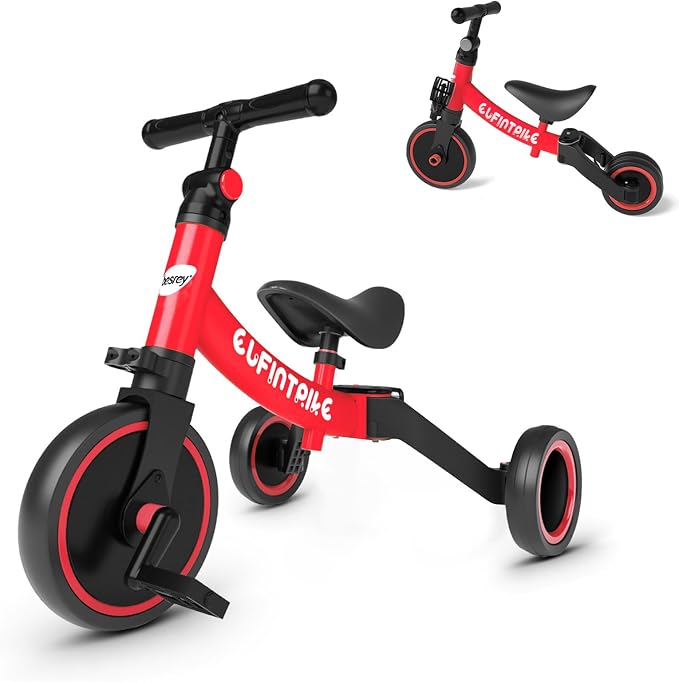
Besrey 5-in-1 Balance Bike
The Besrey Elfintrike changes its rear-wheel layout and removes the pedals for different stages of practice. Its saddle and handlebar can adjust, so check the position in the mode you intend to use. The useful feature is conversion, not the five-mode count; a fixed learner is simpler when you rarely change setups.
Pros
- Adjustable contact points help fit the rider in different configurations.
Cons
- More hinges and removable parts mean more adult checks.
- Rank #33 Our score: 9.73 / 10
Retrospec Baby Beaumont Kids' Balance Bike
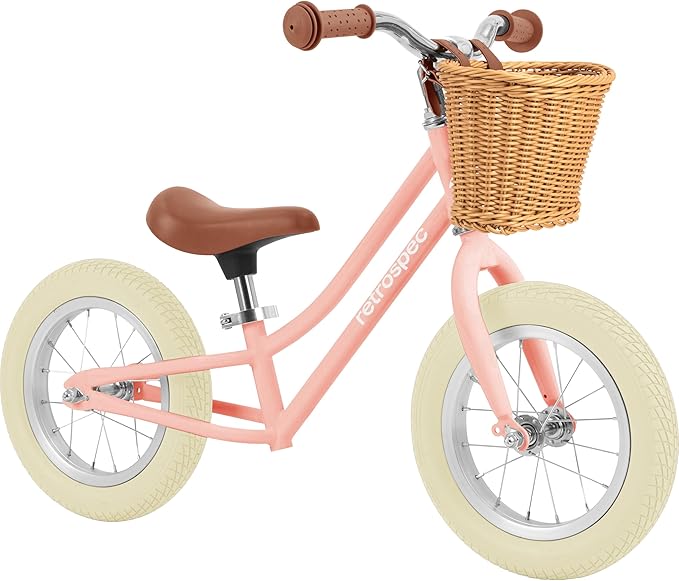
Retrospec Baby Beaumont Kids' Balance Bike suits families who want a first two-wheel bike with air tires and a charming basket/bell setup. It is best for outdoor toddler practice where comfort matters, but the extra style should not outrank saddle fit.
Pros
- Air-filled 12-inch tires are better for bumpy sidewalks than foam tires.
Cons
- Heavier, styled build is less carry-friendly than simpler lightweight starters.
- Rank #34 Our score: 9.73 / 10
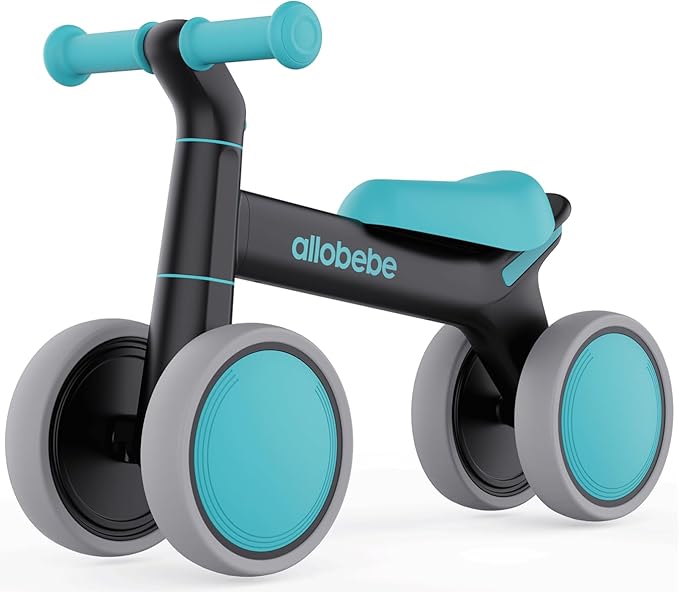
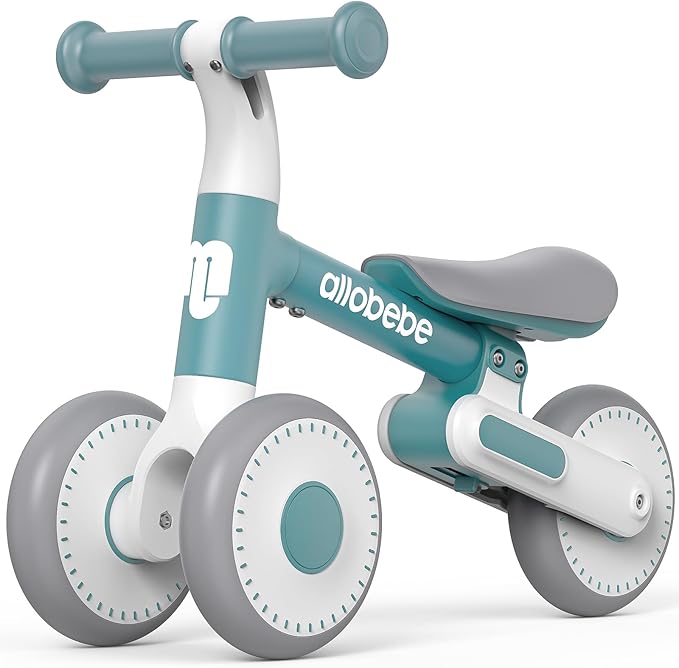
allobebe Four-Wheel Balance Bike
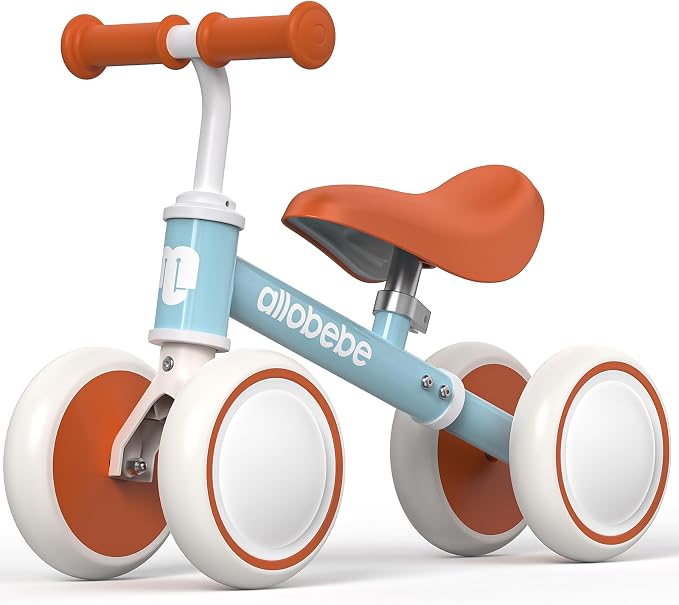
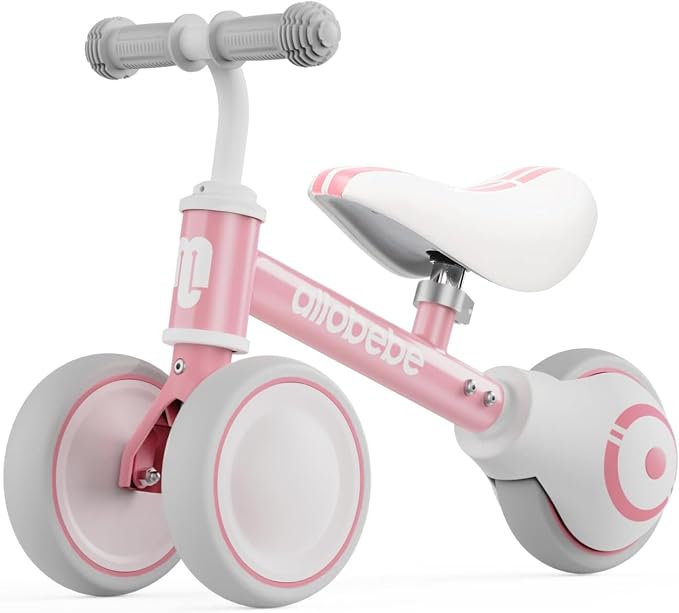
This Allobebe uses four enclosed wheels and a slightly adjustable saddle for first seated pushing. It suits short sessions on dry, smooth floors where the child can keep both feet down. There is no conversion to two-wheel gliding, and the roughly 26-28 cm/10.2-11 in saddle range offers only modest growth room.
Pros
- The small saddle adjustment can improve foot reach compared with a fixed seat.
Cons
- It remains a supported first ride-on as the child grows more confident.
- Rank #35 Our score: 9.73 / 10
Retrospec Cricket 2
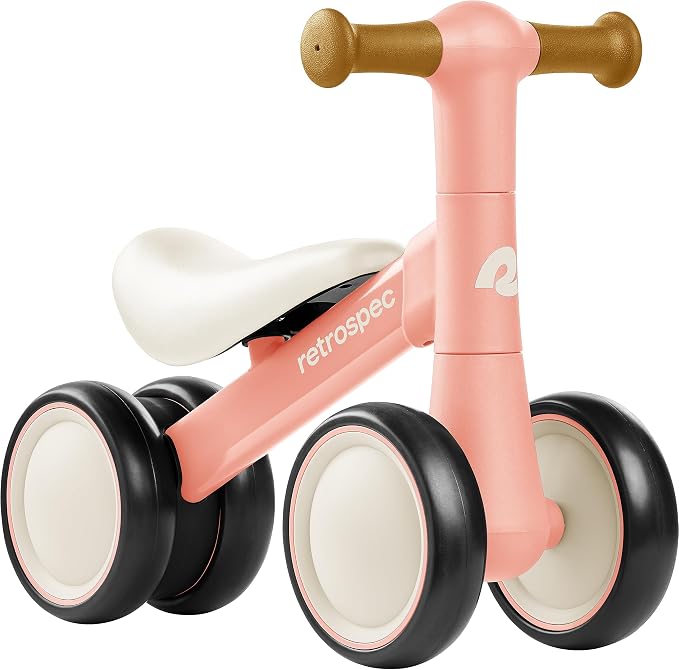
The Retrospec Cricket 2 is a four-wheel first bike for short sessions on smooth floors. Its seat is fixed at about 21.6 cm/8.5 in, so it suits a child who can already reach the ground comfortably. Although it arrives mostly assembled, an adult must fully engage the front assembly and secure its bolt before the first ride.
Pros
- Non-marking wheels suit smooth indoor floors.
Cons
- The fixed saddle and handlebar cannot be raised as your child grows.
- Rank #36 Our score: 9.72 / 10
Newyoo TR008 5-in-1 Balance Bike
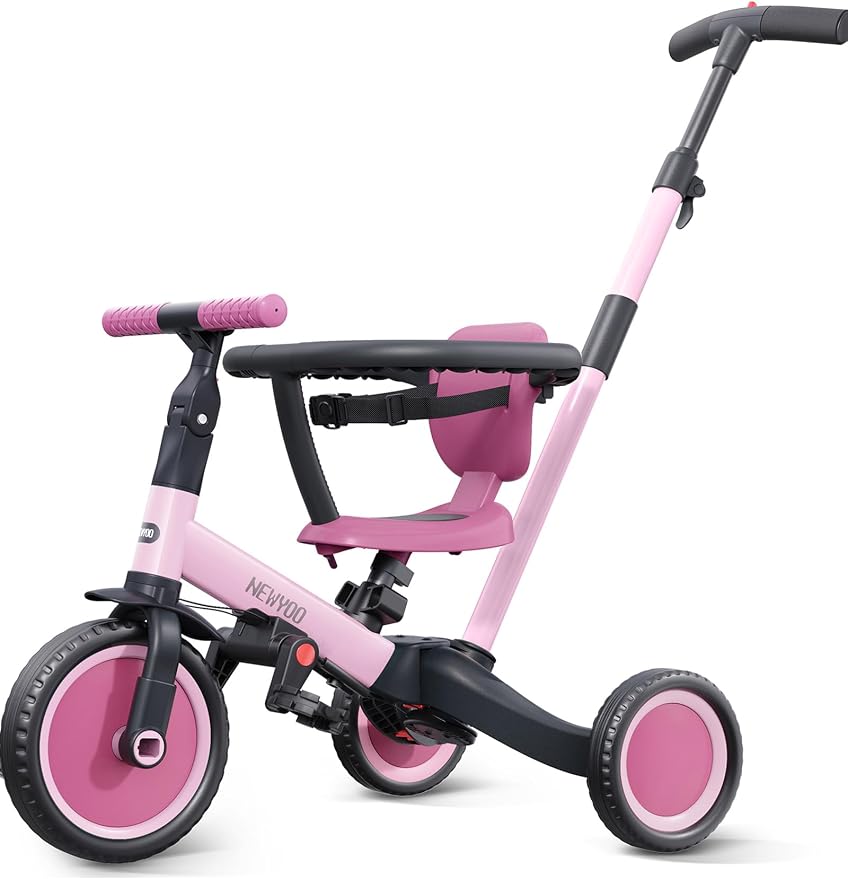
The TR008 combines parent steering with a safety bar and a convertible rear-wheel setup. It suits families moving between guided trike rides and foot-powered practice. Check the saddle and pedal reach in each configuration; neither the bar nor the push handle makes it a stroller for resting.
Pros
- A steering push handle lets an adult guide the early trike stage.
Cons
- The adjustable and removable fittings need checks after each mode change.
- Rank #37 Our score: 9.72 / 10
allobebe WB0601 Mini Balance Bike
The WB0601 is a pedal-free first learner with two wheels at the front and one at the back. It supports early pushing and steering on smooth, level ground, rather than unsupported two-wheel gliding. Its saddle adjusts only from roughly 26-28 cm/10.2-11 in, so check the child’s reach and room to push before buying.
Pros
- The supported wheel layout lets a beginner focus on pushing and steering.
Cons
- The short saddle adjustment gives limited room for growth.
- Rank #38 Our score: 9.71 / 10
KRIDDO Classic Balance Bike
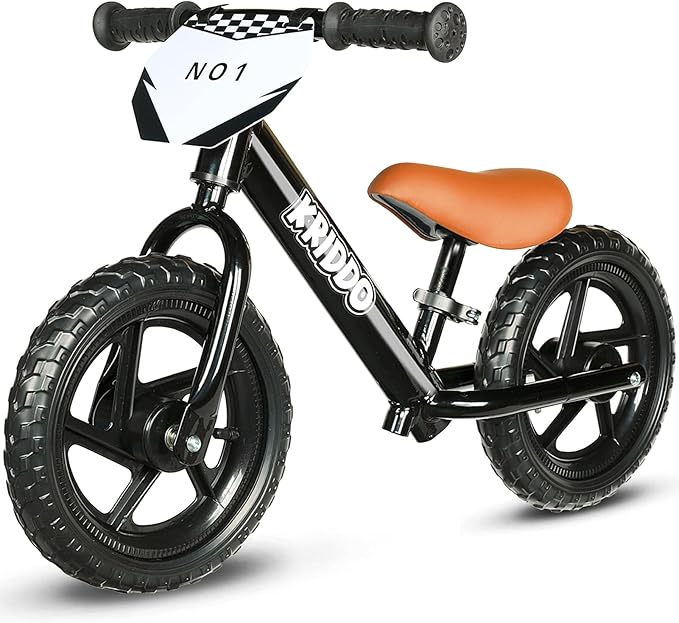
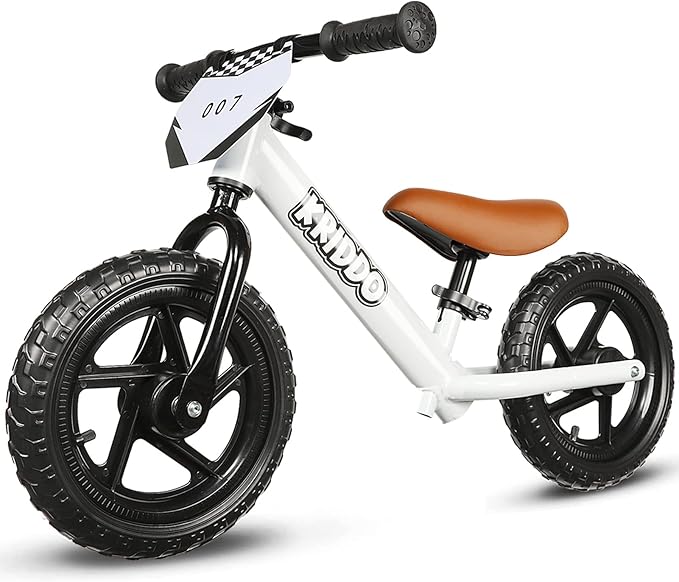
KRIDDO Toddler Balance Bike 2 Year Old is a 30.5 cm/12 in two-wheel starter where the practical value is adjustable fit plus a simple practice routine. The custom plate can help buy-in, but it should not outrank saddle height and riding surface.
Pros
- Adjustable 30.5 cm/12 in format works for a child ready to practise two-wheel balance before pedals.
Cons
- Still needs a careful saddle-height check for a smaller two-year-old.
- Rank #39 Our score: 9.71 / 10
KRIDDO Toddler Balance Bike
The regular KRIDDO Classic combines a custom front plate with a simple 30.5 cm/12 in, two-wheel frame. Choose it for short pushing and gliding practice after checking that the saddle lets both feet reach the ground. Unlike Classic L, this version has no footrest, and stopping relies on the rider’s feet.
Pros
- The saddle and handlebar adjust as the child’s riding position changes.
Cons
- No footrest or hand brake is fitted to this regular Classic version.
- Rank #40 Our score: 9.68 / 10
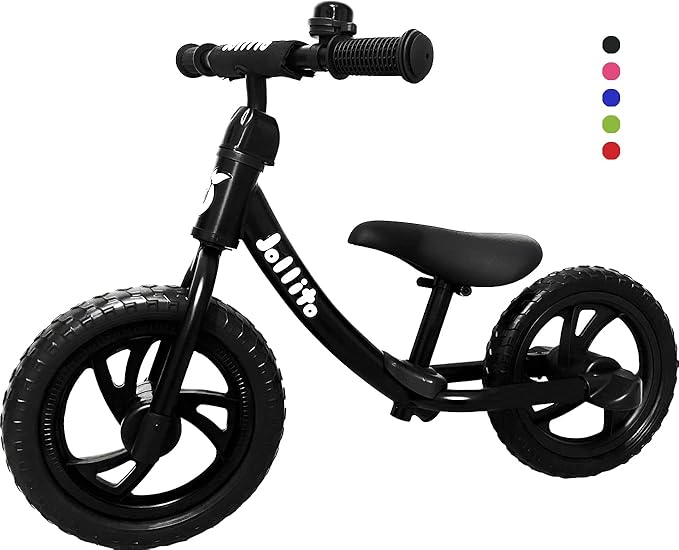
Jollito 30.5 cm/12 in No-Pedal Balance Bike
Jollito 30.5 cm/12 in No-Pedal Balance Bike is a lightweight two-wheel learner for indoor and outdoor practice. It is most useful when the seat range fits the child and air-free tyres are acceptable for the family route.
Pros
- 30.5 cm/12 in two-wheel setup gives more real balance practice than a baby ride-on.
Cons
- Air-free tyres are less forgiving on rough paths than pneumatic tyres.
- Rank #41 Our score: 9.65 / 10
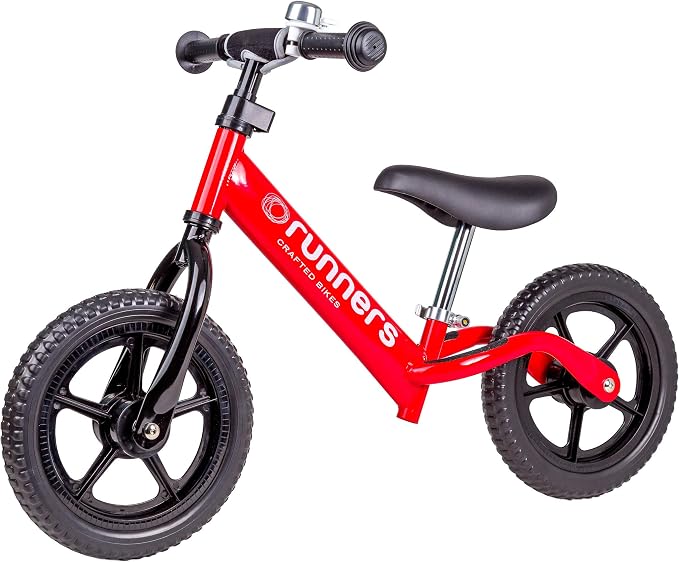
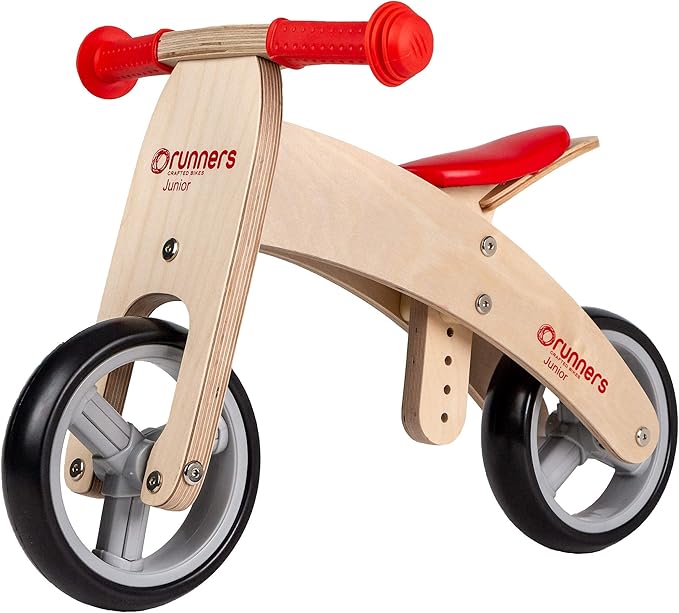
Runners-Bike PushMee Balance Bike
Two-wheel balance bike with a 30.5-43.2 cm/12-17 in seat adjustment range.
PushMee suits families ready for a straightforward two-wheel bike for balance practice before pedals. Its steel-alloy frame weighs under 2.7 kg/6 lb, and the 12-inch EVA tires need no inflation. The broad 18-month-to-5-year age range does not confirm fit, though: check that your child's inseam works with the 30.5 cm/12 in minimum seat setting and that they can start with both feet down.
Pros
- The steel-alloy frame is under 2.7 kg/6 lb, so an adult can lift it more easily between rides.
Cons
- The manufacturer gives no inseam threshold; the 18-month-to-5-year age span is only a screening guide.
- Rank #42 Our score: 9.65 / 10
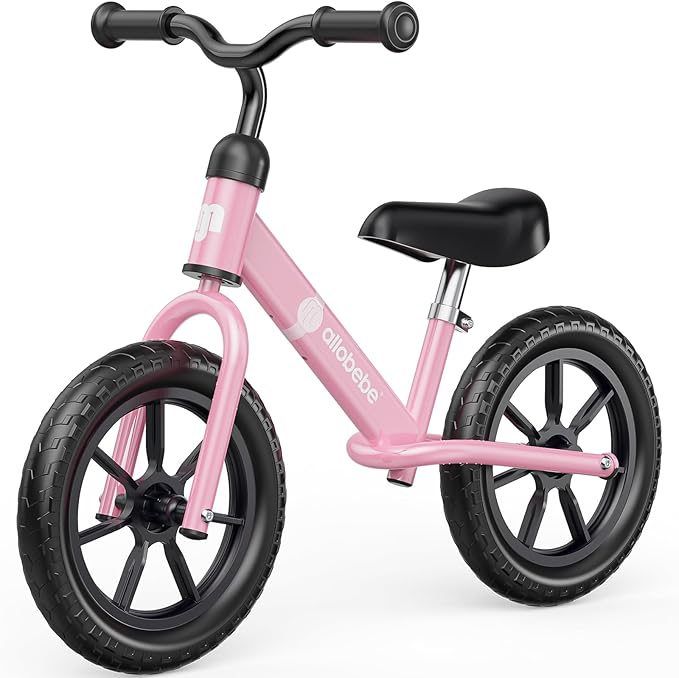
allobebe Balance Bike
allobebe Balance Bike is a cautious low-cost pick for short toddler practice on smooth pavement. The listing points to a small baby-balance-bike format with soft, low-maintenance wheels, so fit, stability, and assembly need a closer pre-buy check than on better-documented bikes.
Pros
- Low-cost baby-balance-bike format works for trying short early practice before investing in a longer-term bike.
Cons
- Limited brand documentation makes saddle range and assembly hardware important pre-buy checks.
- Rank #43 Our score: 9.64 / 10
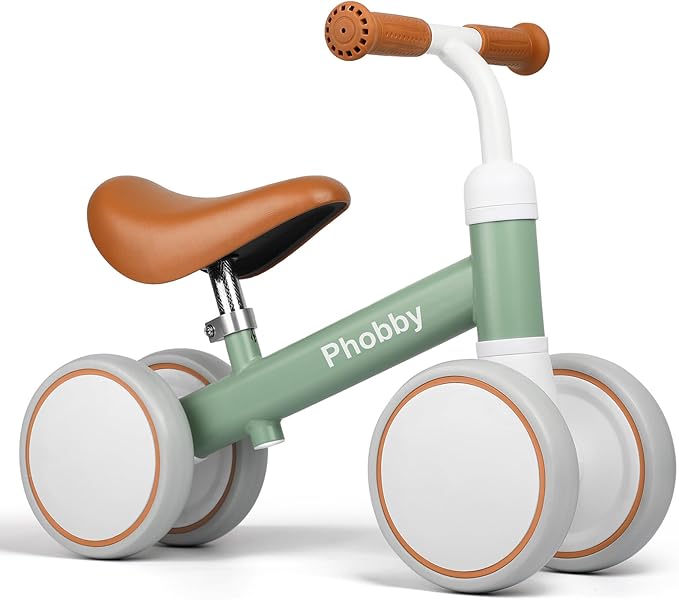
Phobby Baby Balance Bike
This four-wheel Phobby has an adjustable saddle on a steel frame, giving an early rider some fitting flexibility. A reliable minimum saddle measurement is missing, so try it with both feet comfortably down. Its supported wheels suit seated pushing, not the unsupported leaning and gliding of a two-wheel learner.
Pros
- The saddle can be raised, unlike a fixed-seat first ride-on.
Cons
- Missing saddle measurements make buying without a fitting less predictable.
- Rank #44 Our score: 9.64 / 10
Globber Learning Bike ECOLOGIC
The Globber Learning Bike Ecologic is a four-wheel walking bike for children aged 12–36 months, up to 20 kg/44.1 lb. Its two saddle positions and tool-less setup keep the design simple, but there is no brake: the manual says a child stops with their feet. Use only with adult supervision on flat, dry ground away from traffic, slopes and steps. Globber’s former ECOLOGIC page now redirects to Learning Bike Sunshine; its recycled-plastic and wheat-straw claims apply only to specified components, with a Vintage Red exception, and do not map the exact parts on this 736-XXX variant.
Pros
- Four-wheel layout and two saddle positions give a new toddler rider a simple start.
Cons
- There is no brake; the child must stop with their feet.
- Rank #45 Our score: 9.63 / 10
LOL-FUN 5-in-1 Convertible Balance Bike
The five-in-one LOL-FUN adds a parent push handle to the removable-pedal, convertible-wheel design. It makes sense when an adult-assisted phase is useful before independent practice. Check leg reach and every configuration lock; the handle does not turn the cycle into a restrained stroller.
Pros
- The parent handle adds an assisted option before removing pedals for independent pushing.
Cons
- The handle and conversion joints add setup checks without solving uncertain saddle fit.
- Rank #46 Our score: 9.62 / 10
besrey 4-in-1 Convertible Balance Bike
The besrey 4-in-1 is for parents of one to three year olds who expect to push more than chase: it works as a parent-handle trike, then converts to a pedal-free balance bike, with a folding frame and a harness for the youngest stage. The balance-bike mode is the last and briefest stop, so if your toddler already walks confidently, a dedicated balance bike is simpler and lighter.
Pros
- The parent handle, backrest and harness support pushed trike rides before a child is ready to ride independently.
Cons
- This multi-stage frame is heavier and more involved than a dedicated balance bike for a confident walker.
- Rank #47 Our score: 9.60 / 10
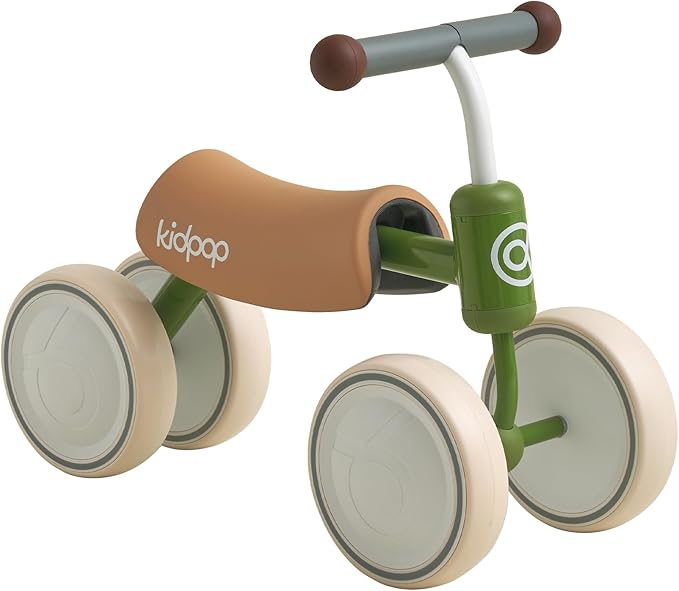
Kidpop Big BEE Balance Bike
The Big BEE has four foam wheels and a saddle about 25.5 cm/10 in high for early seated pushing. Choose it for a child who can already reach the ground comfortably at that height. The saddle does not rise as the child grows, and four-wheel support is a different activity from practising two-wheel glides.
Pros
- Foam wheels need no inflation and suit smooth indoor floors.
Cons
- The fixed saddle cannot be lowered for a smaller rider.
- Rank #48 Our score: 9.56 / 10
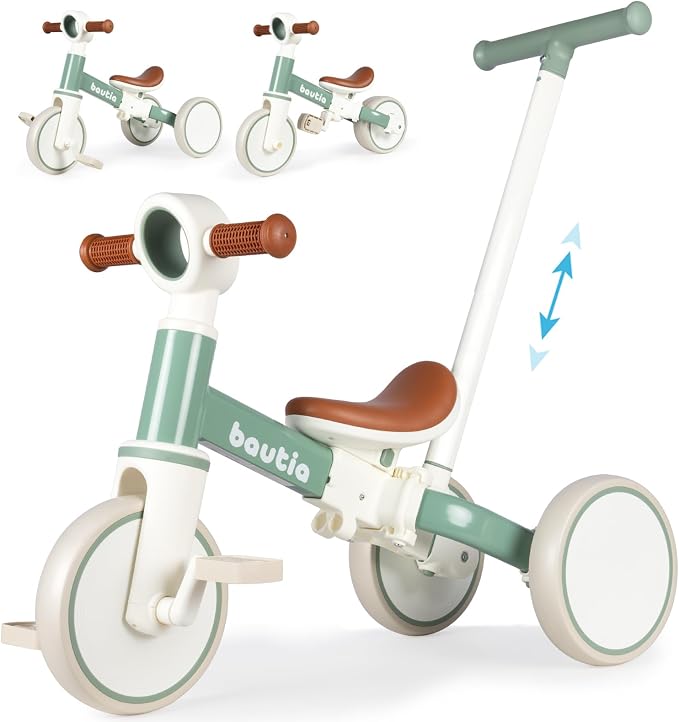
Bautia 5-in-1 Balance Bike
This Bautia has a parent push handle, but the selected version does not give the adult linked steering. Its rear wheels move and the pedals detach for different activities. Choose it only if that distinction works for your outings, and check the child’s actual saddle reach before relying on the broad age range.
Pros
- Rear-wheel changes and removable pedals offer several supervised activities.
Cons
- The rear handle pushes but does not steer the front wheel.
- Rank #49 Our score: 9.56 / 10
KOOKIDO Sport Balance Bike
A 30.5 cm/12 in two-wheel option for children who are ready for a taller preschool fit and the cushioning of air-filled tires. Check the 40 cm/15.8 in minimum seat height against your child's inseam before buying; smaller beginners may not reach the ground securely.
Pros
- Air-filled 12-inch tires add cushioning on rougher paths.
Cons
- The 40 cm/15.8 in minimum seat height can be too tall for smaller preschoolers.
- Rank #50 Our score: 9.56 / 10
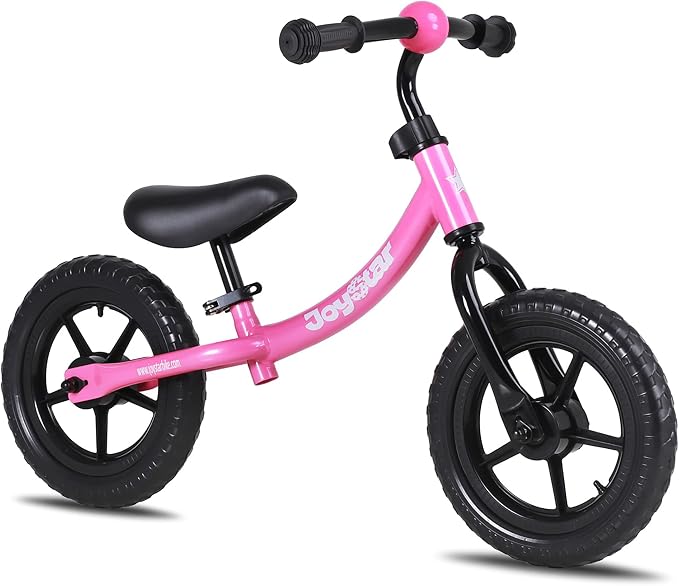
JOYSTAR Toddler Balance Bike
The Marcher has a simple curved frame, 12-inch foam tyres and a saddle listed at roughly 31-40 cm/12.2-15.7 in. It differs from JOYSTAR’s Roller with a footplate. Choose it for straightforward pushing and short glides once the minimum seat height fits; the manufacturer’s 34 kg/75 lb limit is lower than the Canadian listing’s claim.
Pros
- Foam tyres need no inflation, and the quick-release saddle adjusts easily.
Cons
- There is no hand brake or dedicated footrest.
- Rank #51 Our score: 9.55 / 10
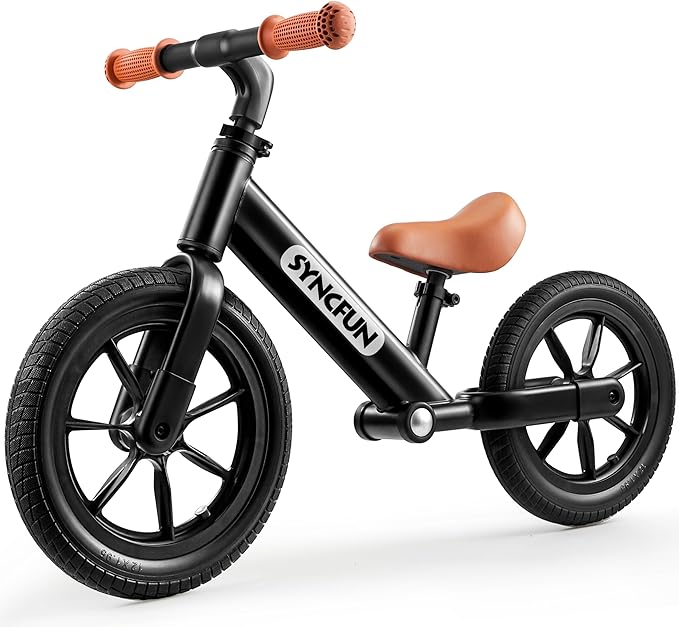
SYNCFUN Balance Bike
SYNCFUN Balance Bike is a preschool-focused two-wheel balance bike. Foam tires keep maintenance simple, while the main buying check is still whether the saddle range matches your child now. Its lighter build helps when the ride turns into walking.
Pros
- Adjustable seat and handlebar make the fit easier to tune as a child grows.
Cons
- Airless tires still trade away some comfort on rough pavement.
- Rank #52 Our score: 9.50 / 10
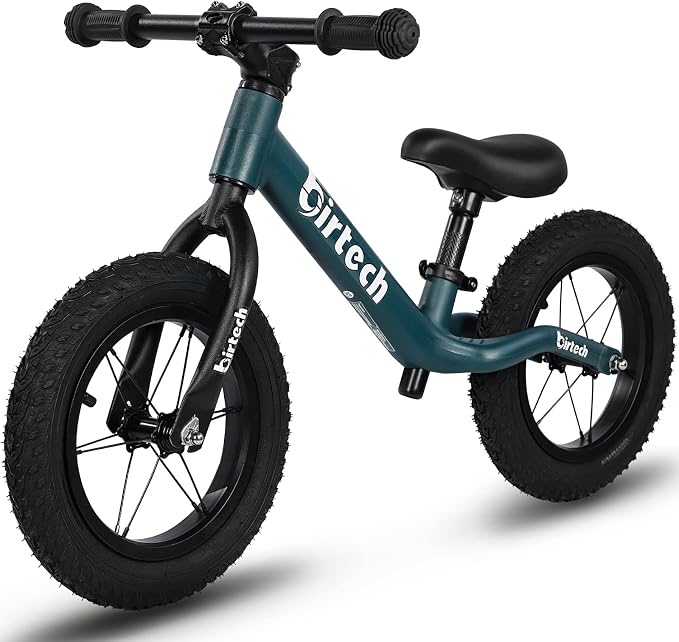
H.yeed / Birtech 12-inch Pneumatic Balance Bike
This Birtech-branded bike has 12-inch air tyres, a light nylon frame and a footrest for gliding. Its saddle adjusts from roughly 33-44 cm/13-17.3 in, useful only once the child can reach the ground at the lowest setting. Plan tyre-pressure checks and foot braking rather than treating the all-terrain wording as a safety guarantee.
Pros
- The 33-44 cm/13-17.3 in saddle range offers room to adjust once the minimum fits.
Cons
- Pneumatic tyres need pressure checks and may puncture.
- Rank #53 Our score: 9.50 / 10
allobebe Toddler Balance Bike 12” No Pedal Training Bicycle
allobebe 12 Inch Toddler Balance Bike is a standard no-pedal learner for 2-5 year olds, with adjustable fit and EVA foam wheels for smooth-surface practice.
Pros
- 30.5 cm/12 in two-wheel format gives a toddler a more direct balance-bike step than four-wheel ride-ons.
Cons
- Fit range and assembly hardware need closer pre-buy checks than on better-documented brands.
- Rank #54 Our score: 9.46 / 10
allobebe Baby Balance Bike
allobebe Baby Balance Bike is a foldable three-wheel toddler starter for first-birthday-stage children, with EVA foam wheels for short smooth-surface practice.
Pros
- Stable multi-wheel stance is calmer for very young toddlers than a true two-wheel balance bike.
Cons
- Less useful for learning lean and glide than a two-wheel balance bike.
- Rank #55 Our score: 9.44 / 10
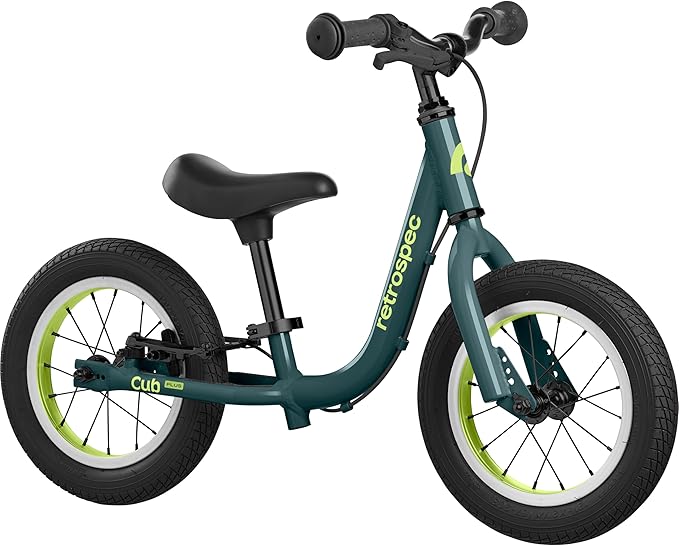
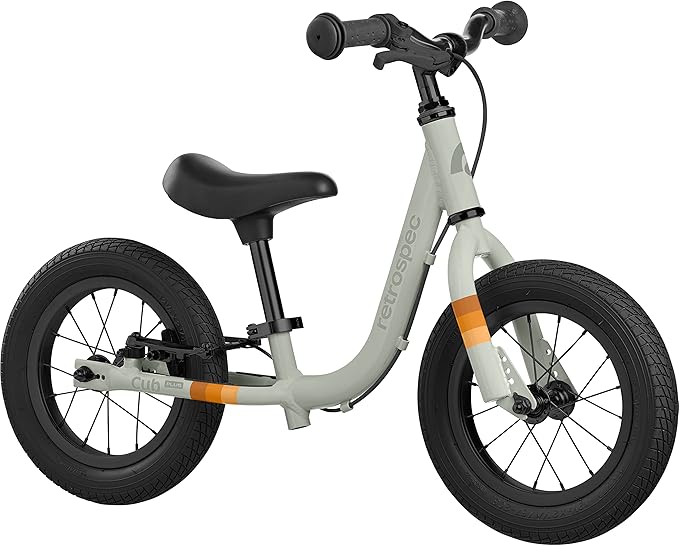
Retrospec Cub Plus Toddler Balance Bike
Retrospec Cub Plus Toddler Balance Bike adds brake practice to the usual no-pedal format. That helps children nearing pedal-bike readiness, but the brake and frame size need to match the child’s hand strength and inseam.
Pros
- Hand brake adds useful stopping practice for children nearing pedal-bike readiness.
Cons
- The brake only helps if the child has enough hand reach and strength.
- Rank #56 Our score: 9.40 / 10
RUNNERS-BIKE
RUNNERS-BIKE offers a longer adjustment window than a fixed-size toddler bike: its seat moves from 12 to 17 in (about 30-43 cm/11.8-16.9 in), and the listed age span is 18 months to 5 years. Its EVA tyres are described as puncture-proof; still check stand-over and saddle fit by inseam, since an age band cannot tell whether the child can push off comfortably.
Pros
- Simple two-wheel balance-bike format suits families focused on steering and balance practice before pedals.
Cons
- Age range support is useful, but inseam, seat height, and tyre suitability still need checking before purchase.
- Rank #57 Our score: 9.35 / 10
Cub Plus Toddler Balance Bike
Cub Plus Toddler Balance Bike is for families who want a more bike-like 30.5 cm/12 in starter with air tires and hand brakes. It rewards a child ready for outdoor paths, but fit and brake reach matter more than buying the most grown-up spec.
Pros
- Air tires make it more comfortable on park paths than foam-tire budget bikes.
Cons
- Brake reach and minimum seat height need checking for smaller toddlers.
- Rank #58 Our score: 9.35 / 10
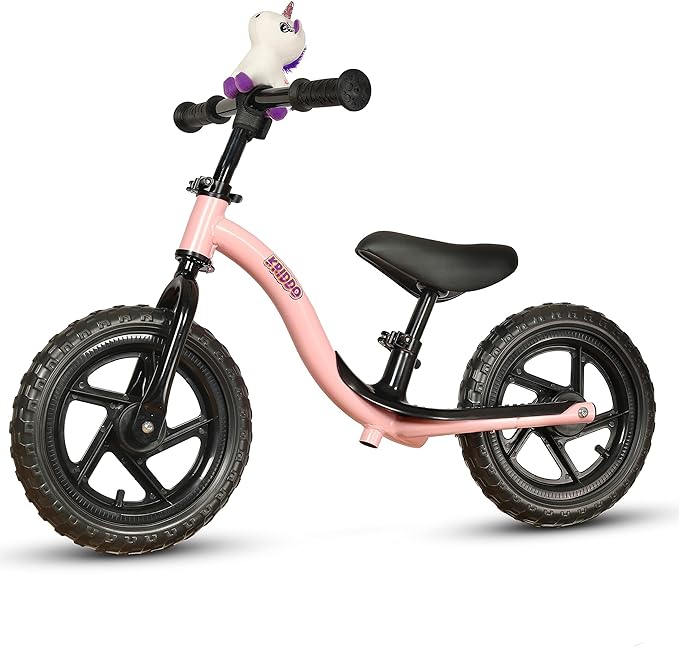
KRIDDO Riding Buddy
The pink Riding Buddy pairs a handlebar unicorn with a low frame and footrest for first pushing and gliding practice. Its saddle adjusts from about 30-43 cm/11.8-16.9 in; the KB001 manual specifies ages 2–5. There is no handbrake, and tyre construction remains unclear, so choose it for supervised, level-ground practice with both feet firmly on the ground.
Pros
- The low curved frame and roughly 30-43 cm/11.8-16.9 in saddle adjustment help a small rider get on and find a feet-flat position.
Cons
- Without a handbrake, stopping depends on the child's feet; slopes are outside the manual's intended use.
- Rank #59
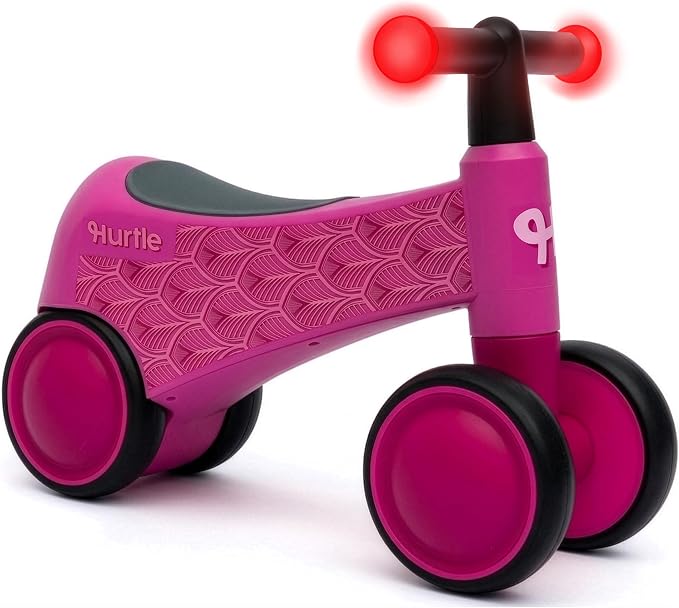
Hurtle Toddler Balance Bike
The Hurtle HUTBB19 is a four-wheel starter ride-on for the maker’s 18–36 month range, with a steering stop and light-up handlebars. It can give a young toddler a simple way to practice steering, but it is not a two-wheel balance trainer and a child ready to glide may outgrow the stance quickly. The lights need two AAA batteries, not included; check the fit and the maker’s age guidance before buying.
Pros
- The four-wheel stance and 135-degree steering limit give a young toddler a simple ride-on to practice steering.
Cons
- It will not teach the same balance skills as a two-wheel balance bike.
- Rank #60 Our score: 9.33 / 10
besrey Balance Bike
besrey Balance Bike is a preschool-focused two-wheel balance bike. Foam tires keep maintenance simple, while the main buying check is still whether the saddle range matches your child now.
Pros
- Official specs support the 30.5 cm/12 in, EVA-tire, adjustable preschool fit claim.
Cons
- Foam tires and value-bike construction are less comfortable on rougher surfaces.
- Rank #61 Our score: 9.33 / 10
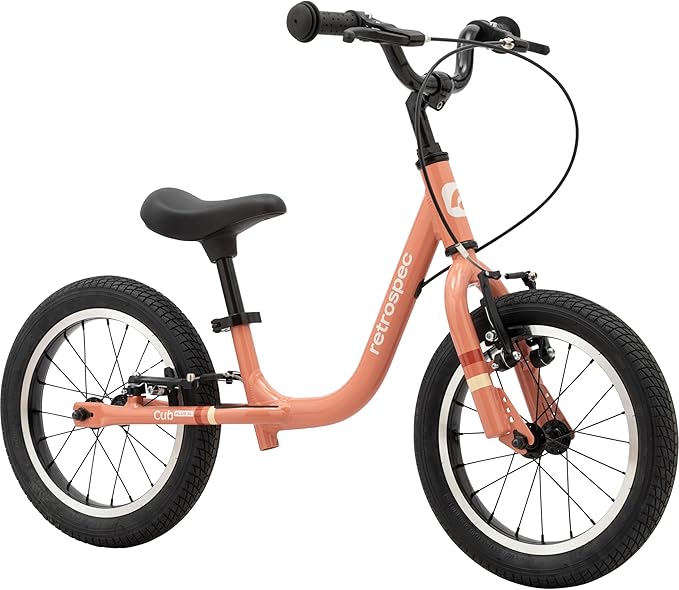
Retrospec Cub Plus XL Kids Balance Bike
Larger 14-inch balance bike with brakes; check minimum saddle height and lever reach before choosing it for a younger child.
Retrospec Cub Plus XL Kids Balance Bike is a 35.6 cm/14 in option for taller or later-starting children who need more room than a toddler bike. Air tires and hand brakes add capability, but only if standover and lever reach fit now.
Pros
- 14-inch wheels and XL frame give taller children more room than small 30.5 cm/12 in bikes.
Cons
- Too much bike for many early toddlers if the saddle or brake levers start high.
- Rank #62 Our score: 9.33 / 10
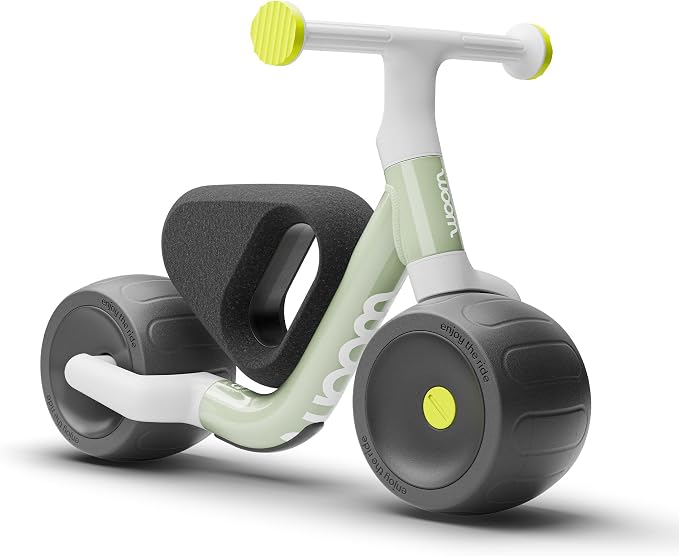
woom WOW
The woom WOW gives a child who can sit independently and stand with support a low seat for early balance practice. Broad wheels and self-centering steering suit short sessions at home. Its use is limited to indoor or enclosed private play space, with direct adult supervision.
Pros
- Broad EVA tires need no inflation.
Cons
- The manual limits use to 9–36 months, at least 70 cm/27.6 in tall and no more than 20 kg/44.1 lb.
Local ratings context
If the local Amazon listing has less review depth, this may help: while reviewing this product, we found more rating context on Amazon US. The shortlist also weighs product fit, brand track record, and broader research; when buying, we recommend using your local Amazon store. View Amazon US listing