Best Balance Bikes in India 2026
Start with the child's inseam and confidence level, then choose between a small four-wheel first ride-on and a proper two-wheel trainer. Weight, saddle height, tire type, and smooth-surface use matter more than colour or a broad age claim.
Why are scores between 9 and 10?
This is a curated shortlist of strong picks, not a full best-to-worst ranking. Small score gaps usually mean we have slightly more evidence for one model than another, not that the lower-scoring option is a poor choice.
So this is just another affiliate roundup with an arbitrary order?
No. We make these lists good enough that we use them ourselves and recommend them to friends and family. We turn the kind of research careful parents would normally do by hand into a repeatable process. Then we compare the evidence across the markets we cover and rank products with a model that gives more weight to stronger signals instead of simple averages or a fully hand-picked order based purely on editorial preference.
Affiliate Disclosure
We use affiliate links and ads to finance this website. As an Amazon Associate I earn from qualifying purchases.
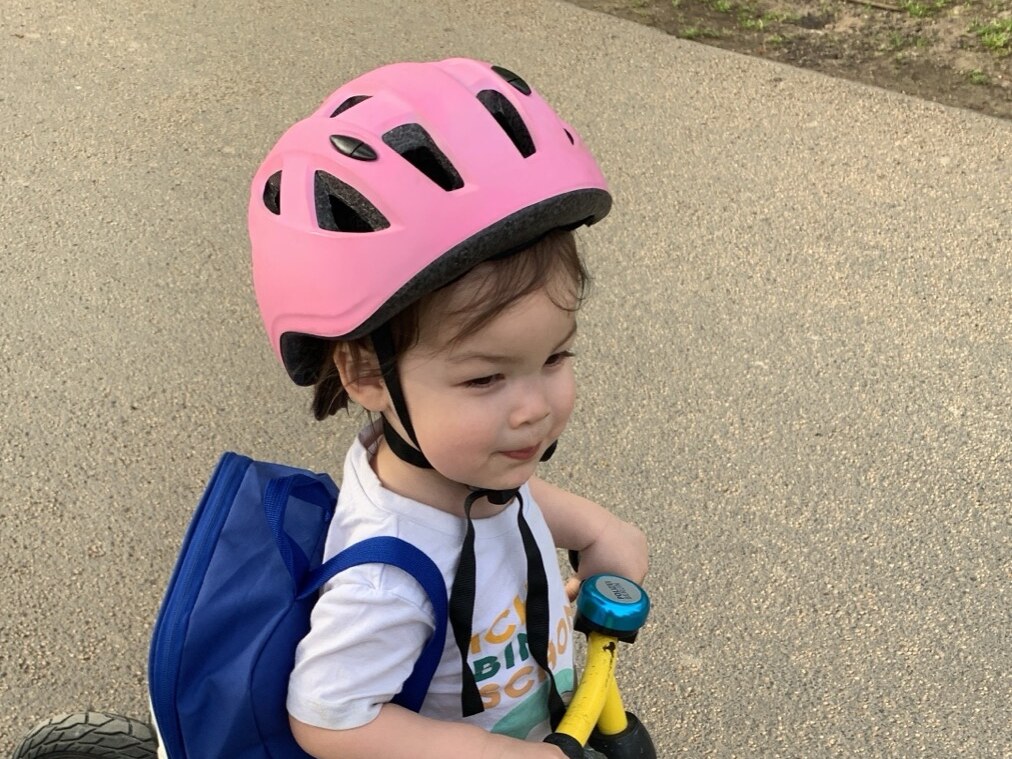
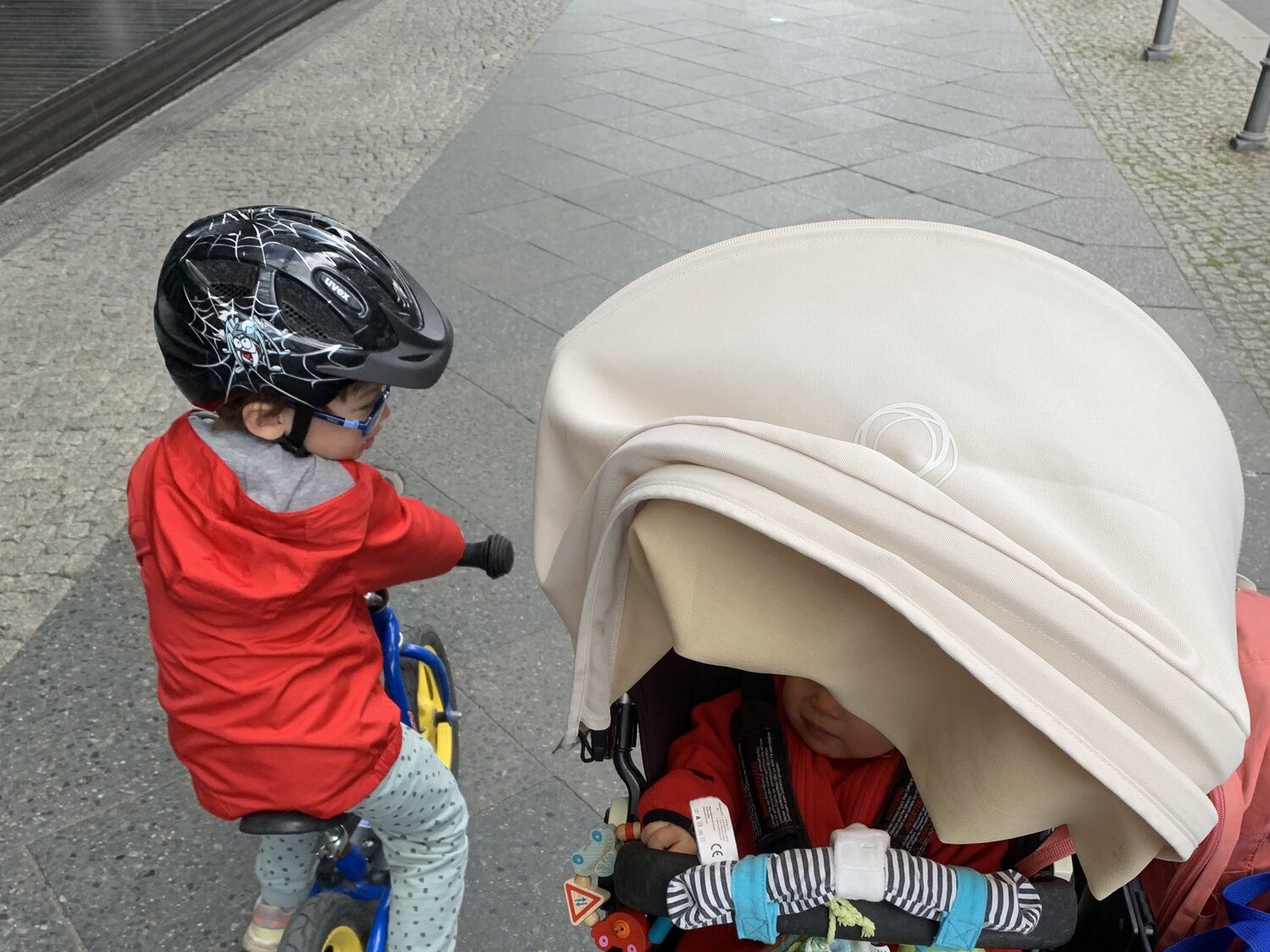
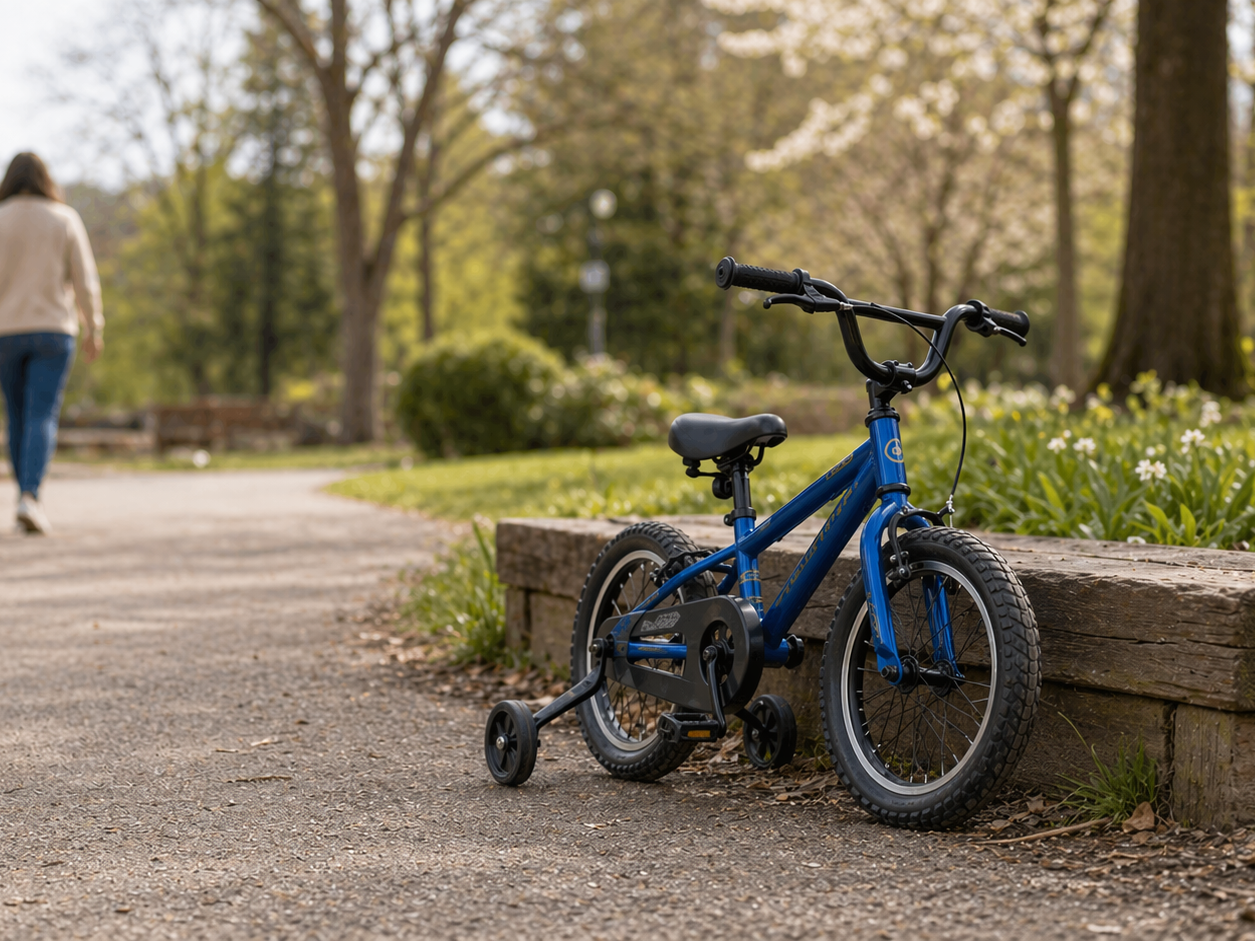
- Rank #1 Our score: 9.91 / 10
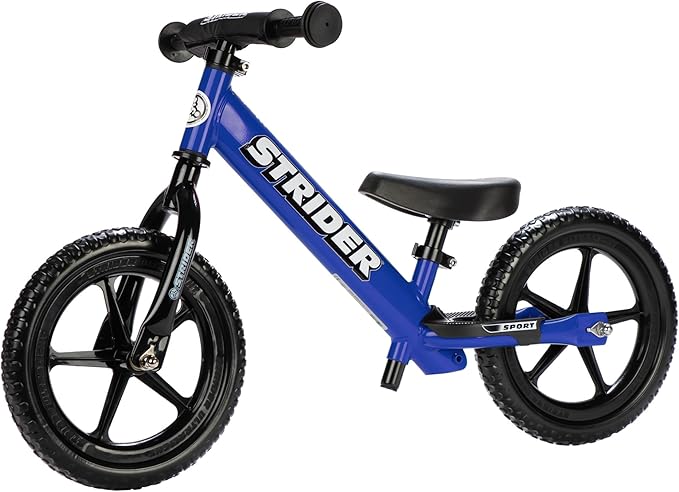
Strider 12 Sport
Best: Preschool fit
Check the included seatpost and both feet flat on the ground; do not use age alone to judge fit.
The 12 Sport gives a child a two-wheel frame for practising foot-powered walking and coasting, with built-in footrests for later glides. Strider lists a 28-43 cm saddle range for the standard setup. Check seated foot reach before buying, and confirm the supplied seatpost rather than relying on the listing’s longer inseam claim.
Pros
- Built-in footrests give the child somewhere to place both feet once coasting.
Cons
- Different seatposts change growth room; verify the included post and actual seated fit.
- Rank #2 Our score: 9.90 / 10
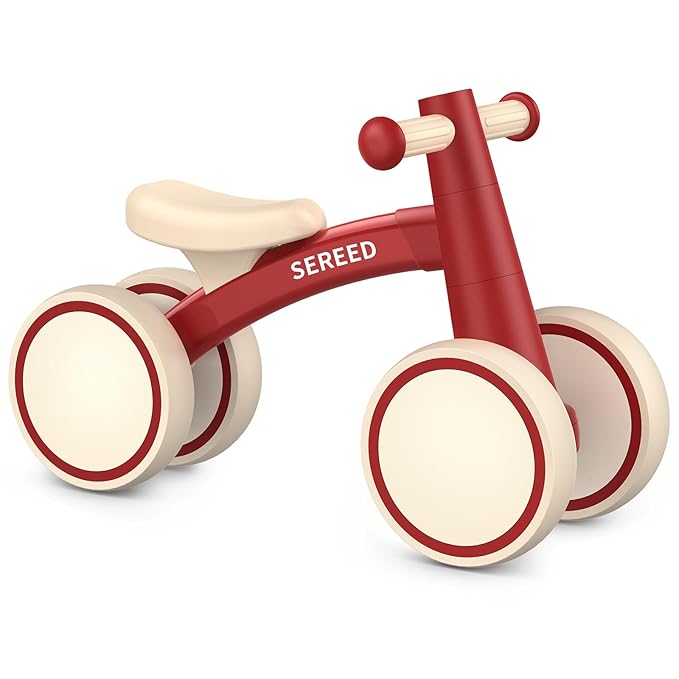
SEREED 25.4 cm Baby Balance Bike
Best: Stable first bike
SEREED 25.4 cm Baby Balance Bike is a low, stable first ride for toddlers who need confidence before a taller two-wheel balance bike. Choose it for early scooting on smooth floors or paths; move up sooner if the child is ready to glide faster.
Pros
- Low four-wheel style is approachable for very early scooting practice.
Cons
- It is a short first-ride stage, not the strongest choice for fast balance progression.
- Rank #3 Our score: 9.88 / 10
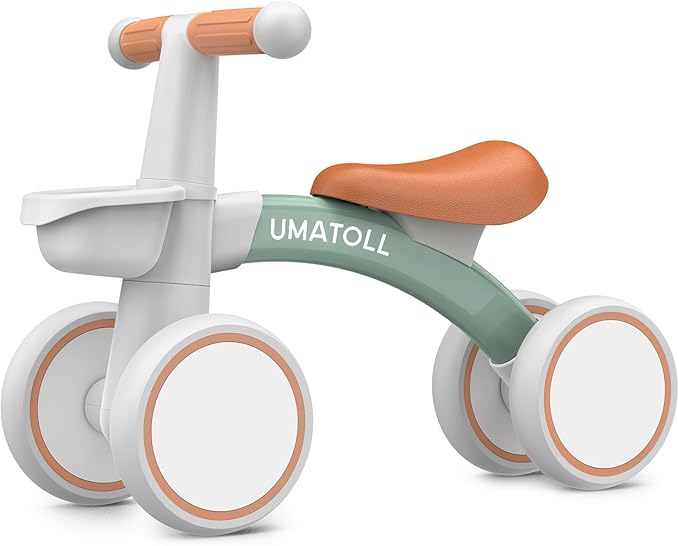
Umatoll Four-Wheel Toddler Balance Bike
Best: Four-wheel first bike
The Umatoll B402 is a four-wheel first ride-on for 12–24-month toddlers, with a removable basket for a small toy. Its three saddle settings change the forwards-and-backwards position, not the height. Check comfortable foot contact before buying. Use it on flat ground under direct adult supervision: the manual specifies no brake and a 25 kg maximum. It is a first pushing stage, not a two-wheel balancing bike.
Pros
- Three fore-aft saddle positions let you adjust the child's reach to the handlebar during this first ride-on stage.
Cons
- The saddle has no verified height adjustment; the child must already reach the ground comfortably.
- Rank #4 Our score: 9.87 / 10
Yvolution Y Velo Junior Toddler Balance Bike
Y Velo Junior lets a child begin with two closely paired rear wheels, then switch to a single rear wheel for more balancing practice. The seat and handlebar adjust as fit changes, but the wheel conversion needs an adult and the correct spacers. This Junior is listed for 18 months to three years, with a 20 kg limit. Use smooth paved ground away from traffic; the extra rear wheel is support, not protection against every fall.
Pros
- The paired rear wheels can be changed to one as balance improves.
Cons
- An adult must refit the rear wheel with the correct spacers.
- Rank #5 Our score: 9.83 / 10
Retrospec Cricket Walker Balance Bike
Cricket is a low, four-wheel scooting toy for the stage before two-wheel coasting. Its padded saddle and steering limiter suit short sessions on a clear, level floor, while the non-marking wheels avoid the need to inflate tyres. Retrospec specifies 12–24 months and a 20 kg limit. Check seated foot reach first: the broad support helps early pushing, but does not teach the same leaning balance as a two-wheel bike.
Pros
- Low saddle and four wheels support early foot-powered movement.
Cons
- The supported layout provides little practice leaning on two wheels.
- Rank #6 Our score: 9.81 / 10
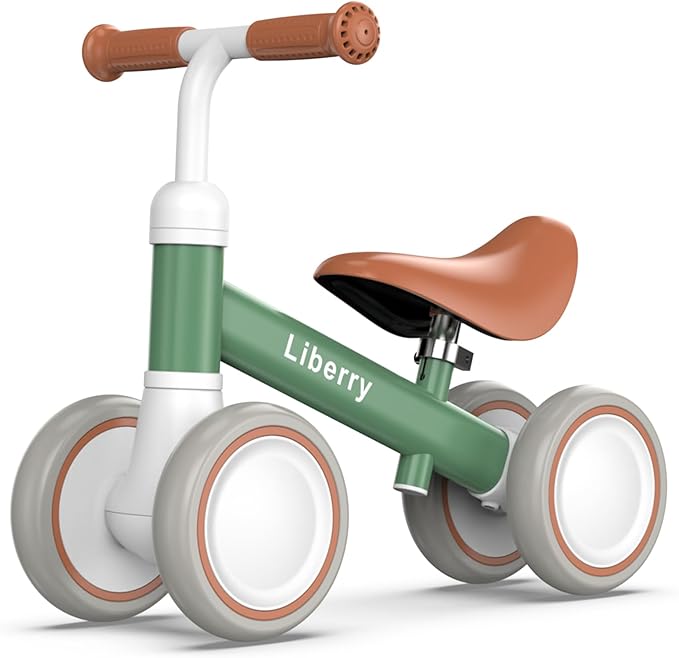
Liberry Baby Balance Bike
Liberry Baby Balance Bike is a stable 12-24 month toddler starter with an adjustable 24.6-27.9 cm seat and EVA tyres for short smooth-surface practice.
Pros
- 12-24 month fit and four-wheel stability suit a toddler just learning to scoot.
Cons
- Likely a short-stage choice once the child is ready for a more conventional balance bike.
- Rank #7 Our score: 9.81 / 10
Kinderfeets Tiny Tot Plus Balance Bike
Tiny Tot Plus starts as a pedal-free trike, then converts to a two-wheel balance bike as control improves. Its 25-34 cm saddle range helps you check fit across that transition; Kinderfeets specifies 18 months to four years and up to 25 kg. There are no brakes, so teach foot stopping before riding. The wooden frame needs dry indoor storage, making an exposed balcony a poor place to leave it.
Pros
- One frame changes from supported trike practice to two-wheel balancing.
Cons
- The wooden frame needs dry storage and regular screw checks.
- Rank #8 Our score: 9.79 / 10
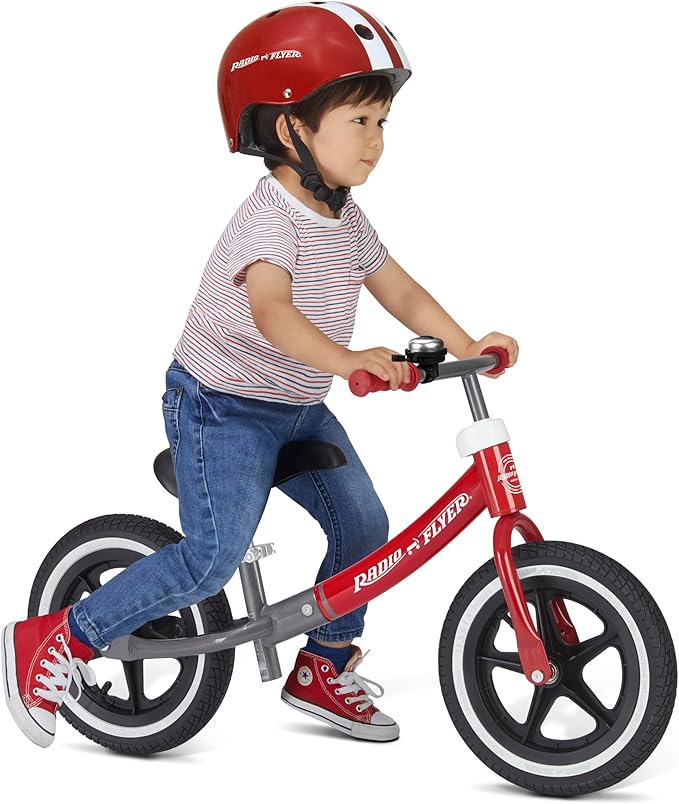
Radio Flyer Air Ride Balance Bike
Air Ride pairs 12-inch air tyres with an adjustable saddle and a frame footrest for coasting. The tyres add cushioning but need pressure checks, unlike foam wheels. Choose it for supervised practice on dry, level paths: Radio Flyer excludes rough terrain and wet-weather riding. The manual lists ages 18 months to five years and a 22.7 kg rider limit; seated foot reach still decides whether a child can push and stop comfortably.
Pros
- Air tyres cushion the ride on suitable level paths.
Cons
- Tyres need pressure checks, and the manual excludes rough terrain and wet weather.
Local ratings context
If the local Amazon listing has less review depth, this may help: while reviewing this product, we found more rating context on Amazon US. The shortlist also weighs product fit, brand track record, and broader research; when buying, we recommend using your local Amazon store. View Amazon US listing
- Rank #9 Our score: 9.79 / 10
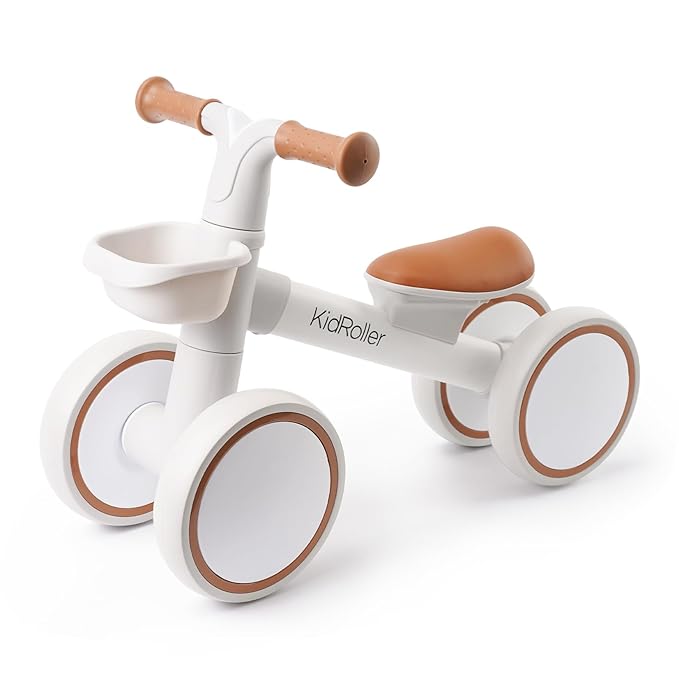
KidRoller Toddler Balance Bike
KidRoller JY-X13 weighs 2.1 kg and has enclosed EVA wheels and a 135° steering limiter. The available listing does not give a numeric seat-height range, so it cannot establish a child’s fit by measurement.
Pros
- Stable first-bike format is useful for cautious toddlers who need early balance confidence.
Cons
- Less compelling once the child is ready for a true two-wheel balance-bike progression.
- Rank #10 Our score: 9.77 / 10
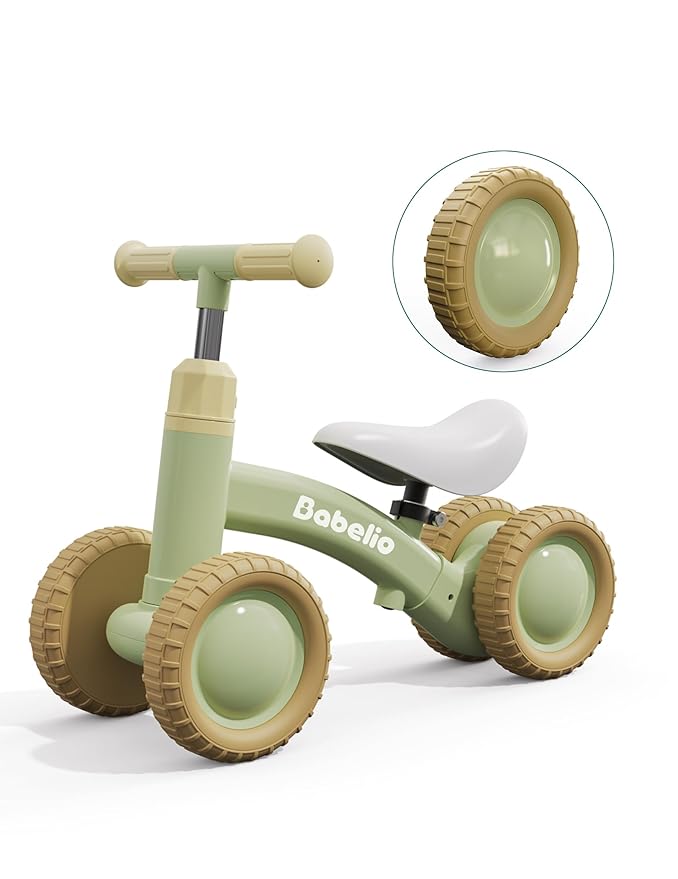
Babelio Kids Balance Bike
Babelio is a four-wheel starter for children aged 10–36 months, with an adjustable seat (24.1-27.9 cm), three handlebar settings and TPE tyres with off-road tread. It supports seated pushing and steering, not two-wheel balance practice.
Pros
- Four-wheel 10-36 month format gives early riders more stability than a two-wheel learner.
Cons
- It is a starter ride-on, not the best choice for a child ready to practise two-wheel lean and glide.
- Rank #11 Our score: 9.75 / 10
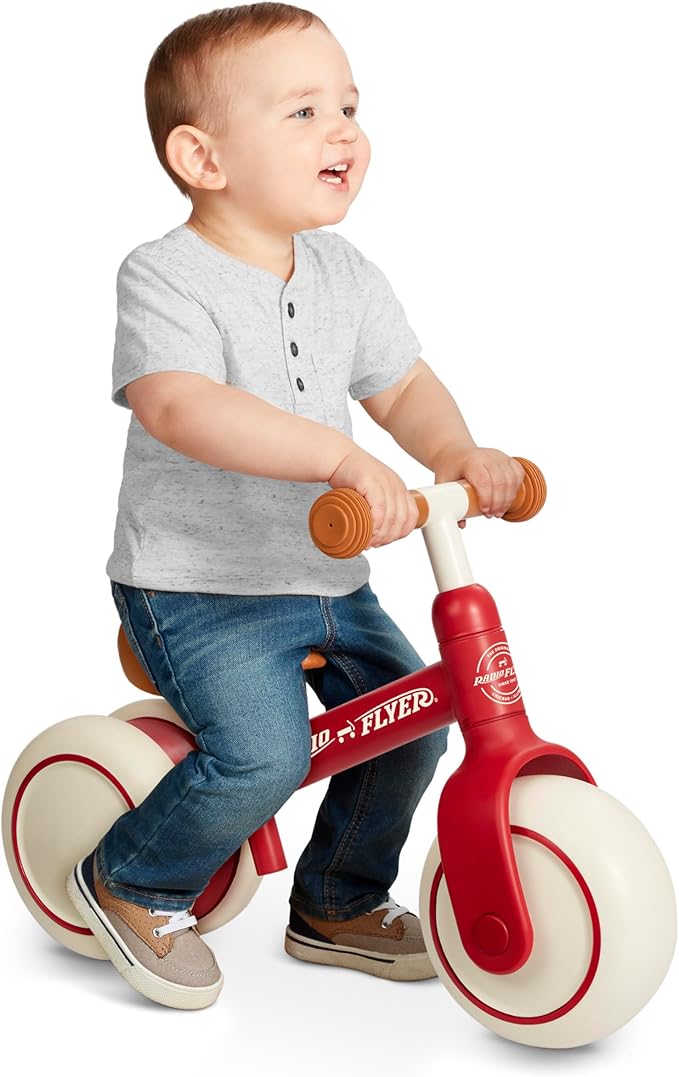
Radio Flyer Early Balance Bike
Steady Start uses a wide front wheel and two rear wheels to support a toddler’s first scooting. The seat adjusts without tools, but the compact design is limited to ages one to three and 19 kg. It is for supervised play on level ground; the manual excludes slopes, wet weather and night riding.
Pros
- The seat adjusts without tools as a young rider grows.
Cons
- The manual rules out use beyond 36 months because of the small size.
- Rank #12 Our score: 9.74 / 10
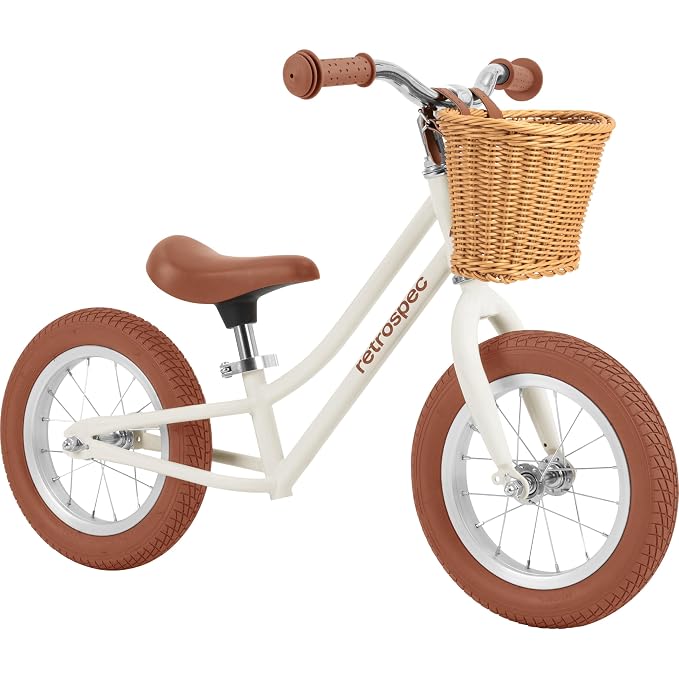
Retrospec Baby Beaumont Kids' Balance Bike
Retrospec Baby Beaumont Kids' Balance Bike suits families who want a first two-wheel bike with air tires and a charming basket/bell setup. It is best for outdoor toddler practice where comfort matters, but the extra style should not outrank saddle fit.
Pros
- Air-filled 12-inch tires are better for bumpy sidewalks than foam tires.
Cons
- Heavier, styled build is less carry-friendly than simpler lightweight starters.
- Rank #13 Our score: 9.72 / 10
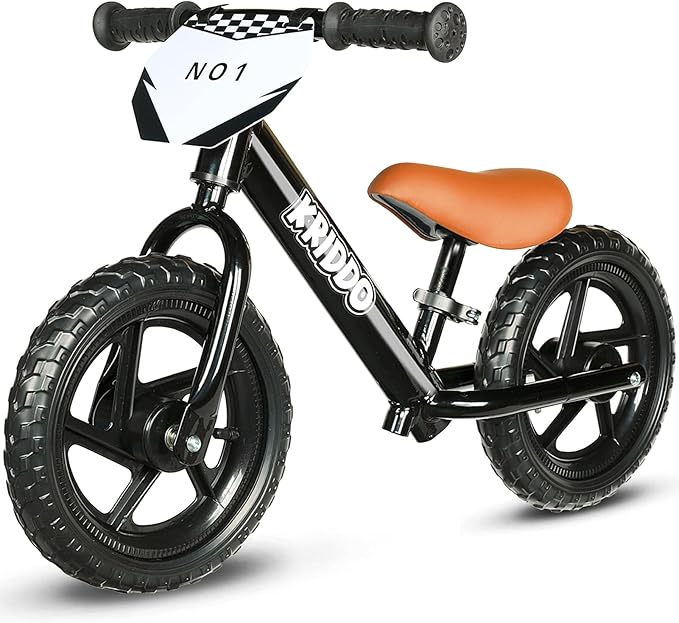
KRIDDO Kids Balance Bike
KRIDDO Kids Balance Bike is a conventional two-wheel learner for toddlers and preschoolers ready to practise gliding rather than use a four-wheel ride-on. Adjustable saddle and handlebar positions add growth room, while the puncture-resistant tyres reduce upkeep; check the lowest saddle against the child’s inseam before relying on the broad 2–5 year range.
Pros
- Adjustable saddle and handlebar positions give a better growth path for two-wheel balance practice.
Cons
- It is less forgiving than a four-wheel first bike for a very cautious or newly mobile toddler.
- Rank #14 Our score: 9.71 / 10
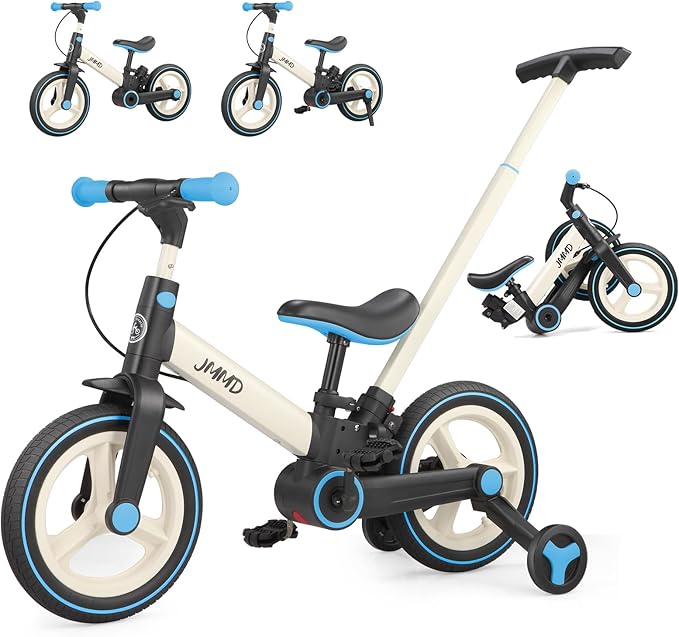
JMMD 6-in-1 Balance Bike
The JMMD S900 combines a parent push handle, removable stabilisers and pedals with a foldable frame and 12-inch wheels. Choose it if you want to change setups as your child learns; folding itself counts as one of the six modes. The maker specifies 18 months–5 years and a 25 kg limit, but independent balance riding still requires both feet flat on the ground.
Pros
- The pedals store on the frame when removed, keeping them with the bike during balance practice.
Cons
- Switching setups requires fresh checks of the folding lock, fitted parts and rear brake; the age range does not mean every mode suits an 18-month-old.
- Rank #15 Our score: 9.64 / 10
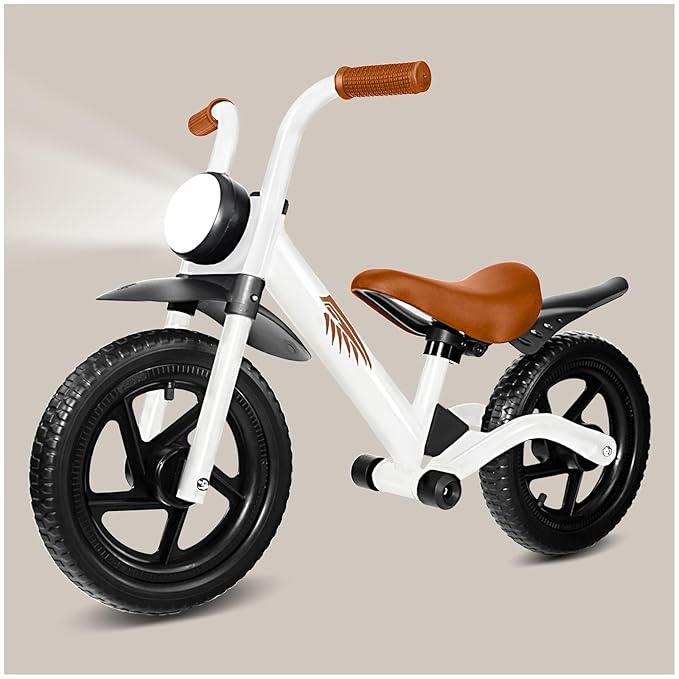
KRIDDO Kids Balance Bike with Front Light
KRIDDO’s two-wheel bike lists a built-in front light, fenders and a shock-absorption structure. The India listing calls its tyres upgraded but does not identify their material or construction. Neither it nor the manufacturer page gives a numeric seat-height range.
Pros
- The listing identifies a front light, fenders and a shock-absorption structure.
Cons
- Neither the current India listing nor the manufacturer page gives a numeric seat-height range or identifies tyre material.
- Rank #16 Our score: 9.62 / 10
Kidpop Big BEE Balance Bike
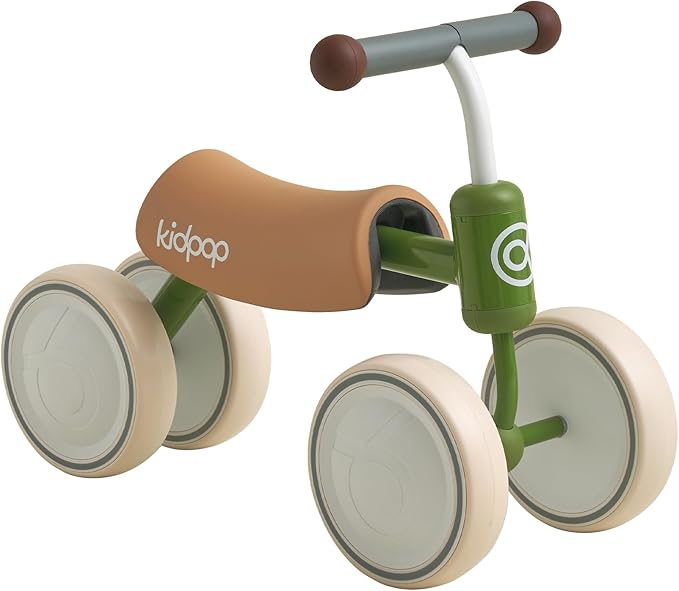
Big Bee has four wide wheels and a 25.5 cm-high saddle for supported foot-powered play. That seat height is a useful starting point for checking whether both feet reach the floor; an age label is not enough. Kidpop lists a 17 kg limit. Its supported layout is for early scooting, with less leaning practice than a two-wheel balance bike.
Pros
- Wide paired wheels support a child’s first foot-powered scooting.
Cons
- The supported four-wheel layout offers less two-wheel leaning practice.
- Rank #17 Our score: 9.55 / 10
Welspo 3-Wheel Toddler Balance Bike
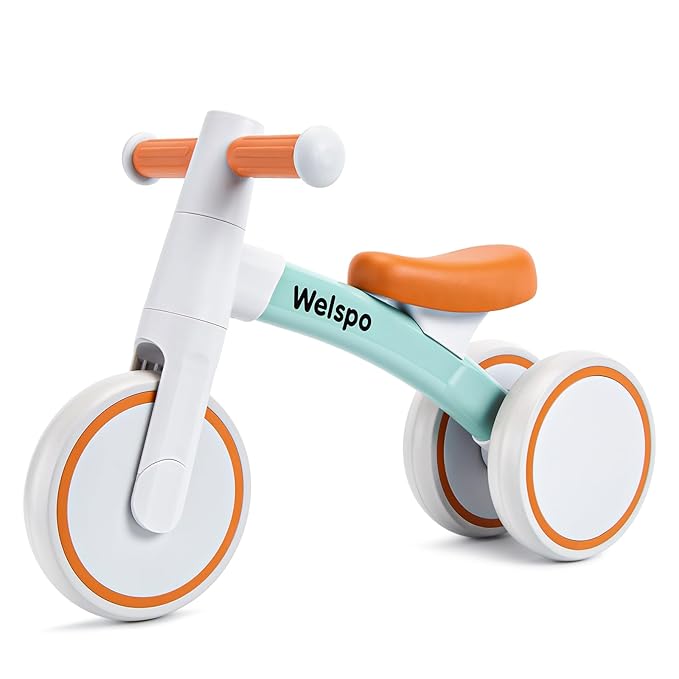
Welspo 3-Wheel Toddler Balance Bike is a stable three-wheel starter for 12-36 month toddlers, with a low 0.8 ft seat height, 20 kg load limit, and TPU cushion tyres.
Pros
- Three-wheel layout, 0.8 ft seat height, and 12-36 month fit give very early riders a steadier first scooting step.
Cons
- Does less to teach real two-wheel balance than a classic balance bike.
- Rank #18 Our score: 9.51 / 10
Ridego 14 Inch Balance Bike
Best: Older child fit
Larger 35.6 cm balance-bike fit; check minimum seat height before choosing it for a small toddler.
Ridego 14 Inch Balance Bike is for a taller child or later starter who needs more room than a 30.5 cm toddler bike. The main risk is buying too large: confirm standover and minimum seat height before choosing it for a younger rider.
Pros
- 35.6 cm format gives taller or later-starting children more room than small 30.5 cm bikes.
Cons
- Too large for many early toddlers if the minimum saddle height is high.
- Rank #19 Our score: 9.45 / 10
Sunderlook Kids Balance Bike
Best: Affordable
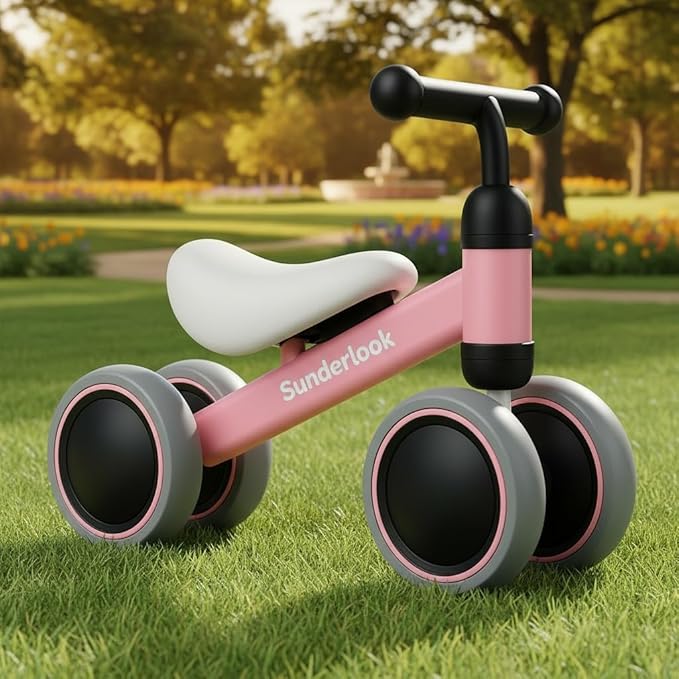
Sunderlook lists a 135° steering limiter, padded seat, anti-slip handlebar and rubber wheels described as quiet and soft. Its current listing title uses both “1+” and “2+” age cues and gives no numeric seat-height range, so it establishes neither a dependable age boundary nor measured child fit.
Pros
- The listing describes a 135° steering limiter, padded seat, anti-slip handlebar and quiet soft rubber wheels.
Cons
- The listing title includes both 1+ and 2+ age cues and gives no numeric seat-height range, so it establishes neither a dependable age boundary nor measured child fit.
- Rank #20 Our score: 9.43 / 10
Gocart 30.5 cm Kids Balance Cycle
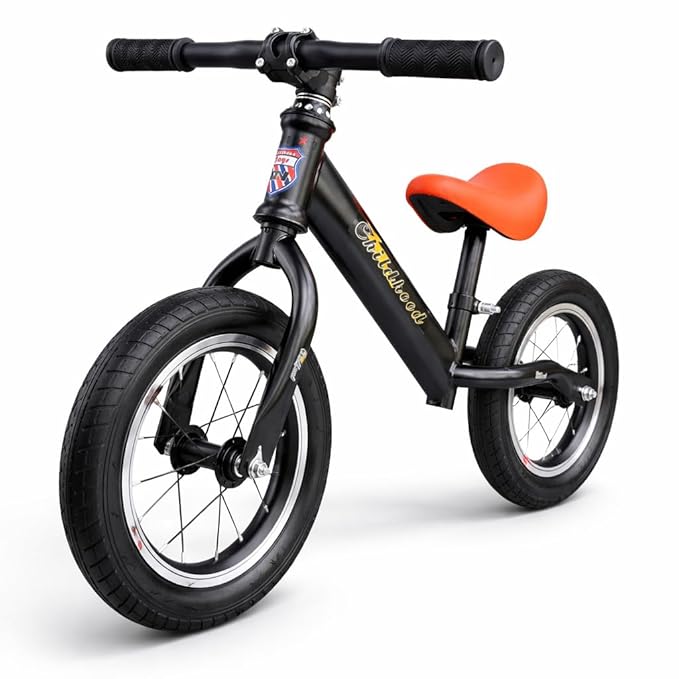
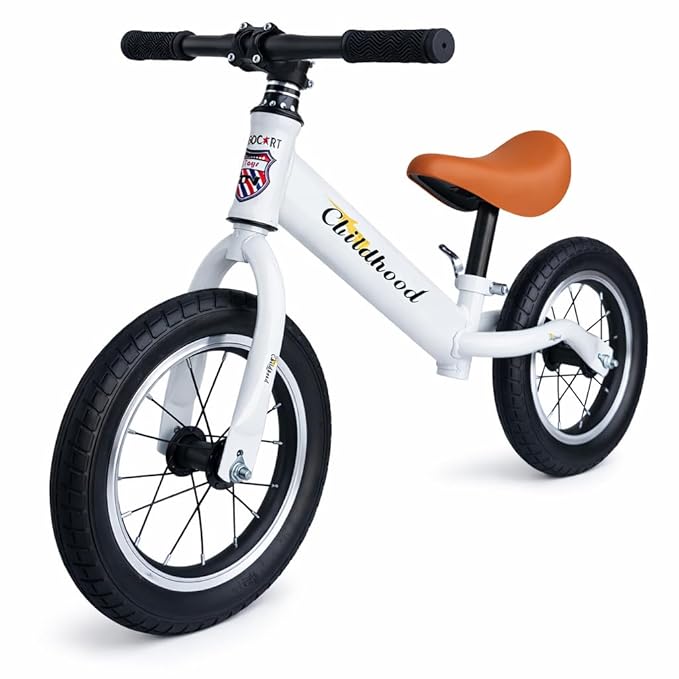
Gocart 30.5 cm Kids Balance Cycle is a two-wheel foam-tyre balance cycle for children who fit a larger 30.5 cm trainer.
Pros
- 30.5 cm two-wheel setup is a real balance-bike step beyond baby ride-ons.
Cons
- Foam tyres are less comfortable on broken pavement than air tyres.
- Rank #21 Our score: 9.38 / 10
Gocart Pedal-Free Balance Bike
The Gocart is a pedal-free step up from a mini ride-on, with a more bicycle-like stance and a heavier steel-style frame. Before choosing it, set the saddle low and check that your child can sit, place both feet down to push and stop, and control the bike while turning. If not, a smaller, lighter first ride-on may be easier to manage.
Pros
- The adjustable seat and two-wheel layout make it a closer bridge toward a regular pedal cycle.
Cons
- The heavier steel-style build may be less convenient for very small riders to pick up and reposition.
- Rank #22 Our score: 9.34 / 10
BIKEBOY 2-in-1 Balance Bike
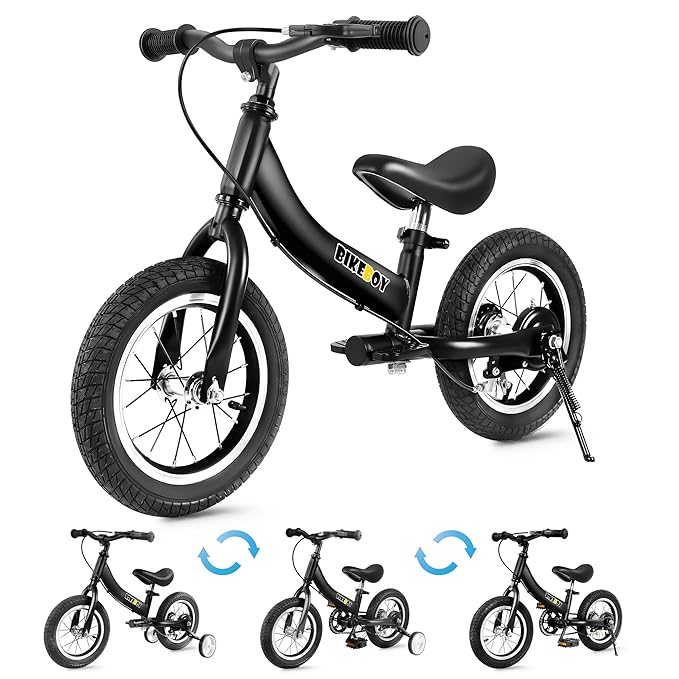
The selected BIKEBOY model 2023-001 listing is the black 35.6 cm version. Its pedals can be removed for balance-bike practice and fitted for pedal-bike use; it also lists a hand brake, carbon-steel frame, rubber tyres and 360° steering. No numeric saddle-height range is given.
Pros
- Hand-brake positioning adds a useful stopping step for older preschool riders.
Cons
- The brake only helps if the child can reach and squeeze it without wobbling.
- Rank #23 Our score: 9.33 / 10
Chicco Speedy Balance Bike
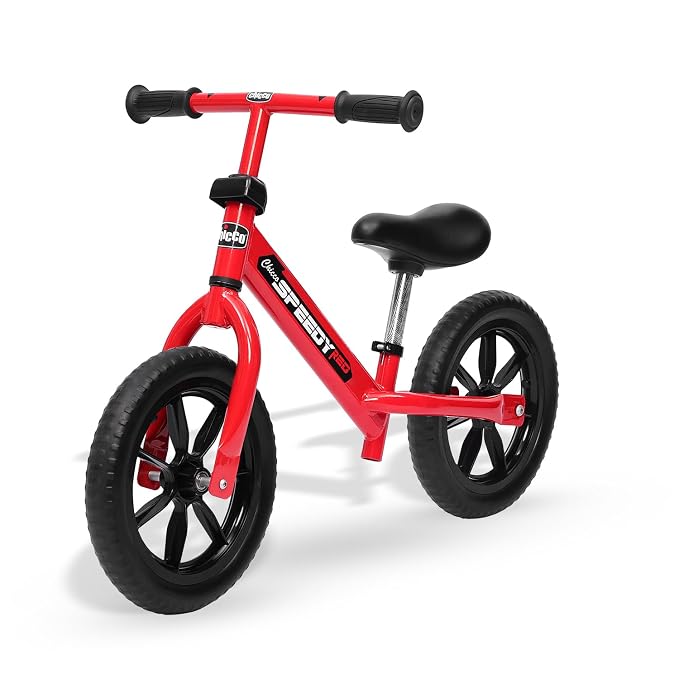
The Chicco Speedy is a pedal-free first balance bike for roughly 2-5 year olds: children push with their feet and learn two-wheel balance before moving to a pedal bike. Seat and handlebar heights both adjust as your child grows, the metal frame is tested to 50 kg, and puncture-proof EVA wheels need no inflation on indoor or outdoor surfaces. The Amazon listing describes it as BIS certified, and Chicco India sells the same model directly. The one gap: neither the listing nor Chicco's own page publishes a seat-height range, so check the saddle height against your child's inseam before buying.
Pros
- Adjustable seat and handlebar let the bike grow with your child through the 2-5 year band.
Cons
- No seat-height range is published on the Amazon listing or the Chicco India page, so confirm the saddle height against your child's inseam before buying.
- Rank #24 Our score: 9.33 / 10
Gocart Kids Balance Cycle
Gocart is a pedal-free two-wheel bike with solid tyres, an adjustable PU seat and an anti-slip handle. The listing gives about 85 cm overall length and 55-60 cm overall height, but not saddle height; its title says ages 1.5–3 while the description says 24 months and up.
Pros
- The listing specifies solid tyres, an adjustable PU seat, an anti-slip handle and a pedal-free two-wheel layout.
Cons
- The stated 55-60 cm is overall bike height, not saddle height; no numeric child-to-seat fit can be derived. The title and description also give different age thresholds.
- Rank #25 Our score: 9.33 / 10
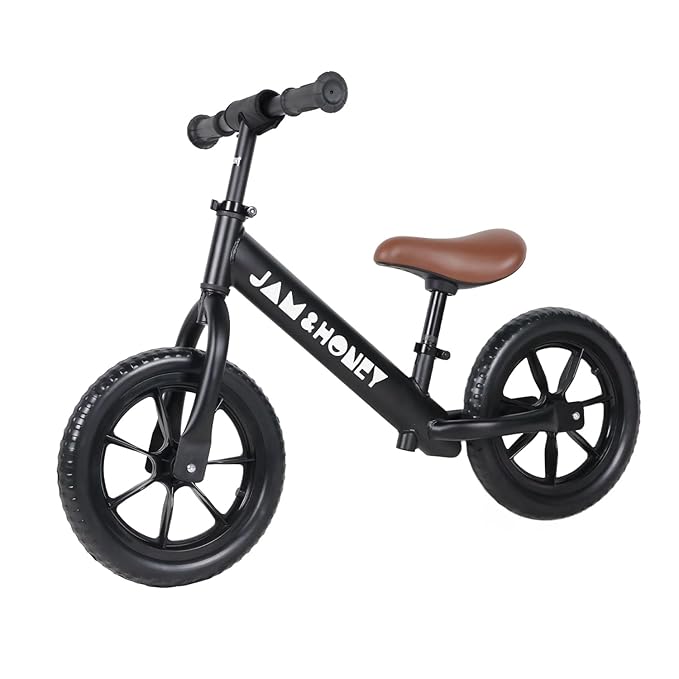
Jam & Honey 12T Balance Bike
Jam & Honey 12T has 12-inch wheels, no pedals, an adjustable seat and handlebar, and EVA foam tyres described as puncture-proof. The listing gives a 25 kg maximum load but no numeric seat-height range or brake specification.
Pros
- The seat and handlebar adjust; the listing describes its EVA foam tyres as puncture-proof.
Cons
- The captured listing gives no numeric seat-height range or brake specification.
- Rank #26 Our score: 9.33 / 10
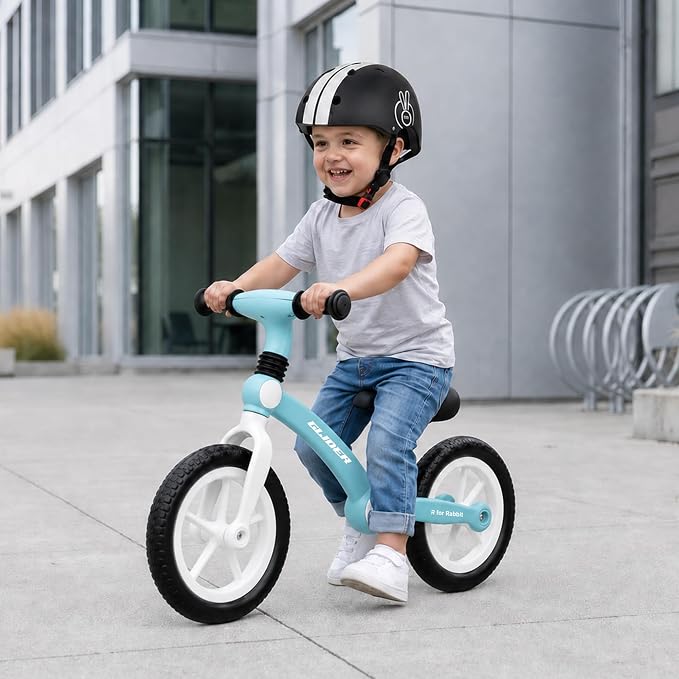
R for Rabbit Glider Balance Bike
Indian brand
The R for Rabbit Glider is a pedal-free balance bike for roughly ages 2–5, with an adjustable cushioned seat, EVA wheels and a listed 25 kg rider limit. It arrives 95% assembled, so check the final setup before riding. Its foam wheels suit smooth paths better than rough ground.
Pros
- Ships 95% pre-assembled, so setup takes minutes rather than an evening.
Cons
- BIS certification is the manufacturer's claim on the listing, not an independently verified credential.
- Rank #27 Our score: 9.33 / 10
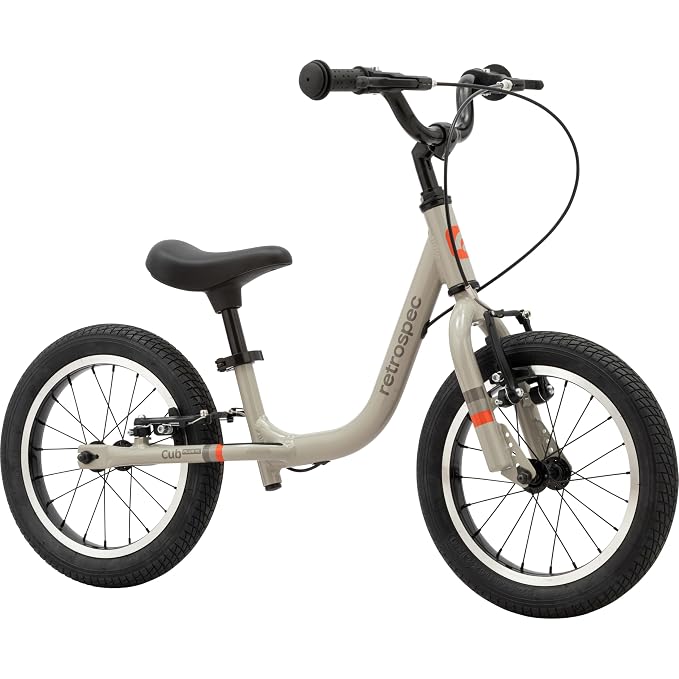
Retrospec Cub Plus XL Kids Balance Bike
Larger 14-inch balance bike with brakes; check minimum saddle height and lever reach before choosing it for a younger child.
Retrospec Cub Plus XL Kids Balance Bike is a 35.6 cm option for taller or later-starting children who need more room than a toddler bike. Air tires and hand brakes add capability, but only if standover and lever reach fit now.
Pros
- 14-inch wheels and XL frame give taller children more room than small 30.5 cm bikes.
Cons
- Too much bike for many early toddlers if the saddle or brake levers start high.