Best Balance Bikes in Japan 2026
The best balance bikes for families who want to help a child practise balance, steering, and independent riding before a pedal bike becomes the right next step.
Why are scores between 9 and 10?
This is a curated shortlist of strong picks, not a full best-to-worst ranking. Small score gaps usually mean we have slightly more evidence for one model than another, not that the lower-scoring option is a poor choice.
So this is just another affiliate roundup with an arbitrary order?
No. We make these lists good enough that we use them ourselves and recommend them to friends and family. We turn the kind of research careful parents would normally do by hand into a repeatable process. Then we compare the evidence across the markets we cover and rank products with a model that gives more weight to stronger signals instead of simple averages or a fully hand-picked order based purely on editorial preference.
Affiliate Disclosure
We use affiliate links and ads to finance this website. As an Amazon Associate I earn from qualifying purchases.
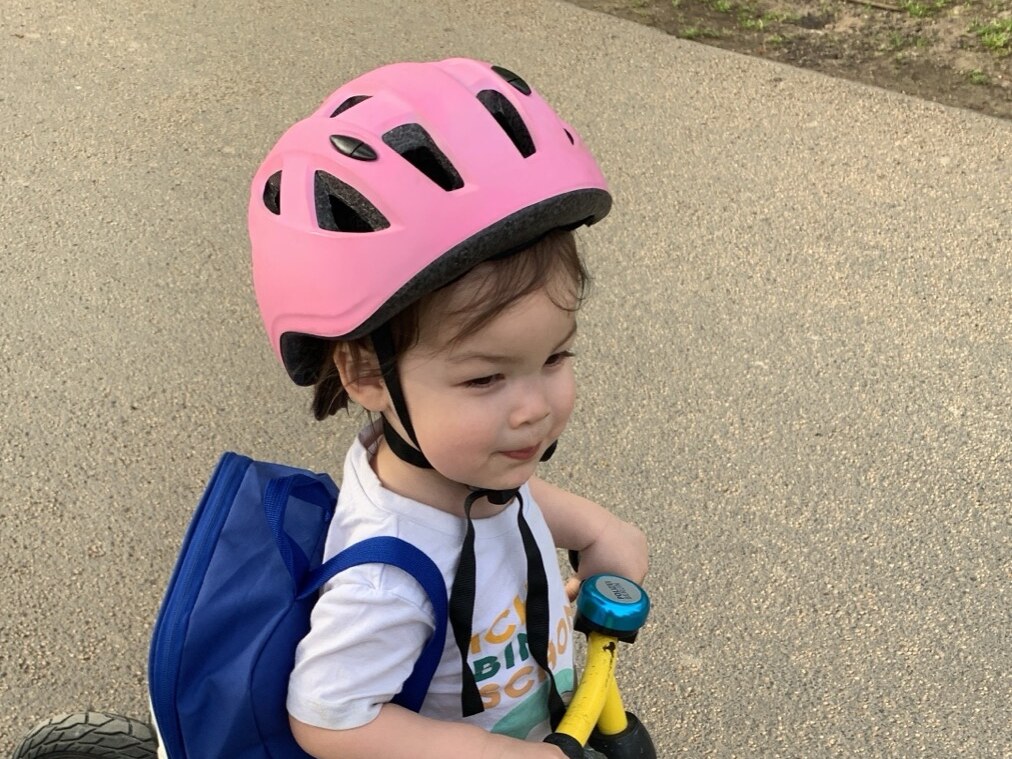
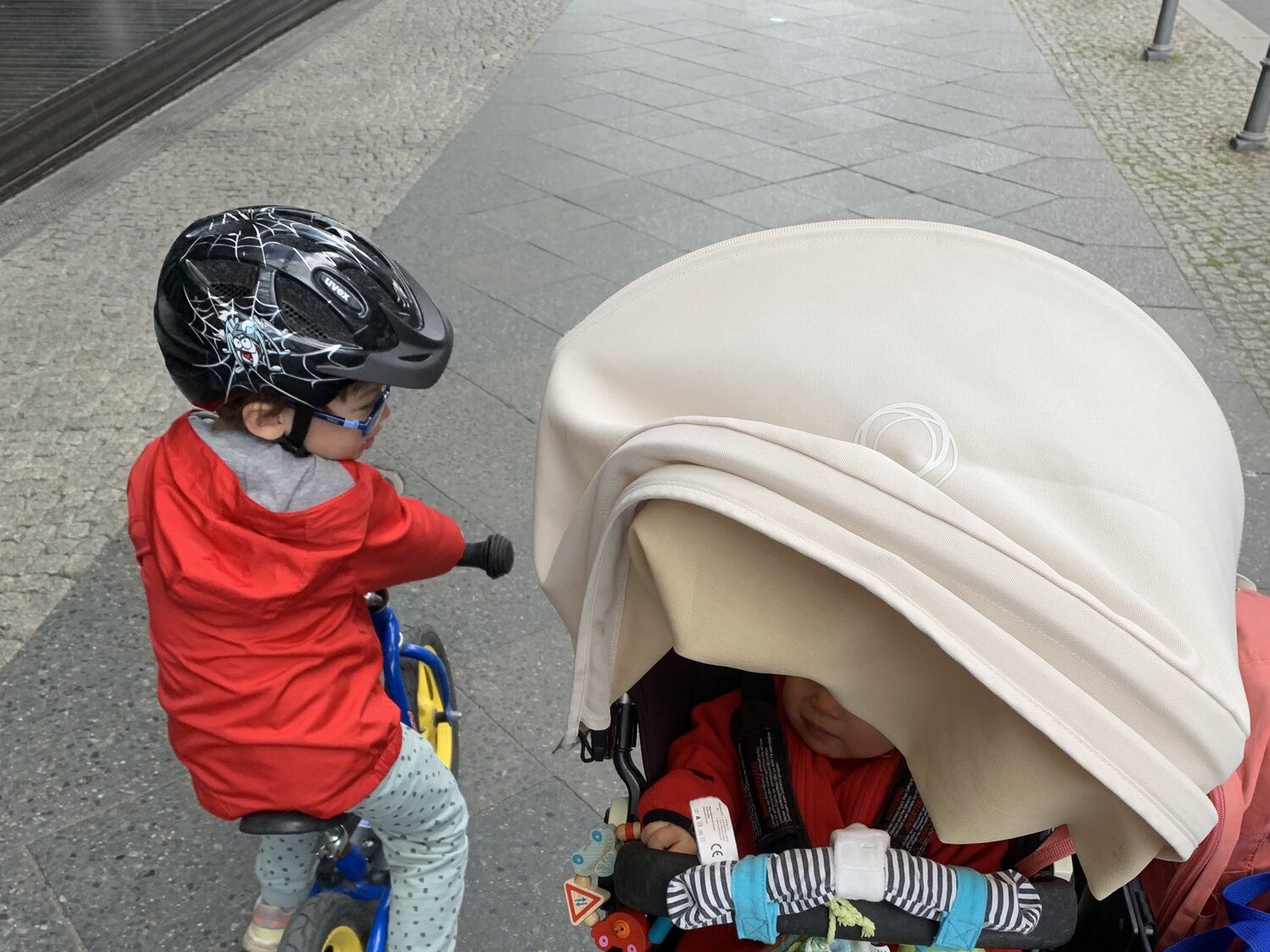
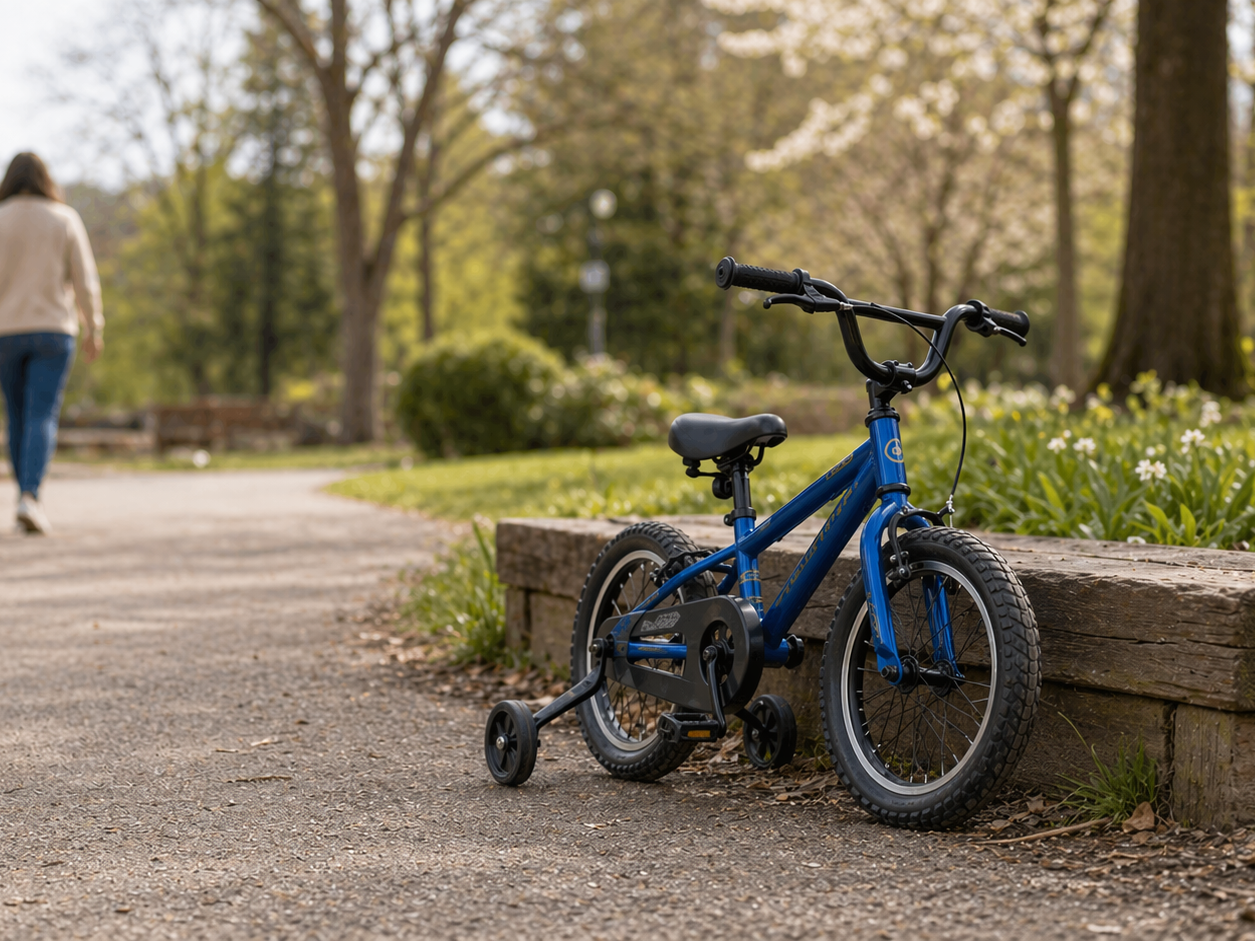
- Rank #1 Our score: 9.86 / 10
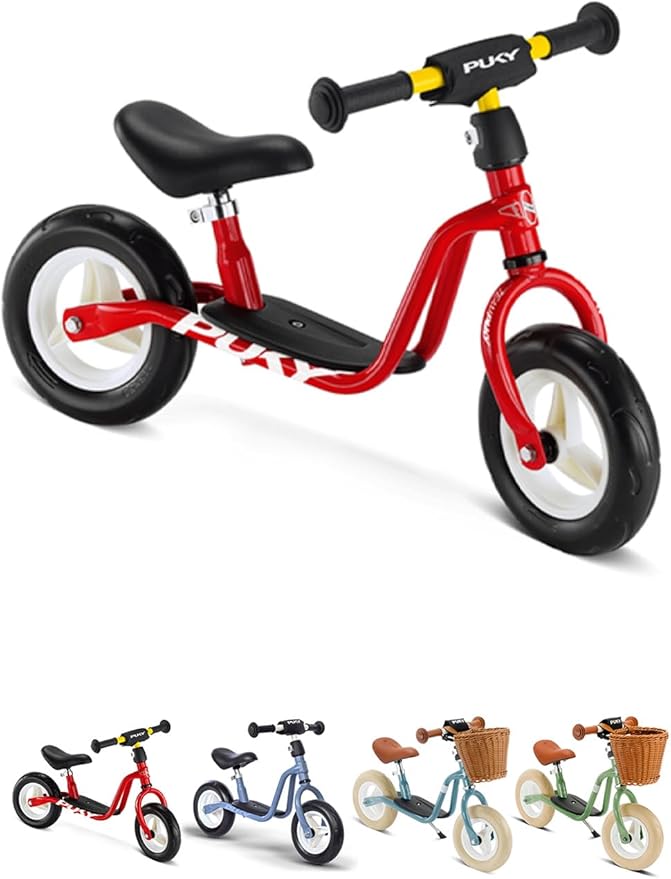
PUKY LR M Classic Balance Bike
Best: Premium
PUKY LR M Classic is a small two-wheel balance bike for roughly 85-110 cm height and 30-43 cm inseam. It weighs 3.5 kg and uses 8.8-inch EVA wheels; it fits an early stage, but a taller preschooler may quickly exhaust its room.
Pros
- The low frame, 30-43 cm inseam range and pressure-free EVA wheels simplify an early two-wheel stage.
Cons
- The small foam wheels cushion less than air tyres and leave less runway for a taller or faster child.
- Rank #2 Our score: 9.80 / 10
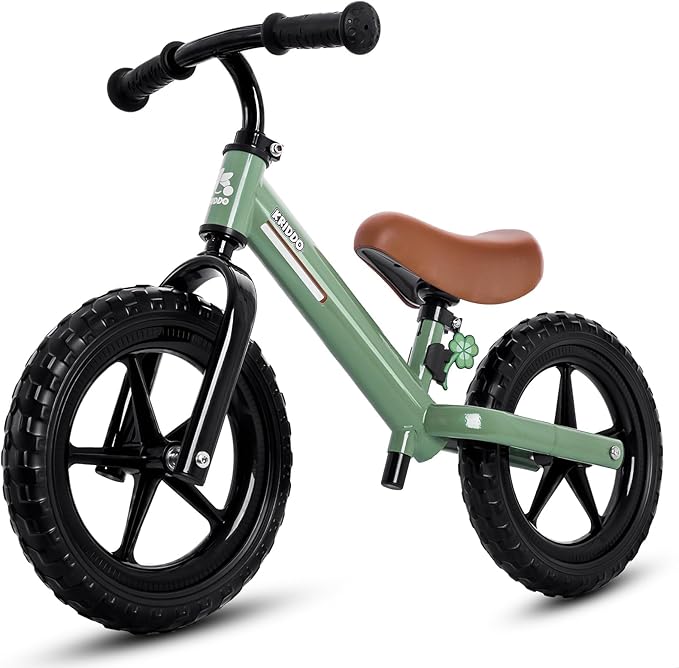
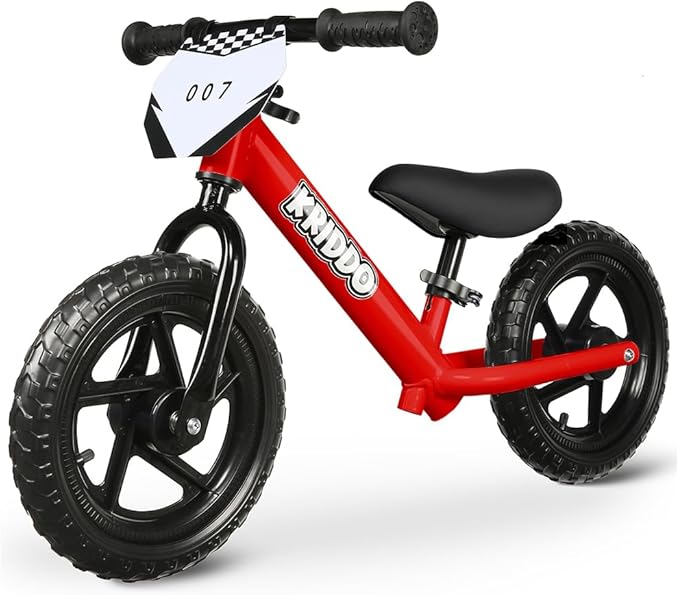
KRIDDO Dual Bearing Balance Bike
Best: Affordable
KRIDDO Dual Bearing Balance Bike is a preschool-focused two-wheel balance bike. Foam tires keep maintenance simple, while the main buying check is whether the saddle range matches your child now.
Pros
- Light 2.6 kg frame should be manageable for many preschoolers.
Cons
- Official specs are less clear about saddle-height range than ideal.
- Rank #3 Our score: 9.80 / 10
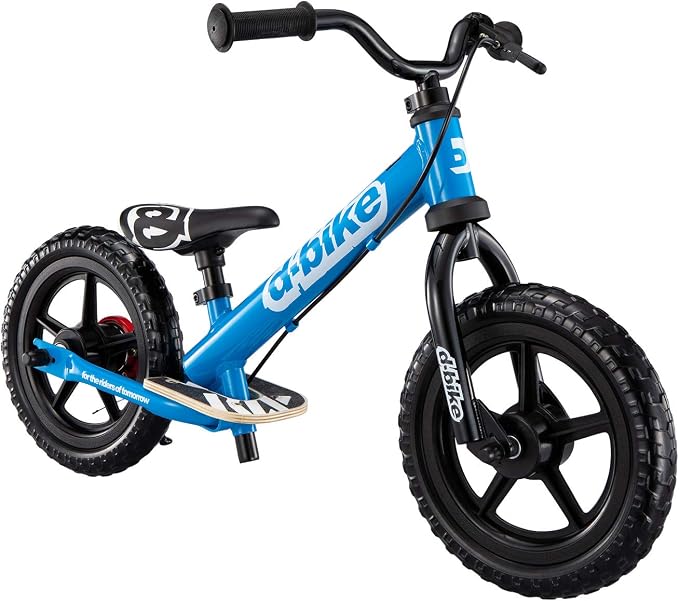
IDES D-Bike KIX AL
Best: Mid-range
A 3.6 kg aluminium balance bike for children from about age 2 and 85 cm tall who are ready to practise braking as well as gliding. The child-oriented EZB brake and foot deck support the transition toward pedals; the 30 cm minimum saddle height makes a careful foot-flat fit check essential for smaller riders.
Pros
- The 3.6 kg aluminium build is easy to manoeuvre and less tiring for a parent to carry.
Cons
- The 30 cm minimum saddle height may be too tall for some younger two-year-olds despite the age guidance.
- Rank #4 Our score: 9.77 / 10
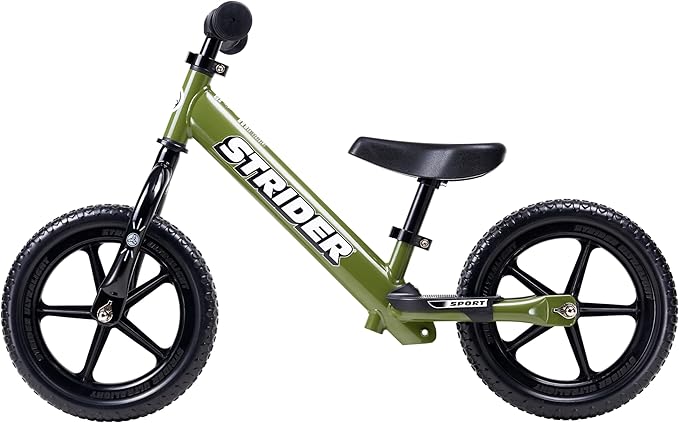
Strider Sport 12
Strider Sport 12 is the safest shortlist anchor if you want the benchmark simple balance bike rather than a convertible toy. It is light, proven, and focused on balance practice, but it does not add pedals later, so the next step is a separate pedal bike.
Pros
- It is the benchmark simple two-wheel balance bike when low weight and a low saddle range matter most.
Cons
- It is not the right fit if you want a brake or later pedal conversion, and the next stage will require a separate bicycle.
- Rank #5 Our score: 9.74 / 10
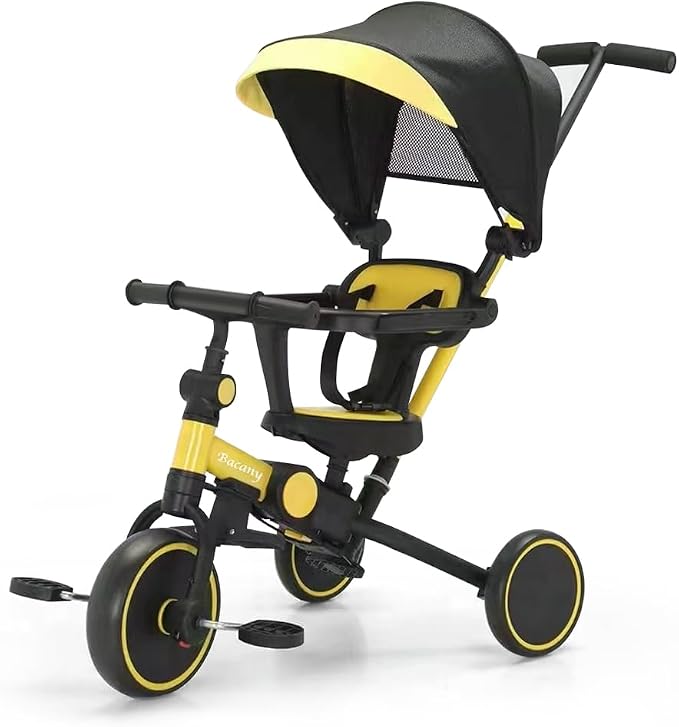
Bacany 7-in-1 Convertible Trike
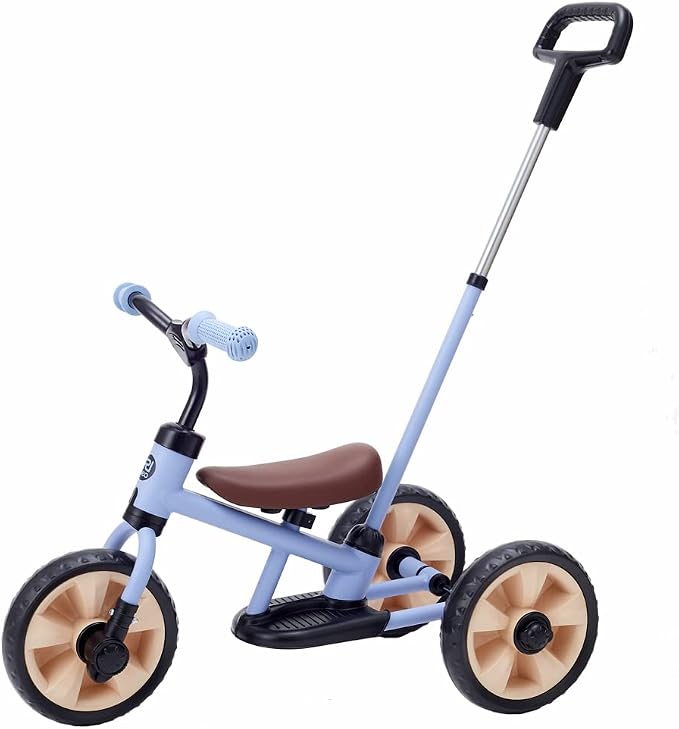
Bacany's 7-in-1 starts as a parent-steered trike with a belt and backrest, then converts through a foot-powered balance stage to pedals, with a 25 cm-range push bar that adjusts to 85, 89 or 93 cm so both parents can steer. At 6.3 kg it is a garage convertible rather than a carry-along, and the description documents its modes loosely, so treat each conversion as a small project. Unused pedals stow under the saddle, which keeps the balance stage tidy.
Pros
- Push bar adjusts to 85, 89 or 93 cm, so taller and shorter parents can both steer.
Cons
- At about 6.3 kg this is a convertible to keep at home or in the car, not a bike to carry to the park.
- Rank #6 Our score: 9.71 / 10
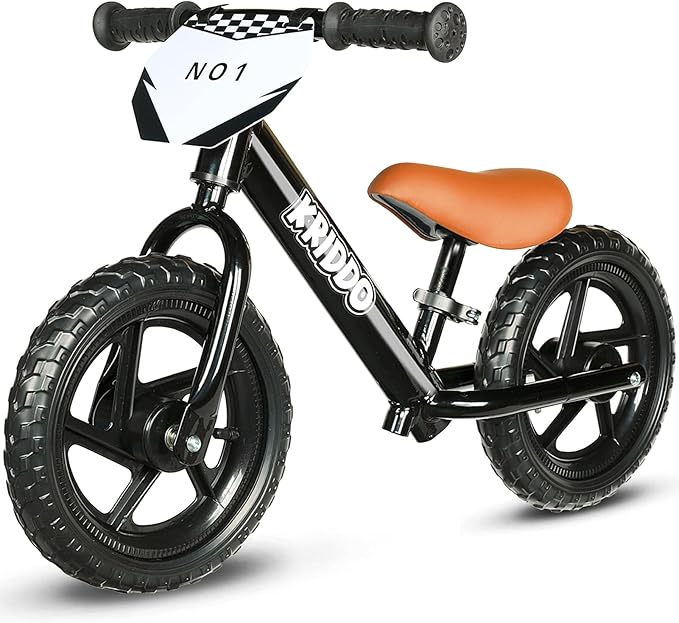
KRIDDO Toddler Balance Bike
The regular KRIDDO Classic combines a personalised front plate with a 30.5 cm two-wheel frame and adjustable saddle and handlebar. Check seated foot reach before choosing it for pushing and gliding practice. It has no footrest and the rider stops with their feet.
Pros
- Saddle and handlebar adjustment help find a comfortable position for foot-powered practice.
Cons
- There is no footrest or hand brake; check ground contact and stopping control rather than relying on the two-to-five-year label.
- Rank #7 Our score: 9.69 / 10
KRIDDO 12-Inch Balance Bike
KRIDDO 12-Inch Balance Bike is a standard two-wheel balance bike for pedal-free practice from around age 2. It suits families focused on foot-powered balance practice; before buying, compare saddle height with the child inseam.
Pros
- 30.5 cm two-wheel format with adjustable handlebar and seat gives real pedal-free practice runway.
Cons
- The broad 24-month-to-5-year range still needs an inseam and saddle-height check.
- Rank #8 Our score: 9.60 / 10
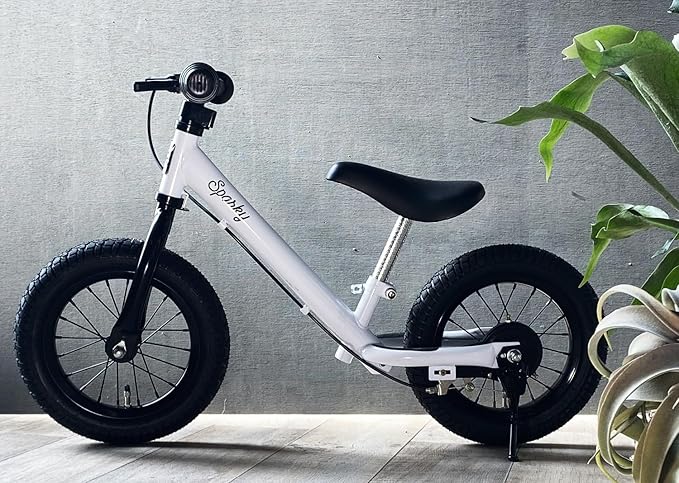
SPARKY First Rider
Japanese brand
SPARKY First Rider is the pick if you specifically want a hand brake, rubber tires, and a kickstand on a first balance bike. It is heavier and more bike-like than foam-tire basics, which helps practice but may be too much for a very small two-year-old.
Pros
- The rear brake, rubber tires, and stand make it feel closer to a small bicycle than a very light toy-like starter bike.
Cons
- The roughly 4.5 kg steel setup is heavier to carry and harder for a small child to handle than foam-tire basics.
- Rank #9 Our score: 9.60 / 10
Nonaka Henshin! Sun Rider NEO
Nonaka's Henshin! Sun Rider NEO starts at 18 months as a steering-limited push trike, becomes a plain trike, then converts into a real running bike for 2-5-year-olds — with the whole journey documented in official specs, from the 84/89/94 cm push bar to bearing-equipped EVA wheels and a coasting footstep. It is 5.5 kg, so the final stage lives in the genkan or car rather than being hauled. One-touch pedals keep the running-bike conversion quick.
Pros
- Official maker documentation covers every stage: heights, weights, ages and parts behaviour.
Cons
- 5.5 kg body weight makes the running-bike stage a keep-at-home option rather than a carry-along.
- Rank #10 Our score: 9.59 / 10
OSJ 4-in-1 Guard Trike
OSJ's 4-in-1 runs a parent-steered guard trike with a 3-point belt through to a two-wheel stage, and its neatest trick is pedal storage: the pedals clip under the saddle and become a footrest, so the balance stage is clean and nothing gets lost. The push bar detaches and adjusts in height as your child takes over. OSJ publishes no age or load figures, so sizing is confirmed on arrival.
Pros
- Pedals stow under the saddle as a footrest, keeping the balance stage tidy and parts accounted for.
Cons
- No age, height or load figures are published anywhere in the listing.
- Rank #11 Our score: 9.55 / 10
Rocking STRIDER 30.5 cm
Best: Stable first bike
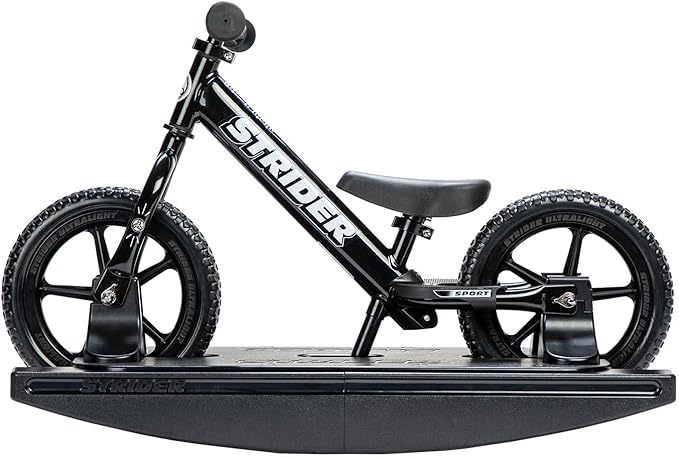
Rocking STRIDER adds a rocking base for families who want to start before a child is ready for normal push-off balance-bike practice. It targets an earlier stage than a standard balance bike, so check indoor storage and whether the longer-use setup makes sense.
Pros
- Rocking base creates an earlier indoor stage before normal balance-bike scooting.
Cons
- Extra base adds storage bulk and cost compared with a simple first balance bike.
- Rank #12 Our score: 9.44 / 10
PYKES PEAK Kids Balance Trike
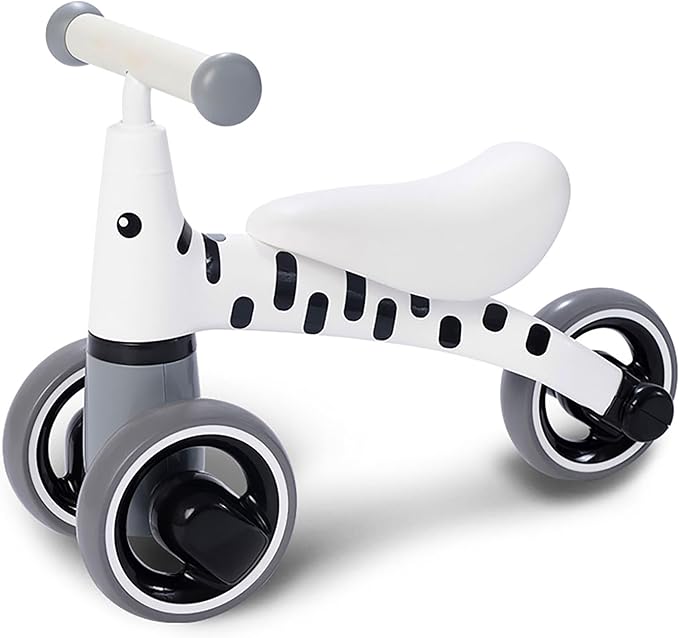
PYKES PEAK's balance trike is a first-riding stage: about 2 kg, EVA wheels that will not scratch flooring, and a handlebar that only turns 50 degrees, so early steering mistakes cannot tip a new rider. Children propel it by kicking while seated, building the leg-and-steer pattern that a balance bike proper assumes. It tops out at 20 kg and has no conversion path, so treat it as the year-or-two bridge before a real two-wheeler.
Pros
- 50-degree steering limit and 2 kg body make early riding hard to tip and easy to move around the house.
Cons
- No conversion path: once your child balances confidently, a balance bike is a separate purchase.
- Rank #13 Our score: 9.43 / 10
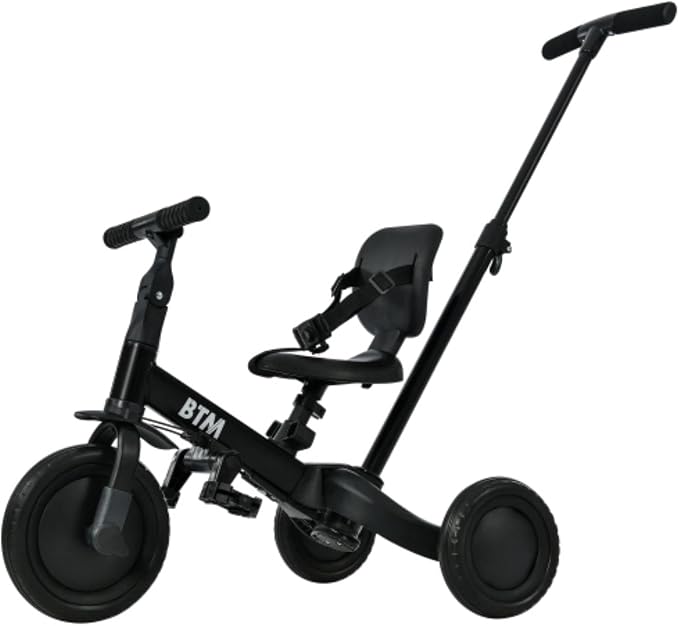
BTM 5-in-1 Convertible Trike
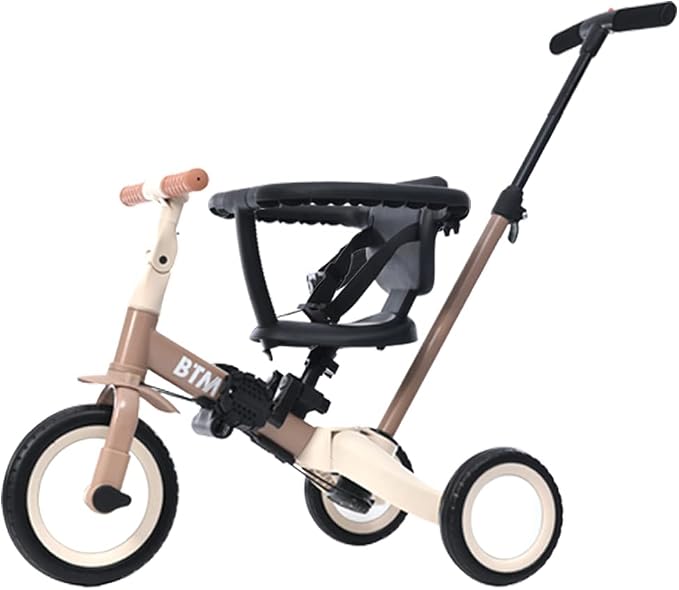
BTM's 5-in-1 keeps things simpler than its 7-mode sibling: a steering limiter, a parent control bar and fully covered wheels that close off the foot-entrapment gaps spoked trikes have. The five stages run from push trike through a pedal-free kick mode to two wheels, with 25 cm of saddle-and-bar adjustment. The listing's own spec text contradicts itself on tyres and frame material, so weigh it on features and check the hardware on arrival.
Pros
- Fully covered wheels close the foot-entrapment gaps that spoked trike wheels have.
Cons
- The listing's tyre and frame-material claims contradict each other, so exact hardware is confirmed only on arrival.
- Rank #14 Our score: 9.42 / 10
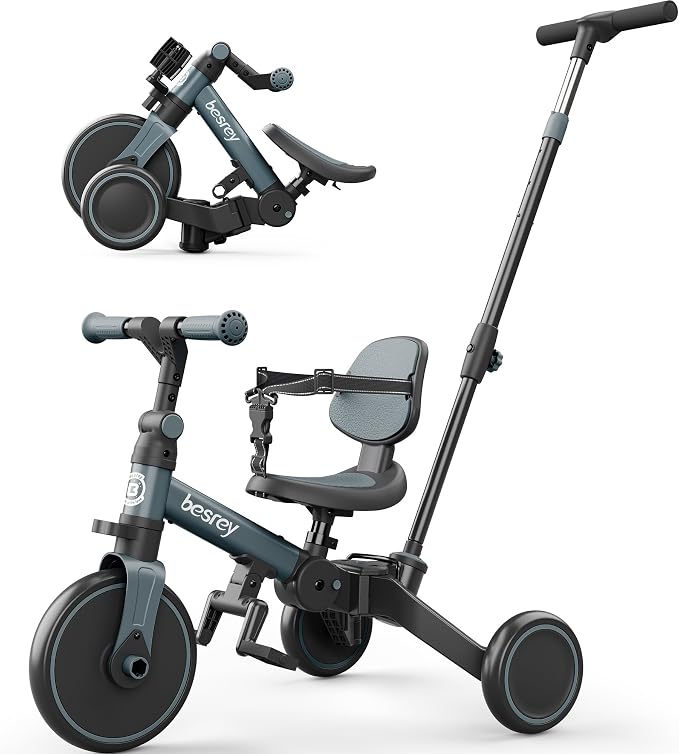
Besrey 5-in-1 Convertible Ride-On
Besrey’s 5-in-1 ride-on converts among tricycle, push-bike and pedal-free balance-bike setups. The balance-bike mode needs its own assembly, so check that configuration and make sure your child can sit securely, steer and place both feet on the ground before riding.
Pros
- The pedal-free balance-bike setup gives this convertible ride-on a distinct riding mode.
Cons
- Switching to balance-bike mode requires reassembly. Check the setup and make sure your child can sit securely, steer and reach the ground before independent riding.
- Rank #15 Our score: 9.41 / 10
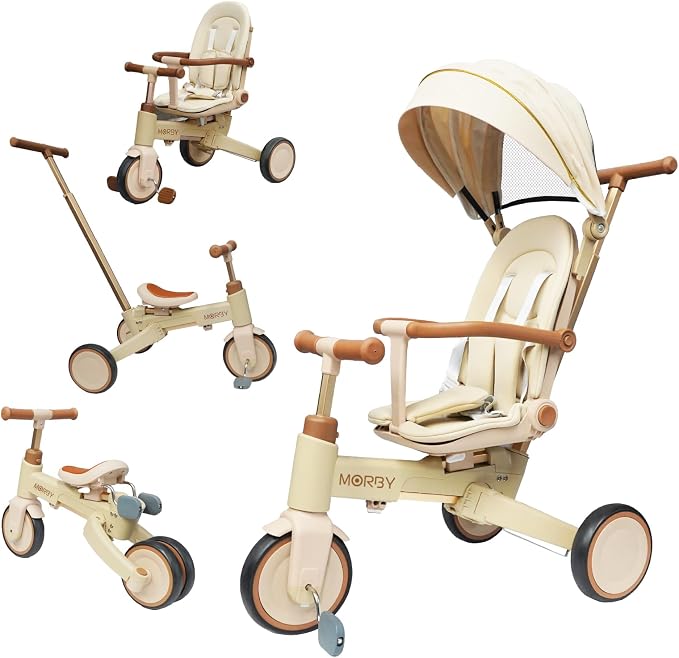
Colulu MORBY 10-Way Convertible Balance Bike
Colulu MORBY changes among ten configurations, including a child-powered kick-bike mode and a hand-pushed kick-bike mode. Colulu gives separate age guides for those setups: 2–5 years for the child-powered mode and 1.5–3 years for the hand-pushed mode. At about 7.2 kg, carrying it between rides is worth considering; check the intended configuration and conversion steps before use.
Pros
- Ten configurations include both child-powered and hand-pushed kick-bike setups.
Cons
- At about 7.2 kg, carrying it between rides may take planning; the different setups also require conversion checks.
- Rank #16 Our score: 9.35 / 10
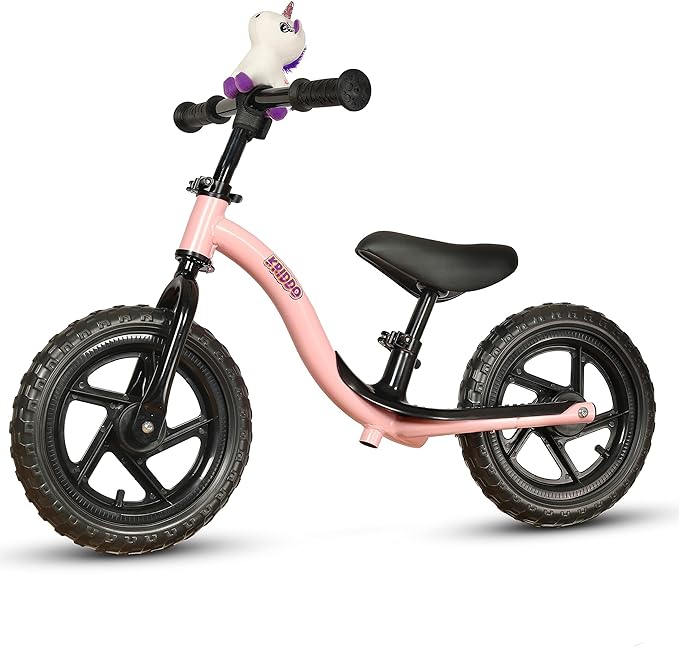
KRIDDO Riding Buddy
The pink Riding Buddy pairs a handlebar unicorn with a low frame and footrest for first pushing and gliding practice. Its saddle adjusts from about 30-43 cm; the KB001 manual specifies ages 2–5. There is no handbrake, and tyre construction remains unclear, so choose it for supervised, level-ground practice with both feet firmly on the ground.
Pros
- The low curved frame and roughly 30-43 cm saddle adjustment help a small rider get on and find a feet-flat position.
Cons
- Without a handbrake, stopping depends on the child's feet; slopes are outside the manual's intended use.
- Rank #17 Our score: 9.33 / 10
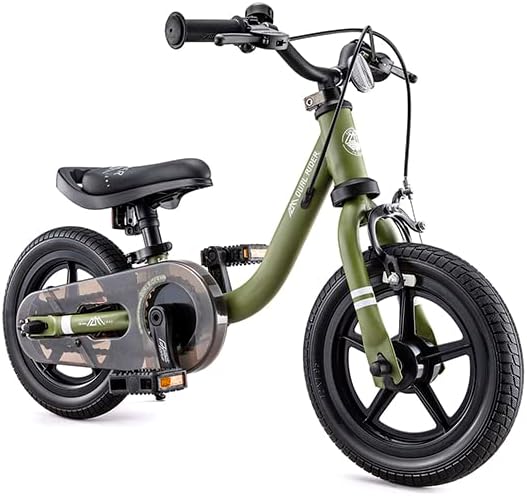
Ides DUAL RIDER by D-Bike
The Ides DUAL RIDER by D-Bike is a 30.5 cm bike that starts as a balance bike and becomes a pedal bike through a one-push switch — no tools, no trip to a shop. Ides sizes it for about 2.5 years and 85-110 cm, up to 20 kg, and the easy-pull brake lets stopping practice start before pedals do. The tradeoff: at 6.8 kg it is heavier than most balance bikes, and the first build happens at home.
Pros
- One-push switch converts between balance and pedal mode in seconds without tools.
Cons
- At 6.8 kg it is one of the heavier 30.5 cm bikes, which matters when a child carries or rights it.
- Rank #18 Our score: 9.33 / 10
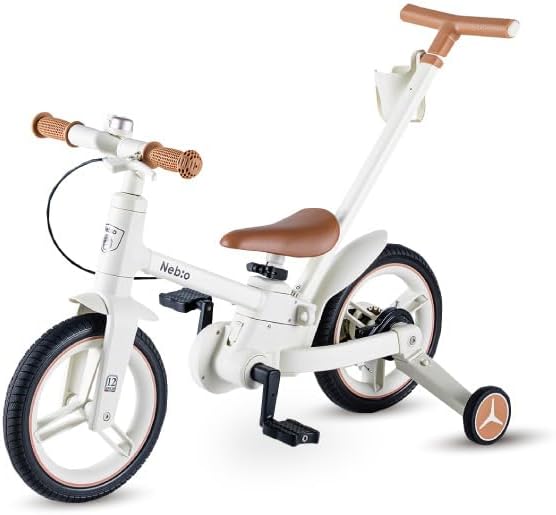
Nebio 5Way Kids Bike
Japanese brand
Nebio 5Way Kids Bike is more of a transformable toddler bike than a pure balance bike. It earns a place for families who want steering support and staged use, while families focused only on balance skills may prefer a simpler two-wheel model.
Pros
- The 5-way format suits families who want staged use, including supported early riding before a plain two-wheel setup.
Cons
- As a multi-mode bike, it can feel more complicated than necessary if the only goal is two-wheel balance practice.
- Rank #19 Our score: 9.33 / 10
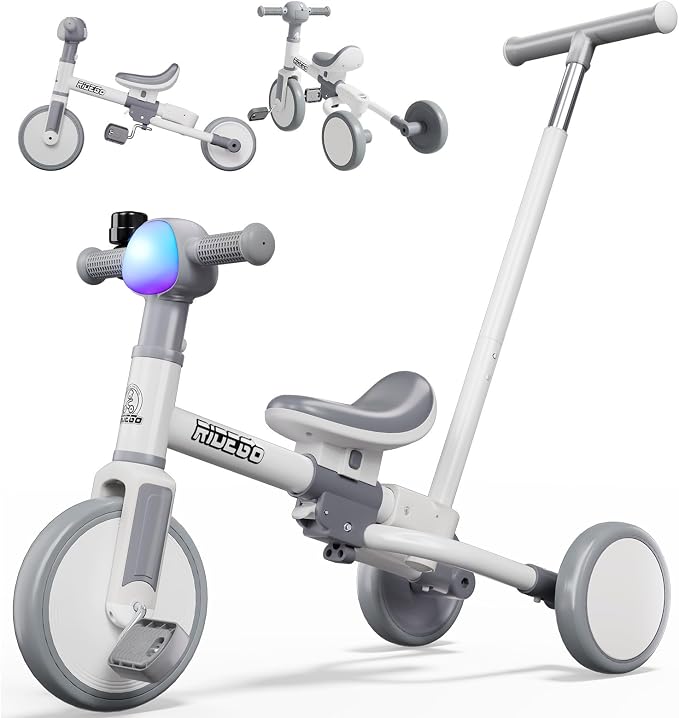
Ridego 5-in-1 Kids Trike
Ridego’s 5-in-1 trike leans into the fun side of a convertible: colour-changing LED lights, four built-in sounds and a detachable bell add play value, while the push bar lets an adult steer. The seat adjusts fore and aft, and the low body is designed for stability. The listing gives no age, height or load limits for the supplied riding configurations. Check the instructions to confirm which configurations are supported and whether your child can sit securely and reach the ground before relying on it for balance practice.
Pros
- LED lights and four sounds give hesitant toddlers a reason to mount and keep riding.
Cons
- No ages, heights or load limits are published anywhere, so fit is verified only on arrival.
- Rank #20 Our score: 9.33 / 10
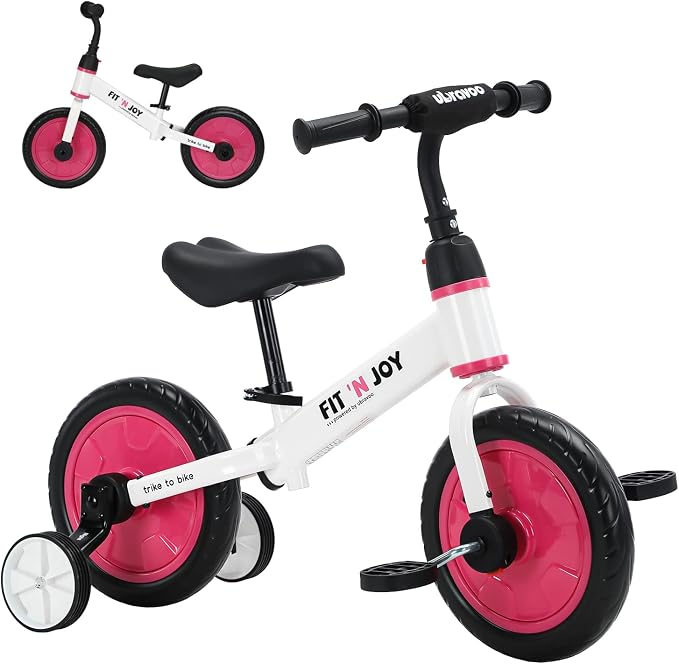
UBRAVOO Fit 'n Joy 4-in-1 Kids Bike
The UBRAVOO Fit 'n Joy moves through four setups — pedal-free with stabilisers, pedal-free sliding, pedalling with stabilisers, then a pedal bike — so gliding and pedalling practice stay on one 3 kg frame. The saddle adjusts one-touch for children around 80-115 cm. The listing documents the steps thinly, so confirm the fit range and parts in the box before buying.
Pros
- Four stages from gliding to pedalling stay on one 3 kg frame.
Cons
- The first stage pairs pedal-free riding with stabilisers, so real balance practice starts only in step two.