Best Double Strollers in Japan 2026
The best double strollers for families who need room for two children without buying a model that feels bigger, heavier, or more compromise-heavy than necessary. We focus on real sibling use, flexibility, storage, and day-to-day practicality.
Why are scores between 9 and 10?
This is a curated shortlist of strong picks, not a full best-to-worst ranking. Small score gaps usually mean we have slightly more evidence for one model than another, not that the lower-scoring option is a poor choice.
So this is just another affiliate roundup with an arbitrary order?
No. We make these lists good enough that we use them ourselves and recommend them to friends and family. We turn the kind of research careful parents would normally do by hand into a repeatable process. Then we compare the evidence across the markets we cover and rank products with a model that gives more weight to stronger signals instead of simple averages or a fully hand-picked order based purely on editorial preference.
Affiliate Disclosure
We use affiliate links and ads to finance this website. As an Amazon Associate I earn from qualifying purchases.
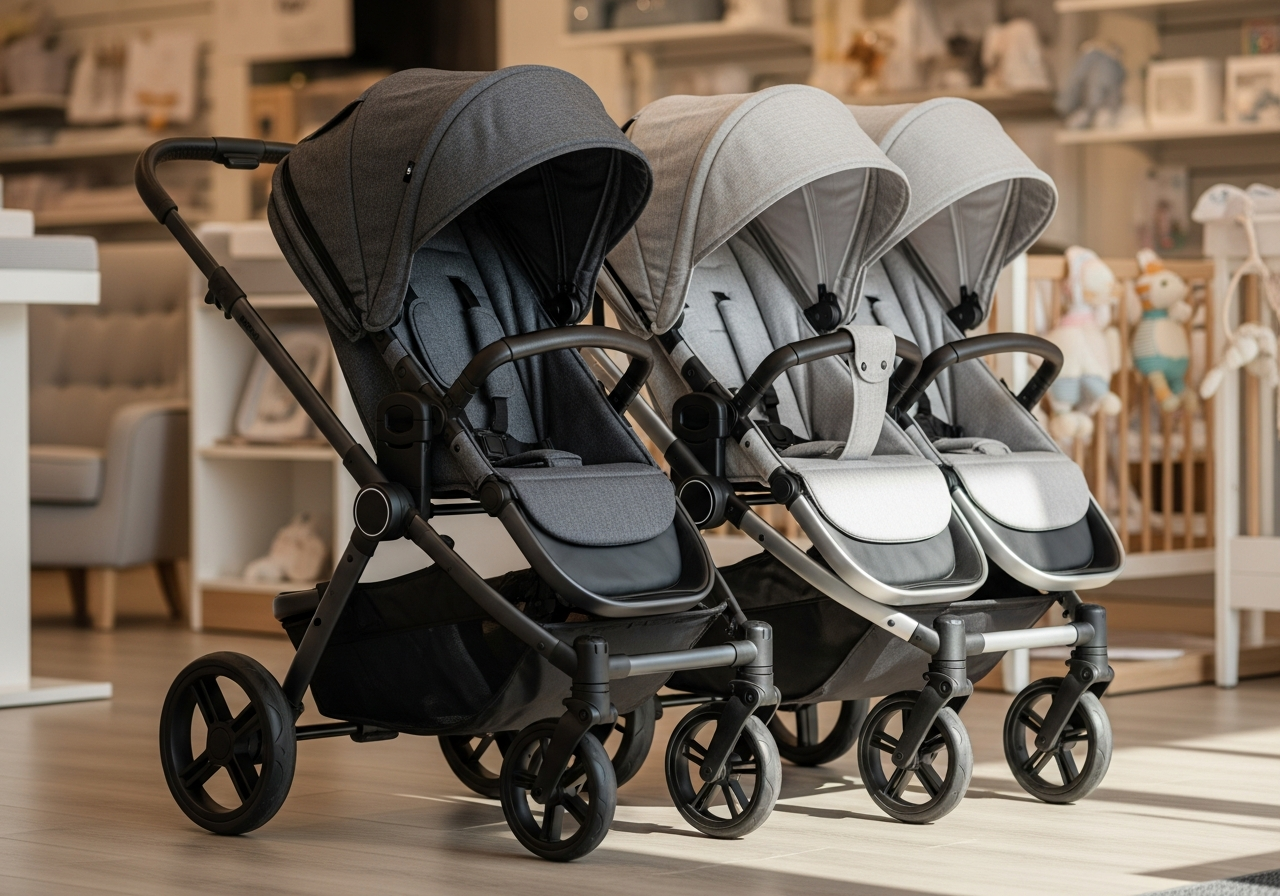
- Rank #1 Our score: 9.81 / 10
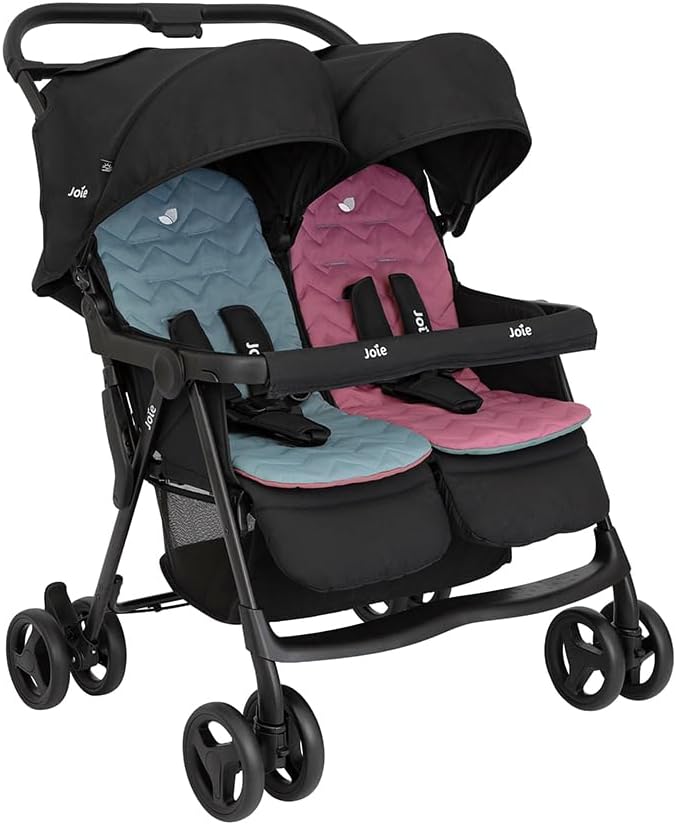
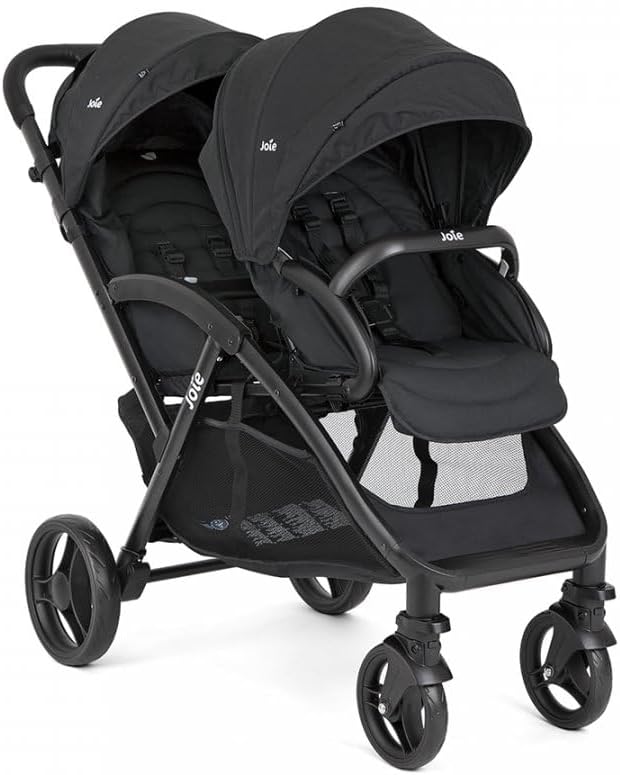
Joie AirTwin
Best: Mid-range
Joie AirTwin is a side-by-side double for twins or close-in-age children who both need real seats. The independent seat setup is useful, but families should measure doorways, lifts, hallway storage, and car-boot width before choosing it.
Pros
- Side-by-side seats treat two close-age riders more evenly than many tandems.
Cons
- Width remains the main check in lifts, narrow shops, and small cars.
- Rank #2 Our score: 9.72 / 10
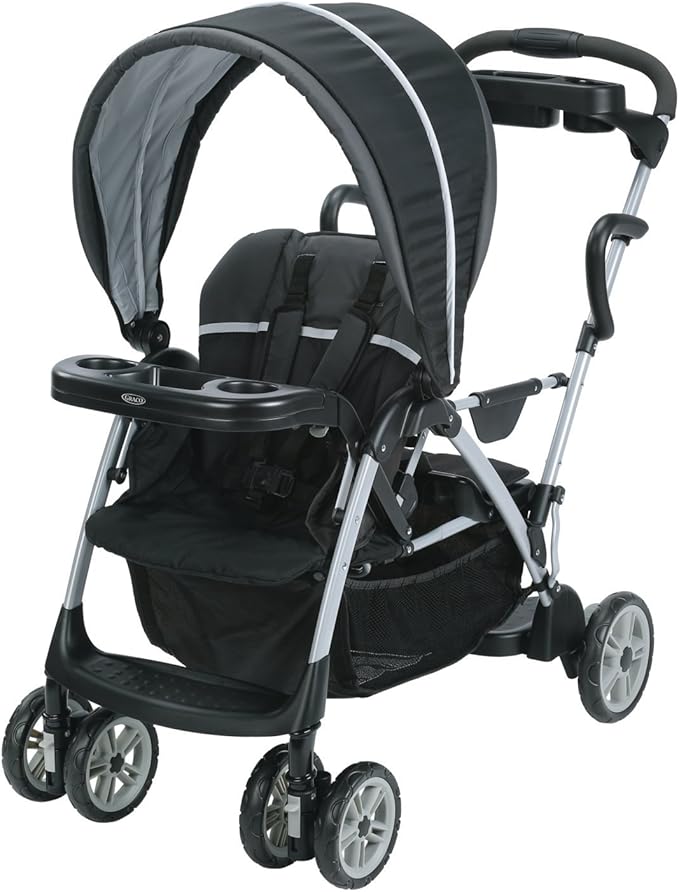
Graco RoomFor2
Best: Affordable
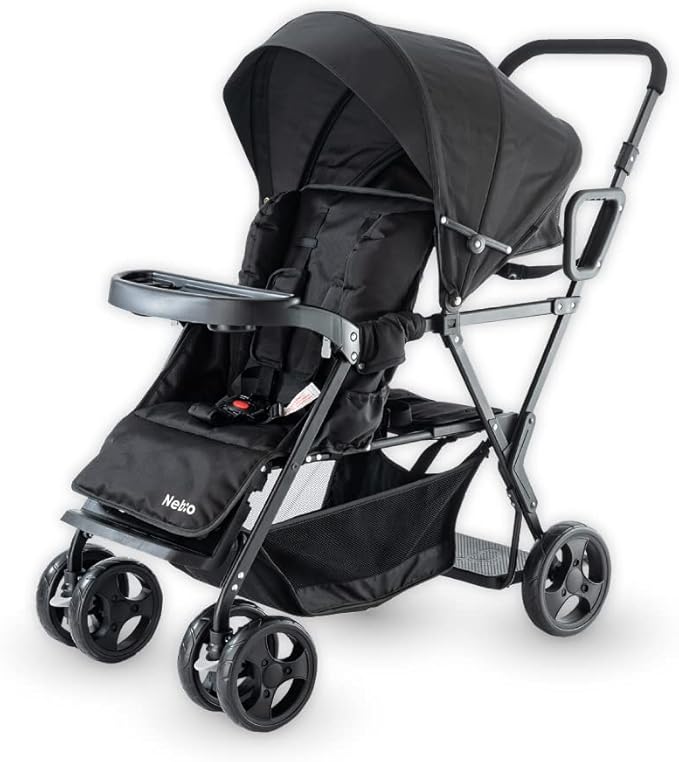
Graco RoomFor2 is the sit-and-stand style double for a toddler plus older sibling who does not always need a full second seat. It is useful for nursery runs, but it depends on the older child being mature enough for the rear riding position.
Pros
- The rear bench/standing area fits older siblings who are partly walking independently.
Cons
- It is not ideal for two small children who both need full recline and restraint.
- Rank #3 Our score: 9.64 / 10
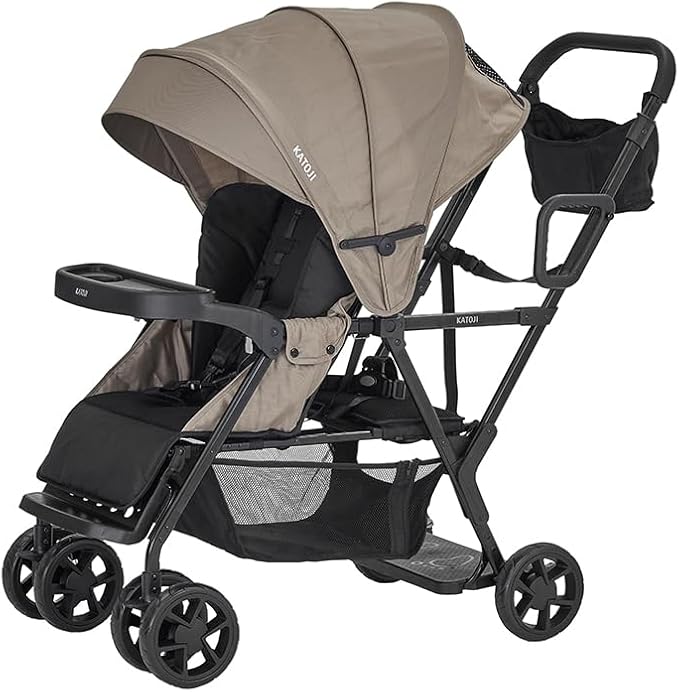
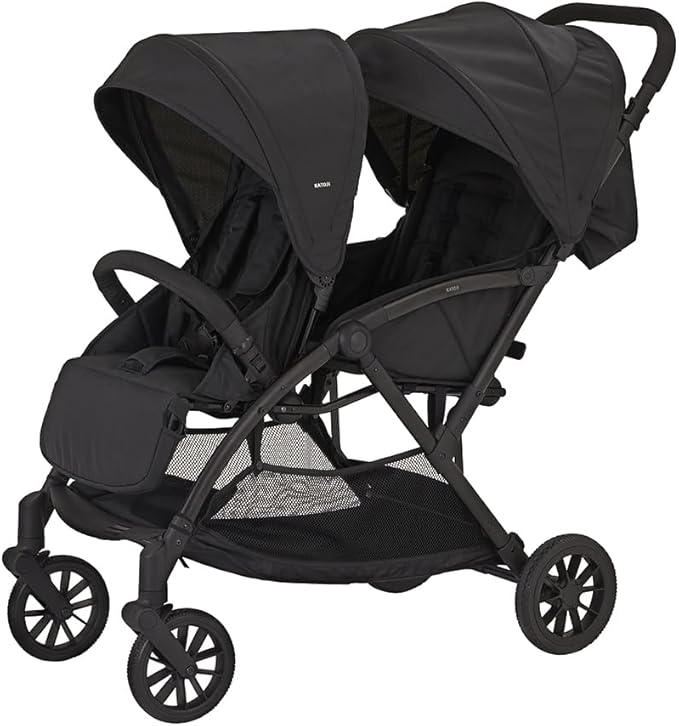
Katoji Futari de Go
Japanese brand
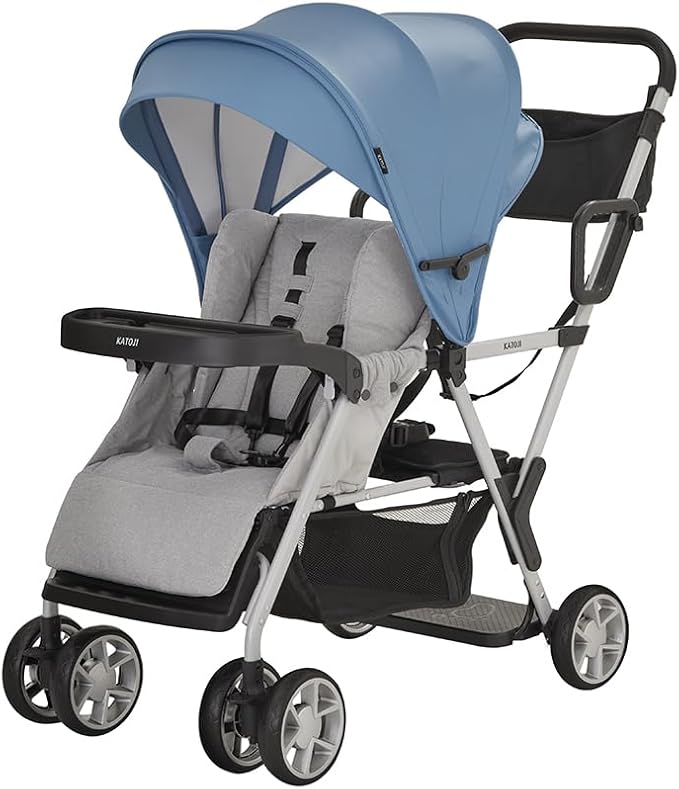
A tandem for a seated younger child from 4 months and an older sibling from 30 months who wants the choice to sit or stand at the rear. Its 54 cm width is easier in narrow routes than a side-by-side and both positions allow up to 20 kg; at 10.2 kg and 112 cm long, it still needs a boot and turning-space check before buying.
Pros
- The rear child can switch between sitting and standing, which suits an older sibling whose willingness to walk changes during the day.
Cons
- The rear position starts at 30 months, so it is not suitable for infant twins or two very young siblings.
- Rank #4 Our score: 9.61 / 10
Katoji 2-Seater Next
Japanese brand
A relatively light, 49 cm-wide tandem for an older sibling up to 6 years behind a younger child aged 6-36 months. At 8.3 kg it is easier to lift than many doubles and the rear unit can switch between a belted kid seat and standing board; the rear child must be at least 12 months, and children under 3 must use the rear seat and belt rather than stand.
Pros
- The 49 cm tandem chassis stays narrow for shop aisles and station gates while carrying two children.
Cons
- The front seat ends at 36 months/15 kg, so this is built around a younger-front, older-rear sibling pairing rather than twins.
- Rank #5 Our score: 9.54 / 10
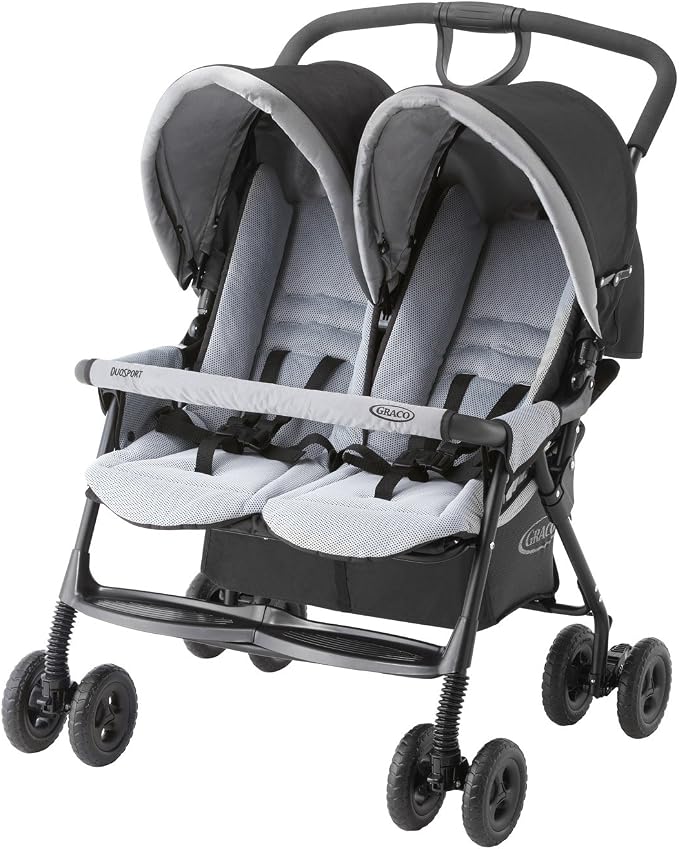
Graco Duo Sports
For two children who need equal side-by-side seats and separate recline; the 35 L basket helps with shared kit, while the 770 mm width demands a route check.
Pros
- Independent recline lets each child rest at a different angle rather than sharing one seat setting.
Cons
- The 770 mm width needs checking against home doors, lifts and regular shop entrances.
- Rank #6 Our score: 9.50 / 10
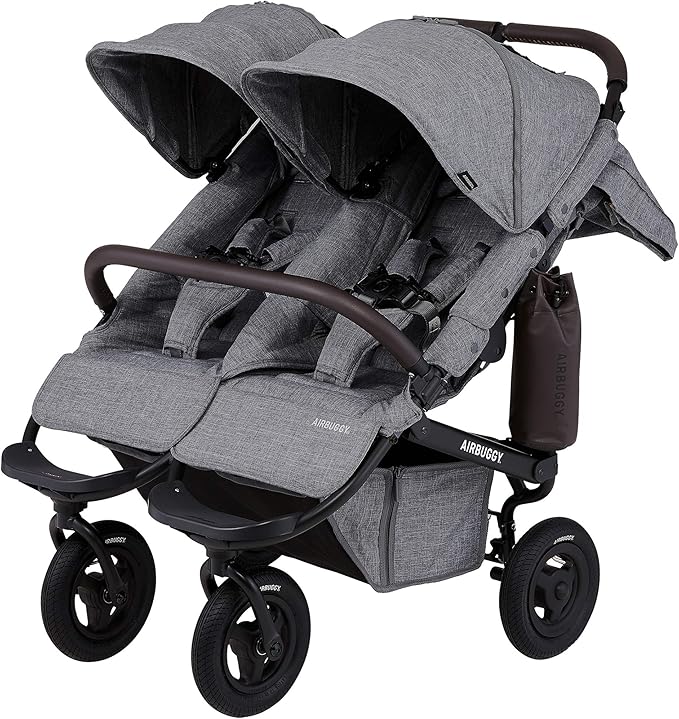
AirBuggy COCO Double EX From Birth
Japanese brand
Best: All-terrain
COCO Double EX From Birth suits newborn twins or close-age siblings who need two independently reclining seats. Each seat carries up to 22 kg; the 71.5 cm width, 13 kg frame and 71.5 cm × 45 cm × 82 cm fold make route and storage measurements essential.
Pros
- Both seats recline independently for use from birth and carry up to 22 kg each, so twins do not have to share the same sleep angle.
Cons
- Measure the full 71.5 cm width against the narrowest home door, lift, station gate and regular shop entrance rather than relying on standard-door claims.
- Rank #7 Our score: 9.36 / 10
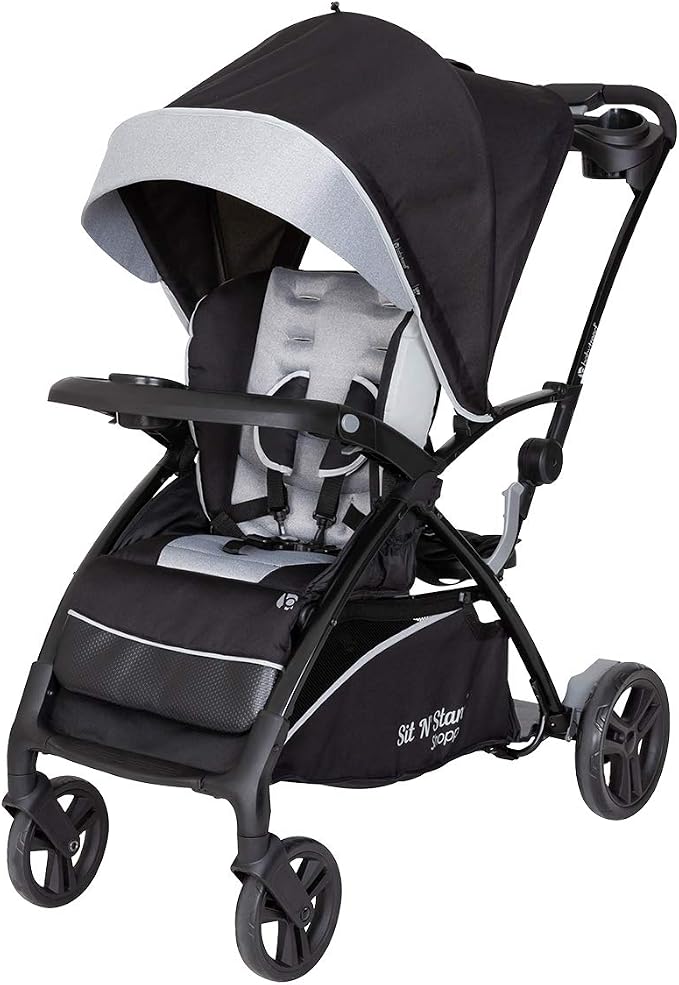
Baby Trend Sit N Stand SmartRide
Baby Trend Sit N Stand SmartRide suits a younger child in the front seat and an older child alternating between the rear jump seat and standing platform. The rear position starts around 2.5 years and is limited to 101 cm and 22 kg; its 124 cm length and roughly 11.5 kg weight need a turning and storage check.
Pros
- The rear child can sit or stand in two orientations, which suits an older sibling who alternates between riding and walking.
Cons
- At about 124 cm long when open, it requires more turning room in small shops and lifts than a compact side-by-side.
- Rank #8 Our score: 9.35 / 10
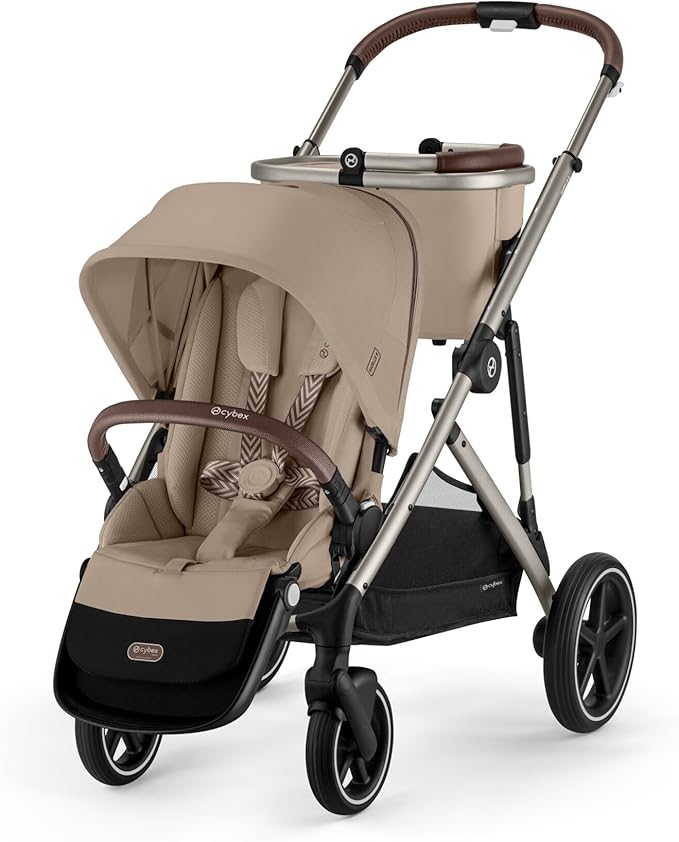
Cybex Gazelle S
Long-running single-to-double platform that still makes sense if sibling flexibility matters more than having the newest chassis
Gazelle S starts with one seat from 1 month and takes an optional second seat for siblings. Its 65 cm width and 12.9 kg frame-and-seat weight favour a step-free routine; the smallest quoted fold requires removing all wheels. Seat position matters too: the lower rear-facing seat is limited to 15 kg in the manual’s illustrated configurations.
Pros
- An optional second seat expands the same frame for siblings, and the stroller can fold with two seats attached.
Cons
- The included seat starts at 1 month, not birth; a second passenger also needs a separately purchased seat.
- Rank #9 Our score: 9.33 / 10
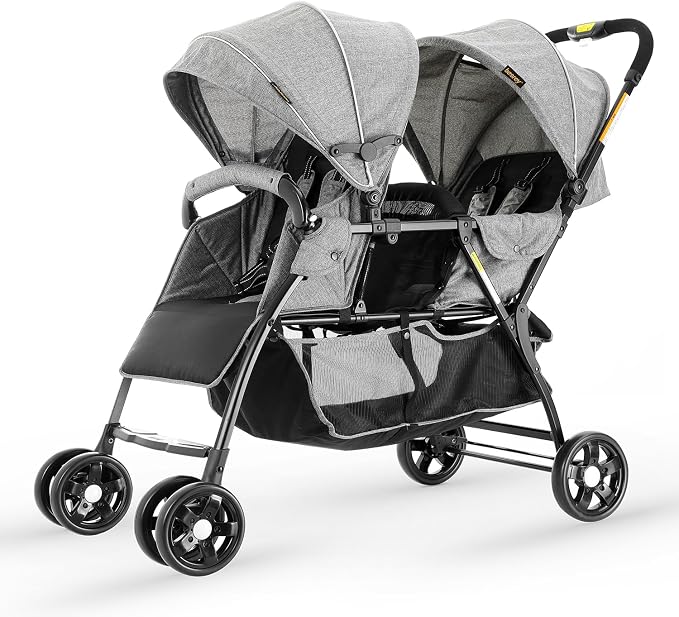
Besrey Tandem Twin Stroller
Besrey's tandem double seats two children one behind the other in a 54.5 cm-wide frame, with a one-touch fold and a dedicated rain cover in the box. It is a low-priced way to give a baby and a toddler two real seats, but the fold stands 110 cm tall and the listing does not state how the 30 kg load splits between the seats.
Pros
- The 54.5 cm tandem width keeps standard doorways and shop aisles open while each child gets a separate seat, canopy and harness.
Cons
- The fold is tall (W54.5×D26×H110 cm), so it stores upright but will not slide under seats or low shelves the way flat-folding doubles do.
- Rank #10 Our score: 9.33 / 10
Joie Evalite Duo
Best: Compact
Lightweight tandem that fits when two seats and realistic lifting both matter
Joie Evalite Duo is the double-stroller option to compare when you want tandem seating without the width of a side-by-side. It fits close siblings better than casual add-on boards, but you should check rear-seat stage fit, folded length, and lift weight.
Pros
- Tandem layout keeps width easier than many side-by-side doubles.
Cons
- The longer frame and staged seating need checking against your children’s ages and storage space.
- Rank #11 Our score: 9.33 / 10
Katoji Futari de Go DX
Japanese brand
Katoji Futari de Go DX is a tandem for a younger child in the rear seat from one month and a sibling in front from four months. Its 56 cm width is easier than many side-by-sides, but the 15 kg, 124 cm-long chassis requires real checks for the car and turns.
Pros
- The 56 cm tandem width is easier through doors and shop aisles than many side-by-sides.
Cons
- At 15 kg and 124 cm long, lifting, boot loading and tight turns are substantial constraints.
- Rank #12 Our score: 9.33 / 10
Katoji Futari de Go Limited
Japanese brand
Katoji Futari de Go Limited fits a baby from four months in the front seat and a child from about two and a half in the rear, in a 54 cm-wide tandem that stays narrower than most side-by-side doubles. The 10.1 kg frame ships with a rain cover and cup holder, but the rear seat is a fixed upright perch and the 114 cm folded length needs a real boot check.
Pros
- The 54 cm tandem width slips through doors and shop aisles that stop many side-by-side doubles, and at 10.1 kg it stays liftable for a two-seat machine.
Cons
- The rear seat has no recline and only accepts children from about 2.5 years, so it cannot carry a second baby or a napping older child.
- Rank #13 Our score: 9.33 / 10
Katoji Tandem Stroller
Japanese brand
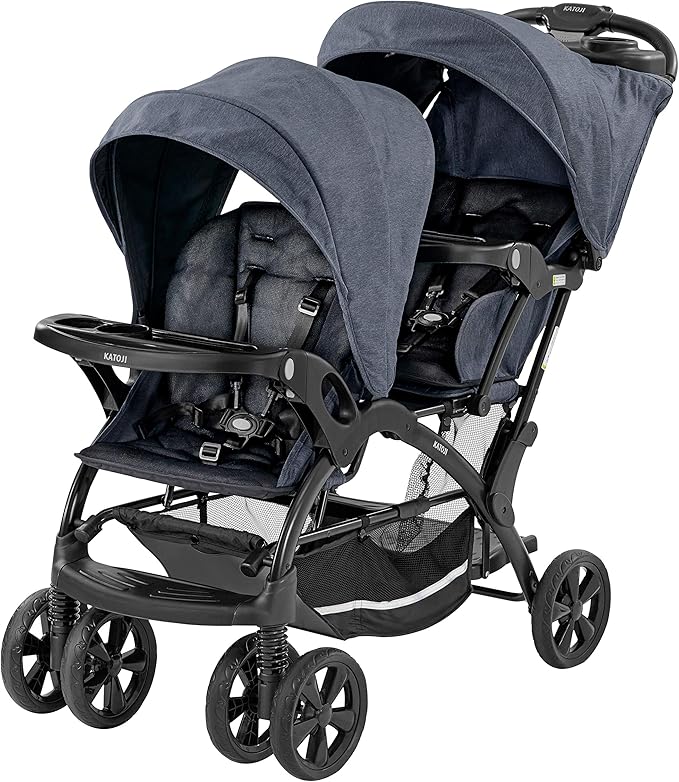
Katoji Tandem Stroller is for families who want to carry siblings or twins in an inline layout. The narrower frame can help through doors, but the longer footprint needs checking against lifts, entryways, and car storage.
Pros
- Tandem seating keeps width lower for siblings or twins in narrow routes.
Cons
- Long frame can be awkward in elevators, entrances, and tight turns.
- Rank #14 Our score: 9.33 / 10
Nebio Amitie F
Japanese brand
Nebio Amitie F is the compact-leaning tandem pick for siblings when a full twin side-by-side feels too wide. It is useful for preschool drop-off and errands, but older children still need a fit check because tandem seats can feel tighter than they look online.
Pros
- The tandem layout keeps width easier than many side-by-side doubles.
Cons
- Seat comfort and legroom need checking for bigger preschoolers.