Best Balance Bikes in France 2026
The best balance bikes for families who want to help a child practise balance, steering, and independent riding before a pedal bike becomes the right next step.
Why are scores between 9 and 10?
This is a curated shortlist of strong picks, not a full best-to-worst ranking. Small score gaps usually mean we have slightly more evidence for one model than another, not that the lower-scoring option is a poor choice.
So this is just another affiliate roundup with an arbitrary order?
No. We make these lists good enough that we use them ourselves and recommend them to friends and family. We turn the kind of research careful parents would normally do by hand into a repeatable process. Then we compare the evidence across the markets we cover and rank products with a model that gives more weight to stronger signals instead of simple averages or a fully hand-picked order based purely on editorial preference.
Affiliate Disclosure
We use affiliate links and ads to finance this website. As an Amazon Associate I earn from qualifying purchases.
- Rank #1 Our score: 9.95 / 10
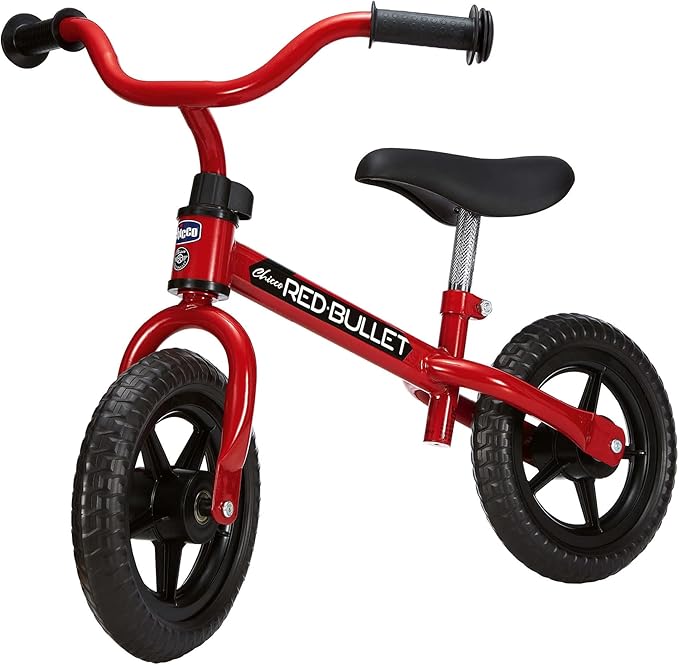
Chicco Balance Bike
Best: Affordable
Chicco Red Bullet and Green Rocket have puncture-proof tyres and adjustable saddles and handlebars for short practice rides. Red Bullet is listed at 2.6 kg, but its published saddle ranges conflict; Green Rocket’s saddle range and weight remain unverified. Neither has a hand brake.
Pros
- Puncture-proof tyres need no pumping before a short outing.
Cons
- There is no hand brake; the child must be able to stop with their feet.
- Rank #2 Our score: 9.92 / 10
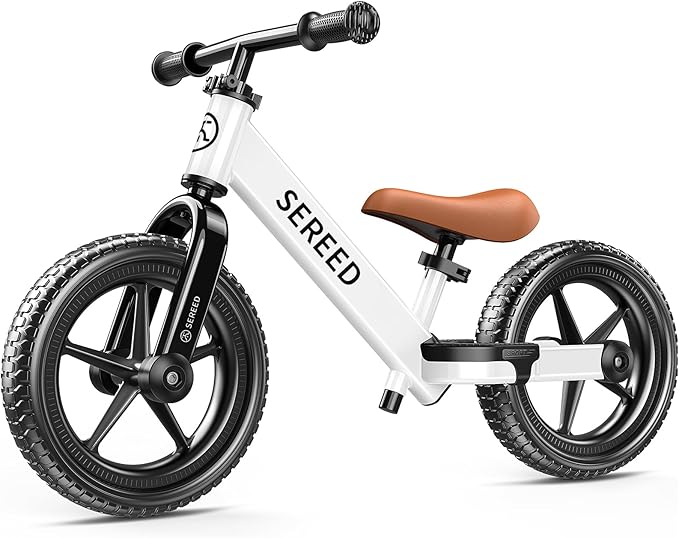
SEREED Tool-Free Balance Bike
SEREED Tool-Free Balance Bike suits a smaller preschool rider who needs a low 29.9 cm starting saddle and frequent fit adjustments without tools. Its 12-inch foam tyres and 3.5 kg frame keep maintenance and carrying simple, while the 41.9 cm maximum saddle should be checked against expected growth.
Pros
- The 29.9-41.9 cm saddle and 49.7-57.1 cm handlebar both adjust without tools, making fit changes unusually straightforward.
Cons
- Foam tyres give less grip and bump absorption than pneumatic tyres on rough or wet routes, and taller children may exhaust the 41.9 cm saddle maximum.
- Rank #3 Our score: 9.88 / 10
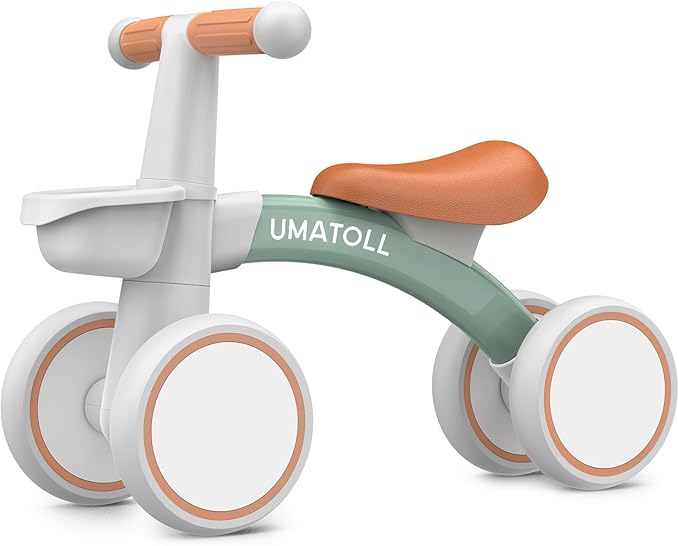
Umatoll Four-Wheel Toddler Balance Bike
Best: Four-wheel first bike
The Umatoll B402 is a four-wheel first ride-on for 12–24-month toddlers, with a removable basket for a small toy. Its three saddle settings change the forwards-and-backwards position, not the height. Check comfortable foot contact before buying. Use it on flat ground under direct adult supervision: the manual specifies no brake and a 25 kg maximum. It is a first pushing stage, not a two-wheel balancing bike.
Pros
- Three fore-aft saddle positions let you adjust the child's reach to the handlebar during this first ride-on stage.
Cons
- The saddle has no verified height adjustment; the child must already reach the ground comfortably.
Local ratings context
If the local Amazon listing has less review depth, this may help: while reviewing this product, we found more rating context on Amazon India. The shortlist also weighs product fit, brand track record, and broader research; when buying, we recommend using your local Amazon store. View Amazon India listing
- Rank #4 Our score: 9.79 / 10
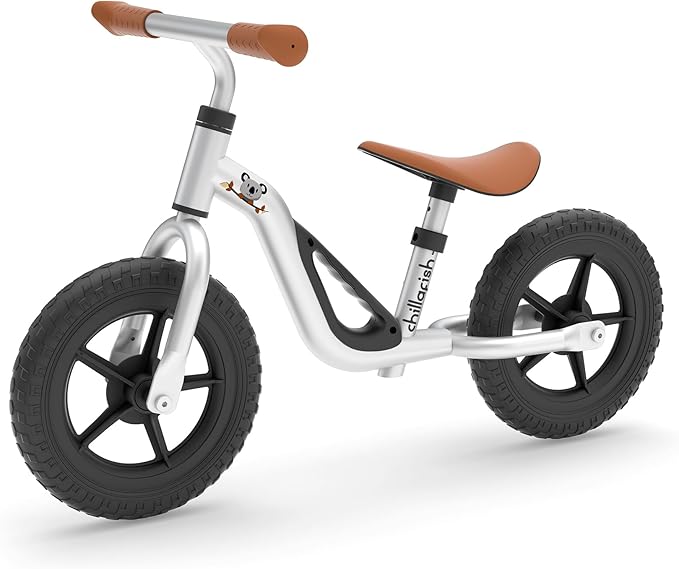
Chillafish Charlie
Chillafish Charlie weighs 2.5 kg and starts with a 28 cm saddle, making it worth considering for small riders who need an easy-to-carry first two-wheeler. Its 10-inch EVA tyres need no pumping, but the 37 cm saddle ceiling limits growing room and the solid tyres favour smooth, dry paths.
Pros
- The 28-37 cm saddle range gives smaller riders a low starting position.
Cons
- Limited saddle height and solid 10-inch tyres make this a short-distance starter, not a rough-path or long-term preschool bike.
- Rank #5 Our score: 9.79 / 10
VITONIS Balance Bike
Choose it only if both feet can reach the ground securely.
VITONIS Balance Bike is a simple two-wheel learner for children around 18 months to four years, with adjustable saddle and handlebar plus limited steering. The 25 kg ceiling says little about fit: buy only if both feet plant flat and the child reaches the bar without stretching.
Pros
- Height-adjustable saddle and handlebar let you set a riding position that suits your child.
Cons
- The listings do not give the saddle's exact adjustment range. Check the lowest position against your child's inseam before buying.
- Rank #6 Our score: 9.72 / 10
Mallie Balance Bike
Set the saddle low enough for secure foot stops.
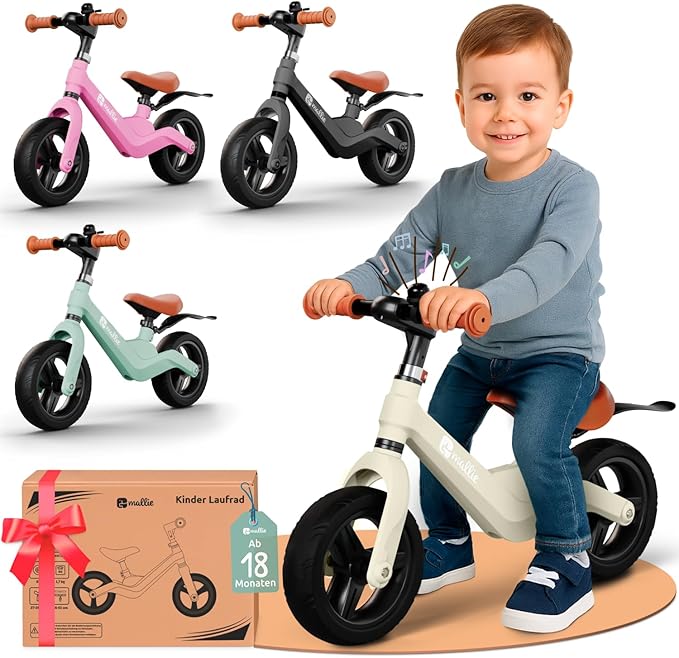
Mallie Balance Bike is a two-wheel pedal-free bike with foam tyres and adjustable saddle and handlebar. The listing mixes incompatible age claims, so decide by measurements: confirm the child can place both feet flat with slightly bent knees and can lift and steer the bike.
Pros
- Adjustable saddle and handlebar support a measurement-led riding position, and the foam tyres need no inflation.
Cons
- The listing gives no reliable saddle range here and contradicts itself on age; measure before buying and expect less cushioning than air tyres.
- Rank #7 Our score: 9.68 / 10
Lionelo Alex
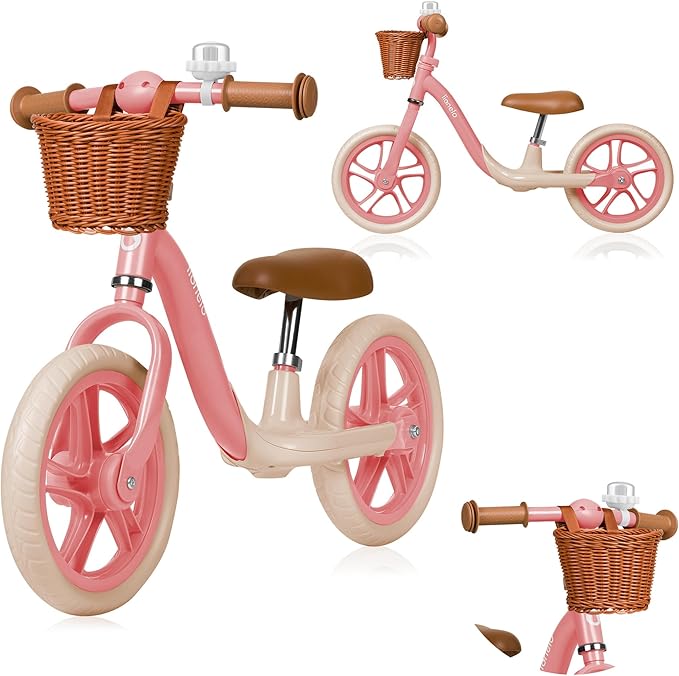
Lionelo Alex is a preschool-focused two-wheel balance bike. Foam tires keep maintenance simple, while the main buying check is still whether the saddle range matches your child now. Its lighter build helps when the ride turns into walking.
Pros
- Useful saddle range for a conventional preschool balance bike.
Cons
- Needs a real posture check before buying.
- Rank #8 Our score: 9.68 / 10
BERG MOOV 10
For children 85-110 cm tall; compare inseam and foot reach. BERG lists the specific MOOV 12 for 90-120 cm.
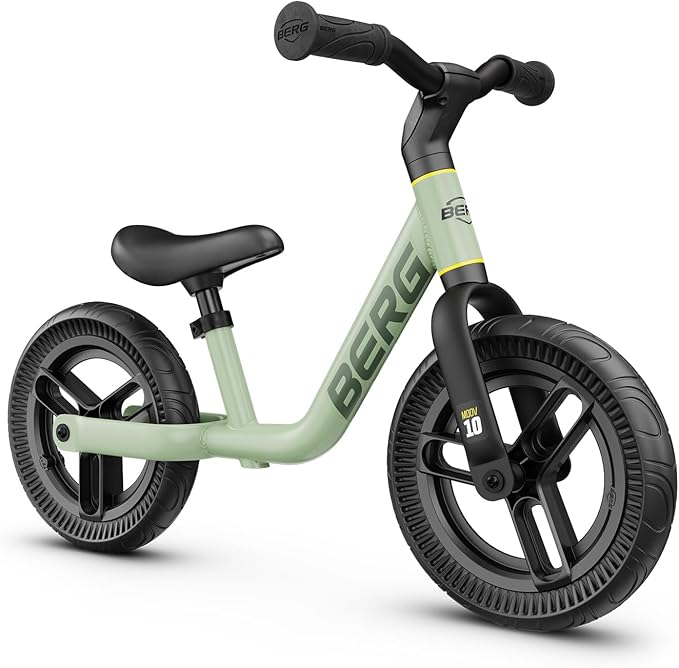
BERG MOOV 10 fits riders 85-110 cm tall and weighs 2.7 kg. Its 10-inch EVA tires need little upkeep but cushion less than air tires. BERG lists the specific MOOV 12 for 90-120 cm and describes it as having 12-inch air tires. Compare your child’s inseam and seated foot reach; wheel size alone does not establish fit.
Pros
- At 2.7 kg, the bike is easier for a small rider to lift and manoeuvre.
Cons
- BERG lists the MOOV 10 for 85-110 cm and the MOOV 12 for 90-120 cm; wheel size alone does not establish fit.
- Rank #9 Our score: 9.67 / 10
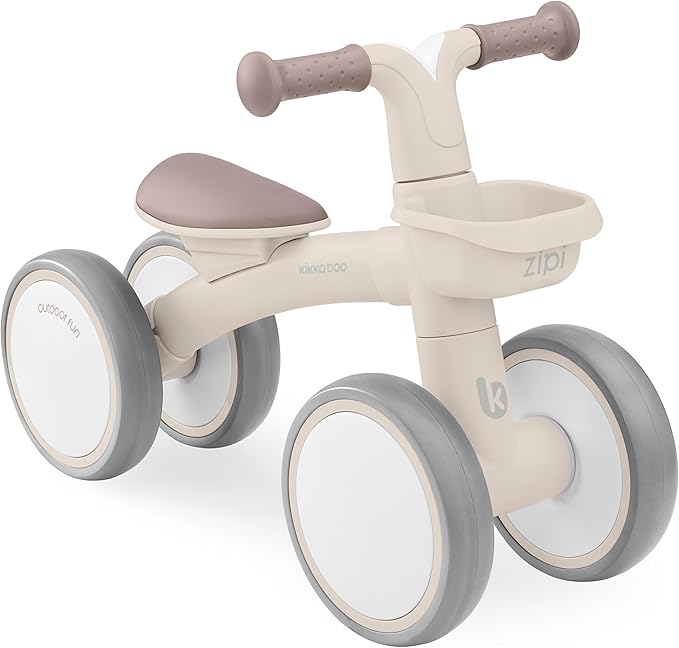
KikkaBoo ZIPI Four-Wheel Ride-On
A four-wheel first ride-on for ages 1–3, before independent two-wheel gliding.
ZIPI gives toddlers aged 1–3 a stable start on four EVA wheels. Its 2.1 kg frame is easy for an adult to carry when play ends, and the saddle moves forwards and backwards. Choose it for first pushing and steering; learning to glide on two wheels requires a later bike.
Pros
- Four wheels and limited steering help a new rider practise pushing and turning.
Cons
- The saddle adjusts forwards and backwards; a height adjustment is not specified.
- Rank #10 Our score: 9.66 / 10
Hello-5ive Balance Bike
Hello-5ive Balance Bike has 12-inch wheels and suits children about 3–6 years who are starting on two wheels. It has a light nylon frame, pneumatic tyres and an adjustable saddle. The listing gives no exact saddle range, so check fit against the child's inseam.
Pros
- Pneumatic tyres improve comfort and grip for outdoor practice.
Cons
- No exact saddle range is published, and air tyres need maintenance.
- Rank #11 Our score: 9.65 / 10
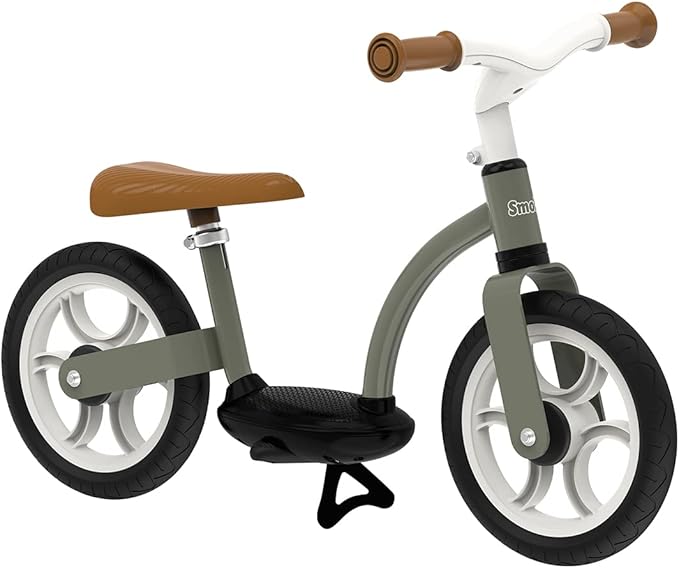
Smoby Draisienne Confort
French brand
Smoby Draisienne Confort is a light two-wheel balance bike with quiet wheels, footrest and kickstand. It suits smooth everyday practice more than rough paths.
Pros
- Listed 2.9 kg weight.
Cons
- Solid wheels are less comfortable than air tires.
- Rank #12 Our score: 9.64 / 10
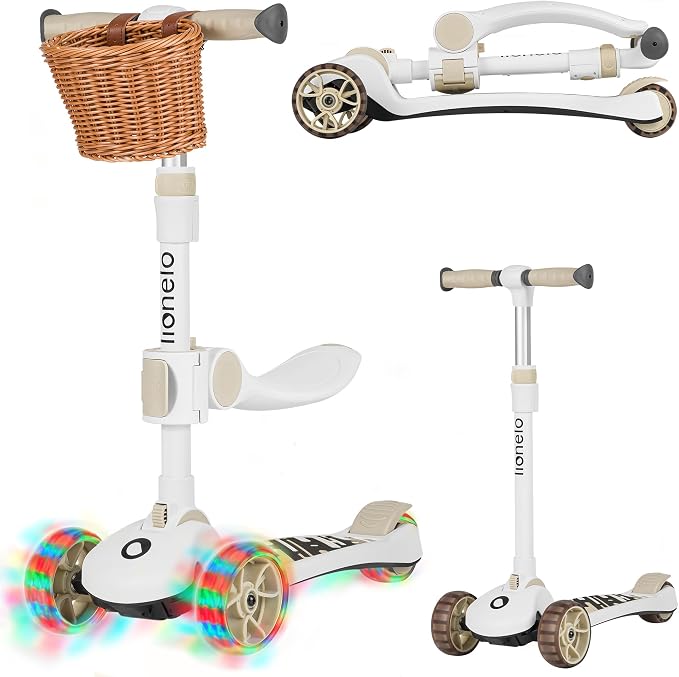
Lionelo Franky
Best: Stable first bike
Lionelo Franky starts as a seated three-wheel ride-on; removing the seat turns it into a scooter. It suits families who want that progression rather than a two-wheel balance bike. The seated mode starts at one year and is limited to 20 kg, with no brake in this configuration. Keep use to level, even ground under supervision; the standing scooter has separate age and weight limits.
Pros
- Removing the seat turns the three-wheel ride-on into a standing scooter for use from age three.
Cons
- The seated mode starts at one year, is limited to 20 kg and has no brake; stick to level, even ground under adult supervision.
- Rank #13 Our score: 9.64 / 10
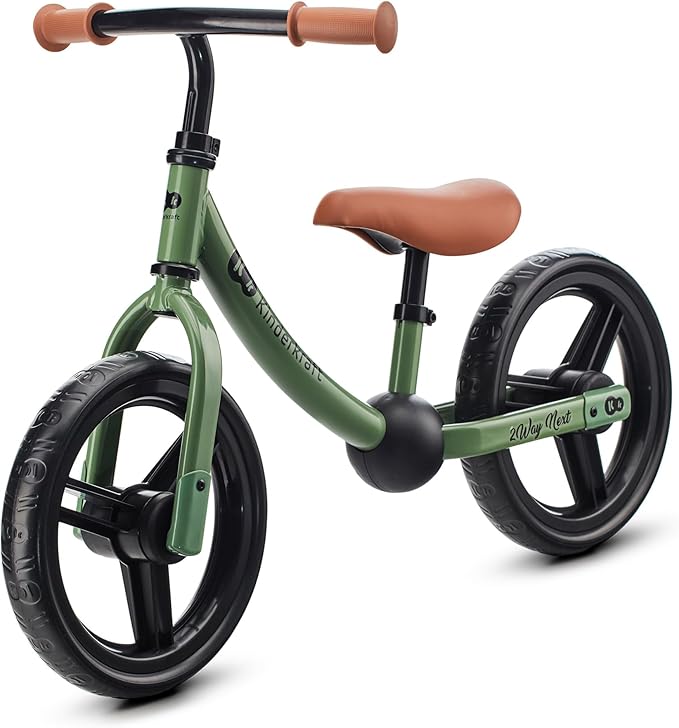
Kinderkraft 2WAY Next
Kinderkraft 2WAY NEXT is a light two-wheel learner for children from 80 cm tall, with a low frame, 31-40 cm saddle and 52-59 cm handlebar. Its foam tires need no inflation but cushion less than air tires; measure inseam so both feet reach the ground rather than relying on standing height alone.
Pros
- Adjustable saddle and handlebar give useful growth room.
Cons
- Foam wheels are less cushioned than air tires.
- Rank #14 Our score: 9.38 / 10
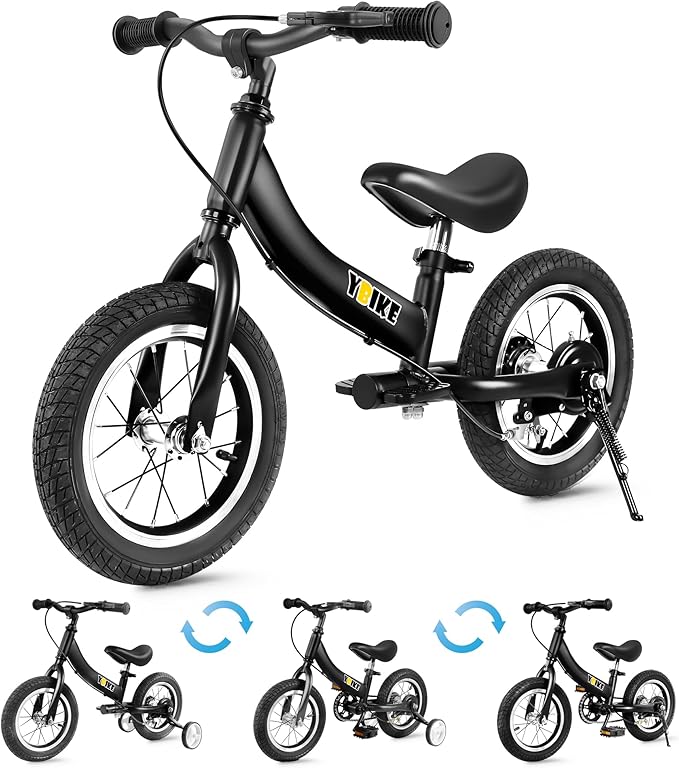
YBIKE 35.6 cm 2-in-1 Balance and Pedal Bike
Best: Premium
This 35.6 cm YBIKE starts without pedals and accepts the supplied pedal-and-chain assembly later. Its size chart gives 100-115 cm and roughly 3–5 years; flat-foot ground contact and reachable brake levers still decide fit. Air-filled tyres and hand brakes make it more involved to maintain than a simple solid-tyred learner. The published 41-48.5 cm saddle diagram covers several wheel sizes, not a verified 35.6 cm-only range.
Pros
- The removable pedal-and-chain assembly lets a child progress on the same correctly sized frame.
Cons
- The shared saddle-height diagram does not isolate the selected 35.6 cm size, so the height chart cannot guarantee ground reach.
- Rank #15 Our score: 9.35 / 10
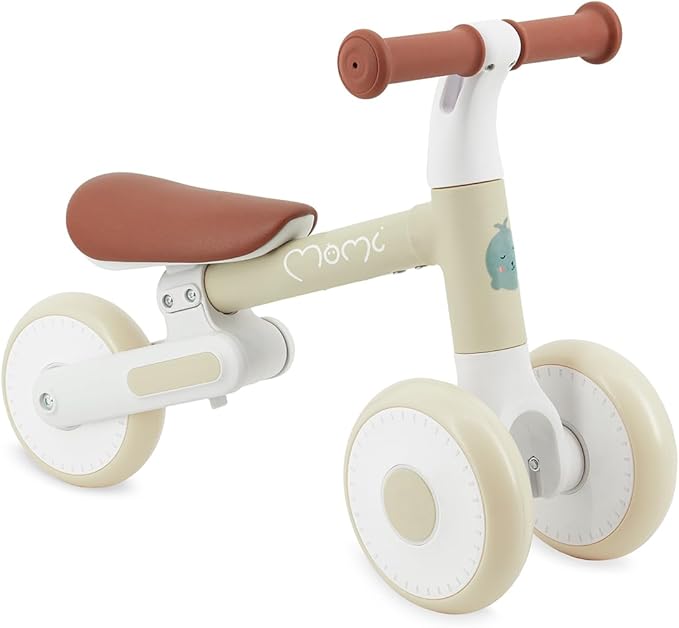
MoMi DEX
MoMi DEX gives a toddler a low, three-wheel ride-on for foot-powered play: the saddle has 22 and 24 cm positions, and the rear wheel folds towards the front pair for storage. Its EVA wheels need no pumping. The small frame is limited to 12–36 months and 20 kg; choose a two-wheel bike when practising unsupported gliding becomes the goal.
Pros
- The rear section folds underneath the frame to reduce storage space.
Cons
- Only two saddle positions, 2 cm apart, leave little growing room.
- Rank #16 Our score: 9.35 / 10
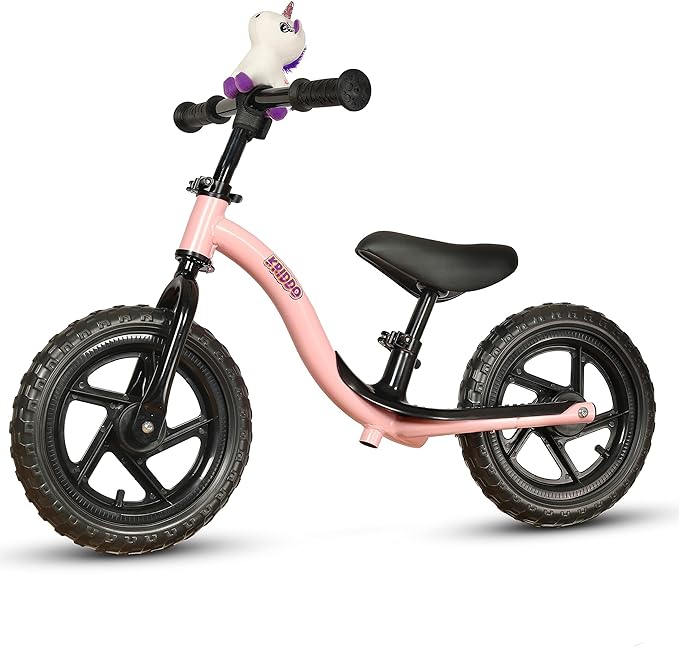
KRIDDO Riding Buddy
The pink Riding Buddy pairs a handlebar unicorn with a low frame and footrest for first pushing and gliding practice. Its saddle adjusts from about 30-43 cm; the KB001 manual specifies ages 2–5. There is no handbrake, and tyre construction remains unclear, so choose it for supervised, level-ground practice with both feet firmly on the ground.
Pros
- The low curved frame and roughly 30-43 cm saddle adjustment help a small rider get on and find a feet-flat position.
Cons
- Without a handbrake, stopping depends on the child's feet; slopes are outside the manual's intended use.
- Rank #17 Our score: 9.33 / 10
Globber GO Bike Elite Duo
French brand
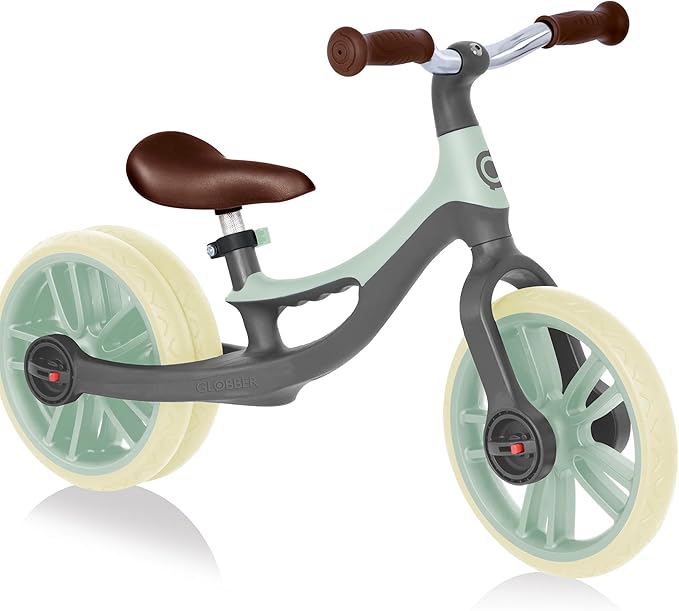
The GO Bike Elite Duo starts with two rear wheels, then converts without tools to one rear wheel for balance practice. Its 25.4 cm TPE wheels do not need inflation, but the bike is for dry, level ground, not gravel or slopes. Check feet-down fit within the stated 33-42 cm saddle range; Globber specifies ages 2–5 and a 20 kg rider limit.
Pros
- The rear wheel arrangement changes without tools, so the same frame provides a supported start and a later two-wheel mode.
Cons
- Two rear wheels provide support rather than the same balancing task as single-rear-wheel riding.