Best Balance Bikes in the US 2026
The best balance bikes for families who want to help a child practise balance, steering, and independent riding before a pedal bike becomes the right next step.
Why are scores between 9 and 10?
This is a curated shortlist of strong picks, not a full best-to-worst ranking. Small score gaps usually mean we have slightly more evidence for one model than another, not that the lower-scoring option is a poor choice.
So this is just another affiliate roundup with an arbitrary order?
No. We make these lists good enough that we use them ourselves and recommend them to friends and family. We turn the kind of research careful parents would normally do by hand into a repeatable process. Then we compare the evidence across the markets we cover and rank products with a model that gives more weight to stronger signals instead of simple averages or a fully hand-picked order based purely on editorial preference.
Affiliate Disclosure
We use affiliate links and ads to finance this website. As an Amazon Associate I earn from qualifying purchases.
- Rank #1 Our score: 9.92 / 10
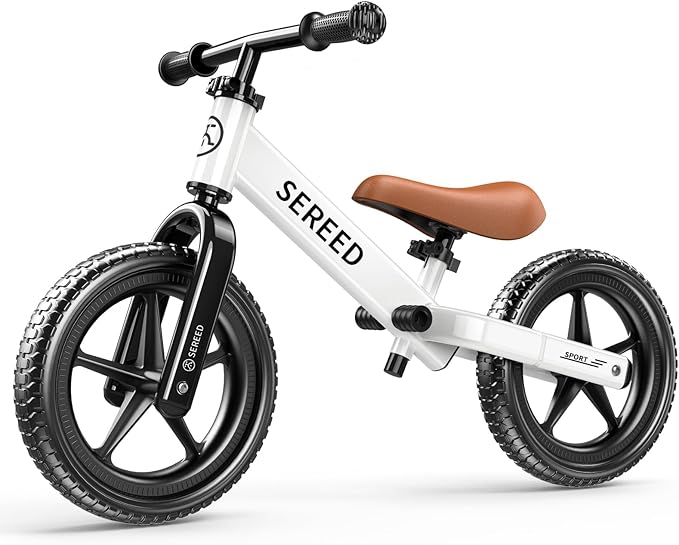
SEREED 12-inch Balance Bike
Best: Affordable
SEREED Toddler Balance Bike 2 Year Old works for families who want easy adjustment and low tire upkeep in a two-wheel balance bike with 12-inch wheels. The 12.6-17.1 in (32-43.4 cm) saddle range is the key fit check, especially for smaller two-year-olds.
Pros
- 12.6 in (32 cm) starting saddle can work for many two-year-olds after an inseam check.
Cons
- Foam tires ride more firmly than air tires on rough surfaces.
- Rank #2 Our score: 9.91 / 10
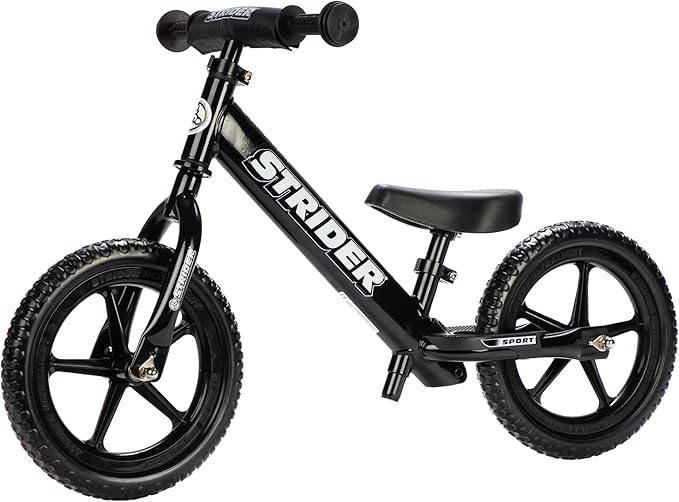
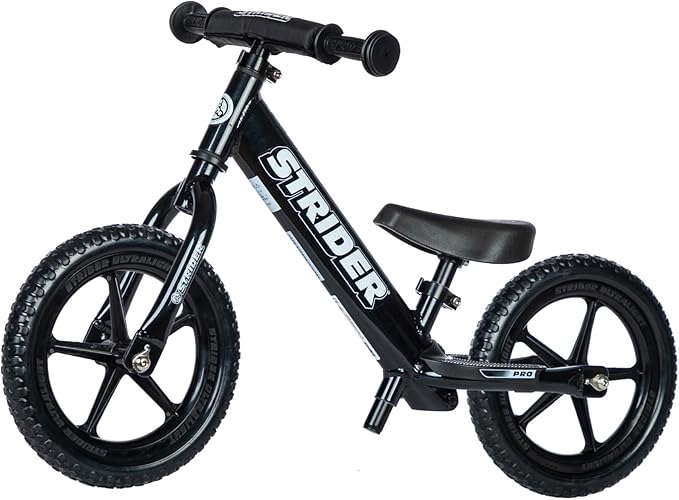
Strider 12 Sport
US brand
Best: Premium
Best when you want the normal Strider fit range without paying extra for the lighter Pro frame.
Strider 12 Sport suits toddlers and preschoolers who need a light 12 in (30.5 cm) two-wheel bike with a low 11 in (27.9 cm) starting saddle. The main tradeoff is the flat-free foam tire ride, so measure inseam before paying for the premium build.
Pros
- Low 11 in (27.9 cm) starting saddle helps small riders get both feet down.
Cons
- Foam tires cushion less than air tires on rough paths.
- Rank #3 Our score: 9.89 / 10
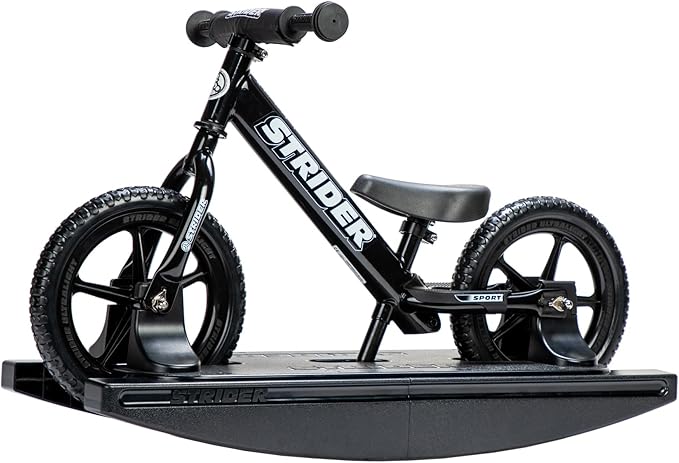
Strider Sport 2-in-1 Rocking Bike
US brand
Strider Sport 2-in-1 Rocking Bike is for families who want to start before a child is ready to stride outside. The rocking base supports the baby stage, then the 12 Sport becomes the balance bike; the cost only makes sense if both stages will be used.
Pros
- Rocking base gives younger babies a supported first-bike stage.
Cons
- High package price is hard to justify if the rocking phase will be short.
- Rank #4 Our score: 9.86 / 10
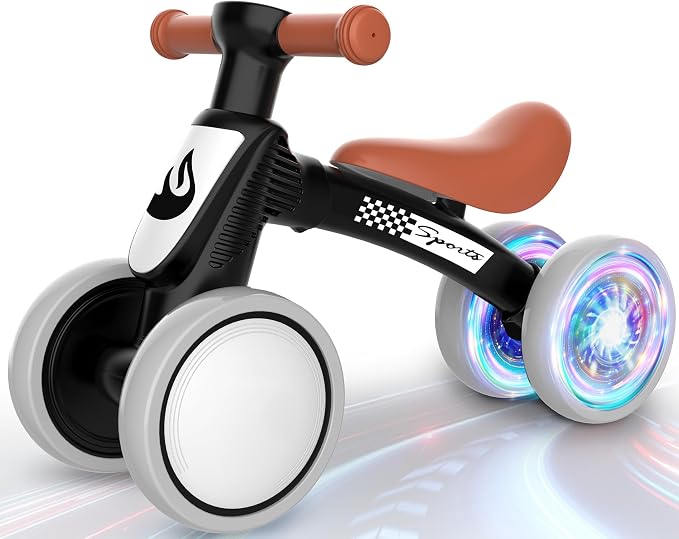
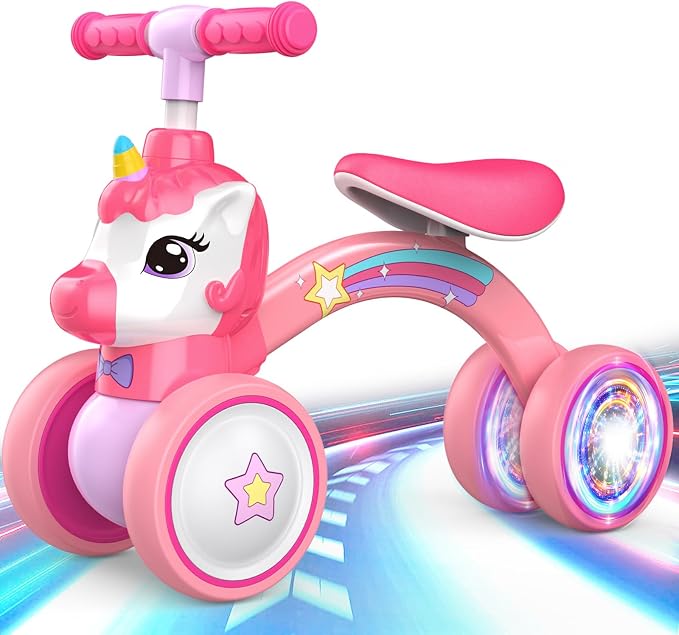
WETIFY Colorful Lighting Baby Balance Bike
Best: Stable first bike
WETIFY Colorful Lighting Baby Balance Bike is a four-wheel sit-on first bike for 10–36 months, aimed at early steering and scooting rather than true two-wheel balance practice. Its closed wheels and steering limiter suit beginners, but older toddlers ready to coast will learn more on a two-wheel model.
Pros
- Four enclosed wheels, a 135° steering limiter and no pedals create a stable first scooting setup for younger toddlers.
Cons
- The four-wheel layout does not teach the side-to-side balance needed for a pedal-bike transition as directly as a two-wheel balance bike.
- Rank #5 Our score: 9.86 / 10
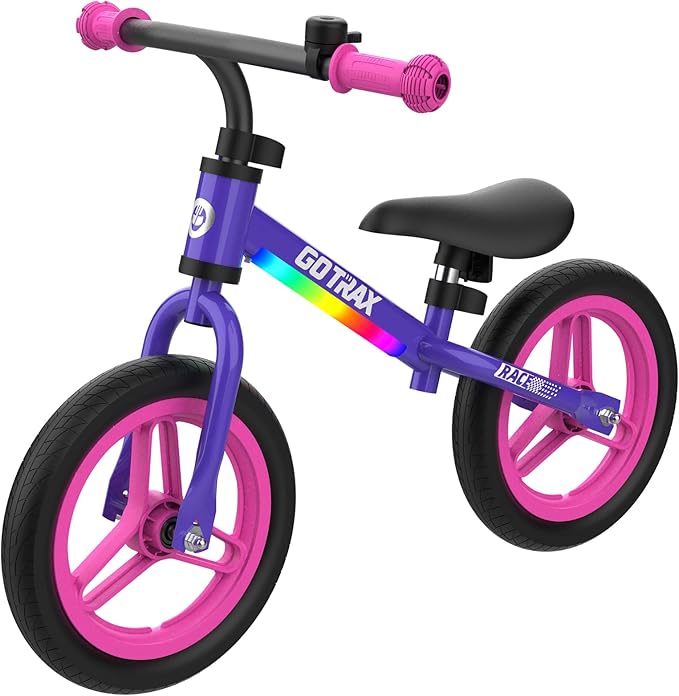
Gotrax KS12
US brand
Gotrax KS12 is a preschool-focused two-wheel balance bike. Foam tires keep maintenance simple, while the main buying check is still whether the saddle range matches your child now. Its lighter build helps when the ride turns into walking.
Pros
- Flat-free EVA wheels keep upkeep low.
Cons
- Minimum saddle height is too tall for many small toddlers.
- Rank #6 Our score: 9.85 / 10
Strider 12 Pro
US brand
Worth paying up for when lower bike weight is the practical reason, not just the badge.
Strider 12 Pro spans toddlers into the preschool years on a simple 12 in (30.5 cm) two-wheel setup. Foam tires keep maintenance simple. Confirm the seat-height range, because the full age window will not fit every child equally well.
Pros
- Very light frame is easier for small riders to manage and for parents to carry.
Cons
- Premium price is high if you are only testing whether balance biking will stick.
- Rank #7 Our score: 9.85 / 10
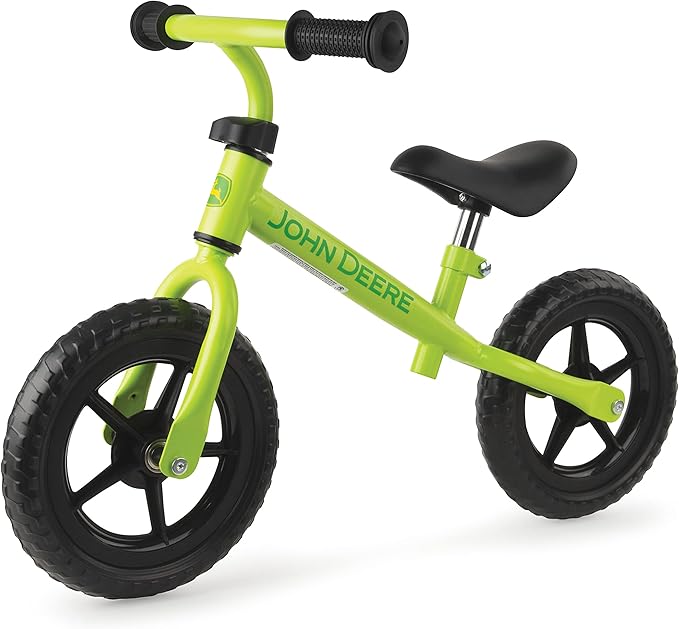
TOMY John Deere Toddler Balance Bike
Best: Mid-range
TOMY John Deere Toddler Balance Bike is a two-wheel balance-bike candidate for children learning steering and balance before pedals. Check the stated age range, seat-height adjustment, and tyre style against where the child will ride.
Pros
- The 10 in (25.4 cm) toddler format is easier to match to a two-year-old than a larger preschool balance bike.
Cons
- The small-wheel stage is short, so taller children may need a larger bike quickly.
- Rank #8 Our score: 9.84 / 10
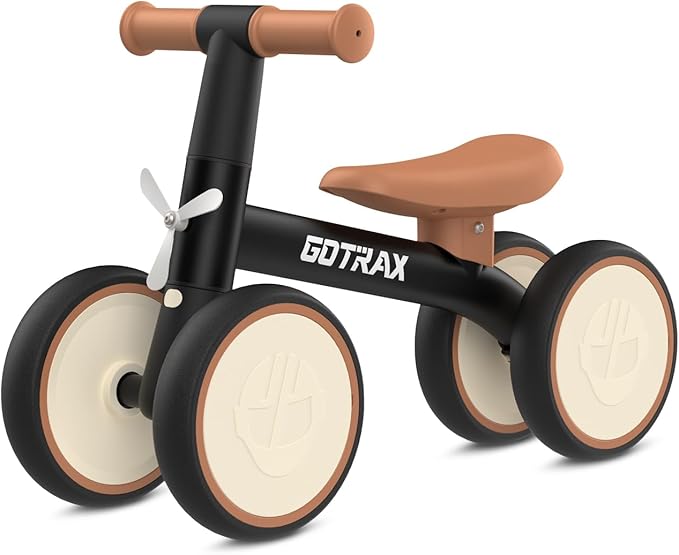
Gotrax Baby Balance Bike
US brand
Gotrax BA1 is a four-wheel first ride for roughly 12–24 months, designed for early scooting and steering with a limited-turn front end. Its 5.9 lb (2.7 kg) weight helps indoors and with carrying, but it does not teach the side-to-side balance of a two-wheel balance bike.
Pros
- Four wheels, limited steering and a low 5.9 lb (2.7 kg) listed weight create an approachable first scooting setup.
Cons
- The stable four-wheel layout delays rather than directly trains the lateral balance needed for a pedal bike.
- Rank #9 Our score: 9.82 / 10
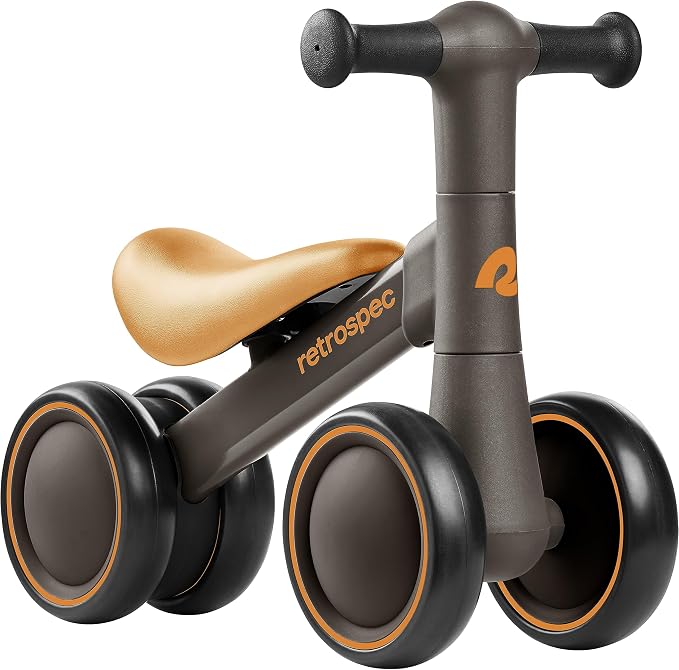
Retrospec Cricket Walker Balance Bike
US brand
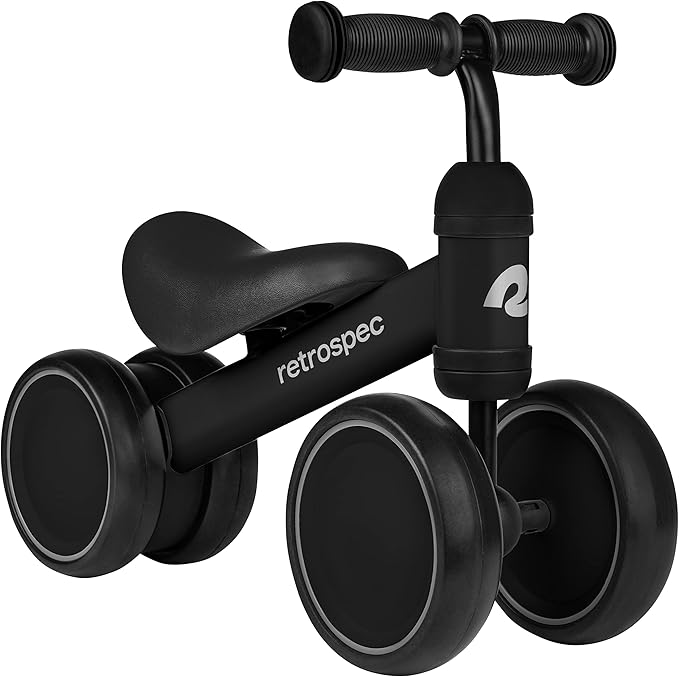
Retrospec Cricket Walker is a four-wheel stable-first bike for an early walker with a measured 9-13 in (22.9-33 cm) inseam. Quiet floor-friendly wheels and a steering limit suit indoor and smooth outdoor scooting; move to two wheels when the child is ready for lateral balance rather than stretching beyond the fit range.
Pros
- The 3 lb (1.4 kg) frame, four non-marking wheels and limited steering create a manageable first scooting setup for early walkers.
Cons
- Four-wheel stability does not develop the same lateral balance as a two-wheel bike, so it is a transitional stage rather than a long-term trainer.
- Rank #10 Our score: 9.82 / 10
LOL-FUN 4-in-1 Convertible Balance Bike
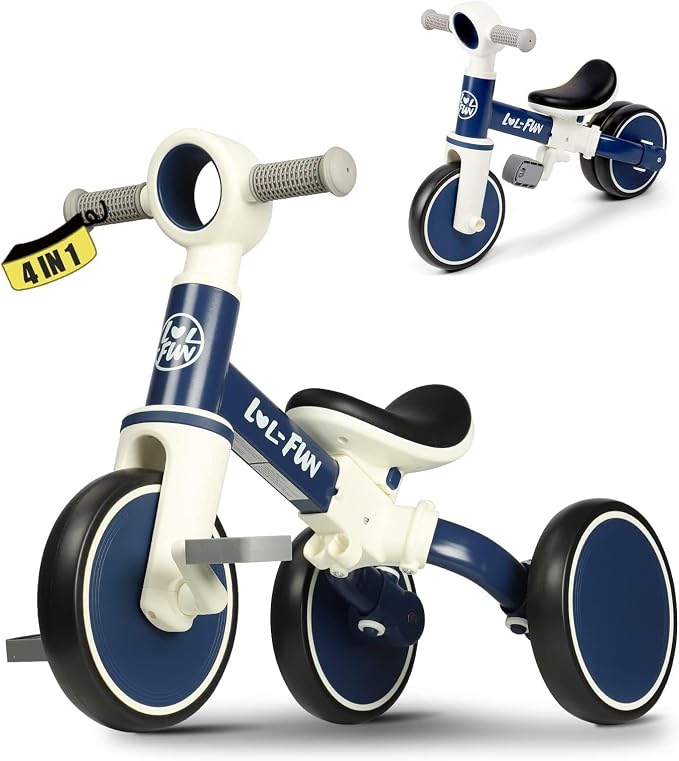
LOL-FUN 4-in-1 changes from a wide-wheel tricycle setup to pedal-free two-wheel balance practice, with pedals added for a pedalling mode. The maker lists ages 10 months–4 years and a 66 lb (29.9 kg) maximum load, and recommends checking the child’s inseam. It publishes no numeric saddle range, so check that the child can sit, steer and place both feet down rather than relying on age alone. Rear-wheel spacing and pedal setup change how the bike is used; follow the maker’s conversion directions each time. The listed product is the 4-in-1 without the parent steering handle shown on the separate 5-in-1 sibling.
Pros
- Rear wheels can be set for a wider tricycle arrangement or two-wheel balance practice; pedals add a separate pedalling mode.
Cons
- No numeric saddle range is published; confirm seated reach and both feet on the ground.
- Rank #11 Our score: 9.81 / 10
Strider 14x Classic
US brand
Best: Older child fit
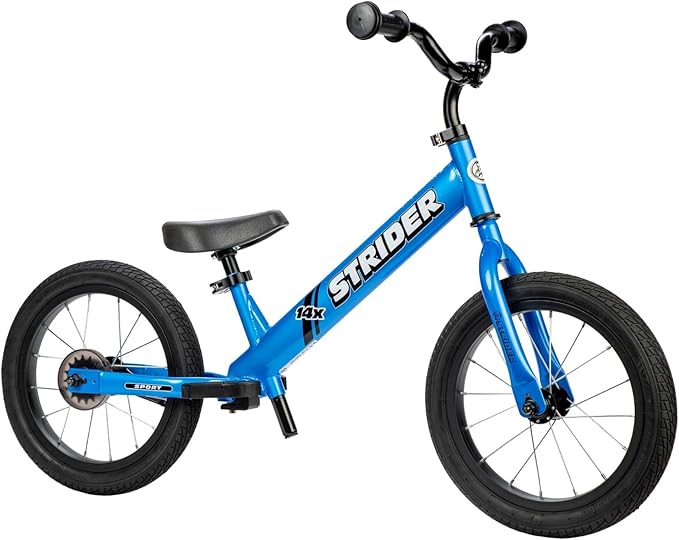
The Strider 14x Classic is listed for ages 3–6, with a 15-22 in (38.1-55.9 cm) saddle range and a 16-23 in (40.6-58.4 cm) inseam range. Check that your child’s inseam fits that range and, at the lowest saddle setting, they can put both feet down to push and stop. The bike weighs 12.5 pounds in balance-bike configuration, and the pedal-conversion kit is sold separately.
Pros
- 14 in (35.6 cm) format suits taller preschoolers who have outgrown smaller 12 in (30.5 cm) bikes.
Cons
- Too tall for many toddlers and smaller three-year-olds.
- Rank #12 Our score: 9.80 / 10
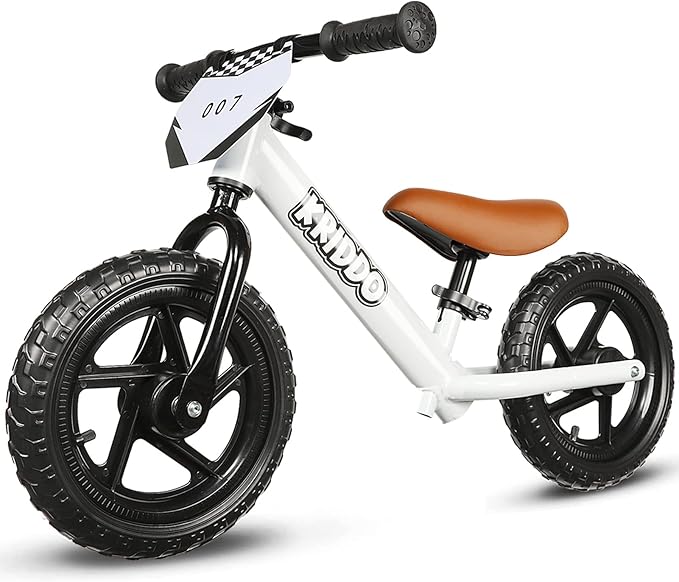
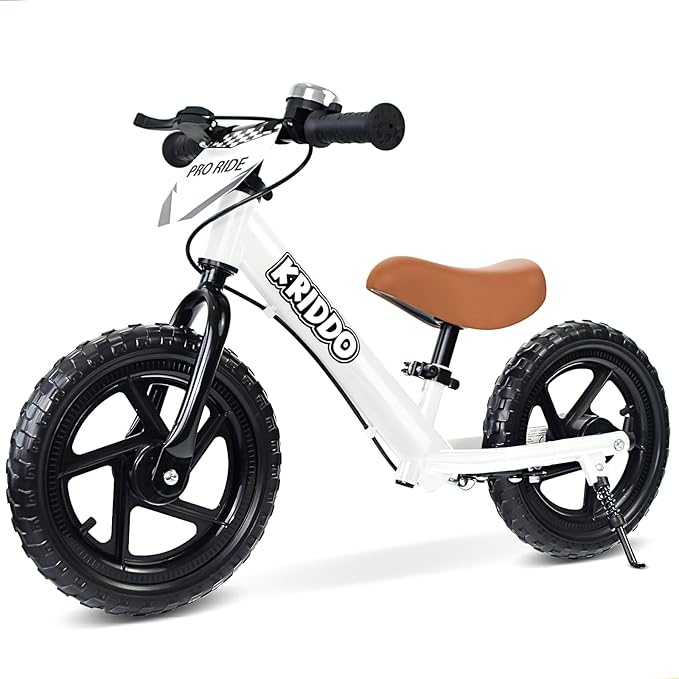
KRIDDO Dual Bearing Balance Bike
US brand
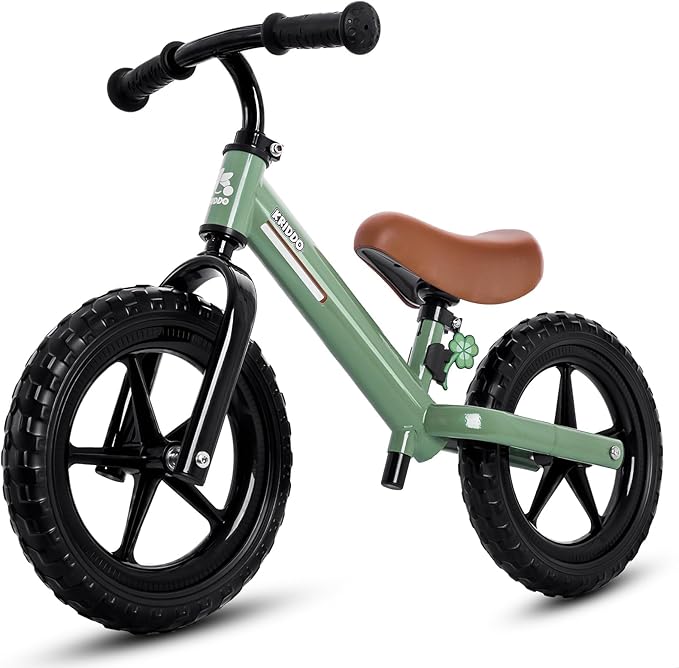
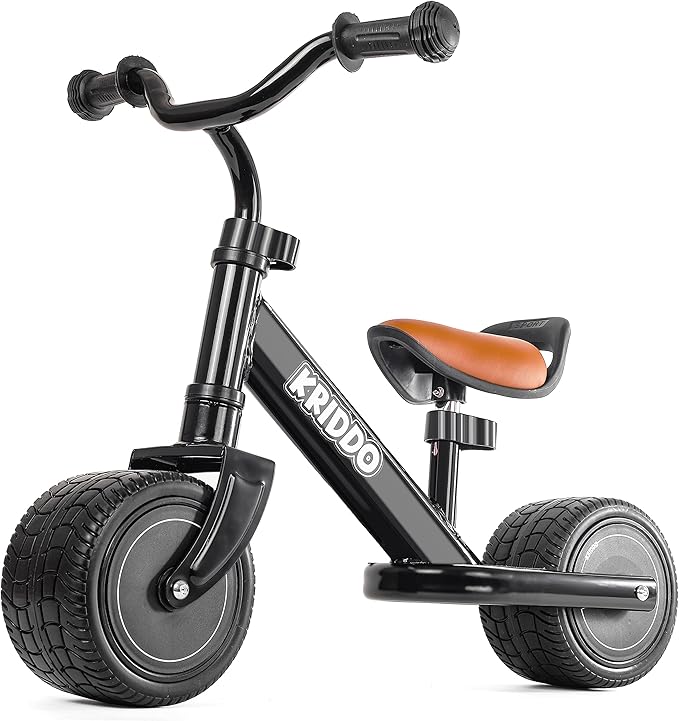
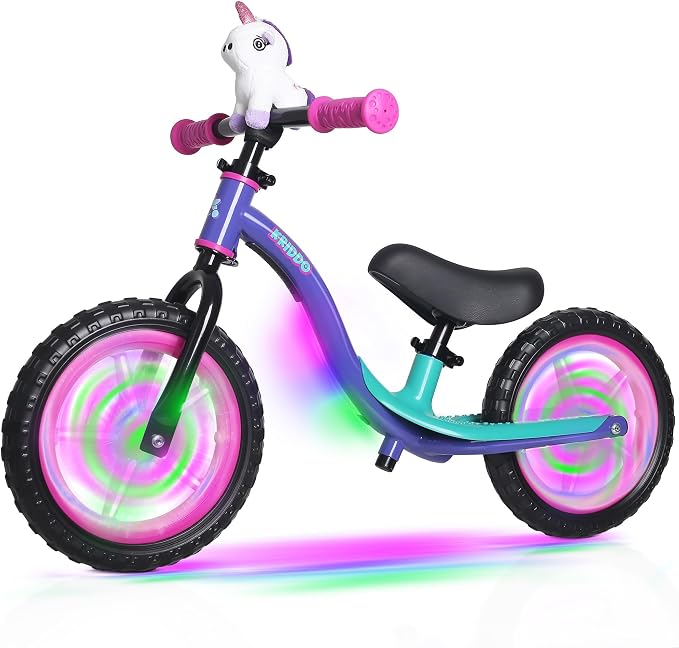
KRIDDO Dual Bearing Balance Bike is a preschool-focused two-wheel balance bike. Foam tires keep maintenance simple, while the main buying check is still whether the saddle range matches your child now.
Pros
- Light 5.7 lb (2.6 kg) frame should be manageable for many preschoolers.
Cons
- Official specs are less clear about saddle-height range than ideal.
- Rank #13 Our score: 9.80 / 10
Retrospec Cub 2 Kids Balance Bike
US brand
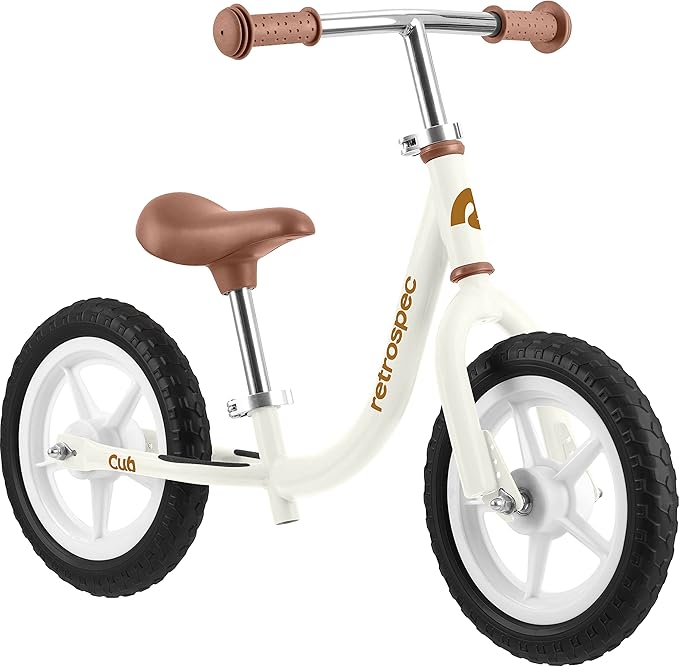
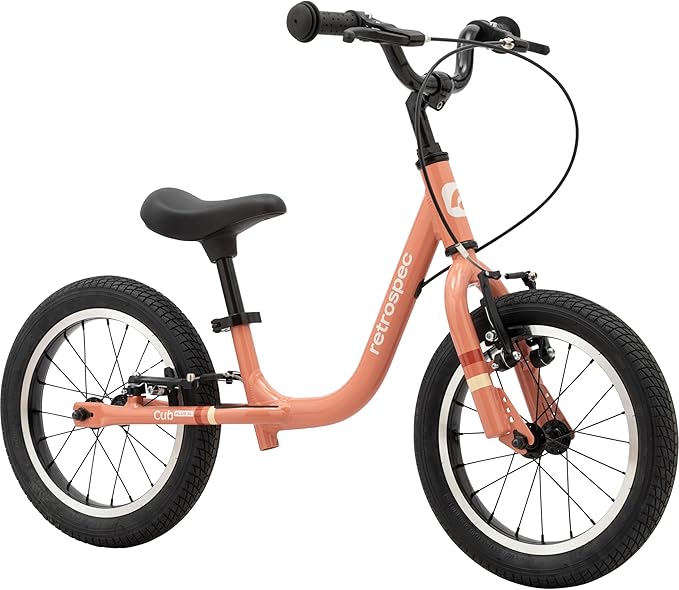
Retrospec Cub Toddler Balance Bike is an early-fit choice for children around 18 months to 3 years. The 11 in (27.9 cm) starting saddle and low frame are the reason to shortlist it; the 14.5 in (36.8 cm) maximum saddle is the growth limit to accept.
Pros
- 11 in (27.9 cm) minimum saddle and low frame help small toddlers mount and stop.
Cons
- 14.5 in (36.8 cm) maximum saddle gives limited growth room.
- Rank #14 Our score: 9.79 / 10
Birtech Balance Bike
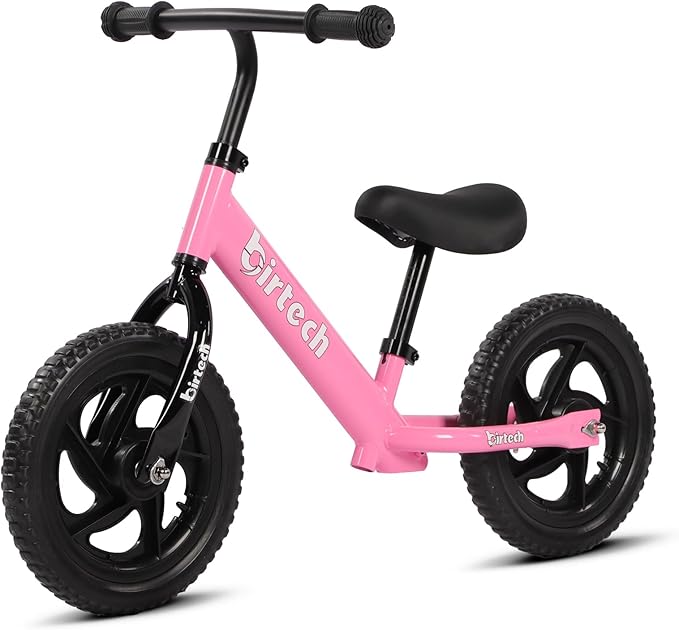
Birtech Balance Bike is a preschool-focused two-wheel balance bike. Foam tires keep maintenance simple, while the main buying check is still whether the saddle range matches your child now.
Pros
- Light 6.2 lb (2.8 kg) build is easier for preschoolers and parents to handle.
Cons
- 13.8 in (35 cm) minimum saddle may be too high for smaller toddlers.
- Rank #15 Our score: 9.78 / 10
Radio Flyer Air Ride Balance Bike
US brand
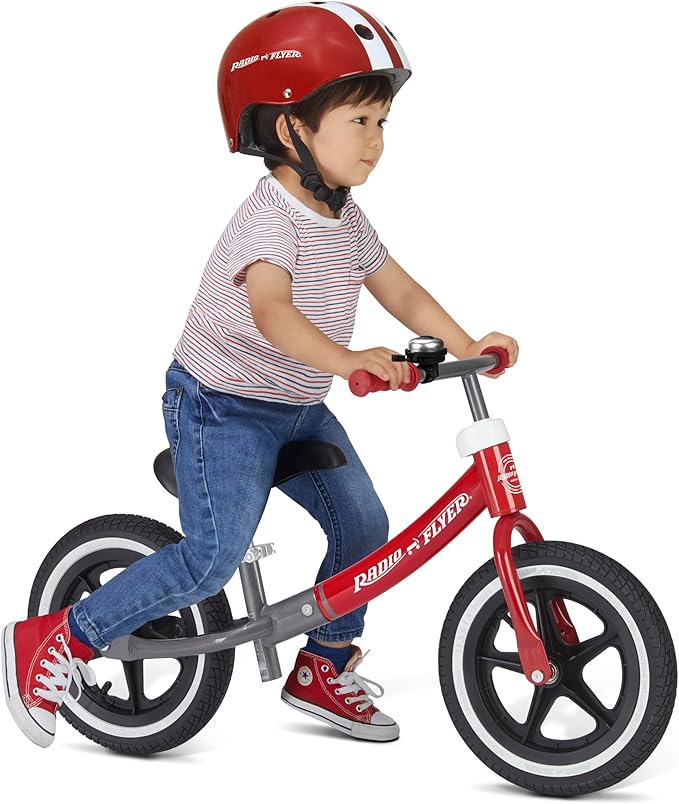
Radio Flyer Air Ride is a 12 in (30.5 cm) air-tyre learner for outdoor practice where ride comfort matters more than zero maintenance. The tool-free seat helps during growth spurts, but a small toddler still needs the actual minimum saddle setting checked.
Pros
- Air tyres cushion rough pavement better than foam tyres.
Cons
- Air tyres add pressure checks and puncture chores.
- Rank #16 Our score: 9.77 / 10
KRIDDO 2-in-1 Balance Trike
US brand
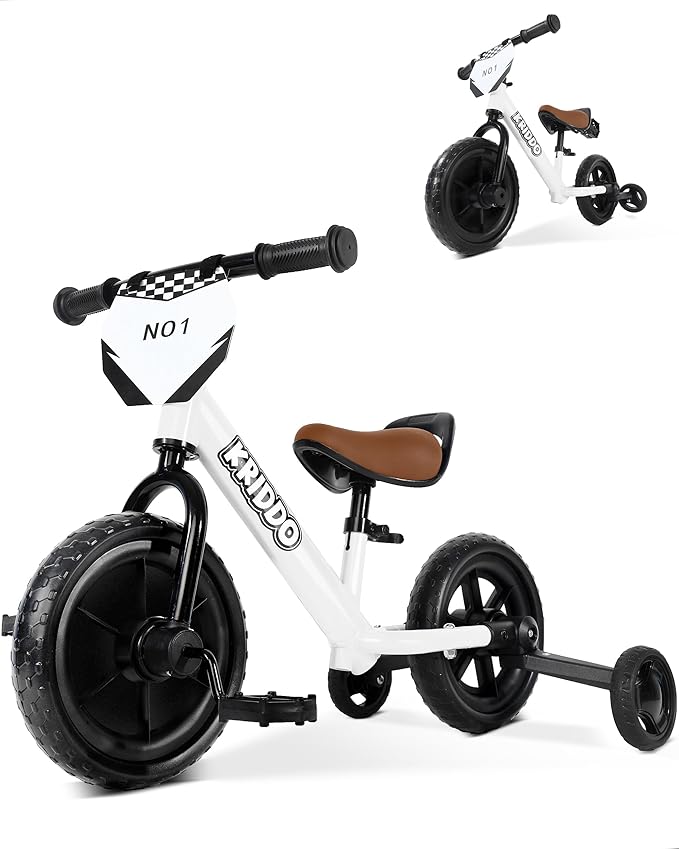
KRIDDO Safe Start changes from a tricycle into a pedal-free two-wheel balance bike: remove the training wheels and pedals, then store the detached pedals behind the seat. KRIDDO lists ages 18 months–3 years, a 9.9 lb (4.5 kg) bike and a 110 lb (49.9 kg) maximum load. The seat and handlebar adjust, but the maker publishes no numeric saddle range, so check whether the child can reach the ground in the lowest setting. Use the maker’s 18 months–3 years specification rather than broader age wording elsewhere. Conversion is useful if a family wants both tricycle and balance-bike modes, but each setup requires an adult to check the attached parts before riding.
Pros
- The same frame converts between tricycle use and pedal-free two-wheel practice; detached pedals stow behind the seat.
Cons
- Maker’s explicit specification is 18 months–3 years; it does not publish a numeric saddle range.
- Rank #17 Our score: 9.76 / 10
Bobike Baby Balance Bike PXBH5B
Bobike Baby Balance Bike PXBH5B is a four-wheel feet-to-floor ride-on for a stable first scooting stage. Closed wheels and limited steering reduce foot trapping and sharp turns on smooth surfaces; confirm the delivered saddle height and secure flat-foot reach because the offer gives no useful inseam range.
Pros
- The low four-wheel layout and enclosed wheels provide a stable first feet-to-floor scooting format.
Cons
- No traceable manufacturer manual, dimensions or load limit was found, and four wheels do not develop two-wheel lateral balance.
- Rank #18 Our score: 9.76 / 10
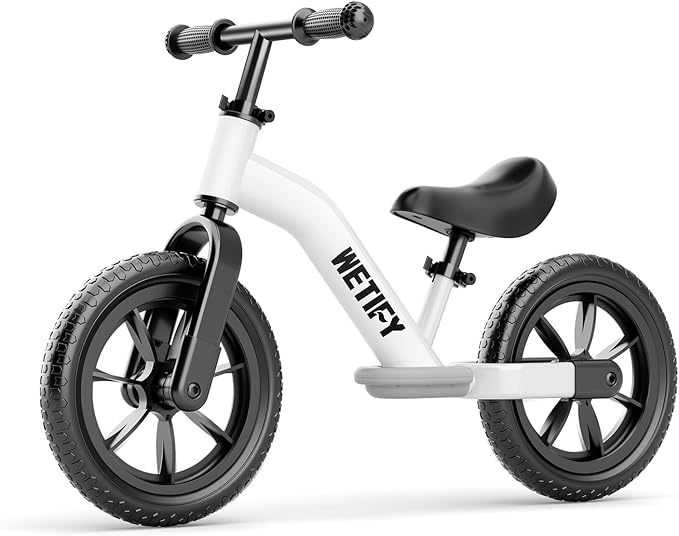
WETIFY Balance Bike 2 Year Old
WETIFY Balance Bike 2 Year Old is a two-wheel balance-bike candidate for children learning steering and balance before pedals. Check the stated age range, seat-height adjustment, and tyre style against where the child will ride.
Pros
- The exact model is positioned for the early two-year-old stage and uses a genuine two-wheel learning format.
Cons
- Minimum saddle height, rider limit and tyre construction still need confirming for the child's fit and route.
- Rank #19 Our score: 9.74 / 10
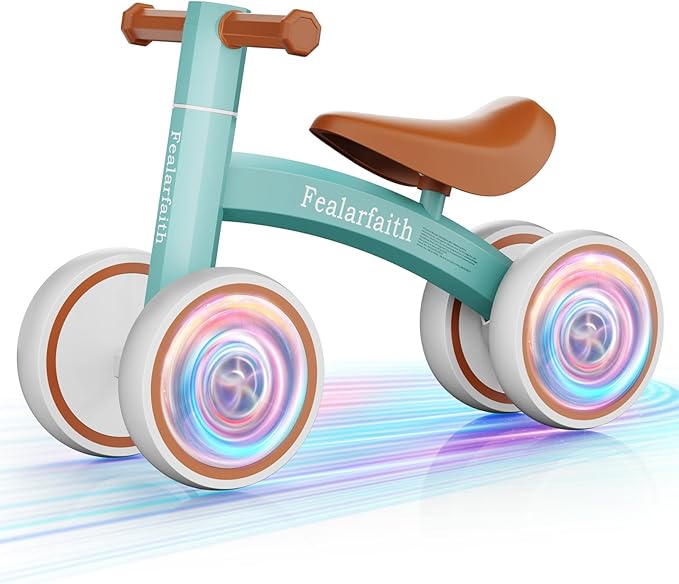
Fealarfaith Light-Up Baby Balance Bike
Best: Four-wheel first bike
Fealarfaith Light-Up Baby Balance Bike is a compact four-wheel first ride for the stated 10–36 month stage. The enclosed wheels and low stable base suit early scooting; check inseam and recognise that it is a step before two-wheel balance practice.
Pros
- The low four-wheel base supports early seated scooting.
Cons
- It will not teach the same lean balance as a two-wheel model.
- Rank #20 Our score: 9.74 / 10
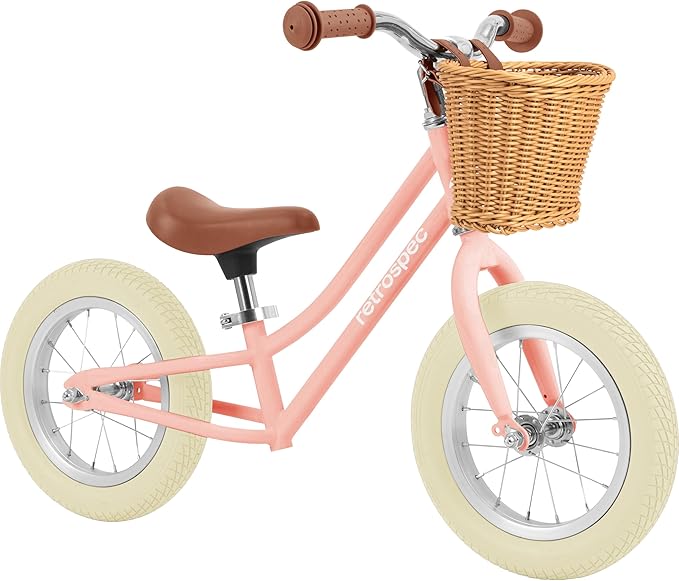
Retrospec Baby Beaumont Kids' Balance Bike
US brand
Retrospec Baby Beaumont Kids' Balance Bike suits families who want a first two-wheel bike with air tires and a charming basket/bell setup. It is best for outdoor toddler practice where comfort matters, but the extra style should not outrank saddle fit.
Pros
- Air-filled 12-inch tires are better for bumpy sidewalks than foam tires.
Cons
- Heavier, styled build is less carry-friendly than simpler lightweight starters.
- Rank #21 Our score: 9.73 / 10
Retrospec Cricket 2
US brand
Retrospec Cricket 2 is a four-wheel first ride for children aged 12–24 months, with a fixed 8.5 in (21.6 cm) saddle and 14 in (35.6 cm) handlebar. The manufacturer lists a 44 lb (20 kg) maximum rider weight and 4 lb (1.8 kg) product mass. Because neither seat nor handlebar adjusts, compare the fixed saddle height with the child’s seated foot reach before buying; the age guide alone cannot establish fit. Retrospec describes indoor use, with smooth, dry outdoor surfaces as an occasional option. This compact walker-style design is for early rolling practice, not a two-wheel balance bike or uneven-ground rides.
Pros
- Four wheels and a fixed 8.5 in (21.6 cm) saddle make the seated fit straightforward to check.
Cons
- The saddle and handlebar do not adjust; a child who cannot reach the floor at the fixed seat height will not fit.
- Rank #22 Our score: 9.71 / 10
KRIDDO Toddler Balance Bike
US brand
The regular KRIDDO Classic combines a personalised front plate with a 12 in (30.5 cm) two-wheel frame and adjustable saddle and handlebar. Check seated foot reach before choosing it for pushing and gliding practice. It has no footrest and the rider stops with their feet.
Pros
- Saddle and handlebar adjustment help find a comfortable position for foot-powered practice.
Cons
- There is no footrest or hand brake; check ground contact and stopping control rather than relying on the two-to-five-year label.
- Rank #23 Our score: 9.70 / 10
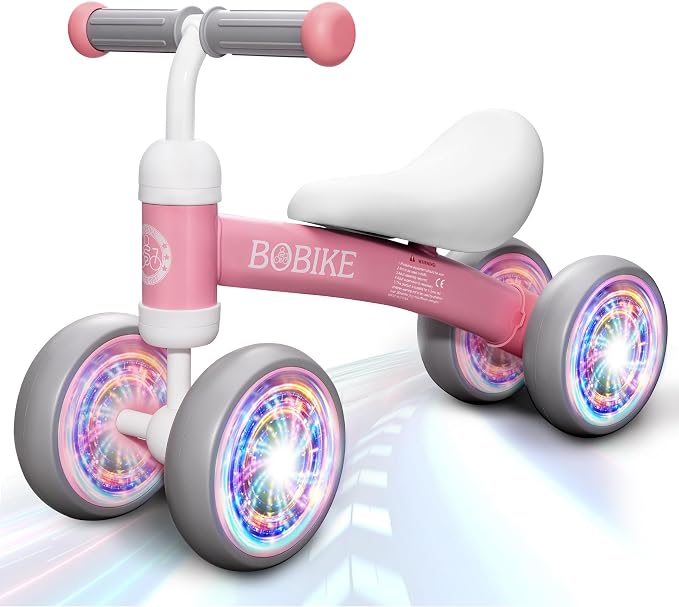
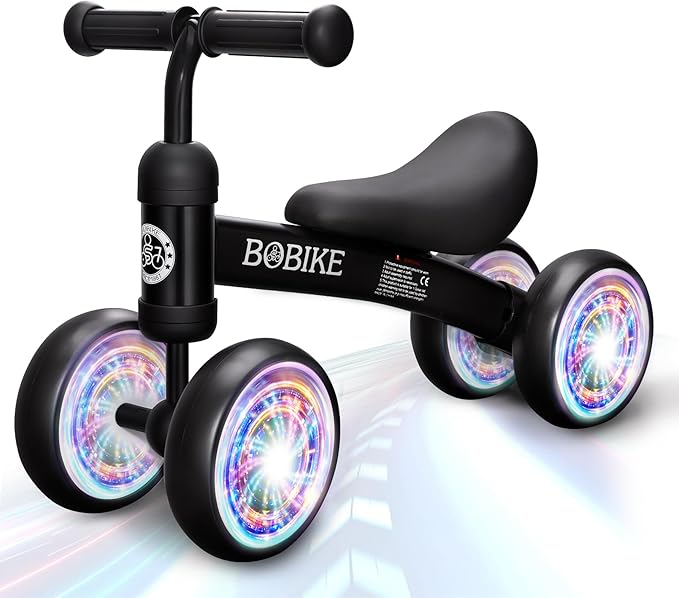
Bobike Light-Up Baby Balance Bike
Bobike Light-Up Baby Balance Bike is the novelty-led four-wheel choice when lights will help a toddler try short pushes. The lights are motivation rather than better balance training, so compare seat height, steering limits, and outgrowth risk before choosing it over a simpler baby ride-on.
Pros
- Light-up wheels can make very short practice more appealing for a toddler who needs novelty.
Cons
- Lights add motivation, not better balance progression, so do not overpay for the gimmick.
- Rank #24 Our score: 9.70 / 10
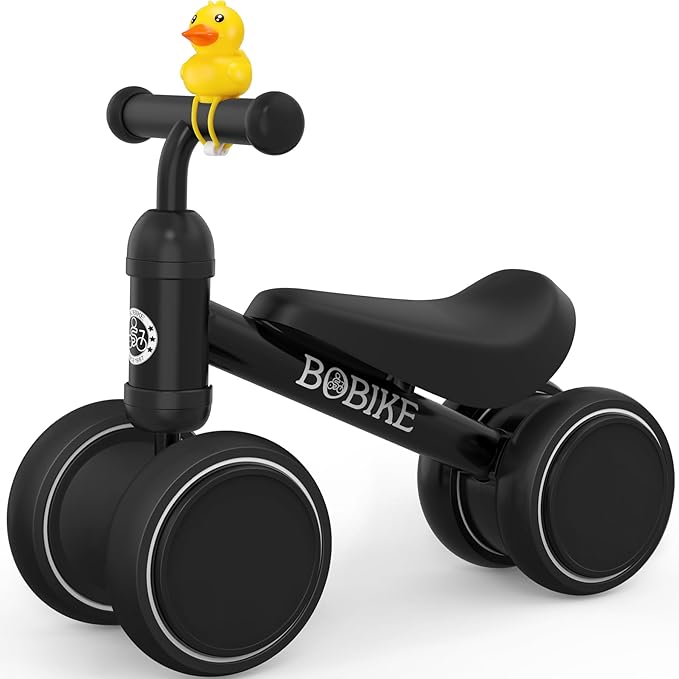
Bobike Duck Baby Balance Bike
Bobike Duck Baby Balance Bike is the play-first baby-bike pick for a toddler who needs four-wheel stability and a friendly design for short indoor practice. Treat the duck styling as motivation, then check seat height, steering limits, and whether the child still needs this brief pre-two-wheel stage.
Pros
- Duck styling gives this four-wheel baby bike a play-first hook for short indoor practice.
Cons
- It is a short-lived ride-on stage, not a strong progression bike for gliding practice.
- Rank #25 Our score: 9.69 / 10
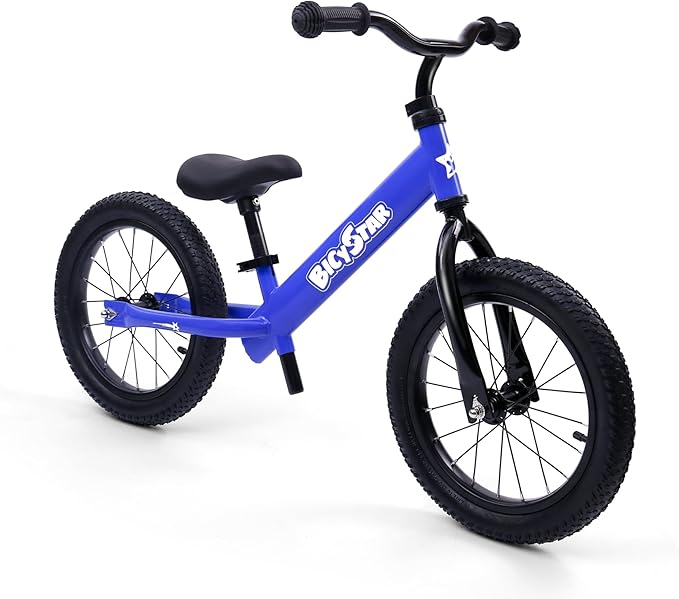
Bicystar 16-Inch Balance Bike
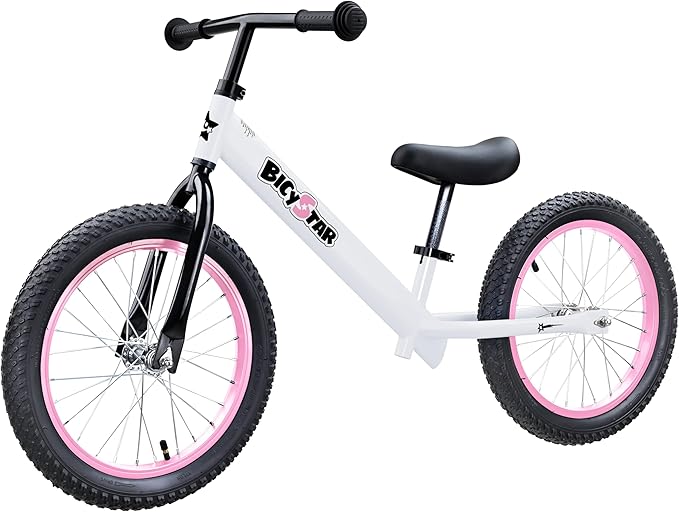
Bicystar BS-KB02 is a 16 in (40.6 cm) air-tire balance bike sized for ages 5–8, with an 18–26 in recommended inseam and a 17–24 in saddle range. The maker also lists 25–28 in handlebars and a 10.8 lb (4.9 kg) bike weight. Measure inseam and check the saddle setting rather than using age alone; the minimum 18 in inseam can rule out a younger or smaller child. The manufacturer does not publish a maximum rider weight, so there is no supported weight-capacity figure for this model.
Pros
- The 18–26 in inseam and 17–24 in saddle ranges make fit measurable for an older or taller beginner.
Cons
- The 18 in minimum inseam can be too large for a child near the lower end of the age guide.
- Rank #26 Our score: 9.67 / 10
KRIDDO Kids Balance Bike with Front Light
US brand
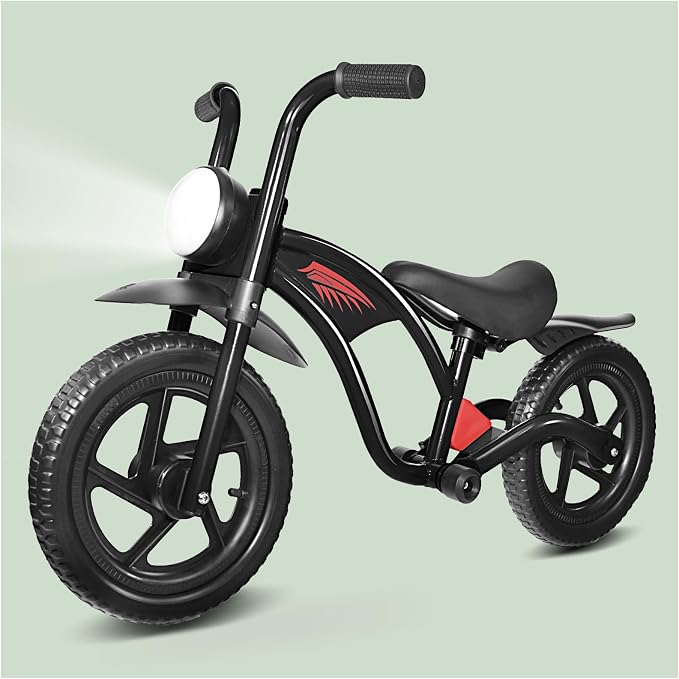
KRIDDO Buzz Rider is a two-wheel balance bike with a built-in front light, fenders and a shock-absorbing structure for children in the maker’s 2–5-year guide. Its 9.3 lb (4.2 kg) weight and 110 lb (49.9 kg) maximum load are listed by KRIDDO. The seat adjusts, but the maker gives no numeric saddle or inseam range, so age alone cannot confirm fit. Before buying, check that the lowest seat setting lets the child sit with both feet reaching the ground. That direct fit check matters more here than choosing from the broad age label.
Pros
- Built-in front light, fenders and a shock-absorbing structure are specified for this exact Buzz Rider model.
Cons
- No numeric saddle-height or inseam range is published; confirm feet reach the ground at the lowest setting.
- Rank #27 Our score: 9.66 / 10
KRIDDO 1-2 Year Old Balance Bike
US brand
KRIDDO 1-2 Year Old Balance Bike is a very early first-bike option, not a standard preschool runner. The wide, stable toddler layout helps cautious new riders; the tradeoff is that children ready to glide fast may outgrow its purpose quickly.
Pros
- Stable wide-wheel layout is approachable for very young toddlers.
Cons
- Short usefulness window once the child is ready for real two-wheel gliding.
- Rank #28 Our score: 9.65 / 10
Bicystar KB-BMX01 BMX Balance Bike
Bicystar KB-BMX01 is a distinct 16 in (40.6 cm) BMX-style balance bike for ages 5–8, with a 15.5–23.6 in inseam range and 15–22.6 in saddle adjustment. It weighs 12.1 lb (5.5 kg) and has a maker-stated 110 lb (49.9 kg) rider limit. Measure the child’s inseam and compare it with the seat range; the broad age label alone does not establish fit. Its air tires and larger adjustment range suit an older beginner, while the bike’s 12.1 lb (5.5 kg) weight matters when an adult carries it between practice spots.
Pros
- The 15.5–23.6 in inseam and 15–22.6 in saddle ranges give older beginners room to adjust fit.
Cons
- At 12.1 lb (5.5 kg), it is a heavier carry between practice areas than its fit figures alone suggest.
- Rank #29 Our score: 9.64 / 10
RoyalBaby Kids Bike
RoyalBaby Kids Bike is a two-wheel balance-bike candidate for children learning steering and balance before pedals. Check the stated age range, seat-height adjustment, and tyre style against where the child will ride.
Pros
- RoyalBaby is a more recognizable bike brand for parents who dislike anonymous balance-bike listings.
Cons
- The broad Kids Bike naming is not enough to decide fit; verify balance-bike setup and saddle range before buying.
- Rank #30 Our score: 9.61 / 10
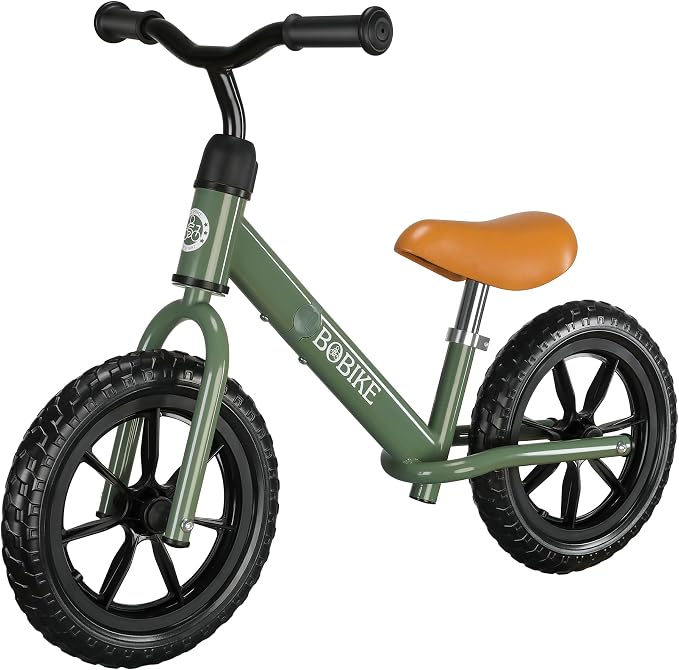
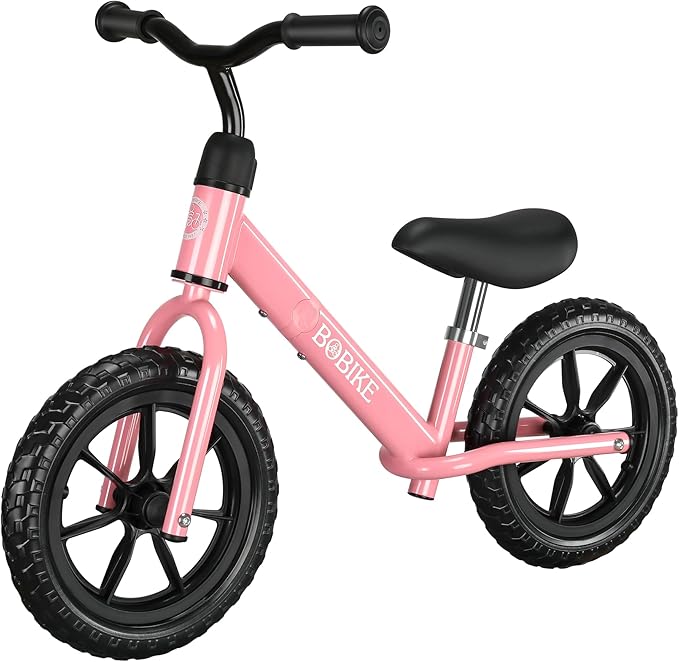
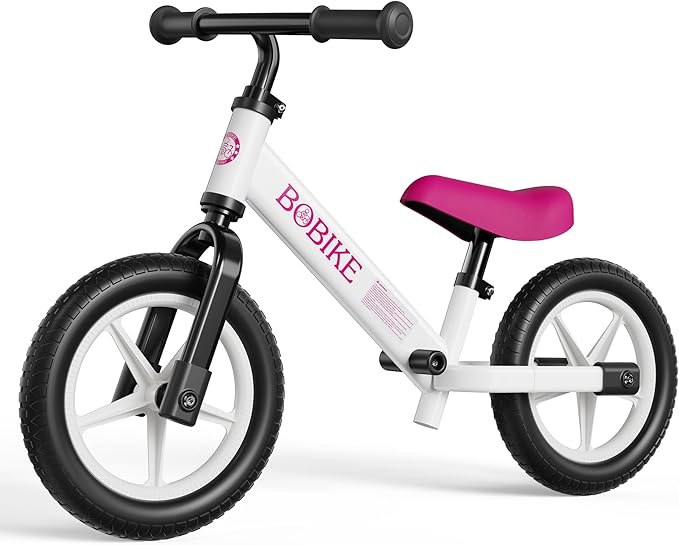
Bobike Balance Bike
The Bobike balance bike is a two-wheel, pedal-free bike for two-to-five-year-olds learning balance, steering and the basics of riding before their first pedal bike. It comes from Bobike, a brand parents may already know from its child seats; the tradeoff is a simple feature set compared with convertibles or air-tyre models.
Pros
- Simple pedal-free design focuses on balance and steering basics for ages 2-5.
Cons
- Basic feature set - no convertibility or premium suspension details.
- Rank #31 Our score: 9.58 / 10
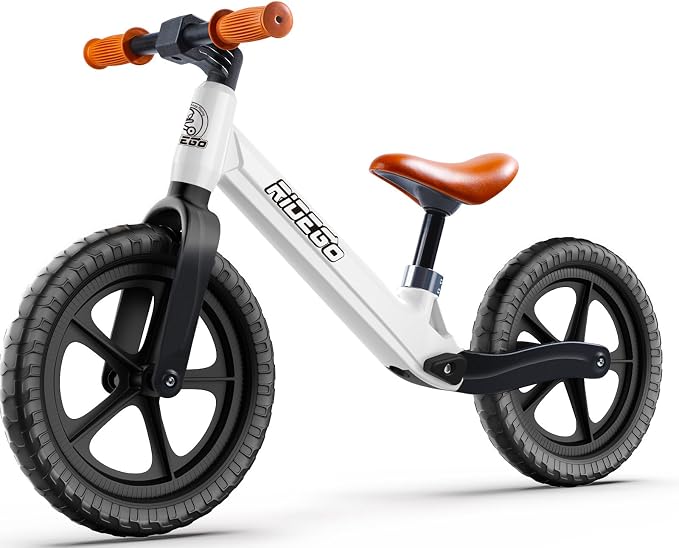
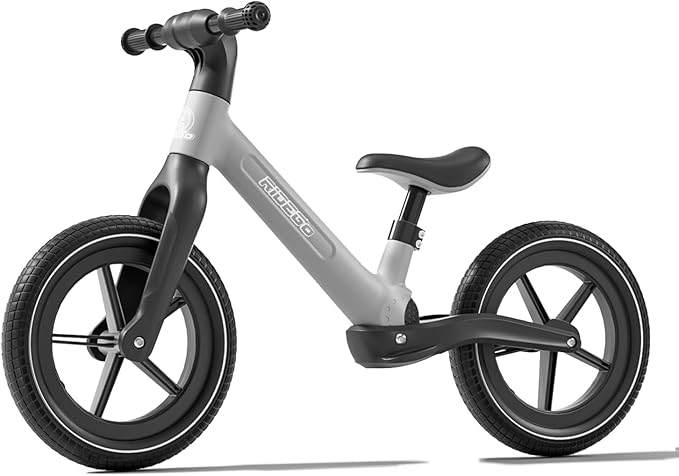
Ridego 12 in (30.5 cm) Foam-Tire Balance Bike
Ridego 12 in (30.5 cm) Foam-Tire Balance Bike targets early two-wheel practice with a listed 12.2-16.9 in (31-42.9 cm) saddle range, footrest and puncture-free tires. It is easier to maintain than an air-tire bike, but rough-path comfort and the child's inseam at the minimum setting need checking.
Pros
- A 12.2 in (31 cm) listed minimum saddle, adjustable range and footrest make the fit proposition clearer than broad age-only listings.
Cons
- Puncture-free foam tires trade away some grip and bump absorption compared with pneumatic tires.
- Rank #32 Our score: 9.56 / 10
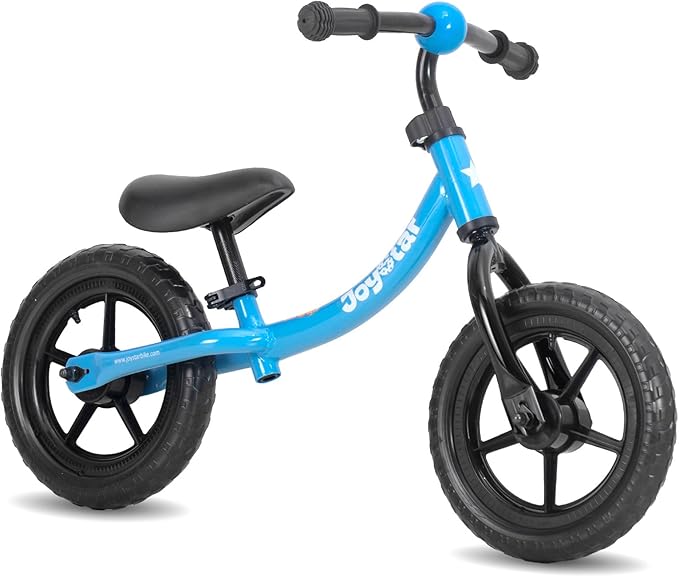
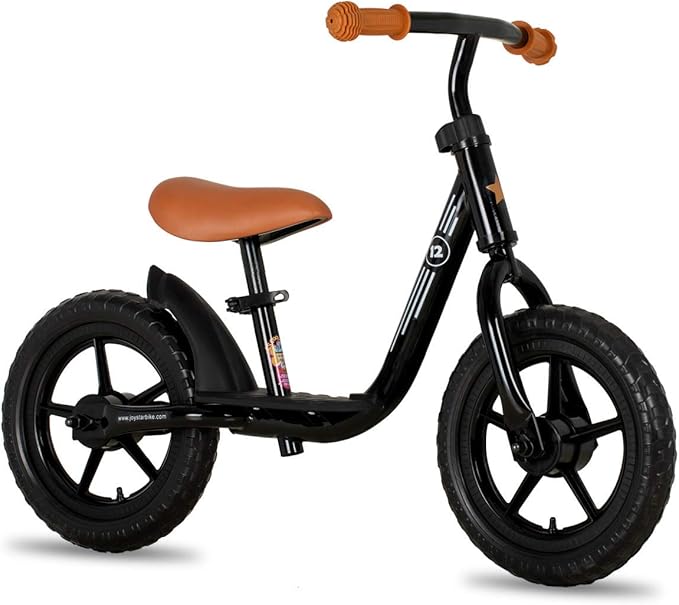
JOYSTAR Toddler Balance Bike
The Marcher combines a curved frame, 12-inch EVA tyres and a saddle adjustable from roughly 12.2-15.7 in (31-40 cm). It is a simple choice for pushing and short glides once the lowest seat setting fits. There is no Roller-style footplate; check secure foot contact for stopping and the 75 lb (34 kg) rider limit.
Pros
- Quick saddle adjustment helps establish comfortable foot contact as the child grows.
Cons
- A child must already reach the ground securely from the roughly 12.2 in (31 cm) minimum saddle height.
- Rank #33 Our score: 9.56 / 10
Madd Gear Balance Bike
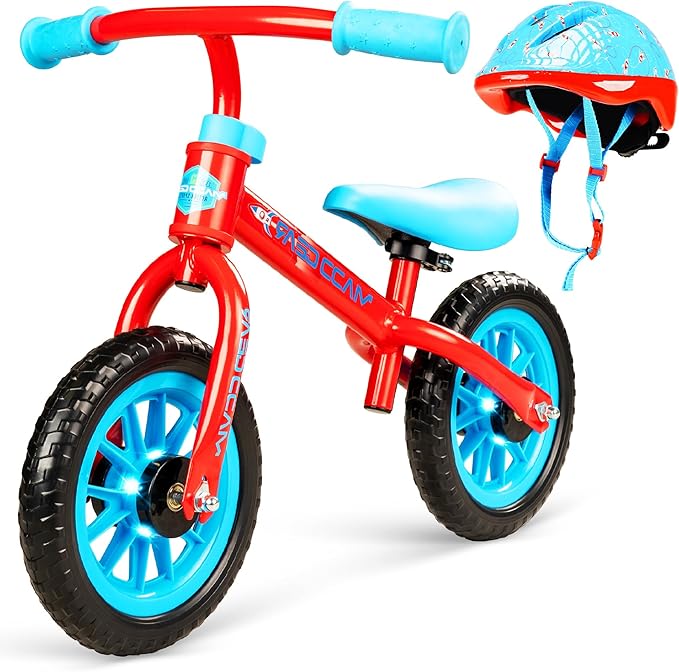
The red/blue Madd Gear My 1st ZBike combines a 6 lb (2.7 kg) balance bike with light-up wheels and a helmet. Its 10 in (25.4 cm) airless tyres avoid puncture repairs. Madd Gear gives an 18-month-to-4-year age range and 44.1 lb (20 kg) rider limit; check saddle height and helmet fit separately before choosing the bundle.
Pros
- The 6 lb (2.7 kg) bike combines adjustable contact points with airless tyres that need no puncture repairs.
Cons
- The exact saddle-height range is unpublished on the reviewed product page; check it before buying for a small toddler.
- Rank #34 Our score: 9.55 / 10
SYNCFUN Toddler Balance Bike
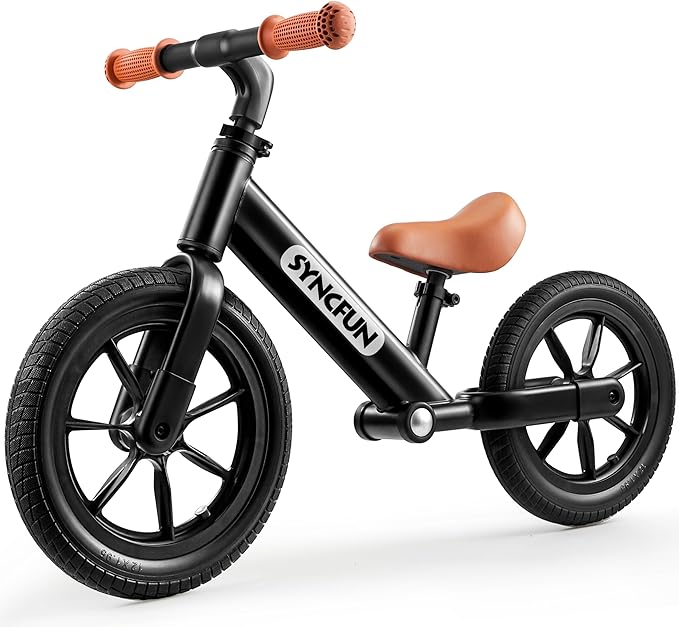
SYNCFUN Toddler Balance Bike is a 12 in (30.5 cm) two-wheel option with parent-friendly setup details: no-tool assembly, carry strap, and airless tires. The missing exact saddle range is the caveat, so confirm fit before choosing it for a small two-year-old.
Pros
- Carry strap helps when a child stops riding mid-walk.
Cons
- Exact saddle-height range is not clear in the listing.
- Rank #35 Our score: 9.55 / 10
ACEGER 12" Kids Balance Bike
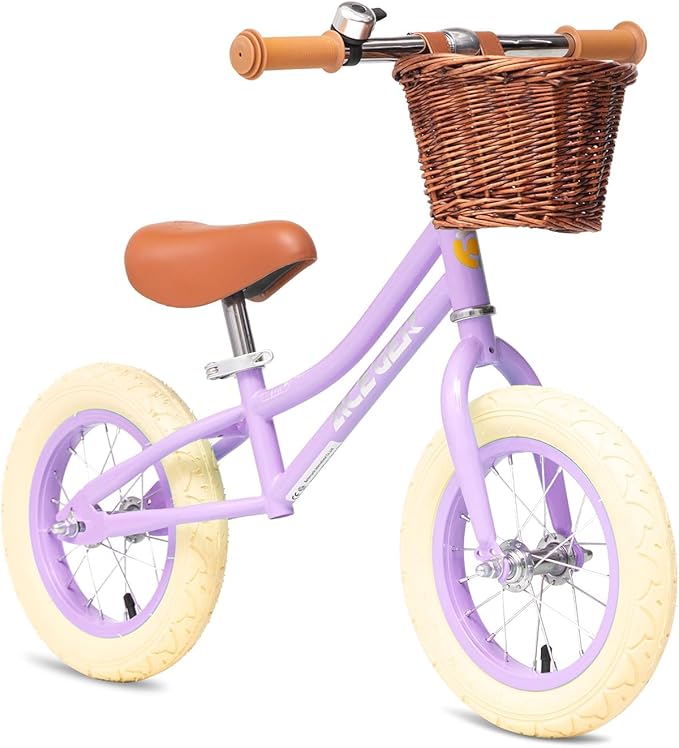
The purple ACEGER combines a step-through frame, basket and bell with 12 in (30.5 cm) air-filled tyres. Its quick-release saddle is convenient for adjustment, but it has no brake: the rider must be able to put both feet firmly down. The seller specifies a 13 in (33 cm) minimum inside leg for ages 2½–5; a full saddle-height range is not published.
Pros
- The basket and bell are included, and the quick-release seat post makes saddle adjustments straightforward.
Cons
- Air-filled tyres need pressure checks. There is no brake, so confident foot contact matters more than the age guide.
- Rank #36 Our score: 9.54 / 10
HAWEEK 12-Inch Toddler Balance Bike
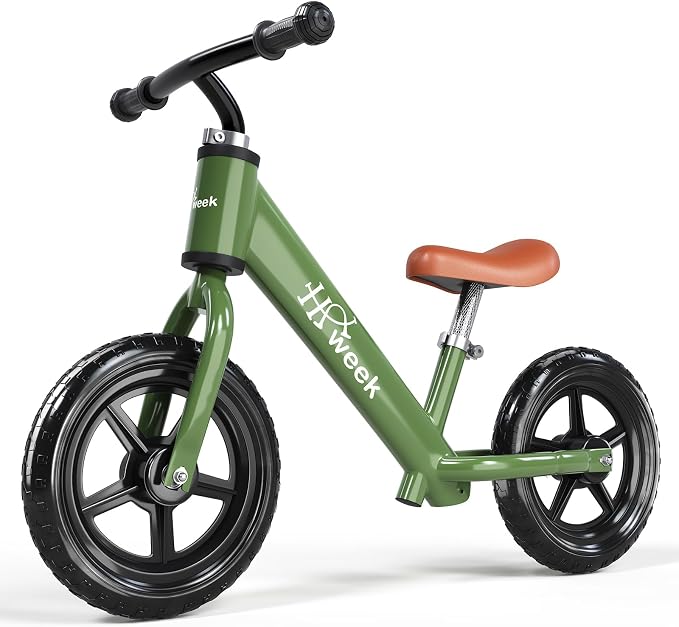
HAWEEK 12-Inch Toddler Balance Bike is a basic two-wheel starter with tool-free saddle and handlebar adjustment and maintenance-free foam tires. Ignore the broad age headline and buy by inseam: both feet should sit flat with bent knees at the lowest saddle setting.
Pros
- Tool-free contact-point adjustment and puncture-free 12-inch tyres simplify fitting and maintenance.
Cons
- Foam tyres cushion rough paths less than air tyres, and the minimum saddle height still needs checking against inseam.
- Rank #37 Our score: 9.53 / 10
Kkdi Unicorn Baby Balance Bike
Kkdi Unicorn is a four-wheel first ride-on for toddlers who need stability while learning to sit, steer and push. The widened EVA wheels and limited steering make it approachable, but it does not teach the lateral balance of a two-wheel bike.
Pros
- Four widened wheels and limited steering provide a stable format for early seated scooting.
Cons
- The four-wheel layout does not develop the unsupported lateral balance of a two-wheel bike.
- Rank #38 Our score: 9.53 / 10
Bobike Toddler Balance Bike Toys
Bobike Toddler Balance Bike Toys is a two-wheel no-pedal bike for ages 2–5 with an adjustable saddle and handlebar. Check the minimum saddle height against the child's inseam; the current listing does not establish the tire material.
Pros
- The adjustable saddle and handlebar give the two-wheel runner room to follow a preschool child’s growth.
Cons
- The current listing does not state the minimum saddle height or tire material, so both need checking before buying.
- Rank #39 Our score: 9.50 / 10
Ridego 14 Inch Balance Bike
Larger 14 in (35.6 cm) balance-bike fit; check minimum seat height before choosing it for a small toddler.
The Ridego 14 in (35.6 cm) is listed for ages 3–6, but saddle fit is the better check: it starts at 14.2 in (36.1 cm) and adjusts to 18.3. Compare your child’s inseam with the saddle height; fit guidance calls for the saddle about 0.5-1 in (1.3-2.5 cm) below the inseam, with both feet able to push and stop. If that fit is not there at 14.2 in (36.1 cm), this bike is still too large. Its 14-inch wheels and inflatable rubber tires make for a roomier ride, but do not solve an oversized fit.
Pros
- 14 inch wheels suit children who have outgrown smaller toddler bikes.
Cons
- 14.2 in (36.1 cm) minimum saddle is too tall for many toddlers.
- Rank #40 Our score: 9.49 / 10
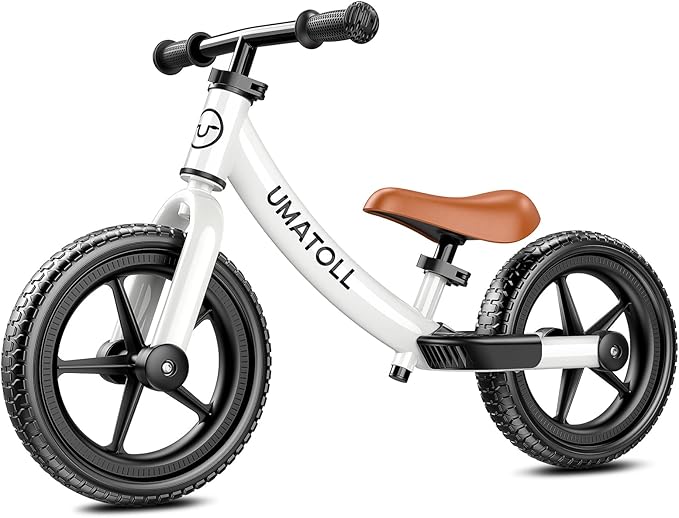
Umatoll Two-Wheel Toddler Balance Bike
Umatoll Toddler Balance Bike spans toddlers into the preschool years on a simple two-wheel frame. It is a fit-first pick, so confirm the seat-height range rather than assuming the full age range will suit every child.
Pros
- Very low stated seat range can suit smaller early riders.
Cons
- Upper saddle range may be short-lived for taller preschoolers.
- Rank #41 Our score: 9.48 / 10
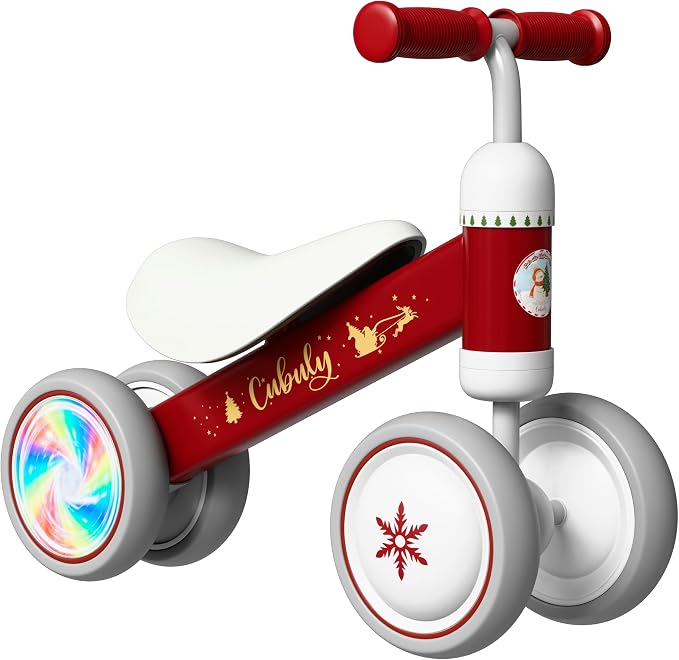
Cubuly Baby Balance Bike
Cubuly Baby Balance Bike is a compact four-wheel first ride for early scooting, with enclosed wheels, limited steering and a listed 3.7 lb (1.7 kg) weight. It can suit a younger toddler learning to propel and steer, but it is not a substitute for a two-wheel balance bike once lateral balance is the goal.
Pros
- The enclosed four-wheel base, steering limiter and very low listed weight suit early indoor or smooth-surface scooting.
Cons
- The stable layout develops steering and propulsion more than the side-to-side balance used on a pedal bike.
- Rank #42 Our score: 9.42 / 10
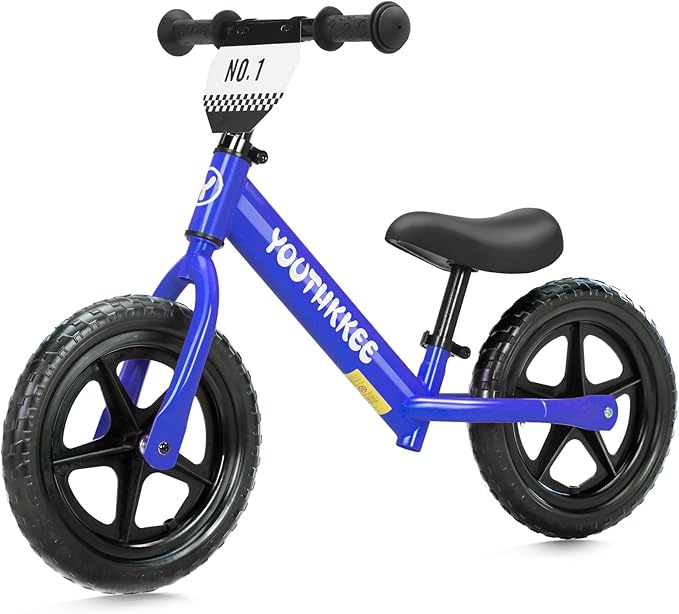
Youthkkee Balance Bike
Youthkkee’s blue balance bike has a pedal-free design, a tool-free adjustable padded seat, non-slip grips and tyres described as puncture-resistant. Seat adjustment helps tune the position, but no minimum saddle height or wheel diameter is published for this selected version. Check that both feet reach the ground at its lowest setting; the age label cannot establish fit.
Pros
- The padded seat adjusts without tools, and the listing specifies non-slip grips and puncture-resistant tyres.
Cons
- No minimum saddle height or wheel diameter is stated for this selected version; tyre material is also unverified.
- Rank #43 Our score: 9.41 / 10
JOYSTAR 10"/12" Toddler Balance Bike
JOYSTAR 10/12 Toddler Balance Bike offers a broad 12.6-18.5 in (32-47 cm) saddle range with a step-through frame and footrest. It can cover toddlers into preschool, but the 12.6 in (32 cm) minimum still needs an inseam check for younger riders.
Pros
- 12.6-18.5 in (32-47 cm) saddle range gives more growth room than many small toddler bikes.
Cons
- 12.6 in (32 cm) minimum saddle may be too tall for some 18 month riders.
- Rank #44 Our score: 9.37 / 10
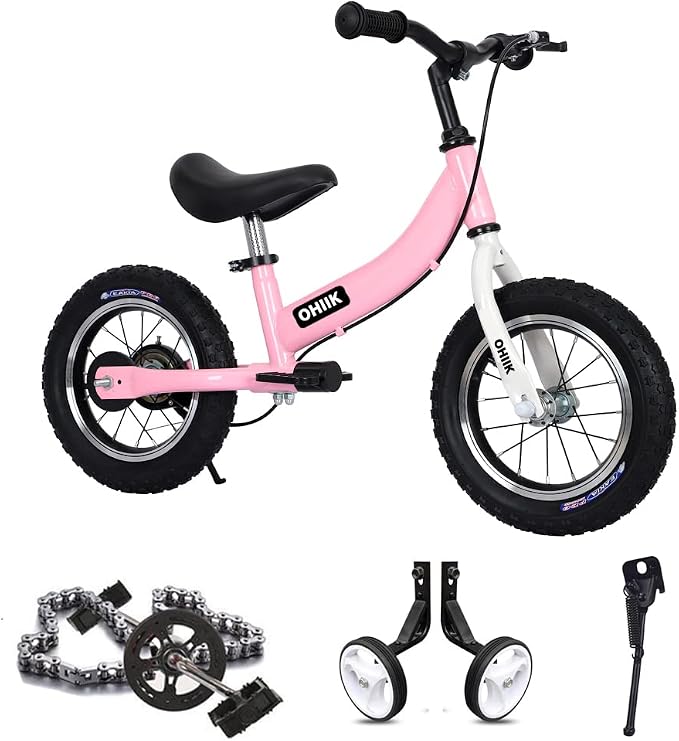
OHIIK 2-in-1 Balance and Pedal Bike
OHIIK 2-in-1 converts from a pedal-free balance setup to a pedal bike with hand brake, so it may avoid a second bike purchase when the frame fit is right. The listing combines 12-, 14- and 16 in (40.6 cm) variants, making exact wheel size and minimum saddle height essential checks before ordering.
Pros
- Included conversion parts, pneumatic tyres and a hand brake can carry one correctly fitted frame from balance to pedals.
Cons
- The grouped 12-, 14- and 16 in (40.6 cm) variants make exact wheel size, saddle height and brake reach essential checks.
- Rank #45 Our score: 9.36 / 10
Bicystar 14 Inch Balance Bike
Bicystar 14 Inch Balance Bike is a two-wheel balance-bike candidate for children learning steering and balance before pedals. Check the stated age range, seat-height adjustment, and tyre style against where the child will ride.
Pros
- The 14 in (35.6 cm) format is worth checking for taller preschoolers who are cramped on 12-inch balance bikes.
Cons
- It is not the safest blind buy for a small toddler; measure inseam and minimum saddle height first.
- Rank #46 Our score: 9.33 / 10
Bobike Toddler Balance Bike 2 Year Old
Bobike Toddler Balance Bike 2 Year Old is a two-wheel balance-bike candidate for children learning steering and balance before pedals. Check the stated age range, seat-height adjustment, and tyre style against where the child will ride.
Pros
- The two-year-old positioning makes this a toddler-first two-wheel option rather than a preschool-only bike.
Cons
- Budget-bike documentation is thin, so saddle range and assembly stability need careful checking.
- Rank #47 Our score: 9.33 / 10
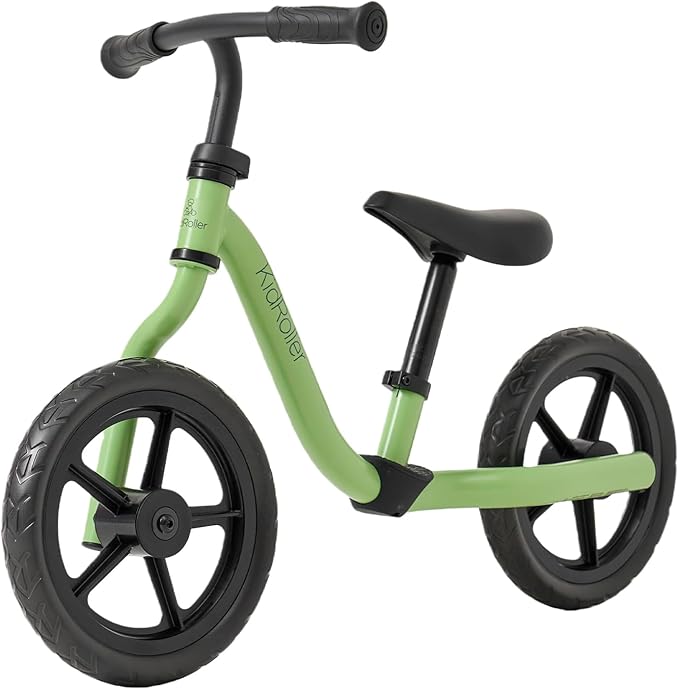
KidRoller Balance Bike
KidRoller Balance Bike is a preschool-focused two-wheel balance bike. Foam tires keep maintenance simple, while the main buying check is still whether the saddle range matches your child now. Its lighter build helps when the ride turns into walking.
Pros
- Published 13-16 in (33-40.6 cm) seat range helps with basic fit checks.
Cons
- Marketplace-only evidence is weaker than an official brand page.
- Rank #48 Our score: 9.33 / 10
KRIDDO Pro Toddler Balance Bike 2+ Year Old
US brand
KRIDDO Pro Toddler Balance Bike 2+ Year Old is for families who want a more bike-like 12 in (30.5 cm) runner with a hand brake and kickstand. It is better for older toddlers or preschoolers than for very small riders because the exact saddle range is not listed.
Pros
- Mini-V hand brake gives older riders early braking practice.
Cons
- Exact saddle-height range is not stated in the listing.
- Rank #49 Our score: 9.33 / 10
KRIDDO Riding Buddy AuraLED Balance Bike
US brand
KRIDDO Riding Buddy AuraLED is a 12-inch balance bike with an LED frame and flashing wheels, adjustable seat and handlebar, and carbon-steel frame. KRIDDO recommends it for ages 2–5 and sets a 110 lb (49.9 kg) rider maximum. The maker does not publish a numeric saddle range, inseam fit or bike weight, so check that the lowest seat setting lets the child stand over the bike and reach the ground before choosing. The saved US offer shows the illuminated unicorn companion bundle; that visual detail does not change the fit limits. This is the AuraLED model, distinct from the non-illuminated KB001 Riding Buddy.
Pros
- The LED frame and flashing wheels distinguish AuraLED from the base KB001 Riding Buddy.
Cons
- No numeric saddle or inseam range is published; verify fit at the lowest seat position.
- Rank #50 Our score: 9.33 / 10
Retrospec Cub Plus XL Kids Balance Bike
US brand
Larger 14-inch balance bike with brakes; check minimum saddle height and lever reach before choosing it for a younger child.
Retrospec Cub Plus XL Kids Balance Bike is a 14 in (35.6 cm) option for taller or later-starting children who need more room than a toddler bike. Air tires and hand brakes add capability, but only if standover and lever reach fit now.
Pros
- 14-inch wheels and XL frame give taller children more room than small 12 in (30.5 cm) bikes.
Cons
- Too much bike for many early toddlers if the saddle or brake levers start high.
- Rank #51 Our score: 9.33 / 10
woom WOW
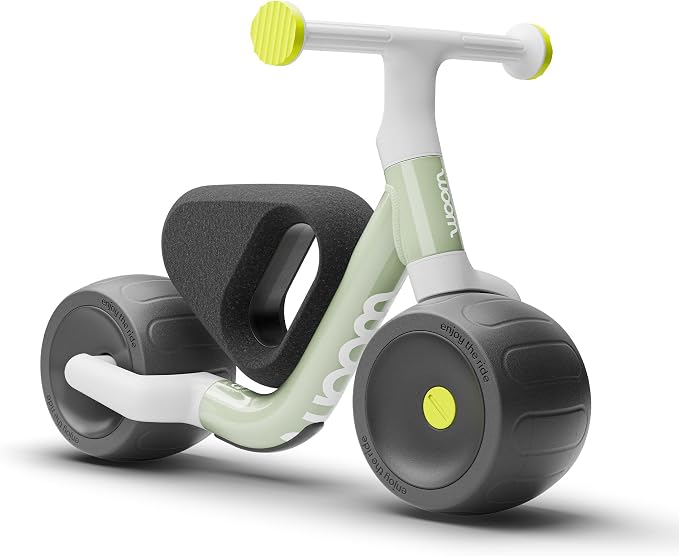
woom WOW is a self-balancing bike for children from 9 months who meet the manual’s fit checks: at least 27.6 in (70 cm), able to sit upright alone and stand holding support, with both soles flat when seated. The manufacturer recommends use through 36 months and sets a 44.1 lb (20 kg) maximum. Its product page lists two conflicting height ranges, while the manual gives no maximum height; use the posture and foot-reach checks instead of relying on an upper-height claim. The 6 lb (2.7 kg) bike is intended mainly for indoor play.
Pros
- Self-centering steering and wide, quiet EVA tires support short balance-practice sessions indoors.
Cons
- Use depends on the child’s age, 27.6 in (70 cm) minimum, independent sitting, supported standing and flat-foot reach; stop above 36 months or 44.1 lb (20 kg).