Best Balance Bikes in Austria 2026
The best balance bikes for families who want to help a child practise balance, steering, and independent riding before a pedal bike becomes the right next step.
Why are scores between 9 and 10?
This is a curated shortlist of strong picks, not a full best-to-worst ranking. Small score gaps usually mean we have slightly more evidence for one model than another, not that the lower-scoring option is a poor choice.
So this is just another affiliate roundup with an arbitrary order?
No. We make these lists good enough that we use them ourselves and recommend them to friends and family. We turn the kind of research careful parents would normally do by hand into a repeatable process. Then we compare the evidence across the markets we cover and rank products with a model that gives more weight to stronger signals instead of simple averages or a fully hand-picked order based purely on editorial preference.
Affiliate Disclosure
We use affiliate links and ads to finance this website. As an Amazon Associate I earn from qualifying purchases.
- Rank #1 Our score: 9.95 / 10
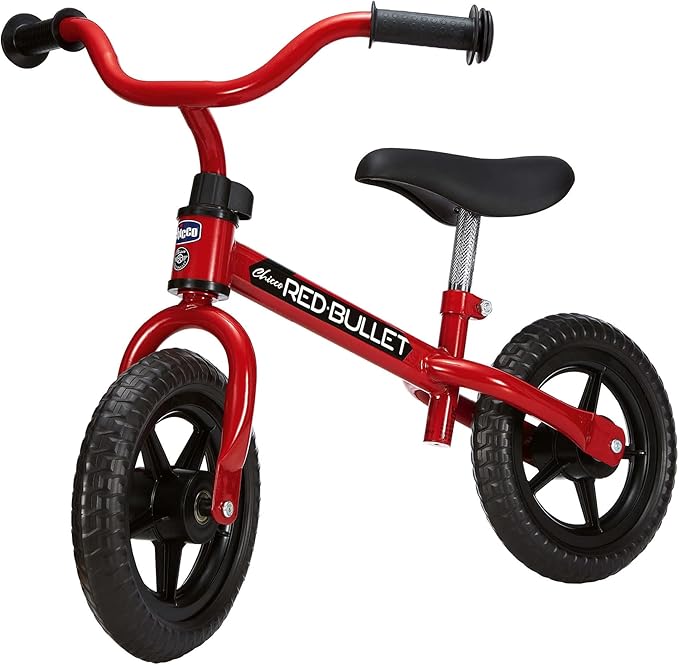
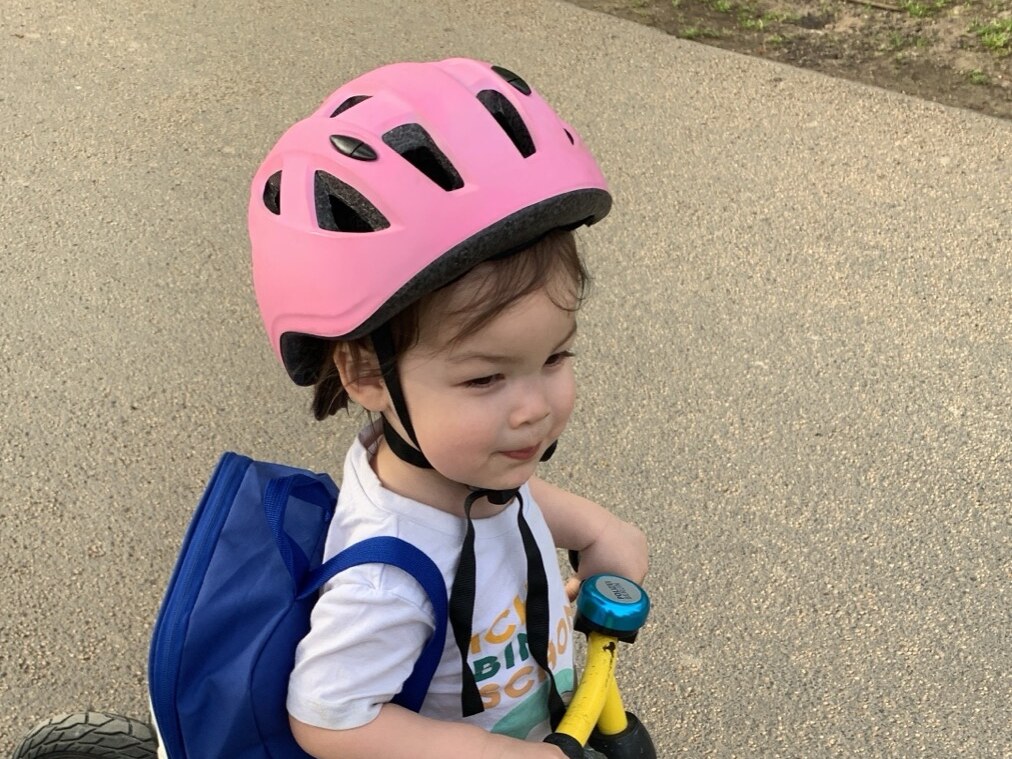
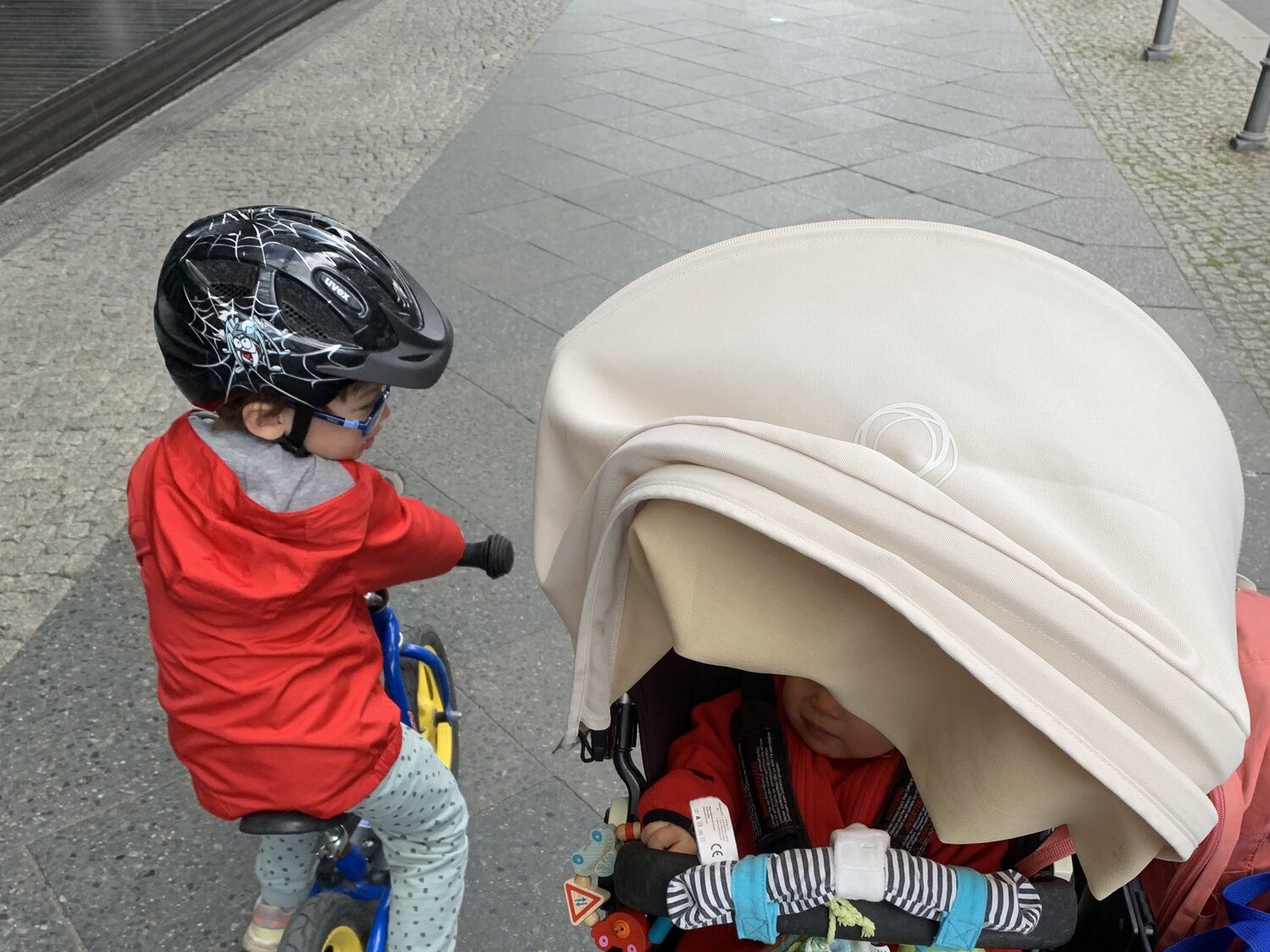
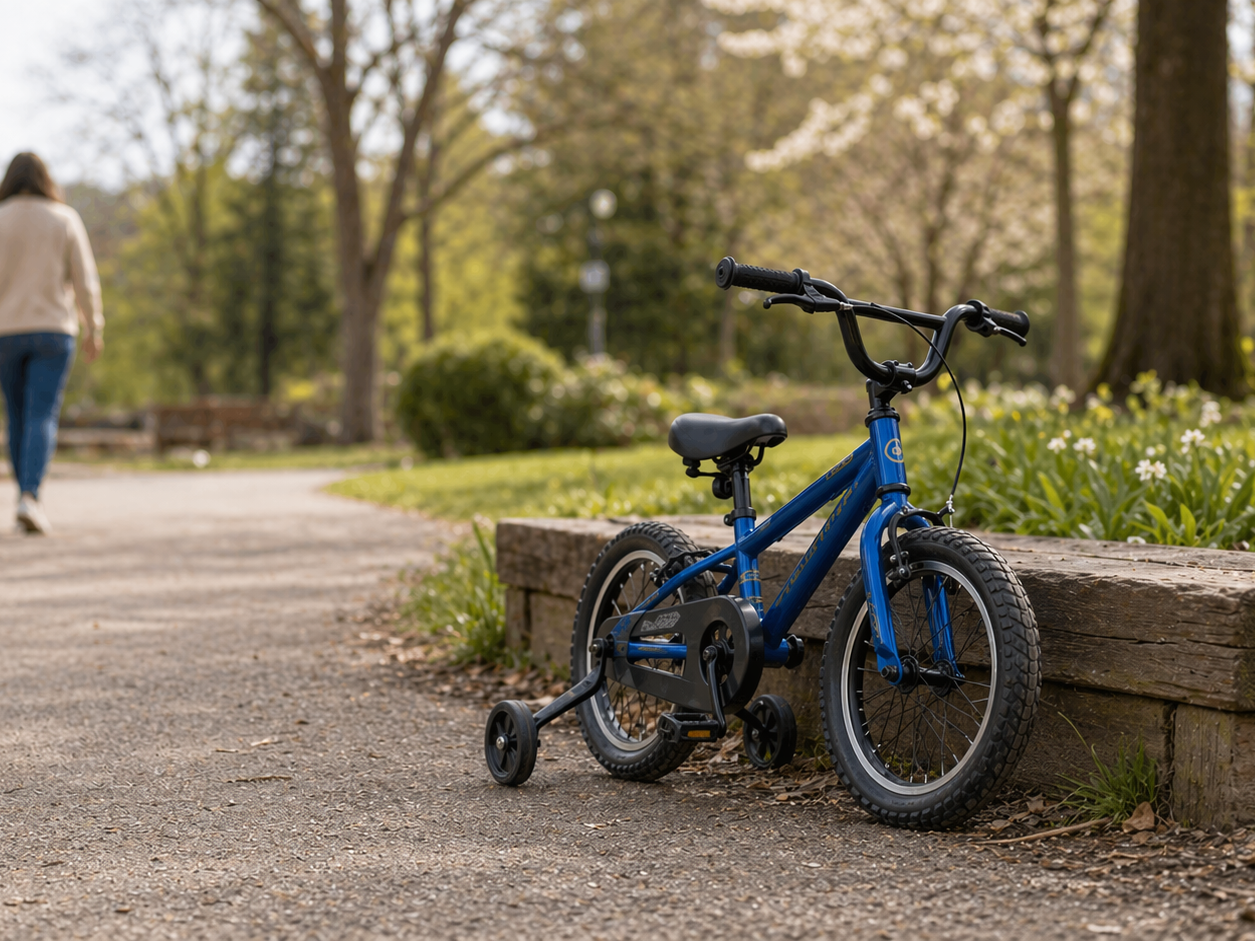
Chicco Balance Bike
Best: Affordable
Chicco Red Bullet and Green Rocket have puncture-proof tyres and adjustable saddles and handlebars for short practice rides. Red Bullet is listed at 2.6 kg, but its published saddle ranges conflict; Green Rocket’s saddle range and weight remain unverified. Neither has a hand brake.
Pros
- Puncture-proof tyres need no pumping before a short outing.
Cons
- There is no hand brake; the child must be able to stop with their feet.
- Rank #2 Our score: 9.92 / 10
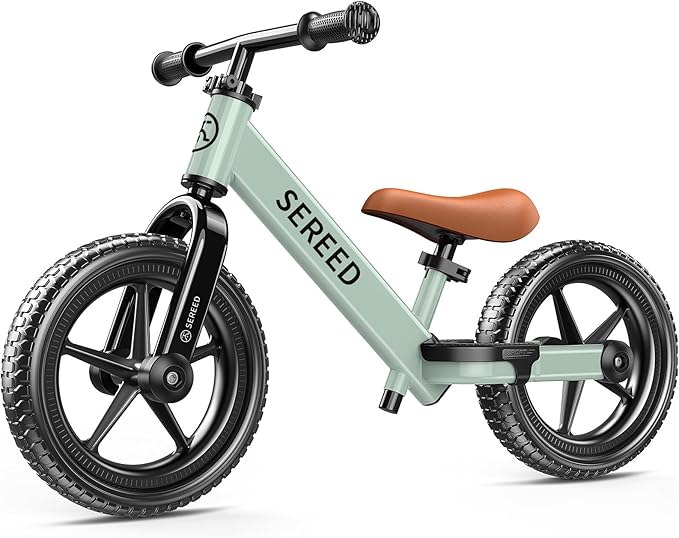
SEREED 12-inch Balance Bike
Best: Toddler fit
SEREED’s two-wheel balance bike with 12-inch wheels combines a tool-free 32-43.4 cm saddle with airless EVA tyres. The 32 cm minimum is the deciding check for a smaller two-year-old: buy only when both feet reach the ground securely.
Pros
- Tool-free 32-43.4 cm saddle adjustment and airless EVA tyres simplify growth changes and tyre upkeep.
Cons
- The 32 cm minimum can be too high for a smaller two-year-old, and EVA tyres cushion rough ground less than air tyres.
- Rank #3 Our score: 9.92 / 10
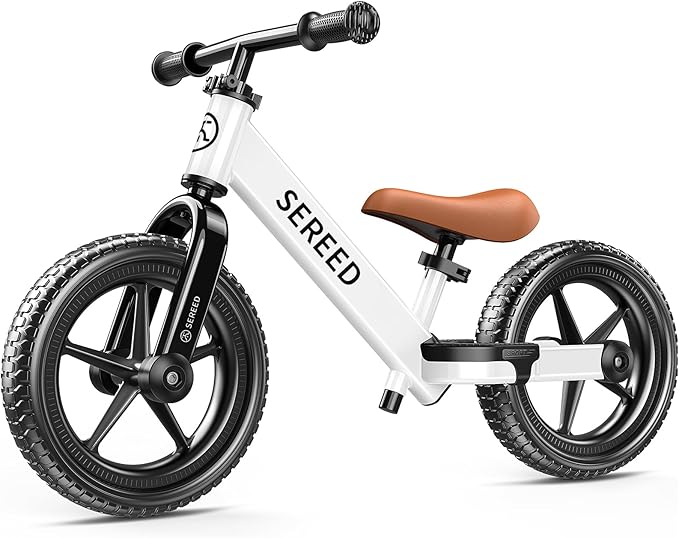
SEREED Tool-Free Balance Bike
SEREED Tool-Free Balance Bike suits a smaller preschool rider who needs a low 29.9 cm starting saddle and frequent fit adjustments without tools. Its 12-inch foam tyres and 3.5 kg frame keep maintenance and carrying simple, while the 41.9 cm maximum saddle should be checked against expected growth.
Pros
- The 29.9-41.9 cm saddle and 49.7-57.1 cm handlebar both adjust without tools, making fit changes unusually straightforward.
Cons
- Foam tyres give less grip and bump absorption than pneumatic tyres on rough or wet routes, and taller children may exhaust the 41.9 cm saddle maximum.
- Rank #4 Our score: 9.86 / 10
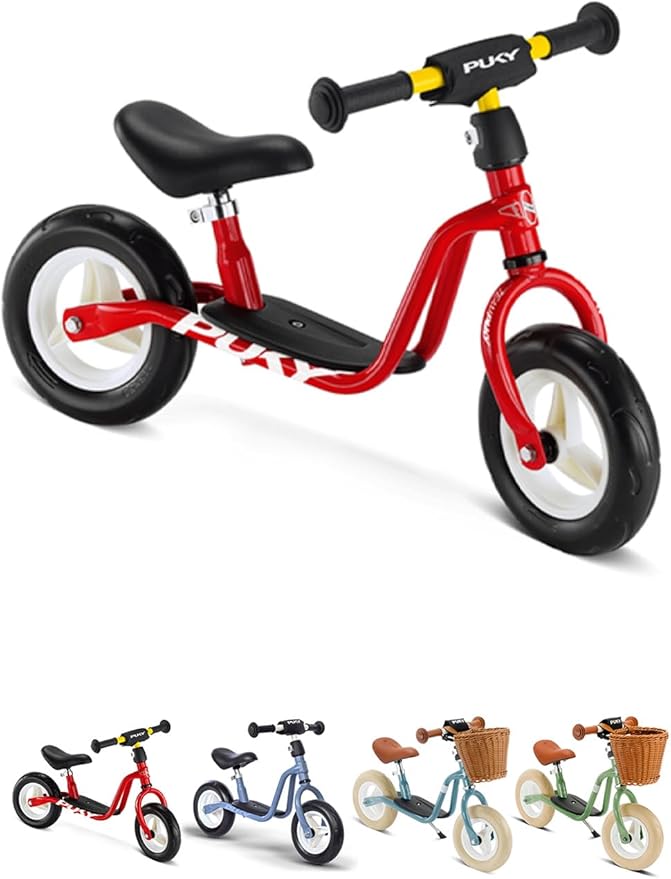
PUKY LR M Classic Balance Bike
Best: Premium
PUKY LR M Classic is a small two-wheel balance bike for roughly 85-110 cm height and 30-43 cm inseam. It weighs 3.5 kg and uses 8.8-inch EVA wheels; it fits an early stage, but a taller preschooler may quickly exhaust its room.
Pros
- The low frame, 30-43 cm inseam range and pressure-free EVA wheels simplify an early two-wheel stage.
Cons
- The small foam wheels cushion less than air tyres and leave less runway for a taller or faster child.
- Rank #5 Our score: 9.82 / 10
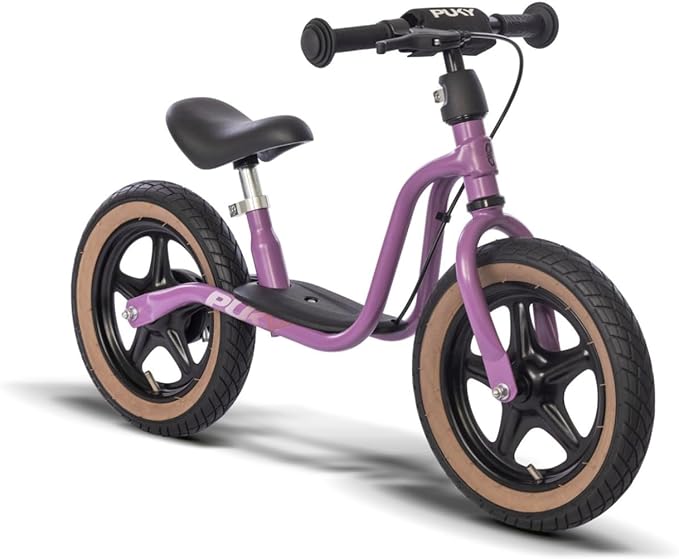
PUKY LR 1L BR
Best: Mid-range
PUKY lists a 34-47 cm inseam and 90-115 cm height range for the LR 1L BR, a balance bike with pneumatic tyres and a child-sized rear drum brake. It is aimed at children already steady on a smaller PUKY balance bike. The product page gives both 2½+ and 3+ age guidance, so check fit and brake reach rather than relying on age alone.
Pros
- The child-sized rear drum brake lets a confident balance-bike rider practise using a hand brake.
Cons
- PUKY gives conflicting 2½+ and 3+ age guidance; use the 34-47 cm inseam and 90-115 cm height ranges as fit checks.
- Rank #6 Our score: 9.80 / 10
KRIDDO Dual Bearing Balance Bike
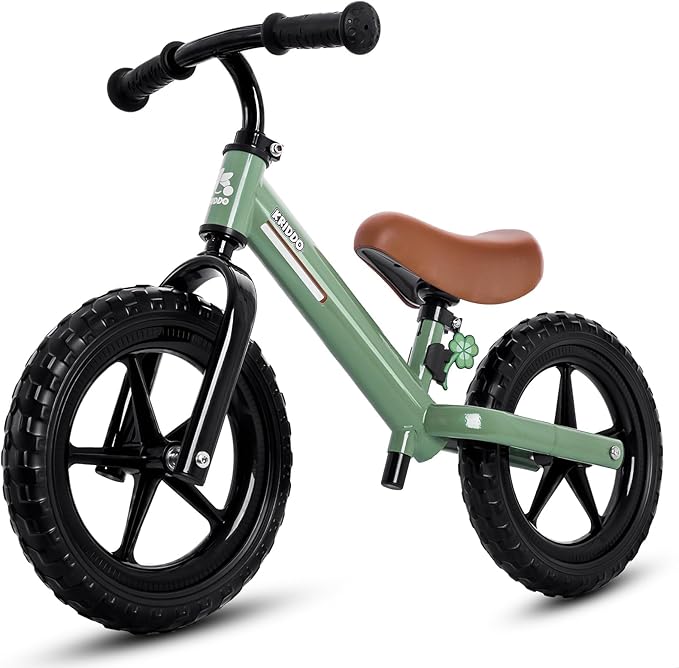
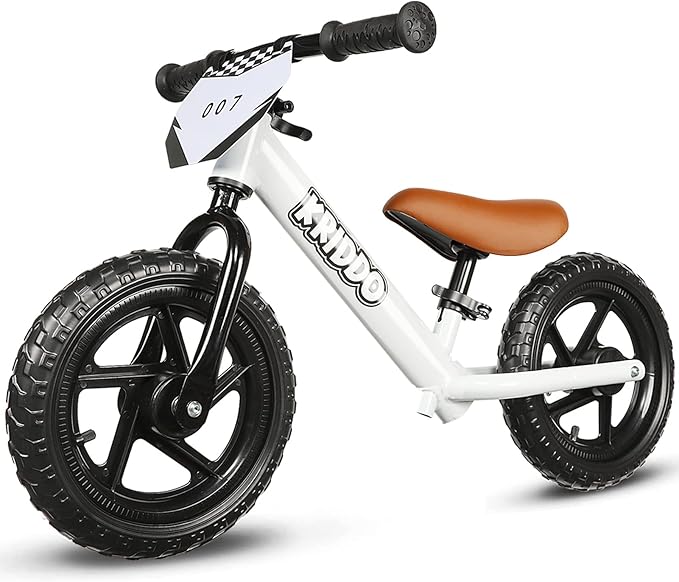
KRIDDO Dual Bearing Balance Bike is a preschool-focused two-wheel balance bike. Foam tires keep maintenance simple, while the main buying check is still whether the saddle range matches your child now.
Pros
- Light 2.6 kg frame should be manageable for many preschoolers.
Cons
- Official specs are less clear about saddle-height range than ideal.
- Rank #7 Our score: 9.79 / 10
Chillafish Charlie
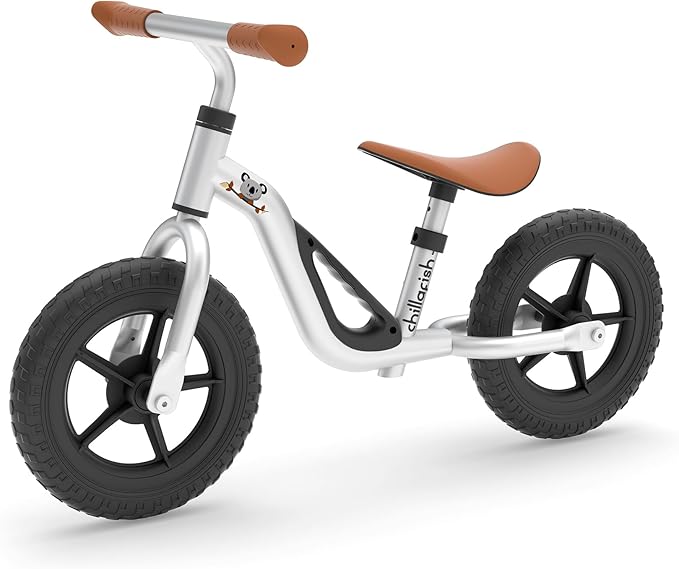
Chillafish Charlie weighs 2.5 kg and starts with a 28 cm saddle, making it worth considering for small riders who need an easy-to-carry first two-wheeler. Its 10-inch EVA tyres need no pumping, but the 37 cm saddle ceiling limits growing room and the solid tyres favour smooth, dry paths.
Pros
- The 28-37 cm saddle range gives smaller riders a low starting position.
Cons
- Limited saddle height and solid 10-inch tyres make this a short-distance starter, not a rough-path or long-term preschool bike.
Local ratings context
If the local Amazon listing has less review depth, this may help: while reviewing this product, we found more rating context on Amazon US. The shortlist also weighs product fit, brand track record, and broader research; when buying, we recommend using your local Amazon store. View Amazon US listing
- Rank #8 Our score: 9.79 / 10
VITONIS Balance Bike
Choose it only if both feet can reach the ground securely.
VITONIS Balance Bike is a simple two-wheel learner for children around 18 months to four years, with adjustable saddle and handlebar plus limited steering. The 25 kg ceiling says little about fit: buy only if both feet plant flat and the child reaches the bar without stretching.
Pros
- Height-adjustable saddle and handlebar let you set a riding position that suits your child.
Cons
- The listings do not give the saddle's exact adjustment range. Check the lowest position against your child's inseam before buying.
- Rank #9 Our score: 9.79 / 10
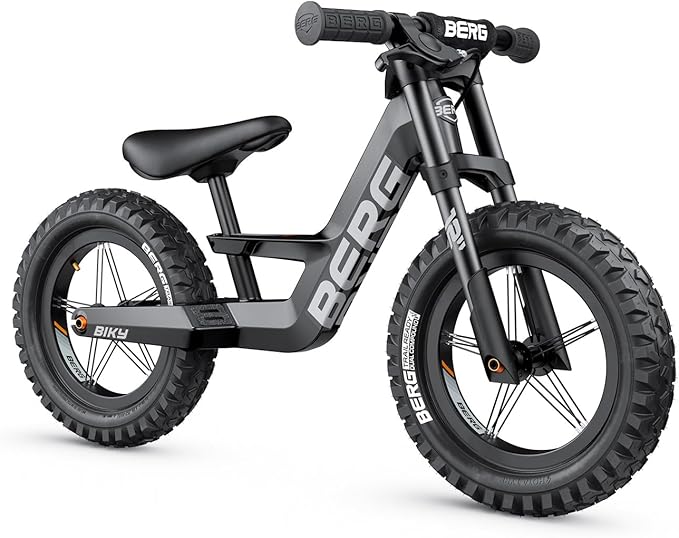
BERG Biky Cross
BERG Biky Cross suits a preschooler ready for a sportier 12-inch balance bike with pneumatic tyres and a hand brake. Check saddle fit, confident feet-down stopping and brake reach together; a lower, simpler bike may suit a cautious first starter better.
Pros
- Pneumatic tyres, a hand brake and a light magnesium frame suit faster practice on less-even park paths.
Cons
- The hand brake helps only when the child can reach and operate it without losing a stable riding position.
- Rank #10 Our score: 9.77 / 10
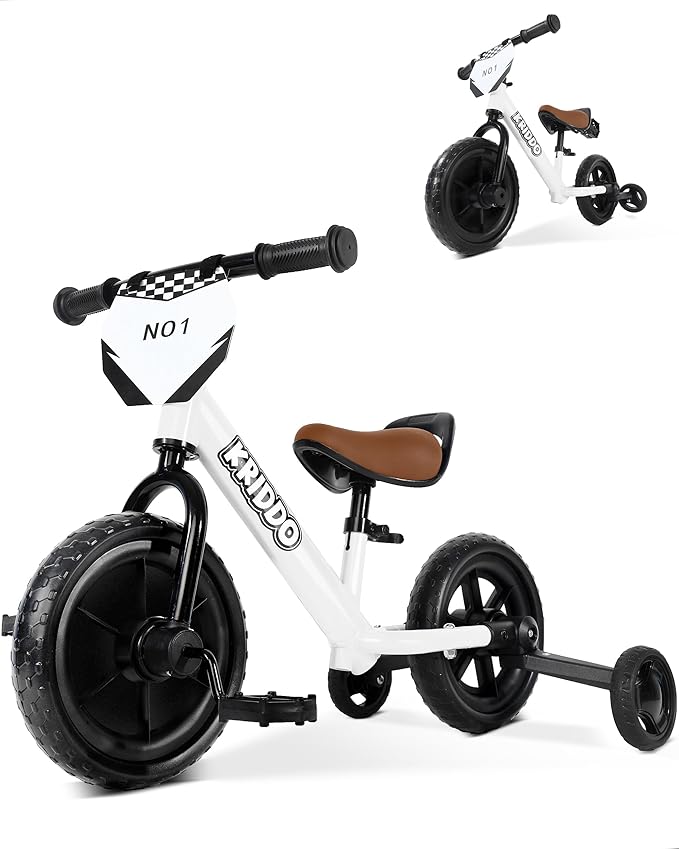
KRIDDO 2-in-1 Balance Trike
Safe Start combines front-wheel pedalling with a genuine pedal-free, two-wheel setup once the training wheels are removed. Pedal storage under the seat helps keep parts together. Choose it if you will use both configurations; at 4.5 kg, it brings more weight and setup checks than a fixed balance bike.
Pros
- Removable pedals and training wheels let the rider practise different skills.
Cons
- Mode changes add attachment checks and loose parts.
- Rank #11 Our score: 9.76 / 10
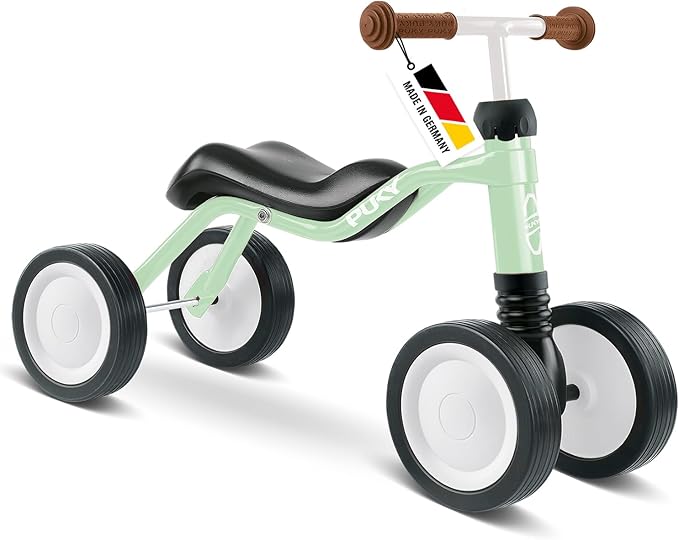
PUKY WUTSCH
Best: Four-wheel first bike
PUKY WUTSCH is a four-wheel toddler ride-on for early steering and pushing practice. It is preserved as a retired record, but it is not a two-wheel balance bike and therefore no longer belongs in the Balance Bikes shortlist.
Pros
- The oscillating axle permits more weight shifting than a rigid baby ride-on.
Cons
- Its four-wheel format does not teach the coasting and side-to-side balance of a two-wheel bike.
- Rank #12
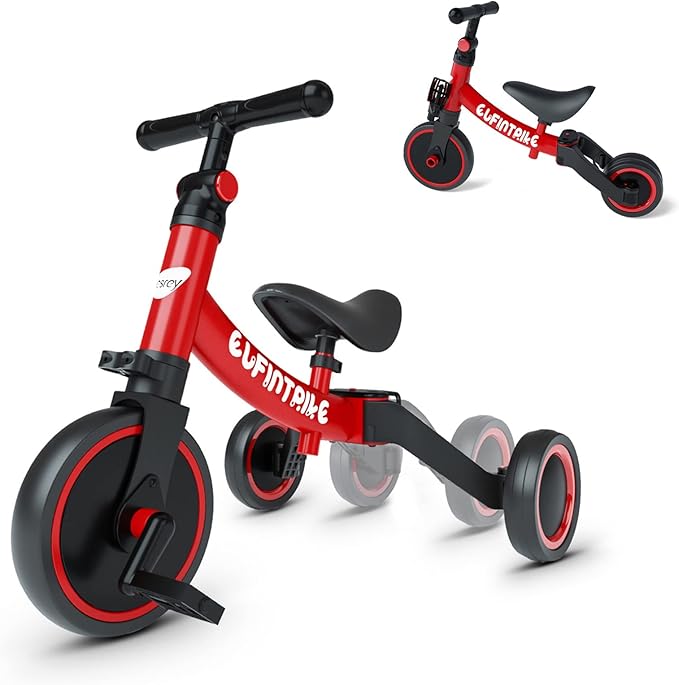
Besrey 5-in-1 Toddler Bike
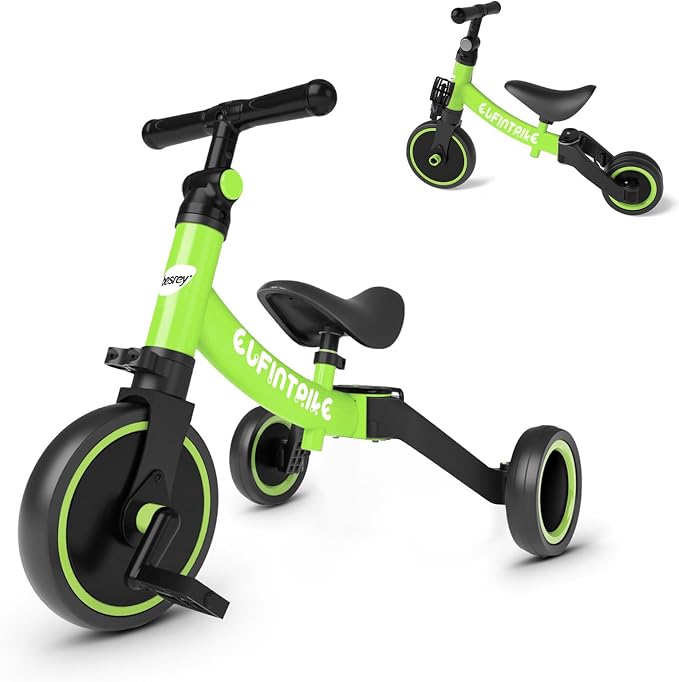
The besrey 5-in-1 grows from a parent-steered tricycle to a balance bike and finally a pedal bike across ages 1-4, so one purchase covers the whole learn-to-ride span. The curved carbon-steel frame keeps the low step-through toddlers need; the tradeoff is that each conversion takes a few minutes and the pedal stage is short-lived compared with a real first pedal bike.
Pros
- Five configurations span tricycle, balance bike and first pedal bike in one frame.
Cons
- Mode conversions take time and small parts need tracking between stages.
Local ratings context
If the local Amazon listing has less review depth, this may help: while reviewing this product, we found more rating context on Amazon Canada. The shortlist also weighs product fit, brand track record, and broader research; when buying, we recommend using your local Amazon store. View Amazon Canada listing
- Rank #13 Our score: 9.74 / 10
Besrey 5-in-1 Balance Bike
Best: Stable first bike
Besrey 5-in-1 Balance Bike fits families who want one toddler vehicle that can change from tricycle-style use toward balance-bike practice. The tradeoff is more parts and setup decisions than a simple light two-wheeler.
Pros
- The conversion modes, removable pedals, and adjustable saddle cover more toddler stages in one product.
Cons
- The 5-in-1 setup is less straightforward than a fixed balance bike if the main goal is gliding practice.
- Rank #14 Our score: 9.72 / 10
Mallie Balance Bike
Set the saddle low enough for secure foot stops.
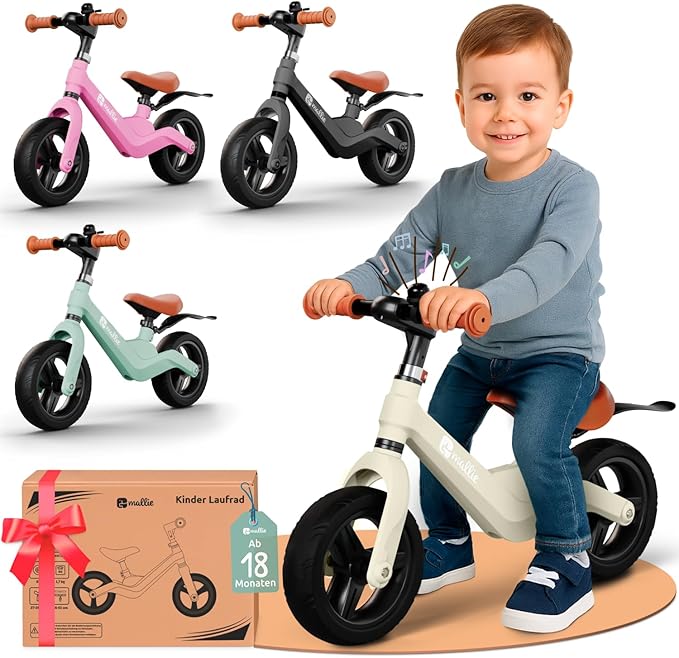
Mallie Balance Bike is a two-wheel pedal-free bike with foam tyres and adjustable saddle and handlebar. The listing mixes incompatible age claims, so decide by measurements: confirm the child can place both feet flat with slightly bent knees and can lift and steer the bike.
Pros
- Adjustable saddle and handlebar support a measurement-led riding position, and the foam tyres need no inflation.
Cons
- The listing gives no reliable saddle range here and contradicts itself on age; measure before buying and expect less cushioning than air tyres.
- Rank #15 Our score: 9.71 / 10
KRIDDO Toddler Balance Bike
The regular KRIDDO Classic combines a personalised front plate with a 30.5 cm two-wheel frame and adjustable saddle and handlebar. Check seated foot reach before choosing it for pushing and gliding practice. It has no footrest and the rider stops with their feet.
Pros
- Saddle and handlebar adjustment help find a comfortable position for foot-powered practice.
Cons
- There is no footrest or hand brake; check ground contact and stopping control rather than relying on the two-to-five-year label.
Local ratings context
If the local Amazon listing has less review depth, this may help: while reviewing this product, we found more rating context on Amazon US. The shortlist also weighs product fit, brand track record, and broader research; when buying, we recommend using your local Amazon store. View Amazon US listing
- Rank #16 Our score: 9.69 / 10
JMMD 6-in-1 Balance Bike
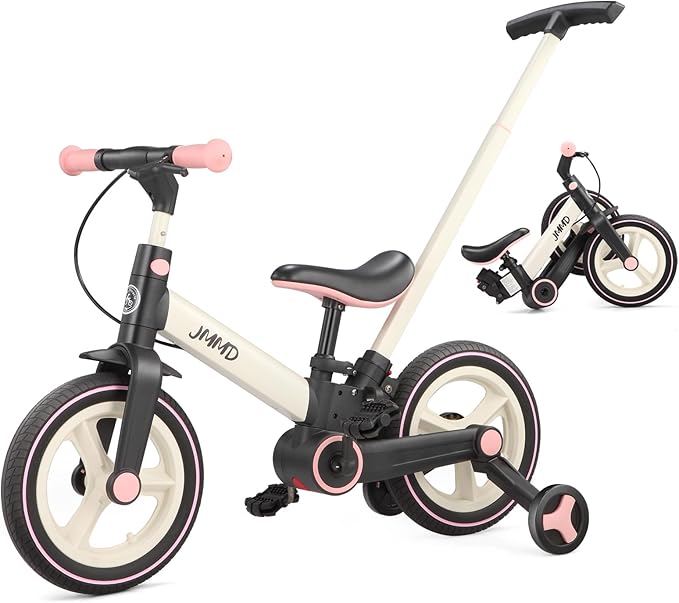
The JMMD S900 combines a parent push handle, removable stabilisers and pedals with a foldable frame and 12-inch wheels. Choose it if you want to change setups as your child learns; folding itself counts as one of the six modes. The maker specifies 18 months–5 years and a 25 kg limit, but independent balance riding still requires both feet flat on the ground.
Pros
- The pedals store on the frame when removed, keeping them with the bike during balance practice.
Cons
- Switching setups requires fresh checks of the folding lock, fitted parts and rear brake; the age range does not mean every mode suits an 18-month-old.
- Rank #17 Our score: 9.69 / 10
Edibaby Toddler Balance Bike
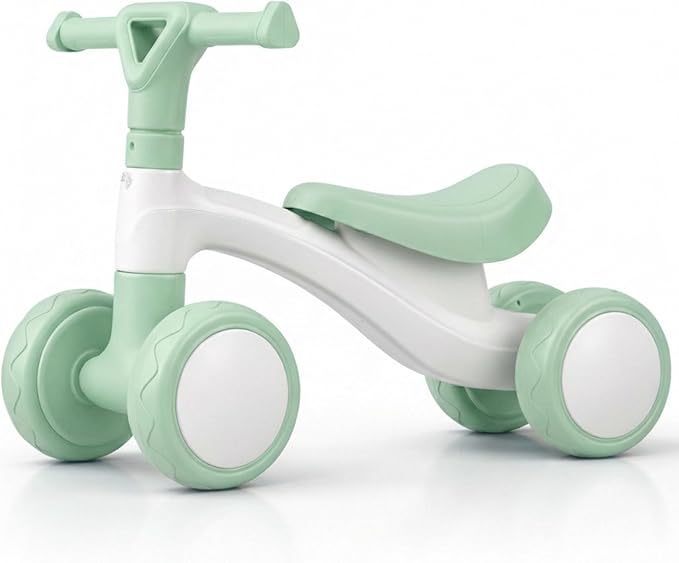
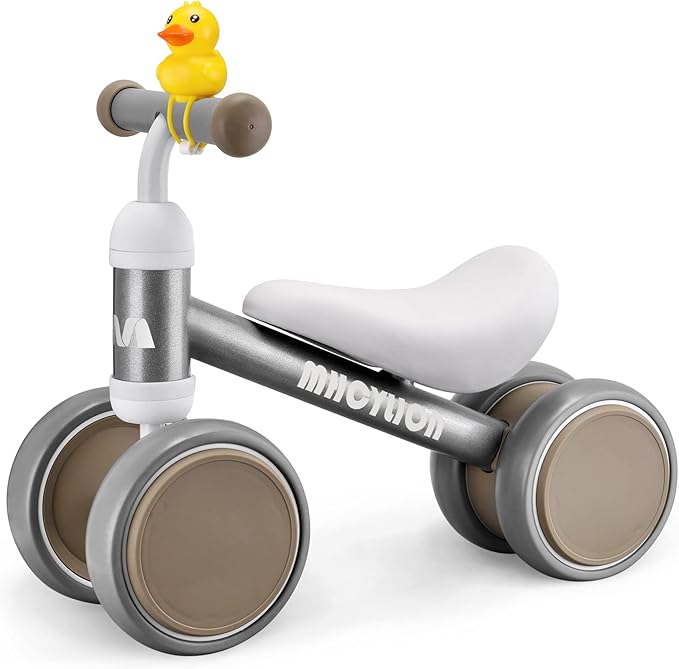
Edibaby’s four-wheel starter suits the first pushing-and-steering stage around 12–24 months. Its approximately 27 cm seat and broad wheel base give a smaller child a low perch; four wheels support the bike, so this is a stepping stone rather than a two-wheel balance trainer.
Pros
- The approximately 27 cm seat gives a concrete starting point for checking feet-flat reach.
Cons
- The 12–24-month focus and four-wheel layout offer little progression towards two-wheel gliding.
- Rank #18 Our score: 9.68 / 10
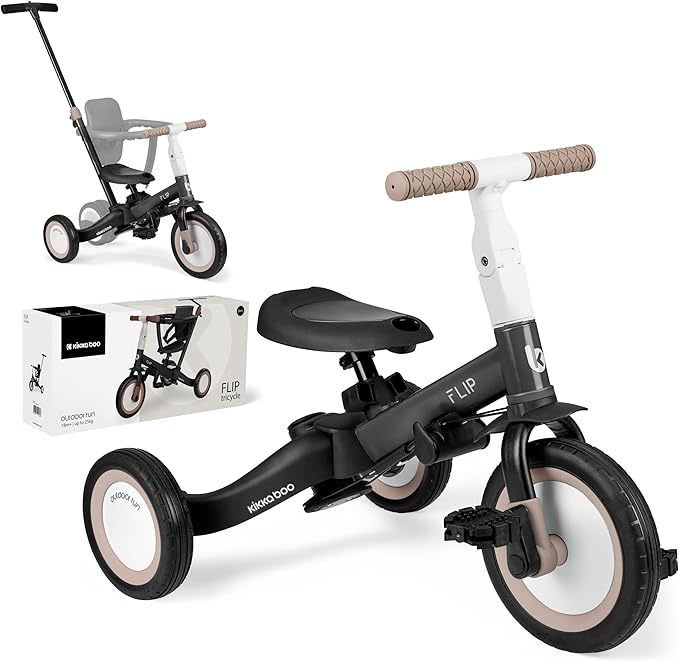
KikkaBoo FLIP 5-in-1
For families wanting one vehicle from parent-pushed trike to two-wheel balance bike. Five distinct riding stages can delay a second purchase, but the 5.7 kg frame and conversion hardware add weight and setup checks versus a dedicated balance bike.
Pros
- Five distinct configurations bridge parent-controlled trips, first pedalling and later two-wheel balance practice.
Cons
- The 5.7 kg frame and removable conversion parts are heavier to carry and more involved to check than a dedicated balance bike.
- Rank #19 Our score: 9.68 / 10
VITONIS Four-Wheel Toddler Balance Bike
VITONIS Four-Wheel Toddler Balance Bike is a low first bike for a toddler who needs stability before a two-wheel balance bike. Check that the child can mount, plant both feet, push and stop without becoming wedged; enclosed EVA wheels work better indoors and on smooth ground than on rough paths.
Pros
- Four enclosed wheels and 135-degree limited steering reduce side-to-side demand during slow first practice.
Cons
- The extra stability does not teach two-wheel lateral balance, and EVA wheels are less comfortable on rough ground.
- Rank #20 Our score: 9.68 / 10
BERG MOOV 10
For children 85-110 cm tall; compare inseam and foot reach. BERG lists the specific MOOV 12 for 90-120 cm.
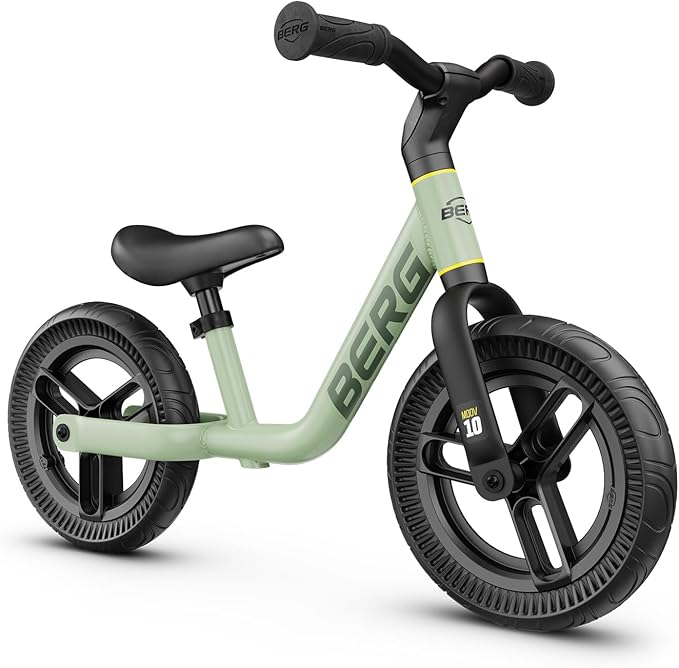
BERG MOOV 10 fits riders 85-110 cm tall and weighs 2.7 kg. Its 10-inch EVA tires need little upkeep but cushion less than air tires. BERG lists the specific MOOV 12 for 90-120 cm and describes it as having 12-inch air tires. Compare your child’s inseam and seated foot reach; wheel size alone does not establish fit.
Pros
- At 2.7 kg, the bike is easier for a small rider to lift and manoeuvre.
Cons
- BERG lists the MOOV 10 for 85-110 cm and the MOOV 12 for 90-120 cm; wheel size alone does not establish fit.
- Rank #21 Our score: 9.66 / 10
Kikka Boo Lanser Balance Bike
Two-wheel LANSER model; not the smaller four-wheel ZIPI first-bike.
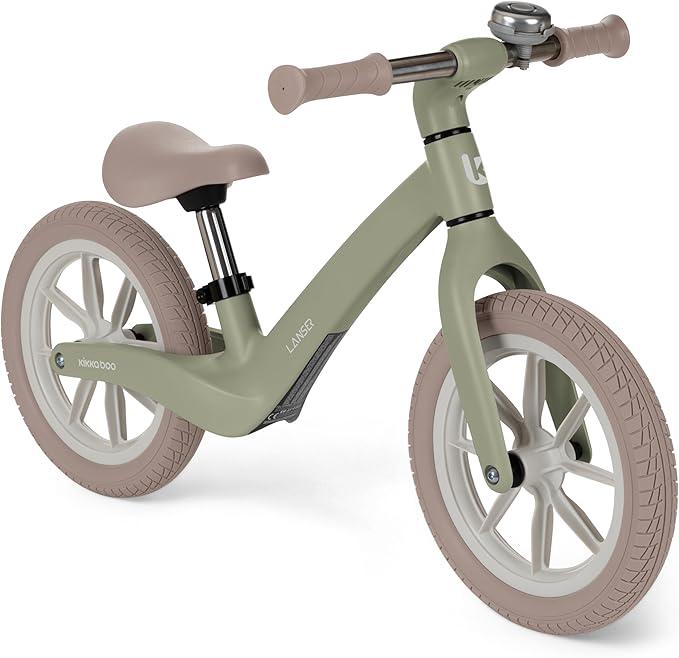
KikkaBoo Lanser is a 30.5 cm two-wheel balance bike for the maker’s stated 3–6-year range. Its 31-41 cm saddle, 3.1 kg weight and solid PU wheels give useful pre-buy checks; choose it only when the child can stand over the bike and place both feet down comfortably.
Pros
- The 3.1 kg weight and 31-41 cm saddle range are clear checks for preschool fit.
Cons
- KikkaBoo specifies ages 3–6; the retailer’s younger claim should not be used for toddler fit.
- Rank #22 Our score: 9.66 / 10
Hello-5ive Balance Bike
Hello-5ive Balance Bike has 12-inch wheels and suits children about 3–6 years who are starting on two wheels. It has a light nylon frame, pneumatic tyres and an adjustable saddle. The listing gives no exact saddle range, so check fit against the child's inseam.
Pros
- Pneumatic tyres improve comfort and grip for outdoor practice.
Cons
- No exact saddle range is published, and air tyres need maintenance.
- Rank #23 Our score: 9.64 / 10
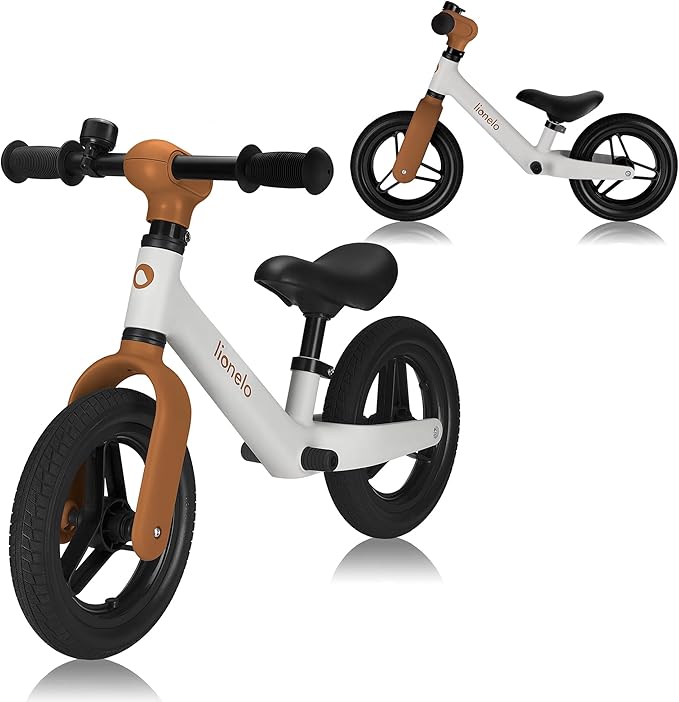
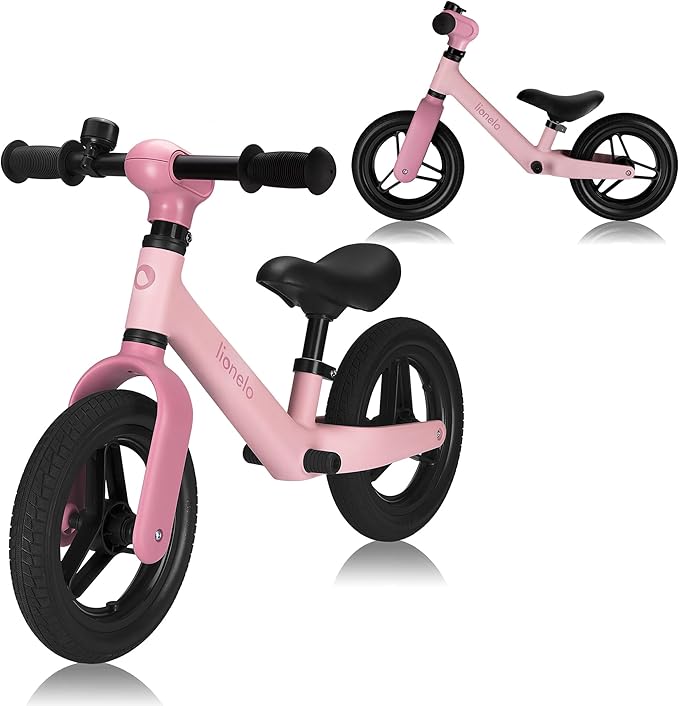
Lionelo Bart Air
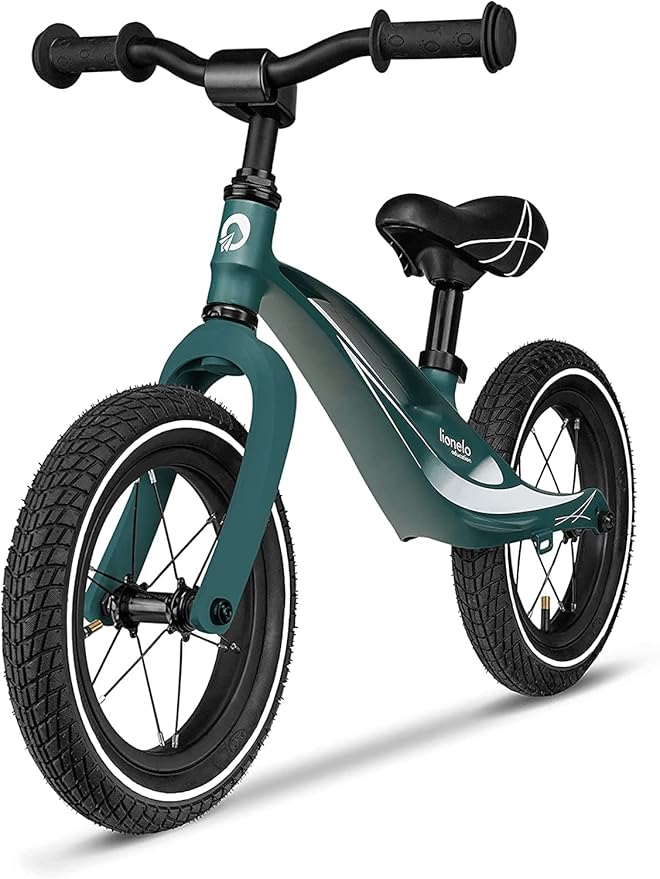
Lionelo Bart Air pairs 12-inch pneumatic tyres with a 3.8 kg magnesium construction and frame handhold for carrying home. It suits children over two who can brake with both feet on level ground. Air tyres need pressure and puncture care; conflicting published saddle dimensions make an actual fit check essential.
Pros
- The frame handhold helps you carry the 3.8 kg bike when riding ends.
Cons
- Lionelo gives conflicting saddle ranges: 35-43 cm in its product text and 37-45 cm in its dimension diagram. Secure two-foot ground contact must be confirmed on the actual bike.
Local ratings context
If the local Amazon listing has less review depth, this may help: while reviewing this product, we found more rating context on Amazon Spain. The shortlist also weighs product fit, brand track record, and broader research; when buying, we recommend using your local Amazon store. View Amazon Spain listing
- Rank #24 Our score: 9.64 / 10
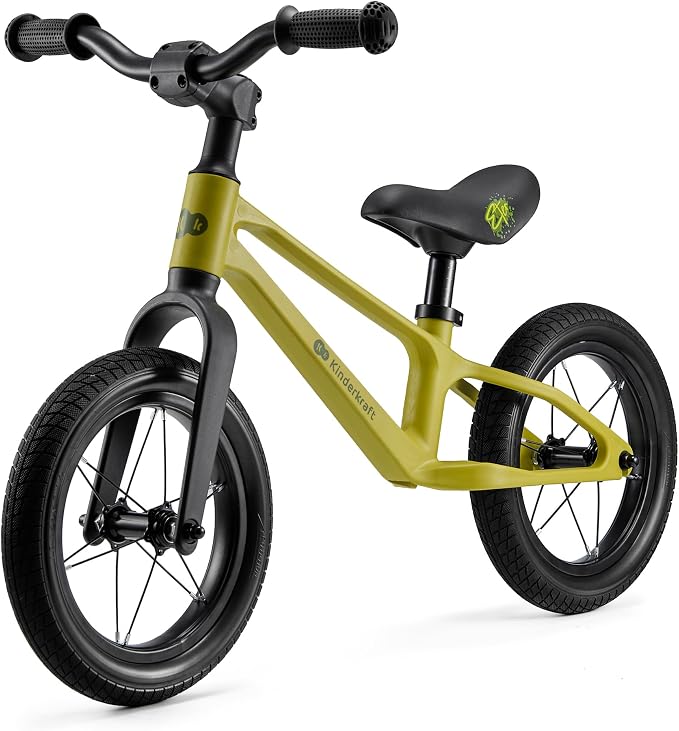
Kinderkraft TOVE balance bike
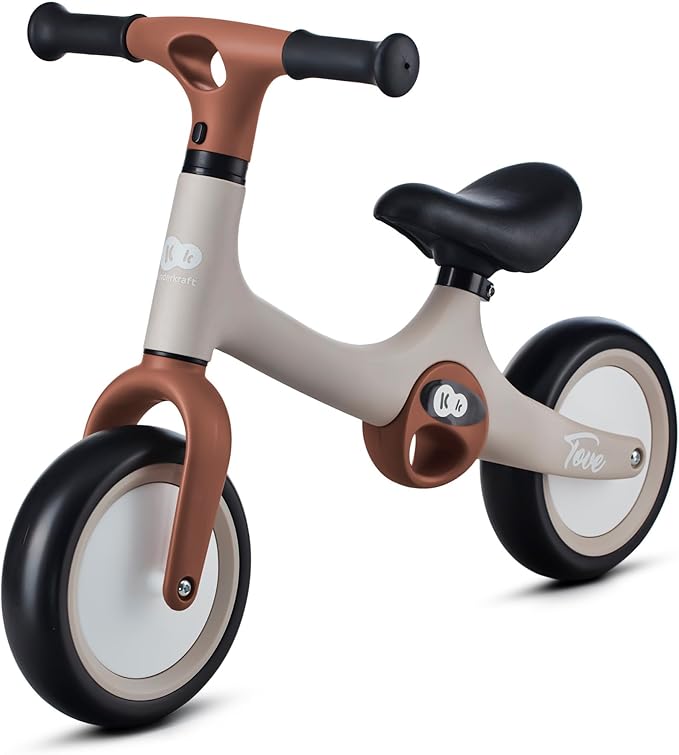
Kinderkraft TOVE suits a toddler who fits its 31-34.5 cm saddle range and is ready for a light two-wheel bike. Its 2 kg frame is easy to carry and foam tyres avoid punctures, though they provide less cushioning than pneumatic tyres.
Pros
- At 2 kg with two carry points, TOVE is manageable when a child stops riding halfway home.
Cons
- The short saddle adjustment range limits growing room, and foam tyres feel firmer than air tyres on rough paths.
- Rank #25 Our score: 9.64 / 10
Kinderkraft 2WAY Next
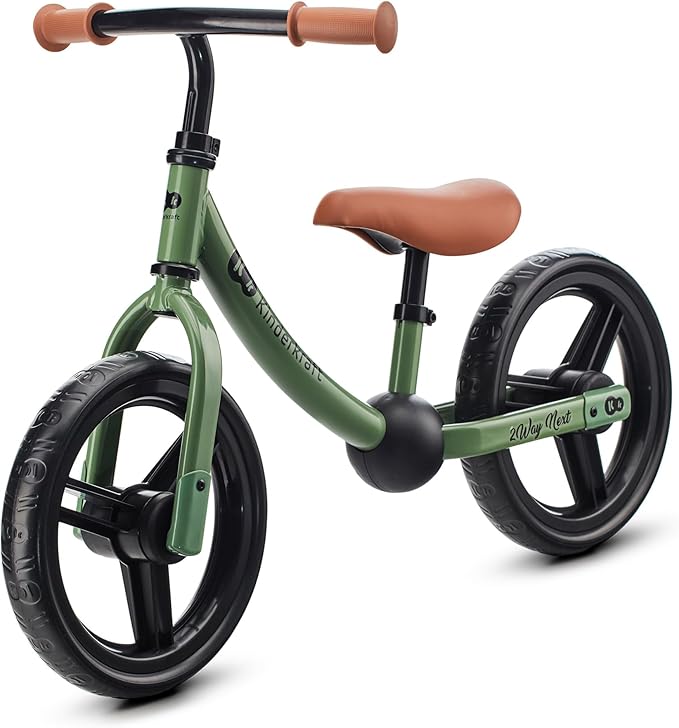
Kinderkraft 2WAY NEXT is a light two-wheel learner for children from 80 cm tall, with a low frame, 31-40 cm saddle and 52-59 cm handlebar. Its foam tires need no inflation but cushion less than air tires; measure inseam so both feet reach the ground rather than relying on standing height alone.
Pros
- Adjustable saddle and handlebar give useful growth room.
Cons
- Foam wheels are less cushioned than air tires.
- Rank #26 Our score: 9.62 / 10
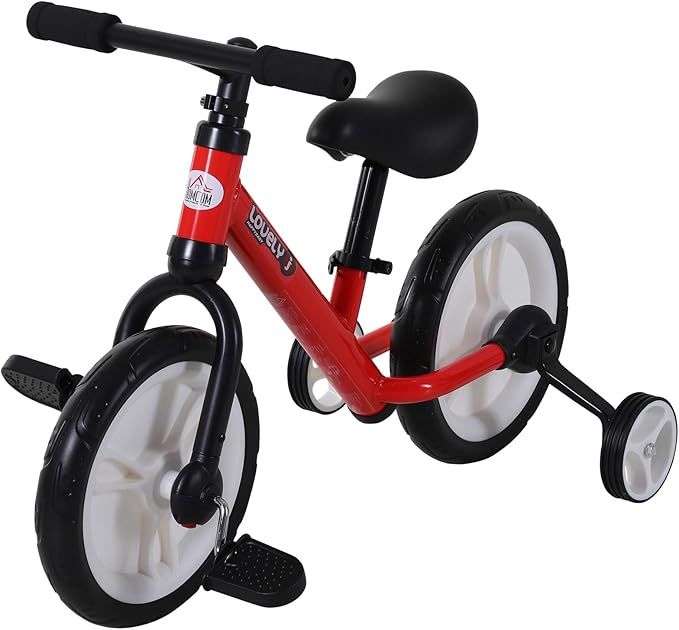
HOMCOM 2-in-1 Laufrad
A 2-in-1 children’s bike with pedals and training wheels for roughly ages two to five.
Pros
- Pedals let the same frame move from pushing to pedalling.
Cons
- The drivetrain and training wheels make it heavier than a dedicated balance bike.
- Rank #27 Our score: 9.61 / 10
BELEEV B1 Stable First Bike
BELEEV B1 fits children around 10 to 24 months who first need stable sitting, steering and push-off practice. Choose its low four-wheel format as a stepping stone, not as a replacement for a two-wheel balance bike once the child is ready to glide.
Pros
- Four enclosed EVA wheels, limited steering and a low step-through make early scooting more manageable than on a normal two-wheeler.
Cons
- The 10–24 month focus means it can become limiting quickly for a toddler who already balances.
- Rank #28 Our score: 9.60 / 10
XIAPIA Baby Balance Bike
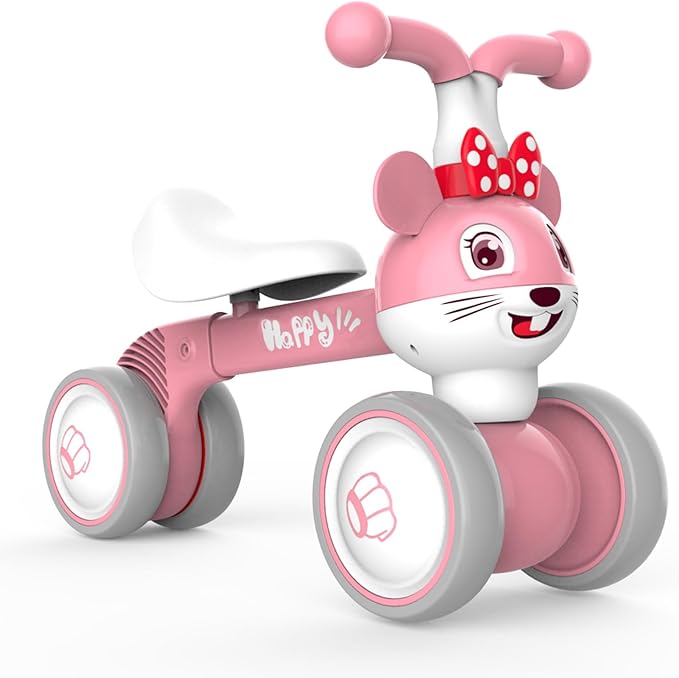
XIAPIA’s animal-shaped four-wheel ride-on suits the first pushing and steering attempts, before two-wheel balancing. The selected Dog and Mouse diagrams put the saddle at about 28 cm, and the ride-on weighs approximately 1.8 kg. A 135° steering limit restricts turning, but does not prevent every tip. The broad 10–36-month age range is only a guide: both feet must comfortably reach the ground.
Pros
- The approximately 28 cm saddle and 1.8 kg weight make the size and carrying burden concrete.
Cons
- The saddle has no demonstrated height adjustment, and four-wheel support does not provide the same sideways balance practice as a two-wheeler.
- Rank #29 Our score: 9.59 / 10
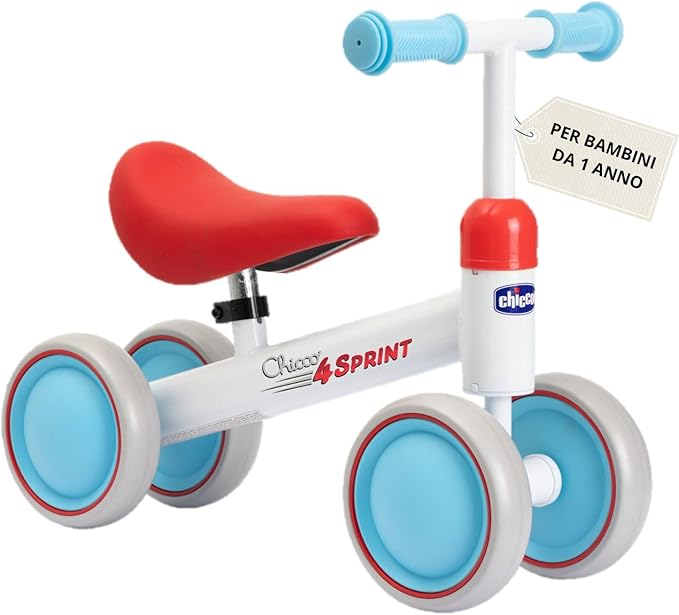
Chicco Ride-On Quadricycle Balance Bike
The Chicco 4 Sprint is a four-wheel first bike for a one-year-old who needs stable push-and-steer practice before learning to balance on two wheels. Its enclosed wheels and 20 kg limit suit short supervised sessions, but the saddle and handlebar do not adjust; check leg room now and expect it to be a brief confidence stage.
Pros
- Four enclosed wheels and a padded seat make early push-and-steer practice less demanding than a two-wheel bike.
Cons
- Fixed saddle and handlebar heights limit growth room, and four wheels do not teach side-to-side balance.
- Rank #30 Our score: 9.59 / 10
Hauck Balance N Ride
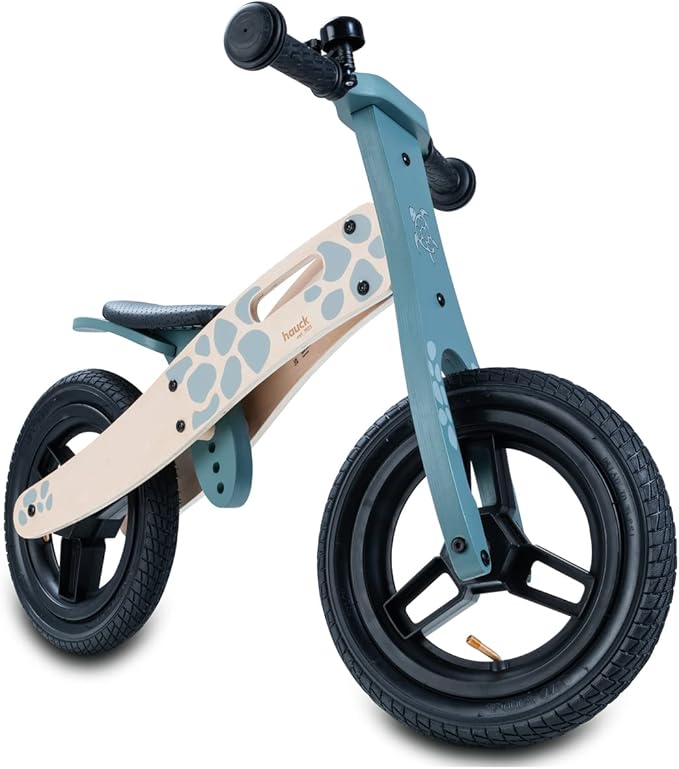
Hauck Balance N Ride suits children from about age two who need a wooden two-wheel balance bike with a four-height saddle and softer-riding 12-inch air tyres. Check saddle fit now, and accept pressure checks and puncture upkeep in return for more comfort on mixed paths.
Pros
- Twelve-inch pneumatic tyres cushion mixed paths better than foam wheels.
Cons
- Air tyres add pressure checks and puncture upkeep.
- Rank #31 Our score: 9.58 / 10
BIG Sport Bike
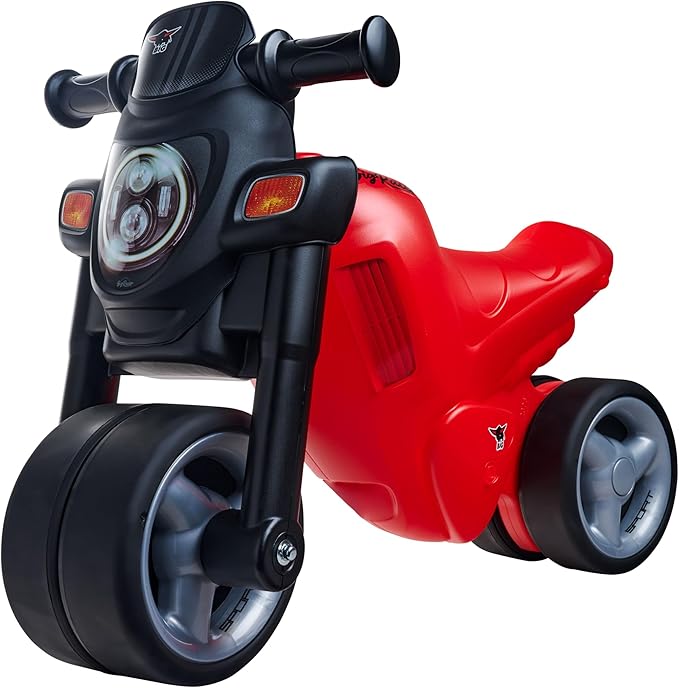
BIG Sport Bike fits an early rider who needs its unusually low 29 cm seat and a broad, steady tyre stance. The steering stop helps keep first scoots predictable, but the fixed motorcycle-style geometry offers less growth adjustment than a conventional balance bike.
Pros
- The 29 cm seat lets a smaller toddler plant both feet securely.
Cons
- The seat and motorcycle-style frame are not height-adjustable, so its useful fit window may end sooner than an adjustable bike's.
- Rank #32 Our score: 9.57 / 10
Hello-5ive Four-Wheel Baby Balance Bike
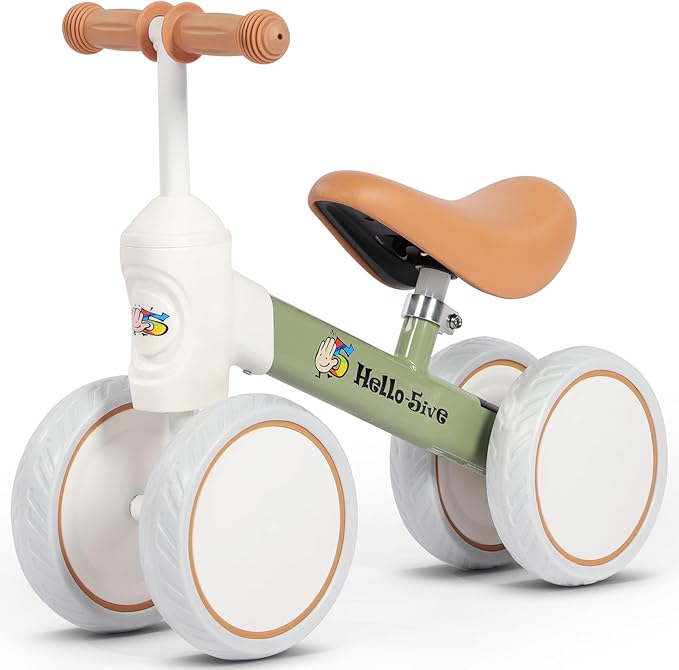
The four-wheel Hello-5ive is a first ride-on for a toddler who can reach the floor from its 28-34 cm saddle. Its 1.8 kg weight makes carrying it home manageable, and the seat has room to rise as the child grows. Choose it for short scooting sessions on level ground, not for learning to balance on two wheels.
Pros
- The saddle adjusts from 28-34 cm, giving growing legs more room without replacing the ride-on.
Cons
- Even the lowest 28 cm saddle can be too high for a small toddler; both feet need firm ground contact.
- Rank #33 Our score: 9.54 / 10
Lionelo Villy
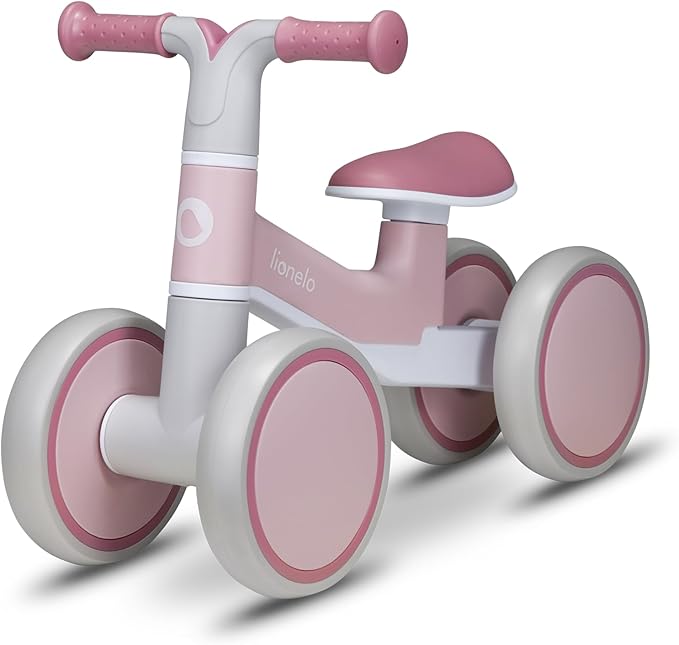
Lionelo Villy is a low four-wheel first bike for one-to-three-year-olds who need stability before a two-wheel balance bike. Its 26 cm seat, 2.1 kg frame and limited steering suit indoor floors and smooth paths, but the stable layout teaches less lateral balance; choose it as an early confidence step, not the final pre-pedal bike.
Pros
- A 26 cm seat, four wheels and 2.1 kg weight make it accessible to very early independent riders.
Cons
- The four-wheel layout becomes limiting once the child is ready to lean and glide on two wheels.
- Rank #34 Our score: 9.53 / 10
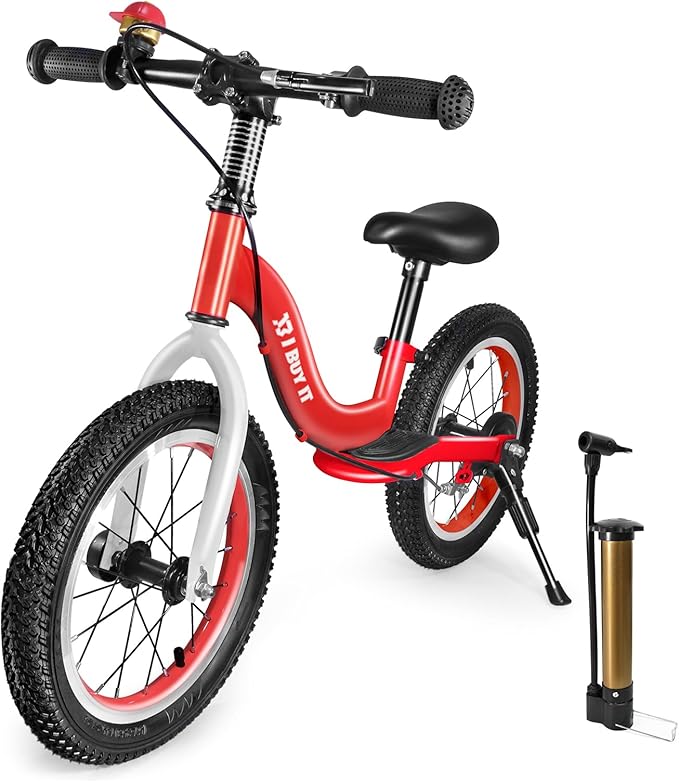
I BUY IT 14/16-Inch Balance Bike
I BUY IT gives a larger child room to keep practising without pedals, with a hand-operated rear brake and footrest for coasting. The stated saddle ranges are 41-51 cm for the version with 14-inch wheels and 43-53 cm for the version with 16-inch wheels. Those high minimum seats rule it out when your child can reach the ground only on tiptoes.
Pros
- The hand lever operates a rear drum brake, adding braking practice alongside balancing.
Cons
- Even the option with 14-inch wheels starts at a 41 cm saddle height, which can prevent smaller riders from planting both feet to push and stop.
- Rank #35 Our score: 9.50 / 10
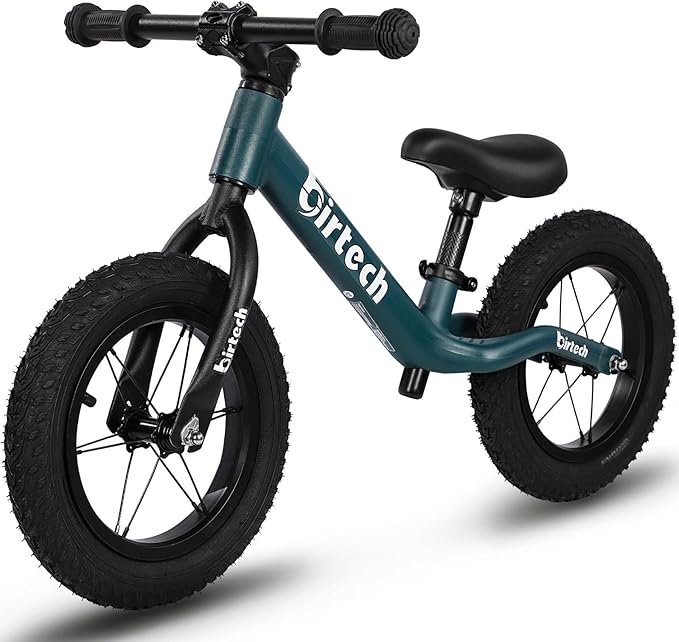
H.yeed / Birtech 12-inch Pneumatic Balance Bike
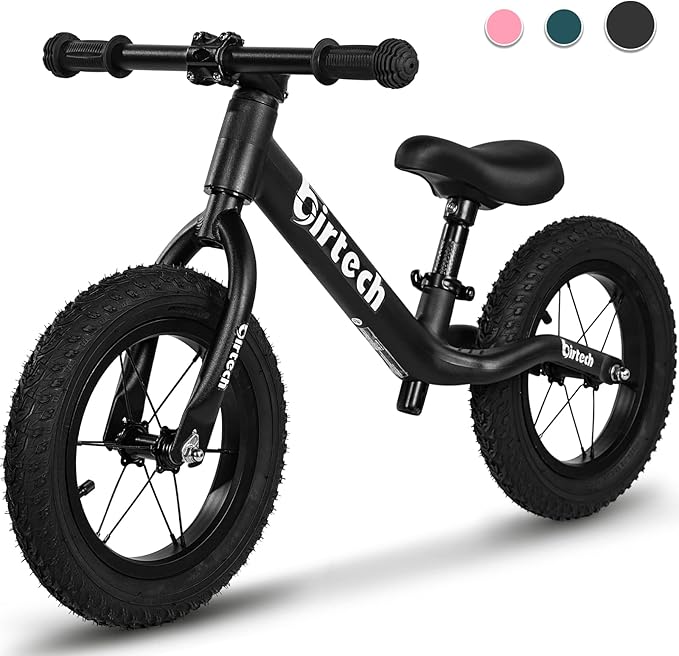
This green H.yeed / Birtech has a one-piece nylon frame, 12-inch pneumatic tyres and a footrest for coasting. Its saddle adjusts from about 33-44 cm; the selected bike weighs 2.9 kg and has a 32 kg rider limit. It suits a preschooler who can reach the ground comfortably and is ready to practise gliding. Air tyres require pressure checks and can puncture. This is the pneumatic model, not the lighter foam-tyred bike sold under similar names.
Pros
- The 33-44 cm saddle range gives 11 cm of height adjustment for a child who fits the minimum setting.
Cons
- Air tyres need pressure checks and can puncture.
- Rank #36 Our score: 9.46 / 10
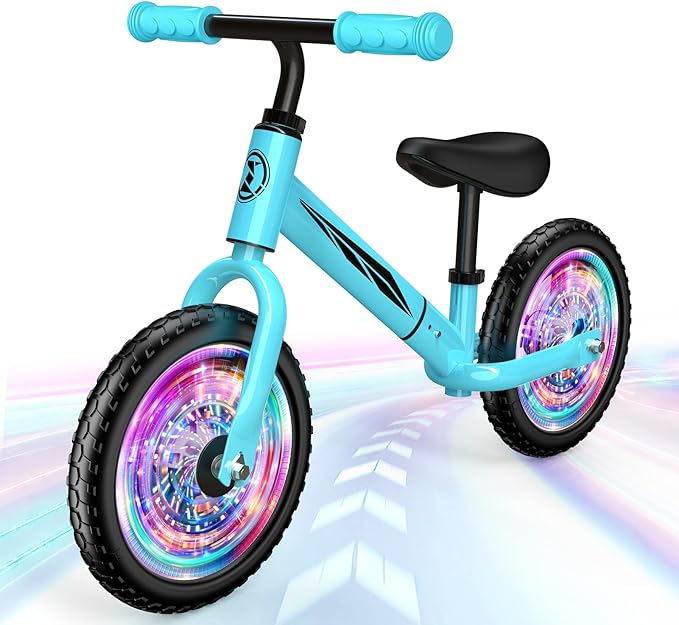
Dromlag Balance Bike
Dromlag Balance Bike is a simple two-wheel learner with an adjustable saddle and handlebar for smooth-surface practice. The offer gives no saddle-height range or bike weight, so check current measurements, both feet flat and secure push-and-stop control; illuminated wheels do not compensate for poor fit.
Pros
- Quick-release saddle and handlebar adjustment make it easier to recheck posture as the child grows.
Cons
- Without a published saddle-height range or bike weight, online fit is harder to judge than on better-documented models.
- Rank #37 Our score: 9.46 / 10
Lionelo Toni Balance Bike
Lionelo Toni is a low two-wheel balance bike for an early rider who fits its 26-32 cm saddle. At 2.3 kg it is easy to recover and carry, while the steering limiter and footrest support first glides; the short saddle range limits growth and PU wheels cushion less than air tyres.
Pros
- The 26 cm minimum saddle and 2.3 kg weight make it accessible to smaller early two-wheel riders.
Cons
- The saddle tops out at 32 cm, so growth room is short, and PU wheels give less cushioning on rough paths.
- Rank #38 Our score: 9.46 / 10
Lionelo Toni
Lionelo Toni is a light two-wheel balance bike for small beginners from 18 months. Its 2.3 kg frame and 26-32 cm saddle are easy to manage; check inseam carefully and expect less cushioning from the solid PU tyres on rough paths.
Pros
- At 2.3 kg, it is easier for a small child to steer and for an adult to carry.
Cons
- Maintenance-free PU tyres cushion rough paving less than air tyres, and there is no brake.
- Rank #39 Our score: 9.43 / 10
Kinderkraft ETER
Kinderkraft ETER is a 3 kg, 12-inch balance bike for a child at least 80 cm tall who fits its relatively high 37-45 cm saddle range. Its PU wheels avoid puncture chores, while smaller toddlers should choose a lower starter rather than buy for future growth.
Pros
- The 37-45 cm saddle range gives taller preschoolers useful adjustment room.
Cons
- A 37 cm minimum saddle is too high for many early toddlers.
- Rank #40 Our score: 9.42 / 10
GASLIKE 16 Inch Balance Bike
Best: Older child fit
GASLIKE 40.6 cm gives taller children room to practise without pedals. Its air tyres and 45.5-57 cm saddle range suit longer legs rather than a toddler’s first balance bike. There is no hand brake: the child must be able to stop securely with both feet. At 104 cm long, it also needs substantial hallway or car space.
Pros
- 16-inch air tyres and a 45.5-57 cm saddle range give taller children a pedal-free practice option.
Cons
- No hand brake; the high minimum saddle and 104 cm overall length limit child fit and storage options.
- Rank #41 Our score: 9.41 / 10
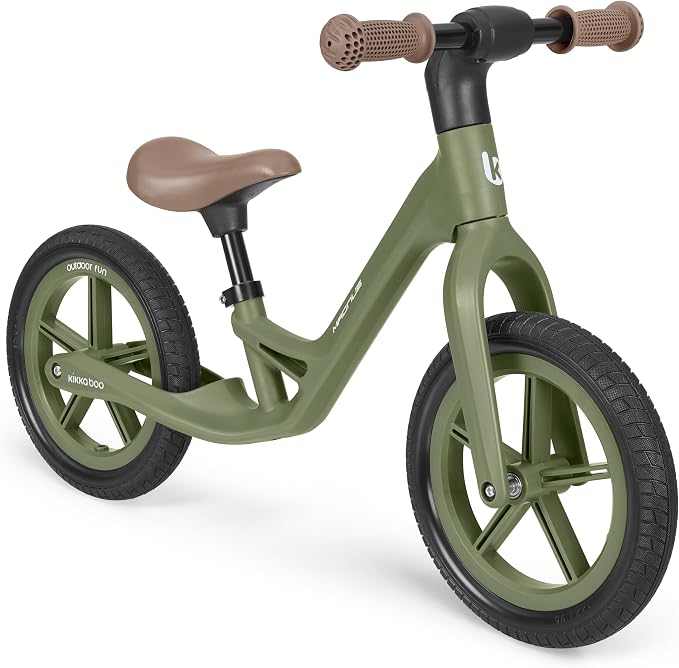
KikkaBoo Magnus Balance Bike
For preschool practice on smooth paths: the fibreglass frame keeps Magnus manageable and its 12-inch PU wheels need no pumping. They ride harder than pneumatic tyres, so verify the unpublished minimum saddle height against the child's inseam before buying.
Pros
- The fibreglass frame and 30.5 cm no-pump wheels make Magnus straightforward to handle, carry and maintain for smooth-path practice.
Cons
- Solid PU wheels give less cushioning on broken ground, and the exact offer omits the minimum saddle height needed for a reliable fit check.
- Rank #42 Our score: 9.37 / 10
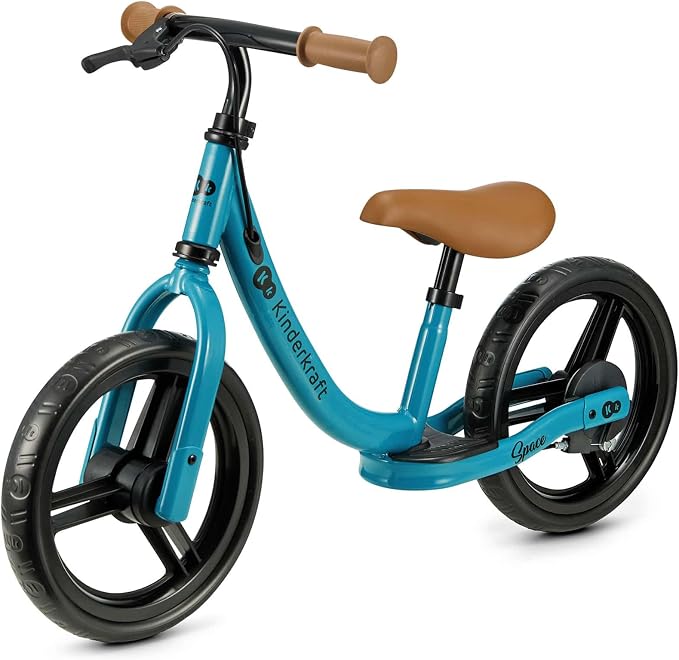
Kinderkraft SPACE2 balance bike
SPACE2 pairs a low frame and 33-41 cm saddle with a hand brake and footrest for longer glides. It is specified from 80 cm tall, although both feet still need to reach the ground securely. The EVA wheels need no pumping but cushion less than air tyres, and the brake requires a comfortable reach and squeeze.
Pros
- The 33-41 cm saddle range, low frame, hand brake and footrest support progression from first pushes to longer glides.
Cons
- Foam tyres trade puncture-free ownership for less cushioning, and the hand brake only helps if the child can reach it.
- Rank #43 Our score: 9.35 / 10
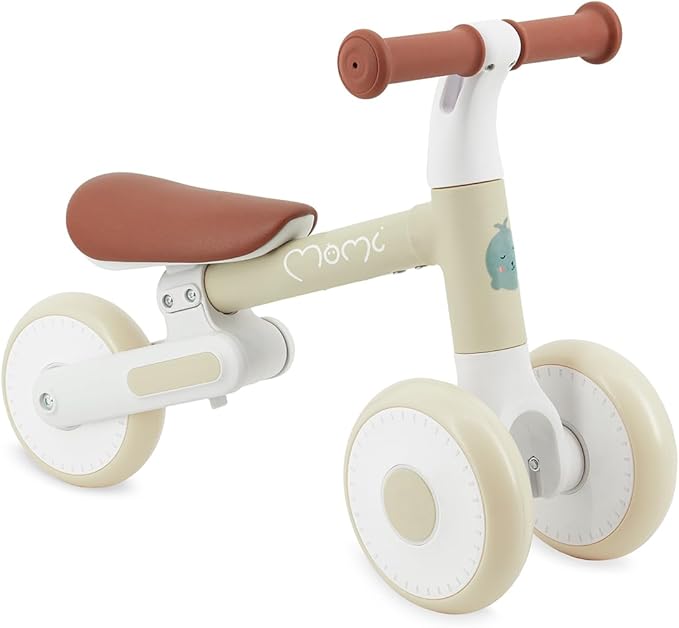
MoMi DEX
MoMi DEX gives a toddler a low, three-wheel ride-on for foot-powered play: the saddle has 22 and 24 cm positions, and the rear wheel folds towards the front pair for storage. Its EVA wheels need no pumping. The small frame is limited to 12–36 months and 20 kg; choose a two-wheel bike when practising unsupported gliding becomes the goal.
Pros
- The rear section folds underneath the frame to reduce storage space.
Cons
- Only two saddle positions, 2 cm apart, leave little growing room.
- Rank #44 Our score: 9.33 / 10
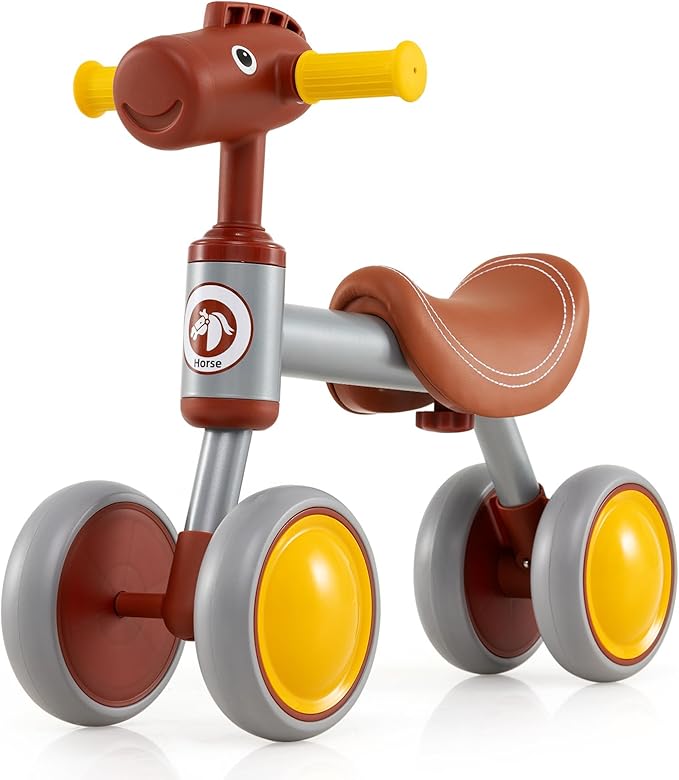
Costway Horse Balance Bike
Costway Horse Balance Bike fits toddlers around 18 to 36 months who want a stable four-wheeler with a playful horse theme. The tradeoff is that the theme and four wheels matter less once the child is ready to glide on two wheels.
Pros
- Four EVA wheels, soft seat, and horse head make it an approachable first ride-on for toddlers.
Cons
- It is more stable toddler ride-on than growing bike for two-wheel balance.
- Rank #45 Our score: 9.33 / 10
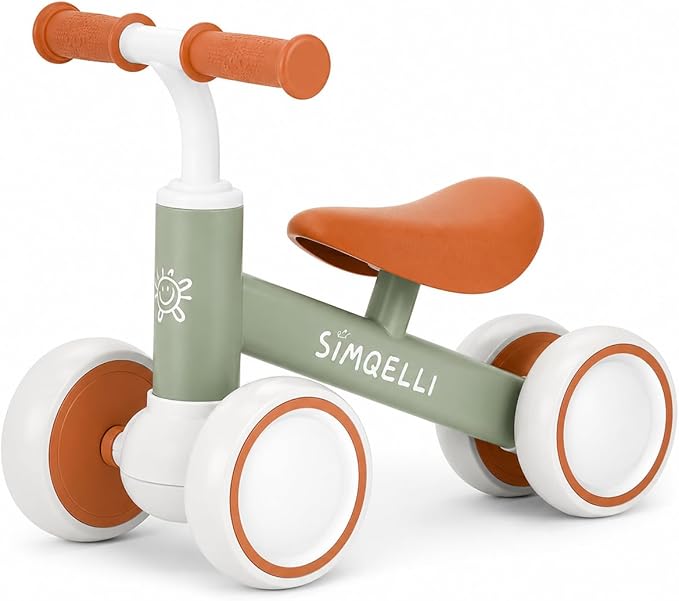
SIMQELLI Four-Wheel Toddler Balance Bike
SIMQELLI is a 1.8 kg four-wheel first balance bike for children around 10–24 months, with a 26 cm seat and limited steering. The low stable format makes early scooting approachable, but it has a short fit window and does not teach the lateral balance of a two-wheeler.
Pros
- A 1.8 kg weight, 26 cm seat and four-wheel base are well matched to very early, slow scooting.
Cons
- The 10–24 month range leaves little runway, and four wheels provide less direct preparation for a conventional two-wheel balance bike.