
Balance Bike or Training Wheels: Which Should You Choose?
By Peter CronaLast updated
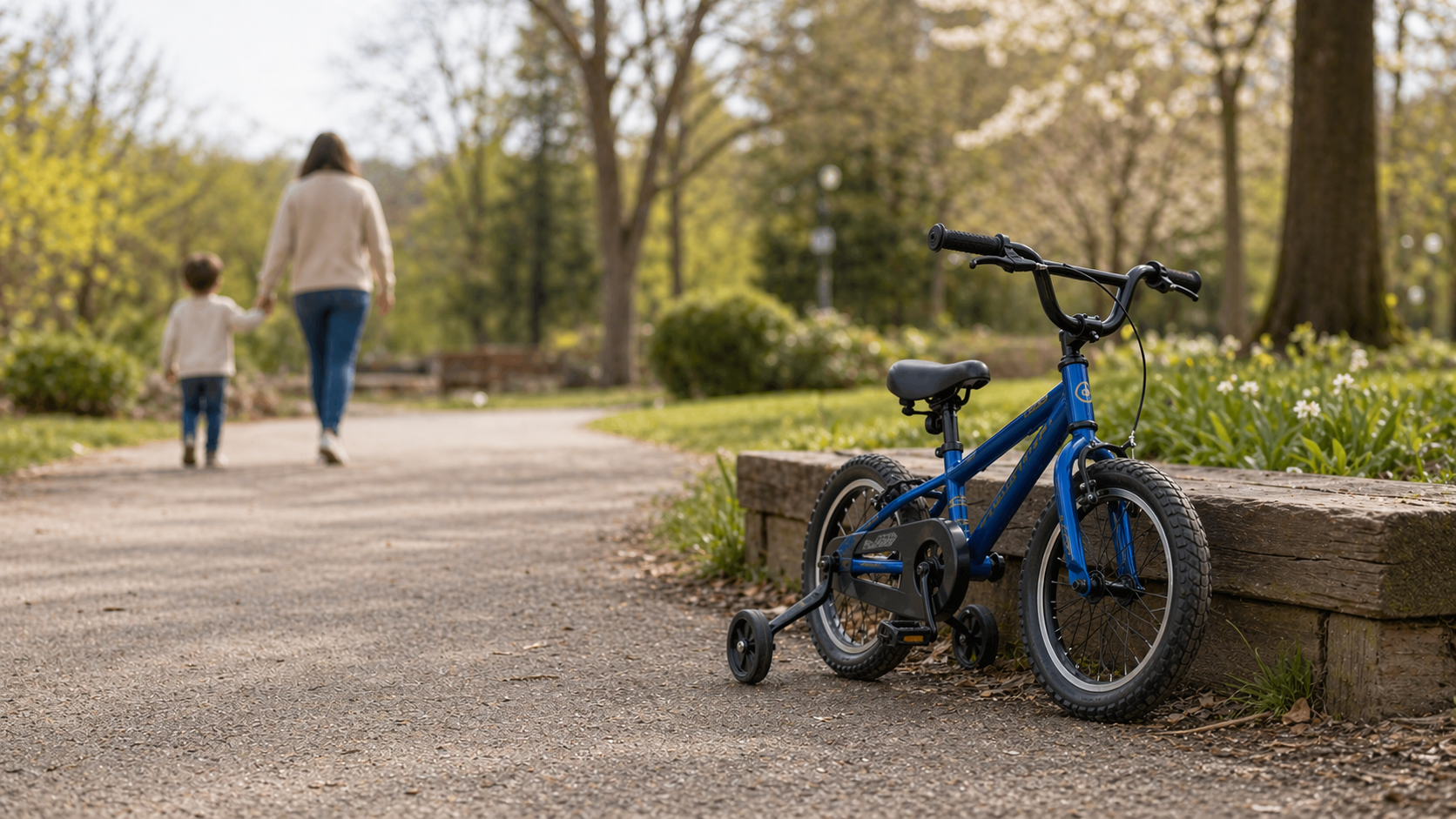
Parents often ask this as a product question, but it is really a learning-stage question: are you trying to help a child learn balance first, or are you trying to make an existing pedal bike feel less intimidating?
Choose a balance bike when your child is still learning to glide, steer, and stop confidently. Do not add training wheels after a balance bike as the normal next step; move to a correctly sized pedal bike when the child can balance and practise in a safe place. Use training wheels only as a short fallback when you already own a pedal bike and fear is blocking any attempt. If the child is still being transported by an adult, stay with a child bike seat or trailer until independent riding is actually useful.
Start with the job
A balance bike is for the child who is starting to ride independently. A child bike seat or trailer is for moving the child with an adult cyclist. Those jobs overlap in family life, but they are not substitutes.
Use this split:
- bike seat or trailer: school runs, errands, longer rides, and adult-controlled transport
- balance bike: park loops, calm paths, practice sessions, and short independent riding
- training wheels: a last-choice temporary support for a child who already has a pedal bike but is too nervous to try without support
If the real problem is getting a tired toddler across town, a balance bike is the wrong tool. If the real problem is building balance and confidence near home, it can be the cleaner first step.
When a balance bike makes more sense
A balance bike usually wins when the child is young, cautious, or not ready to coordinate pedaling and balancing at the same time.
It works best when:
- the child can sit with feet flat or nearly flat on the ground
- you have safe, low-traffic practice space
- the bike is light enough for you to carry home
- the wheel size actually matches the child, not just the age label
- stopping with feet, or a simple hand brake on some models, is easy to understand
The main advantage is clean skill order. The child learns balance and steering before pedals enter the picture. That can make the later move to a pedal bike simpler because the scary part has already been practised.
The tradeoff is range. A balance bike is not a family transport plan. Young children tire, stop suddenly, and may need carrying. For real errands or mixed routes, it pairs better with a stroller, trailer, cargo bike, or patient adult walking pace than with an ambitious ride plan.
When training wheels still make sense
Training wheels are not the recommended default anymore, especially for a child who has already learned to balance on a balance bike. They do not teach the leaning and balancing skill that makes a two-wheel bike work, and current teaching guidance usually starts with balance first, often by using a balance bike or removing pedals from a pedal bike.
They can still make sense as a narrow fallback when a child already has a correctly sized pedal bike, wants to pedal, and is too afraid to try without support. Even then, treat them as temporary. They can create a false sense of readiness on uneven ground or turns, where the bike still behaves differently from a two-wheel bike.
Use them as a short confidence bridge, not as the learning strategy. If you are buying from scratch, a light balance bike is usually the more focused first tool. If the child is moving from a balance bike to a pedal bike, skip training wheels unless there is a specific fear or support need that makes normal practice impossible.
What the guidance is based on
This is not just a preference for newer gear. Sweden’s NTF guidance for parents of young children recommends a balance bike before a pedal two-wheeler and skipping training wheels. The UK’s RoSPA teaching guide also starts with balance first, either on a balance bike or by removing pedals and stabilisers from a pedal bike. USA Cycling is more permissive, which is why this guide keeps training wheels as a narrow confidence fallback rather than treating them as always wrong.
What to check before buying a balance bike
The useful filters are not toy features. Start with fit and daily friction:
- seat height low enough for confident foot contact
- wheel size that matches the child now, usually smaller for early toddlers and larger for older preschoolers
- tire type: foam for low-maintenance pavement use, air tires for more comfort and grip
- brake or no brake: a hand brake helps some older children, but it should not replace foot-stopping confidence
- weight: if you cannot carry it home with one hand while managing your child, it is too annoying for everyday practice
That is why our best balance bikes shortlist now keeps the main comparison simple: fit first, bike type second, then price and the specific caveats worth checking before you buy.
Where this fits in Family Cycling
Think of balance bikes as the child-rides-independently branch.
If your child still needs adult transport, start with Bike Trailer vs Rear Bike Seat. If trailer logic wins, go to Bike Trailers 101. If seat logic wins, go to Child Bike Seats 101.
If your child is ready to practise short, supervised riding, compare balance bikes by fit first. The best choice is the one your child can handle confidently today, not the one with the most growing room on paper.