
Child Bike Seats 101: Where to Start
By Peter CronaLast updated Last checked
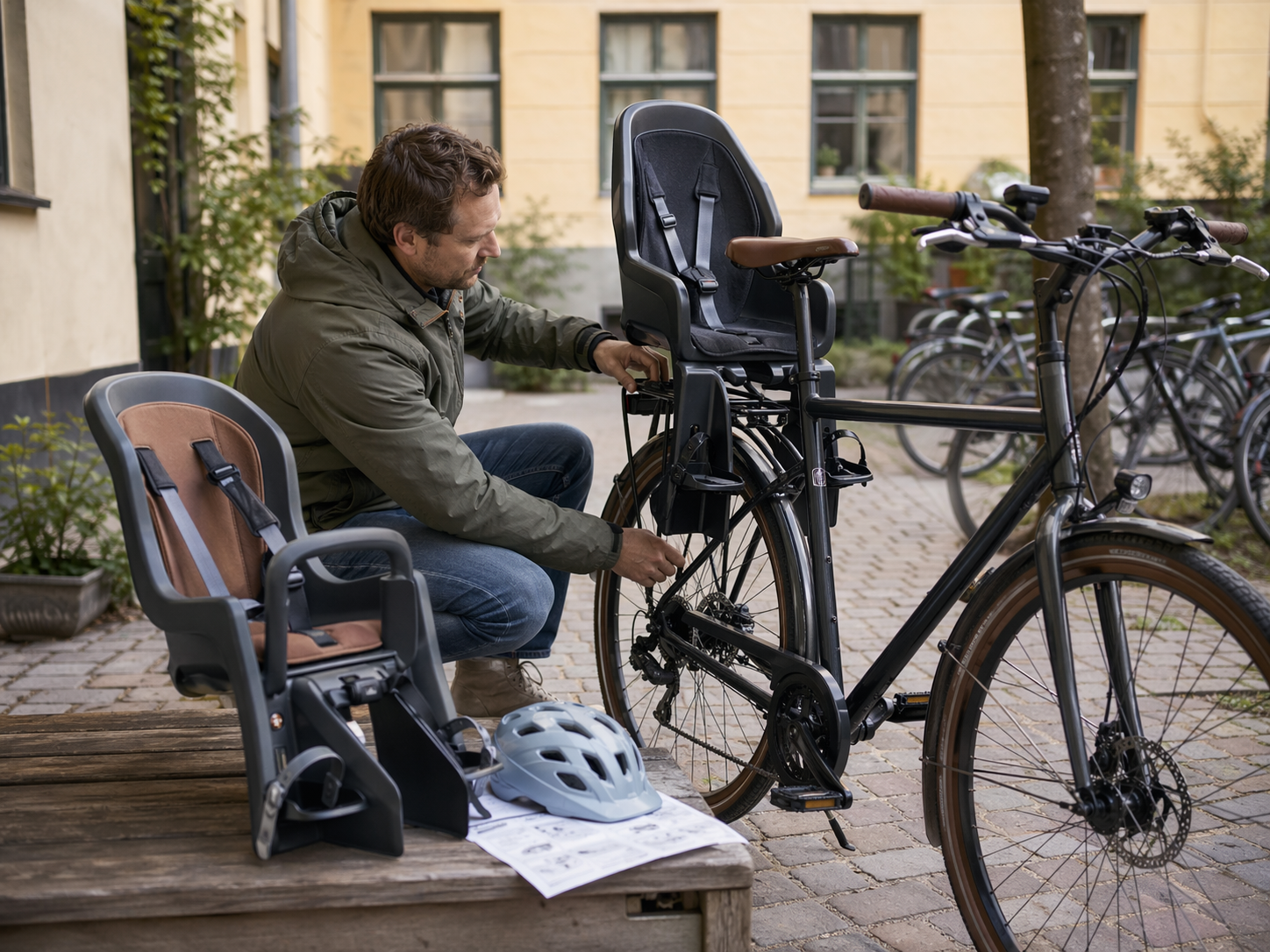
Child bike seats get much easier to shop once you stop asking which brand is best and start asking which seat position and mount style actually fit your rides. Most parents are not really comparing ten seats at once. They are trying to work out whether they want the child in front or behind them, whether the seat needs a frame mount or a rack mount, and whether their bike can actually support that plan without daily friction.
Choose a front-mounted child bike seat when you want one younger child close, your rides are shorter and calmer, and the lower age range and smaller size still fit your stage. Choose a rear-mounted seat when you need the longer runway, stronger load range, and wider day-to-day practicality that most families use for regular errands and longer local rides. Then check mount style before you compare brands, because frame and rack compatibility rule out bad fits faster than feature lists do.
Start with the ride you are trying to make easier
The useful first question is not whether one seat looks more premium than another. It is what kind of riding day you are trying to make simpler.
Some families want one child close enough to talk to on short calmer rides. Some want the narrowest, cheapest setup for nursery runs and errands. Others need a rear seat that can stay useful longer, work with a rack-equipped utility bike, or make more sense for an e-bike already in the garage.
Those are different buying problems. A good child bike seat solves one of them clearly. It does not need to solve all of them at once.
Front-mounted vs rear-mounted
When a front-mounted seat makes more sense
A front-mounted seat is often the cleaner answer when:
- you are still in the earlier child-bike-seat stage
- you want the child closer and easier to talk to
- your rides are shorter, calmer, and less gear-heavy
- the bike still feels balanced enough for you with the child between the bars and saddle area
The main advantage is visibility and closeness. The tradeoff is that front seats are usually for a shorter stage, can feel tighter for both rider and child, and are more sensitive to cockpit space, rider size, and bike geometry.
When a rear-mounted seat makes more sense
A rear-mounted seat is usually the stronger default when:
- you want the longer usable stage most families actually need
- your child is already beyond the smaller front-seat window
- you need more room around the bars and top tube
- you want the wider mainstream market of rear-seat options
Rear seats usually give you more runway and more practical everyday choice. The tradeoff is that the child sits further from you, the weight sits higher and further back, and the bike can feel less calm at low speed than a trailer does.
Frame-mount vs rack-mount
This is where many bad buys start. A seat that looks right in a shortlist can still be wrong for the actual bike.
Frame-mount
Frame-mounted rear seats usually make sense when you want the seat’s own support structure and your bike does not depend on a compatible rear rack. They are common, but they still depend on frame shape, clearance, and the exact clamp area the manufacturer allows.
Check before buying:
- whether your frame material and tube shape are approved
- whether the required mounting area is actually free
- whether cables, suspension, or frame shape interfere
Rack-mount
Rack-mounted rear seats make more sense when you already have a compatible rear rack and want the cleaner integration that can come with that setup. The catch is obvious: the rack has to be the right kind, with the right load logic and approval for that exact seat.
Check before buying:
- whether the seat requires a dedicated rack spec or width
- whether your rack’s load rating really covers child plus seat
- whether the manufacturer explicitly approves your rack style
Compatibility checks that matter before brand comparison
Child fit and weight window
Do not buy by vague age shorthand alone. Seat fit depends on the exact child, the seat’s weight range, helmet fit, and whether the child can sit well enough for the setup and your local rules.
Bike fit
Child bike seats are not universal. Official fit documents matter here because frame shape, rack type, wheel size, rear suspension, and e-bike layout can all change the answer.
If you ride an e-bike, do not assume a seat is automatically fine just because the bike feels sturdy. You need explicit manufacturer support for that bike style or mounting setup.
Rider comfort and route reality
Ask yourself:
- are your routes calm enough that a seat still feels realistic
- do you have enough low-speed confidence with extra child weight on the bike
- will stairs, storage, and daily parking make a seat easier than a trailer
- do your normal rides look more like short practical hops or longer leisure outings
These questions matter more than accessory count.
How to use our child-bike-seat shortlist
Use our best child bike seats shortlist in this order:
- decide first whether you need front-mounted or rear-mounted
- then narrow by frame-mount or rack-mount where relevant
- then compare everyday fit, bike compatibility, and practical tradeoffs inside that smaller pool
That order keeps you from comparing seats that solve different problems.
What to do next
If you are still unsure whether any bike seat makes more sense than towing a trailer, go back to Bike Trailer vs Rear Bike Seat.
If seat logic clearly wins, the next page is Front vs Rear Child Bike Seats, then our best child bike seats shortlist.