Best Baby Carriers in the UK 2026
Looking for the best baby carrier in the UK? Start with the right type first: structured carrier, wrap, or ring sling. Then narrow by newborn fit, back carrying, travel, or warmer-weather comfort so you compare the options that still suit your real sling or carrier use.
Why are scores between 9 and 10?
This is a curated shortlist of strong picks, not a full best-to-worst ranking. Small score gaps usually mean we have slightly more evidence for one model than another, not that the lower-scoring option is a poor choice.
So this is just another affiliate roundup with an arbitrary order?
No. We make these lists good enough that we use them ourselves and recommend them to friends and family. We turn the kind of research careful parents would normally do by hand into a repeatable process. Then we compare the evidence across the markets we cover and rank products with a model that gives more weight to stronger signals instead of simple averages or a fully hand-picked order based purely on editorial preference.
Affiliate Disclosure
We use affiliate links and ads to finance this website. As an Amazon Associate I earn from qualifying purchases.


- Rank #1 Our score: 9.79 / 10
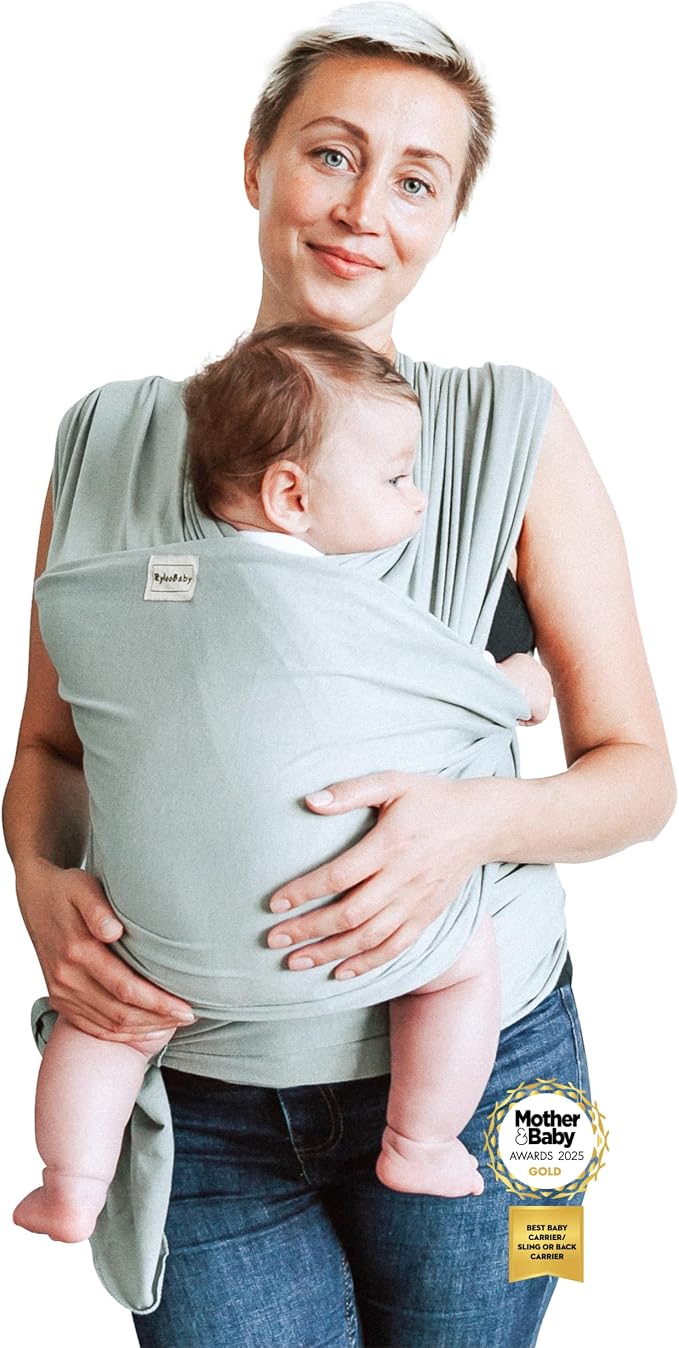
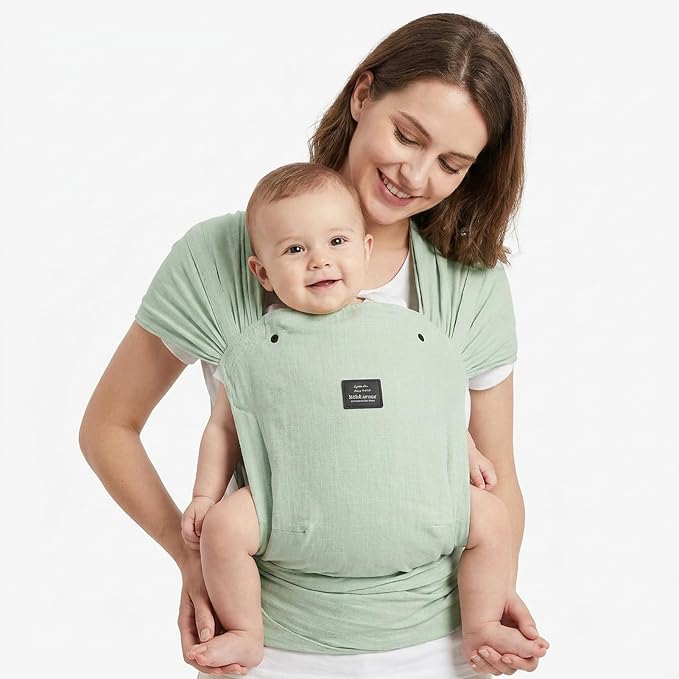
RYLOOBABY Baby Sling Wrap
Best: Wrap
RYLOOBABY uses roughly 5 m of cotton-spandex fabric for a wrap you can tie before putting your baby in. It suits early front carrying from 3.2 kg/7 lb; the brand says it works best up to 9.1 kg/20 lb despite the higher 15.9 kg/35 lb limit. Learning the three-layer tie is the main commitment.
Pros
- The wrap can stay tied when you lift the baby out, so each short break need not mean starting again.
Cons
- The brand recommends it mainly up to 9.1 kg/20 lb; the 15.9 kg/35 lb limit is not a promise of equal suitability as your child grows.
- Rank #2 Our score: 9.76 / 10
Bellababy All-in-One Carrier
Best: Mid-range
Bellababy All-in-One combines padded shoulder straps and a buckled panel with a firm hip-seat base. Our recommendation is for the fully assembled carrier, facing inward, once the child sits independently and has steady head control: at least three months and 3.2 kg-15 kg/7.1-33.1 lb. This deliberately narrower range does not resolve the conflicting published limits. The projecting seat adds bulk, and the soft upper panel does not provide head support.
Pros
- The assembled panel and shoulder straps distribute carrying support beyond the projecting waist seat.
Cons
- The firm seat projects farther from the waist and packs less flat than an all-fabric carrier.
- Rank #3 Our score: 9.72 / 10
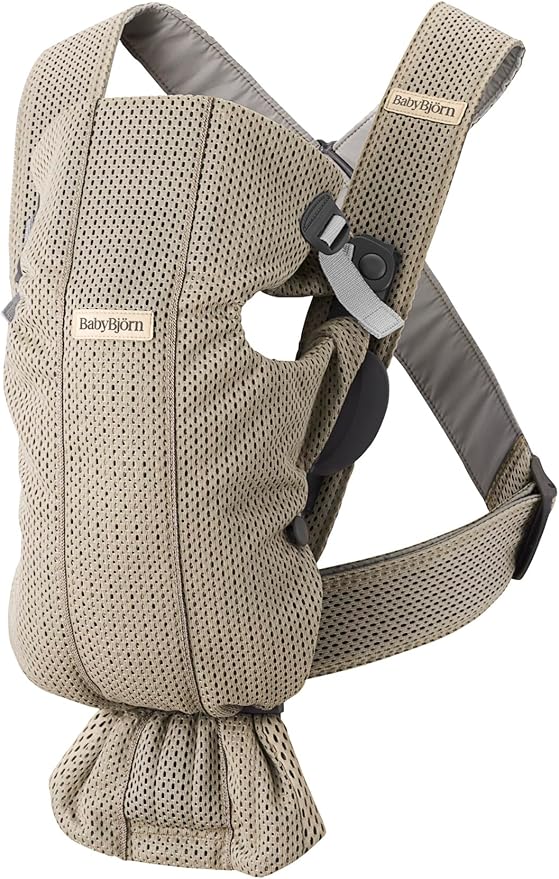
BabyBjorn Carrier Mini
Best: Premium
Best if you want one of the easiest structured newborn carriers to put on quickly without a bigger multi-stage setup. BabyBjorn Carrier Mini is strongest for short early wears, calm setup, and travel-friendly simplicity, not for carrying deep into later toddler use.
Pros
- One of the quickest structured newborn carriers to get on and off, which makes it unusually easy to justify for short daily carries, handovers, and travel days when a bigger carrier feels like too much kit.
Cons
- The shorter lifespan is real: once your baby gets heavier, it is much less convincing than stronger waistbelt carriers for longer walks or later back-carry use.
- Rank #4 Our score: 9.72 / 10
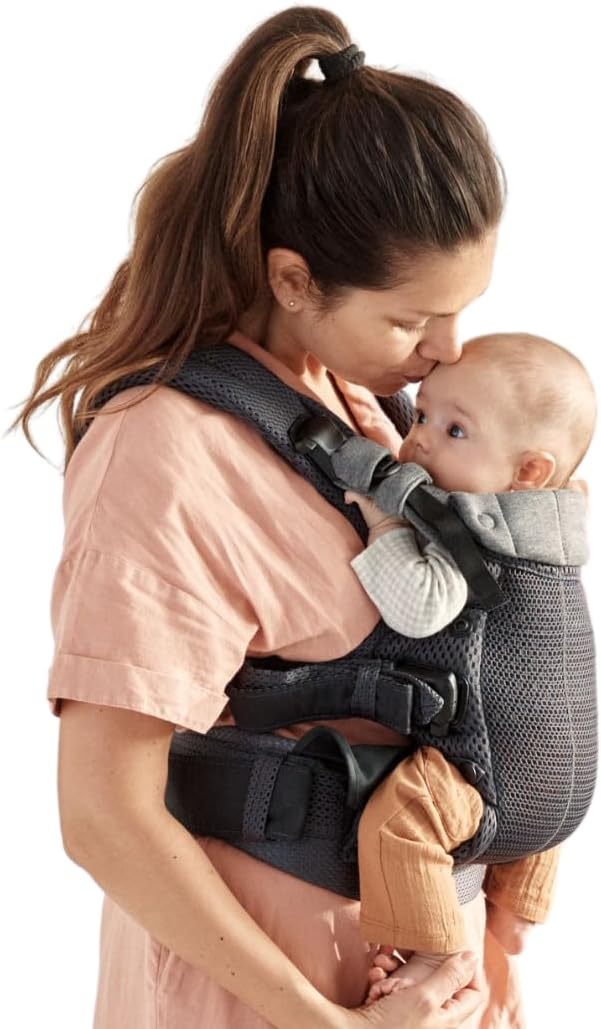
BabyBjorn Carrier Harmony
Best: Hot Weather
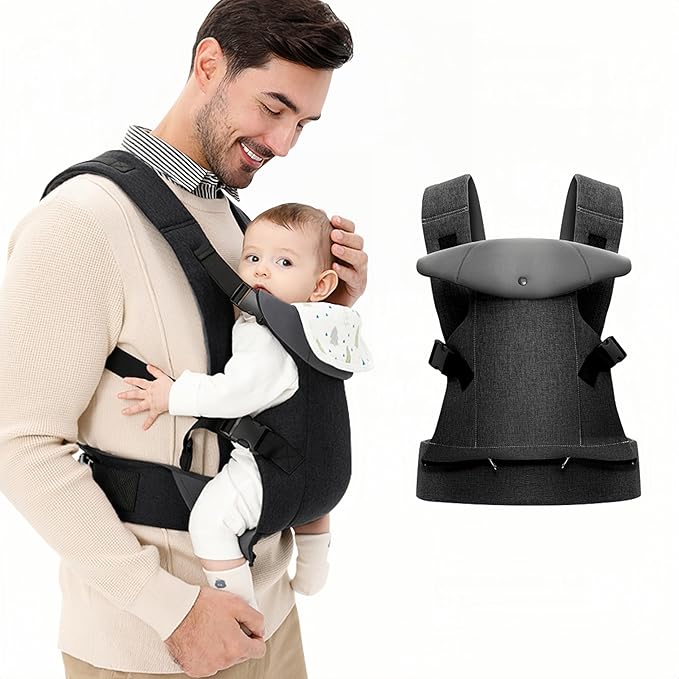
Best if you want one premium structured carrier that can start from newborn and still feel convincing once longer wears and back carrying matter more. BabyBjorn Carrier Harmony earns its place when breathable fabric, easier weight distribution, and a more polished everyday feel matter enough to justify the higher price.
Pros
- The padded waist support, thicker shoulder straps, and back-carry range make it much more convincing for longer wears than newborn-first carriers that fade once your baby gets heavy.
Cons
- It is expensive, and that premium only really pays off if you expect regular longer wears rather than short occasional carries.
- Rank #5 Our score: 9.67 / 10
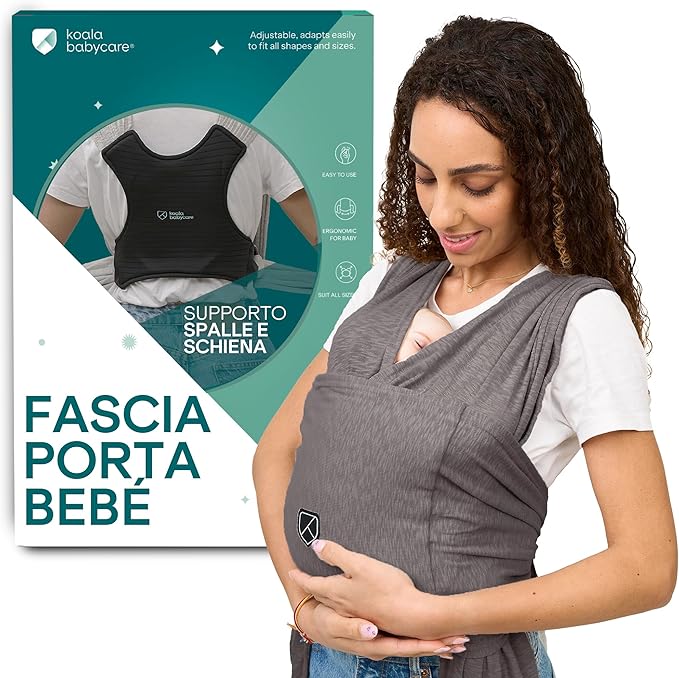
Koala Babycare Baby Wrap
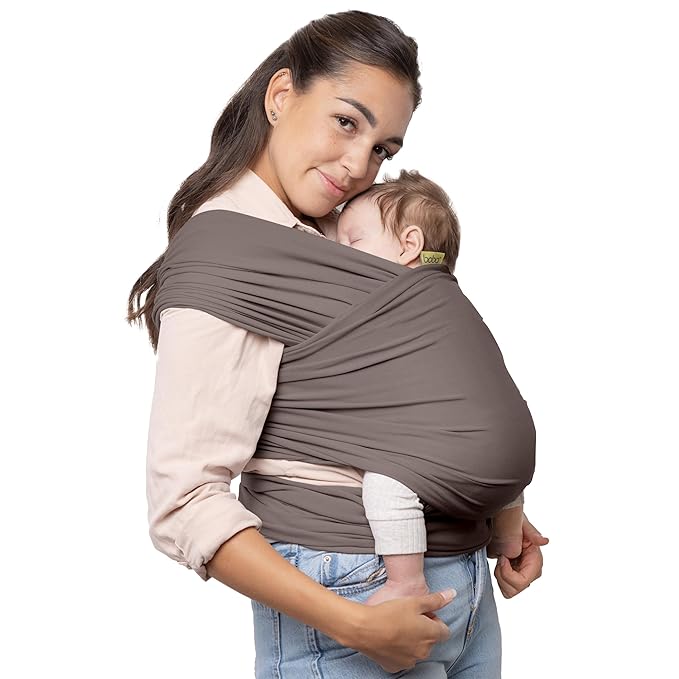
Koala Babycare Baby Wrap suits the early months when a parent wants wrap-like closeness without tying a long fabric panel from scratch each time. Its pre-tied bands, adjustment rings and back panel reduce setup friction, but the 9 kg/19.8 lb limit gives it a shorter useful window than a structured carrier.
Pros
- Pre-tied bands and side adjustment rings are quicker to put on and keep off the ground compared with a traditional long wrap.
Cons
- The 9 kg/19.8 lb limit makes this primarily an early-stage carrier rather than a long toddler solution.
- Rank #6 Our score: 9.67 / 10
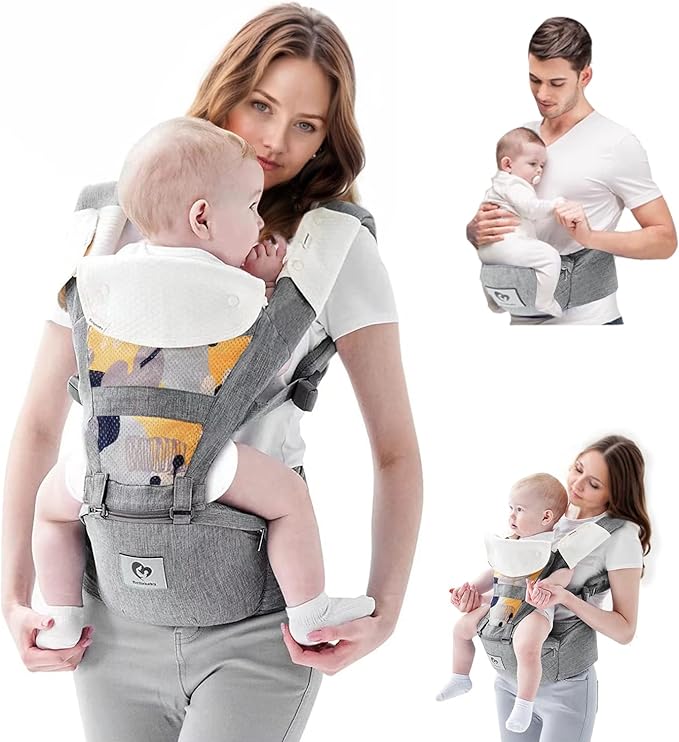
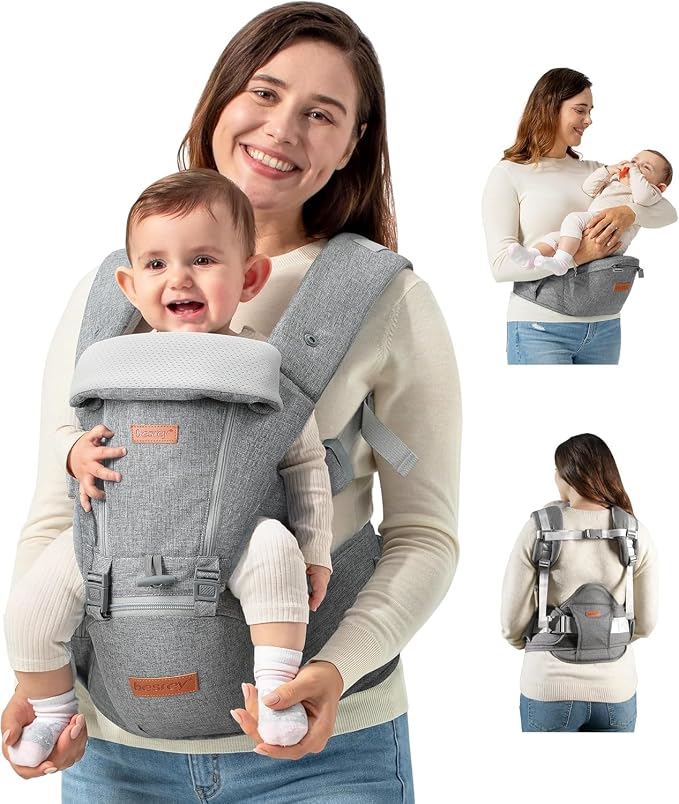
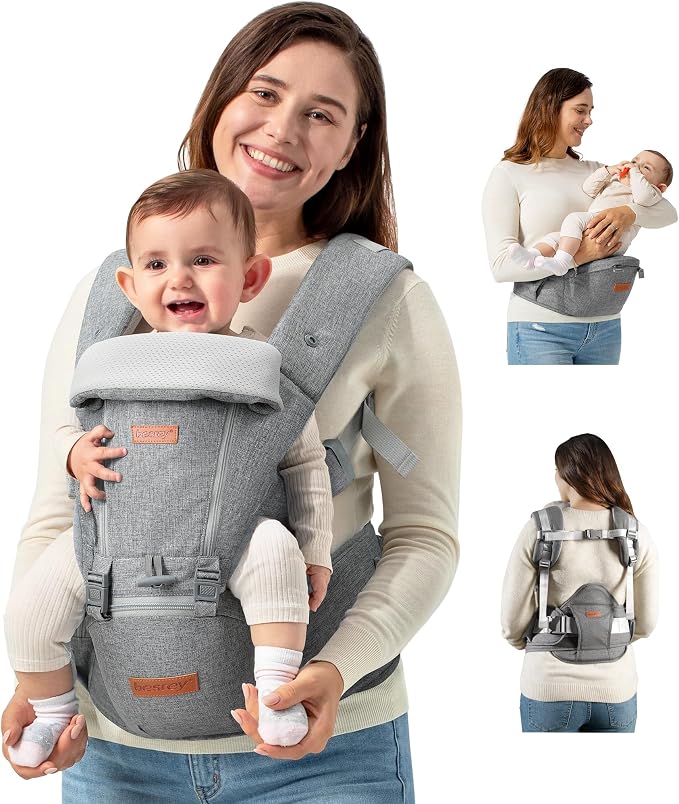
Besrey Baby Carrier
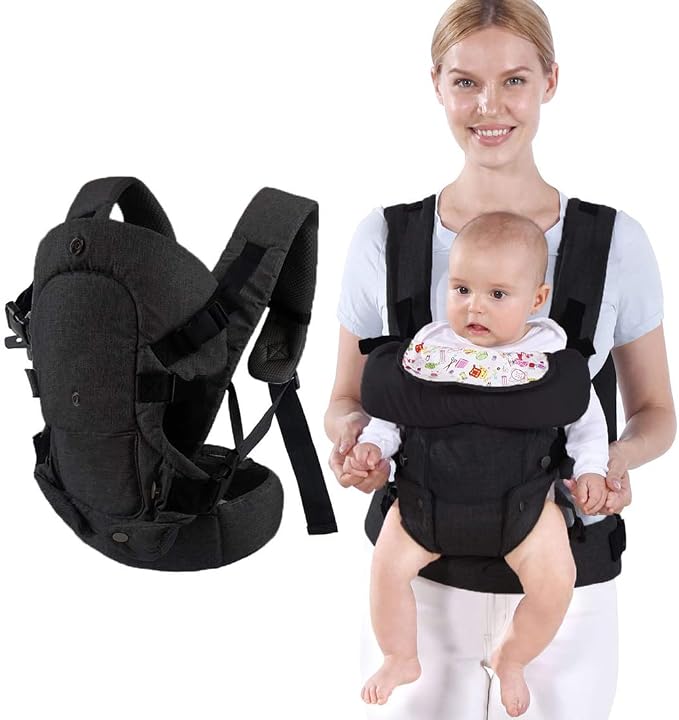
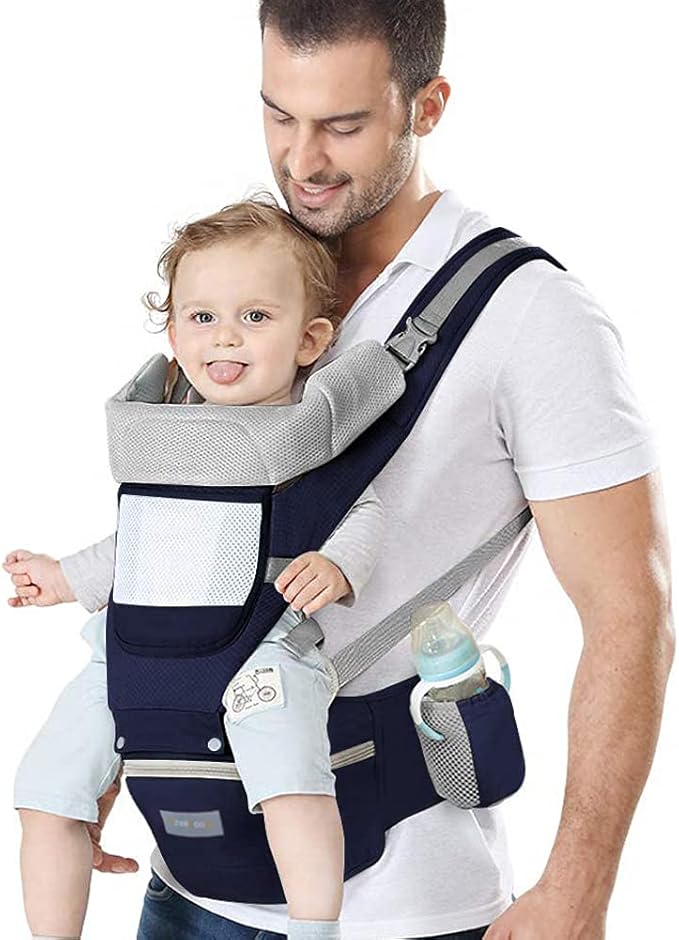
A structured carrier with a detachable hip seat for families who want inward, outward, hip and back-carry options from one setup. The adjustable seat and head support broaden fit, but each mode has a different age and support requirement that must be checked before use.
Pros
- The adjustable seat width, head support and detachable hip seat cover more carrying stages than a fixed-panel carrier.
Cons
- The many configurations create more fit checks, and the hip seat alone is not a hands-free carry.
- Rank #7 Our score: 9.66 / 10
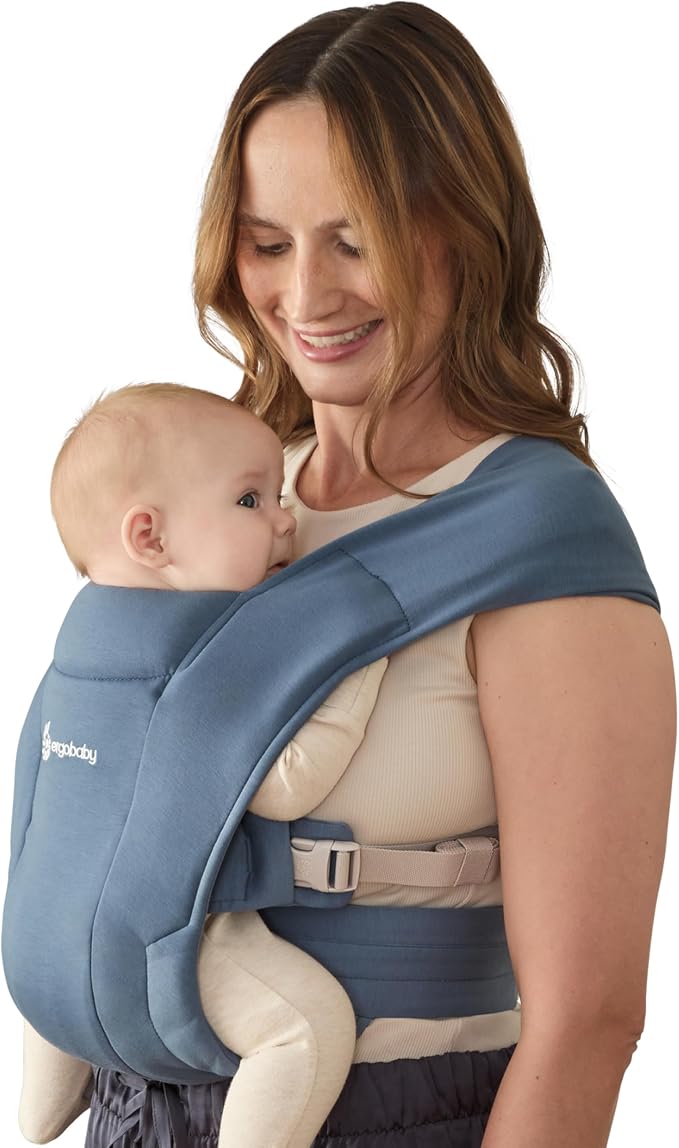
Ergobaby Embrace Newborn Carrier
Ergobaby Embrace is a soft structured carrier for the close newborn stage when parents want buckle repeatability without a long wrap. Its 3.2 kg-11.3 kg/7.1-24.9 lb range makes it deliberately short-lived, so compare it with a longer-stage carrier if toddler use matters.
Pros
- Crossed straps and an adjustable seat make the newborn fit easier to repeat than a fully tied wrap.
Cons
- The 11.3 kg/24.9 lb upper limit means many families will need another carrier for later toddler carries.
- Rank #8 Our score: 9.65 / 10
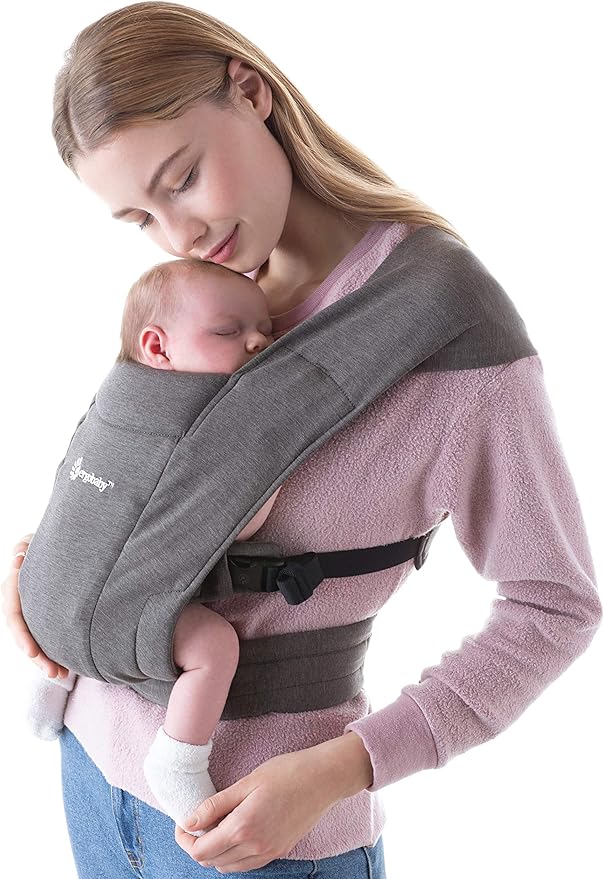
Ergobaby Embrace
Ergobaby Embrace is a 3.2 kg-11.3 kg/7.1-24.9 lb first-stage carrier with soft fabric, buckle fastening and crossed shoulder straps. It has front inward and outward positions but no back carry; outward-facing starts at 66 cm/26 in with steady head and neck control, and a baby must not sleep facing out.
Pros
- Soft fabric, buckle fastening and crossed shoulder straps give a wrap-like front carry without tying a long wrap.
Cons
- The 3.2 kg-11.3 kg/7.1-24.9 lb range and lack of back carry make this a first-stage carrier.
- Rank #9 Our score: 9.63 / 10
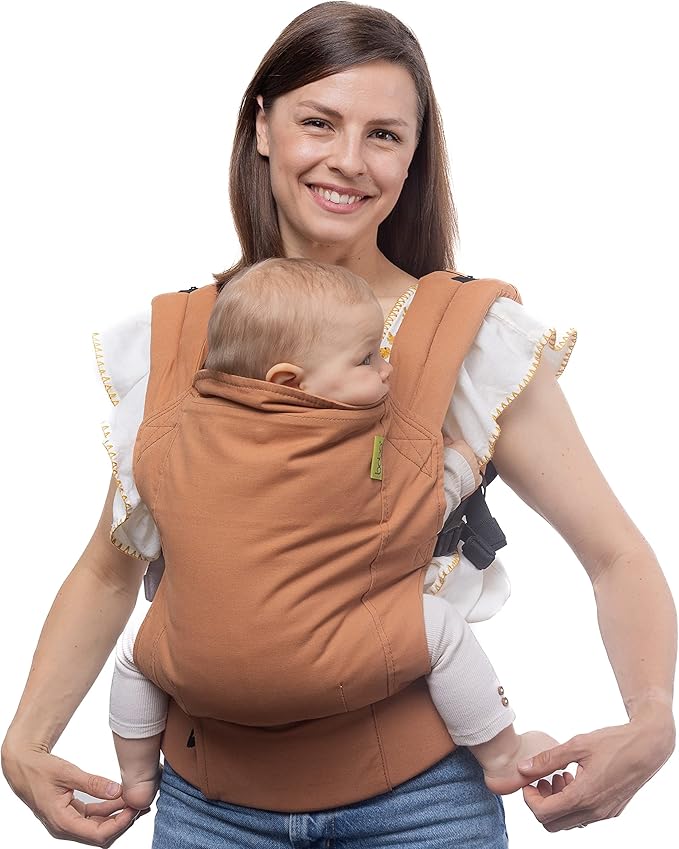
Boba Classic 4GS Carrier
Boba 4GS is for parents who want a padded structured carrier with front and back carrying rather than a compact sling. It makes most sense when support and pockets matter more than the smallest storage size.
Pros
- Padded structured support, newborn-to-toddler positioning and waist-belt storage suit parents who carry often.
Cons
- It gives more structure than a compact sling, so it is not the smallest option for travel or quick backup use.
- Rank #10 Our score: 9.56 / 10
besrey Hip Seat Baby Carrier
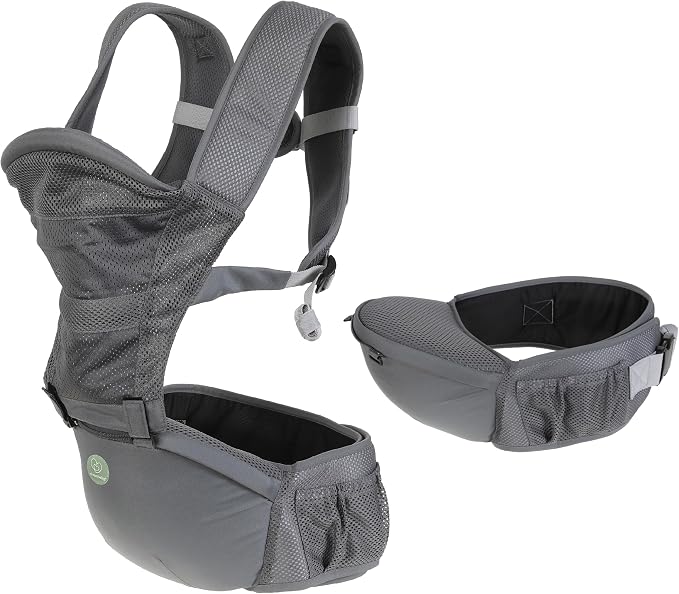
besrey Hip Seat Carrier suits families starting from the listed four-month stage who want a supportive waist seat and several front or back options. The 130 cm/51.2 in waistband broadens adult fit, while the rigid seat adds bulk and should not be treated as a newborn carrier.
Pros
- The structured hip seat and lumbar pad shift more load to the waist than a minimal sling.
Cons
- The listing starts at four months, so this is not a birth-ready carrier.
- Rank #11 Our score: 9.52 / 10
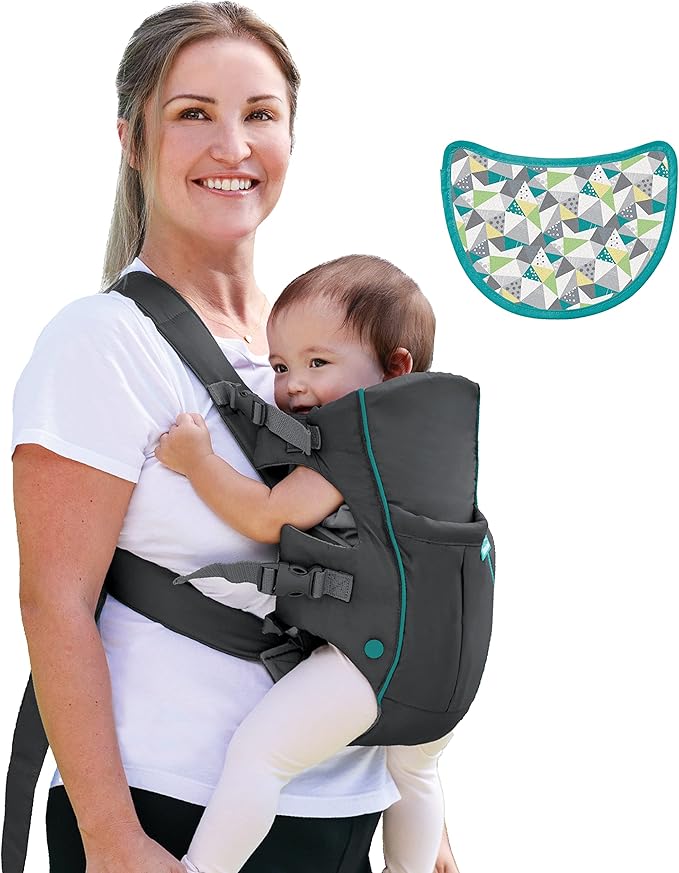
Infantino Swift Classic Carrier
The grey Infantino Swift Classic is a compact carrier for 3.2 kg-11.8 kg/7.1-26 lb that packs into a bag alongside your pushchair. Front buckles, a pocket and a removable bib keep the setup practical for outings. It offers front carrying only: outward facing must wait until your baby holds their head upright independently, and there is no later back-carry stage.
Pros
- The compact pouch-style design packs into a bag for use alongside a pushchair.
Cons
- There is no back-carry position for the next stage.
- Rank #12 Our score: 9.51 / 10
Infantino Flip Luxe 4-in-1
The Infantino Flip Luxe is the step-up Flip for parents who want the familiar four-position concept with wider lumbar support and a listed 3.2-15.9 kg/7-35 lb range. It should distribute load better than the basic Flip Advanced, but it remains a value-focused carrier and each seat configuration still needs to match the child's stage.
Pros
- Wider lumbar support addresses a key comfort limitation of basic budget carriers while retaining four stage-dependent setups.
Cons
- The Luxe name does not remove the need to test shoulder and waistband comfort before long carries.
- Rank #13 Our score: 9.50 / 10
IULONEE Front and Back Baby Carrier
This IULONEE carrier pairs a zip-adjustable seat with a folding head panel for inward carrying from three months and back carrying after independent sitting, within 3 kg-15 kg/6.6-33.1 lb. Its 66-116 cm/26-45.7 in waistband gives adults a concrete fit check. Choose it for staged front-to-back use, not for carrying from birth.
Pros
- Adjustable seat width and a folding head panel support the transition between the stated inward-carry stages.
Cons
- Carrying starts at three months, not birth; an applicable original operating manual was not found.
- Rank #14 Our score: 9.46 / 10
shsyue 4-in-1 Baby Carrier
shsyue's 4-in-1 carrier is an adjustable structured option across the listed 3.2-20.4 kg/7-45 lb range, with padded shoulder straps and a waistband for front and later back carrying. The listing's position labels are unclear, so the supplied instructions—not the marketing count—must govern safe setup.
Pros
- Padded shoulder straps and a waistband distribute load across more than the shoulders alone.
Cons
- The listing describes some carry positions ambiguously, making the delivered instructions essential.
- Rank #15 Our score: 9.44 / 10
Beco Gemini
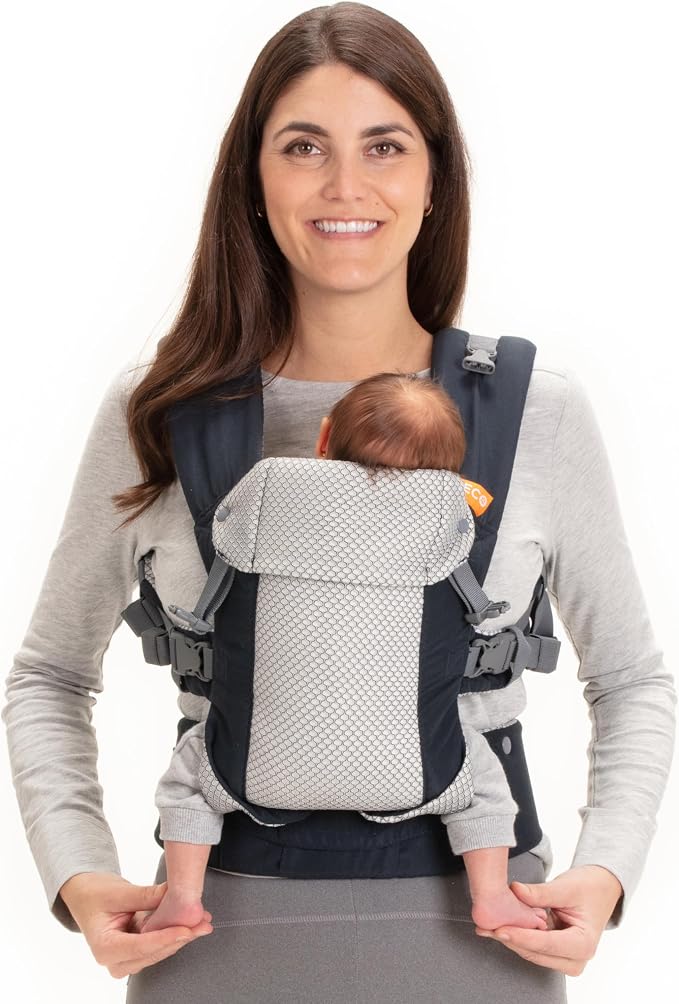
Beco Gemini suits parents who want a compact buckle carrier with more position flexibility than a front-only model. The adjustable seat is the appeal, but it also means newborn and outward-facing setup need careful fit checks.
Pros
- Adjustable seat width gives it more stage flexibility than many simpler budget buckle carriers.
Cons
- The fit is less plug-and-play because the seat and panel need careful stage-by-stage adjustment.
- Rank #16 Our score: 9.42 / 10
Momcozy Baby Carrier
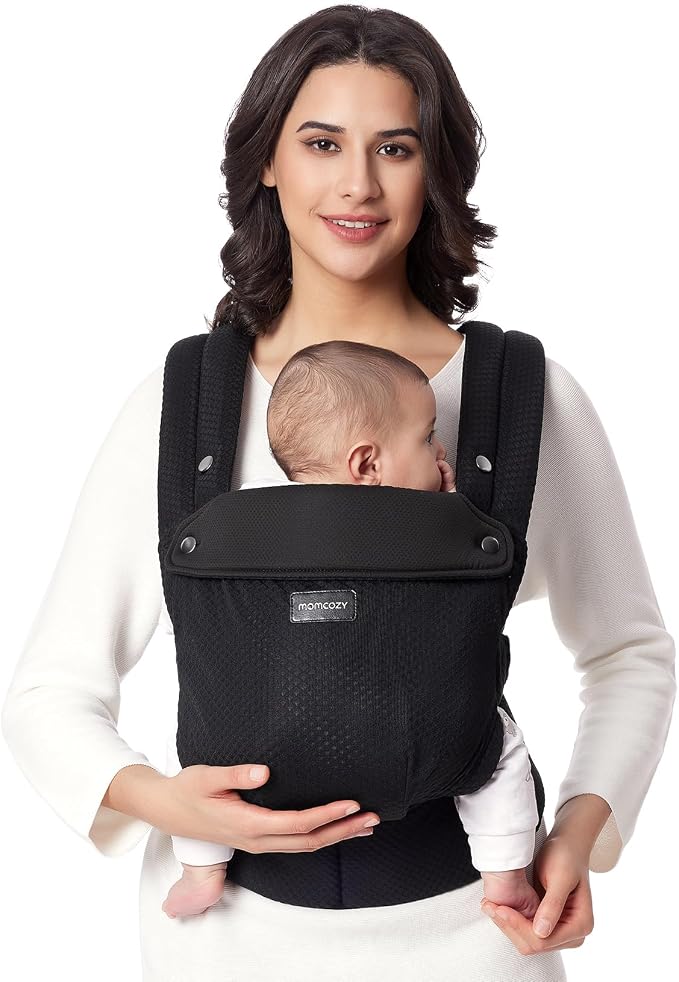
Momcozy PureHug is a front-inward structured carrier for babies from about three months, with an X-shaped back, EVA lumbar panel and an adjustable 3.2-20 kg/7-44 lb seat. It suits errands and shorter walks when fast setup matters; choose another carrier for newborn-first or back-carry use.
Pros
- The X-shaped straps and EVA lumbar panel spread load across the back and waist during everyday front carry.
Cons
- Momcozy starts this model at about three months, so the low weight number alone does not make it a newborn carrier.
- Rank #17 Our score: 9.41 / 10
Azeekoom Ergonomic Baby Carrier
Azeekoom's firm waist seat and mesh upper panel suit inward carrying when accessible pockets matter more than a small packed size. The complete-carrier chart starts at 6 months; we recommend it only once your child sits independently and has steady head control. The stated full-carrier load is about 25 kg/55.1 lb, not a precise certified maximum. The detached seat has a separate 10 kg/22 lb limit and needs continuous arm support.
Pros
- Mesh across the upper panel leaves less solid fabric around the child than a closed padded panel.
Cons
- The rigid seat projects from the waist and does not pack as flat as an all-fabric carrier.
- Rank #18 Our score: 9.39 / 10
Dreambaby Elevate Carrier with Hip Seat
Dreambaby Elevate combines a structured carrier with a detachable hip seat for families who want several short-carry options in one product. Dreambaby's current guidance starts the carrier at four months and the hip seat at five months, so do not rely on broader newborn wording in the marketplace title.
Pros
- The wide lumbar panel and detachable hip seat give carers alternatives as the child gets heavier.
Cons
- The official stage guidance is narrower than the listing headline, and switching modes adds more buckles and fit checks.
- Rank #19 Our score: 9.38 / 10
Infantino Zip Travel Carrier
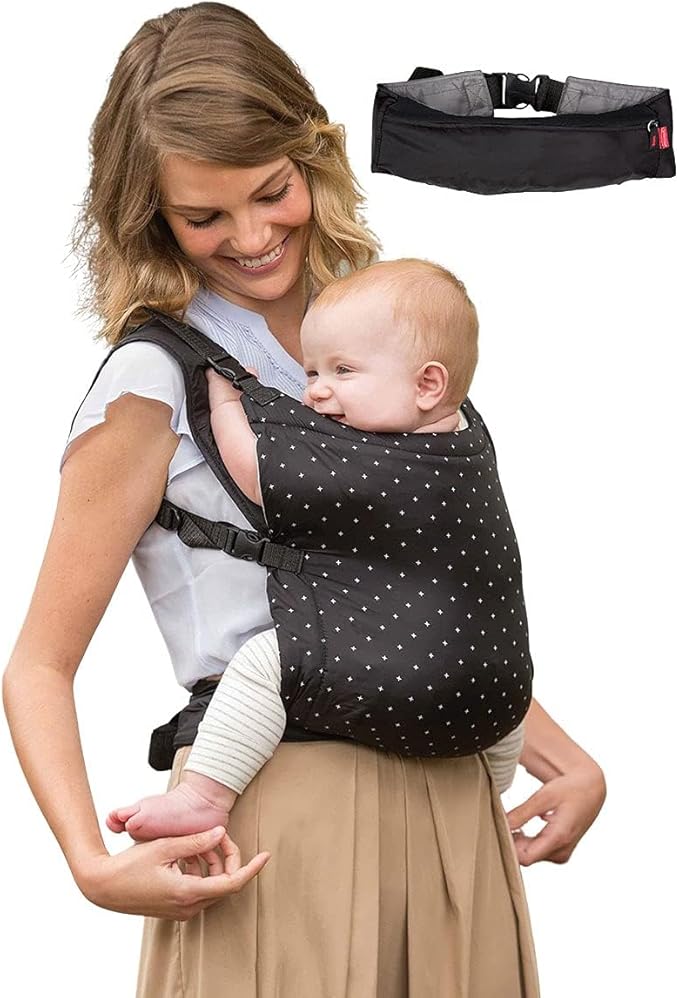
Infantino Zip folds into its own waist-belt pocket, making it a practical spare for trips without a pushchair. It carries 5.4-18.1 kg/12-40 lb (about 5.4 kg-18.1 kg/11.9-39.9 lb), facing you on the front or on your back once your child sits independently. It does not offer outward-facing carry.
Pros
- The carrier packs into its waist-belt pocket, so there is no separate storage bag to lose.
Cons
- The 5.4 kg/12 lb minimum excludes smaller babies, even if they fit the advertised age description.
- Rank #20 Our score: 9.33 / 10
Bebamour Adjustable-Seat Baby Carrier
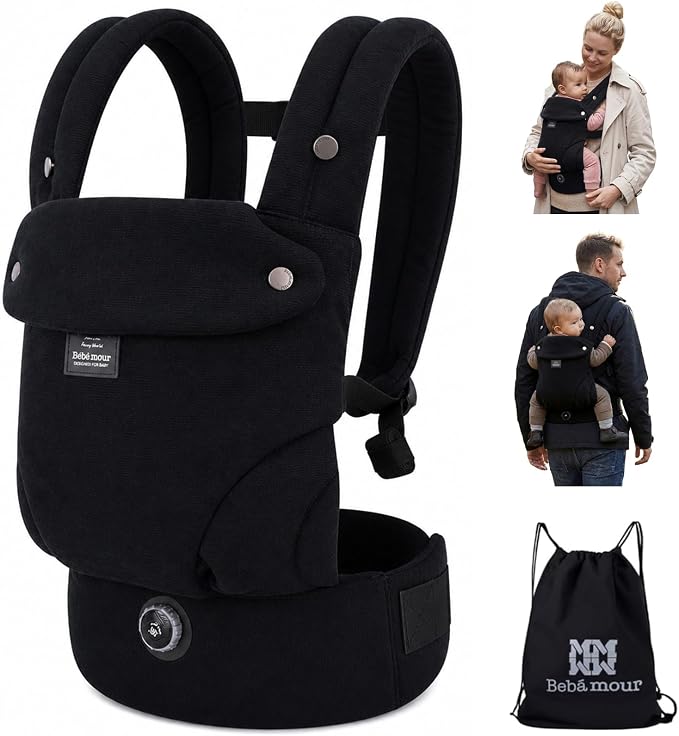
Bebamour Adjustable-Seat uses a dial to resize the fabric seat, without a bulky hip-seat base. We recommend it only for inward-facing carrying once a child sits independently and has steady head control, from at least four months and within 3.6 kg-14.5 kg/7.9-32 lb. This is our narrower recommendation: published ranges conflict, so it is not a verified newborn-to-toddler fit promise. Removable bibs simplify washing, but the dial adds a fitting step.
Pros
- The seat-width dial adjusts thigh support without adding a rigid hip-seat base.
Cons
- Published limits differ: 3.6 kg-14.9 kg/7.9-32.8 lb in the title and image, versus 3.2 kg-14.5 kg/7.1-32 lb and 4–36 months in the description; our recommendation uses the overlap, not a resolved manufacturer rating.
- Rank #21 Our score: 9.33 / 10
Bebamour Carrier
Bebamour Carrier is an adjustable structured carrier for families who want front, hip and back positions as their child grows. Seat width adjusts from 16-42 cm/6.3-16.5 in and the panel from 30-45 cm/11.8-17.7 in, but those controls only help when they are reset for the child's current height and carry mode.
Pros
- Independent seat-width and panel-height adjustment gives more useful fit control than a fixed-size budget carrier.
Cons
- The extra settings make hurried handoffs easier to get wrong, so recheck the seat, panel and straps after every change of carer or mode.
- Rank #22 Our score: 9.33 / 10
Boba Baby Wrap
Boba Baby Wrap is the cotton-rich stretchy wrap for close, inward-facing carrying in the early months. Its approximately 5 m of fabric adjusts without buckles, but takes practice to tie and feels warmer than Boba Serenity. The 3.2-15.9 kg/7-35 lb limit is not a promise of toddler comfort: Boba says it works best up to 9.1 kg/20 lb.
Pros
- The cotton-and-spandex fabric gives a close fit without buckles pressing against you.
Cons
- Tying roughly 5 m of fabric takes practice and makes quick changes between wearers less convenient.
- Rank #23 Our score: 9.33 / 10
Stokke Limas Plus Carrier
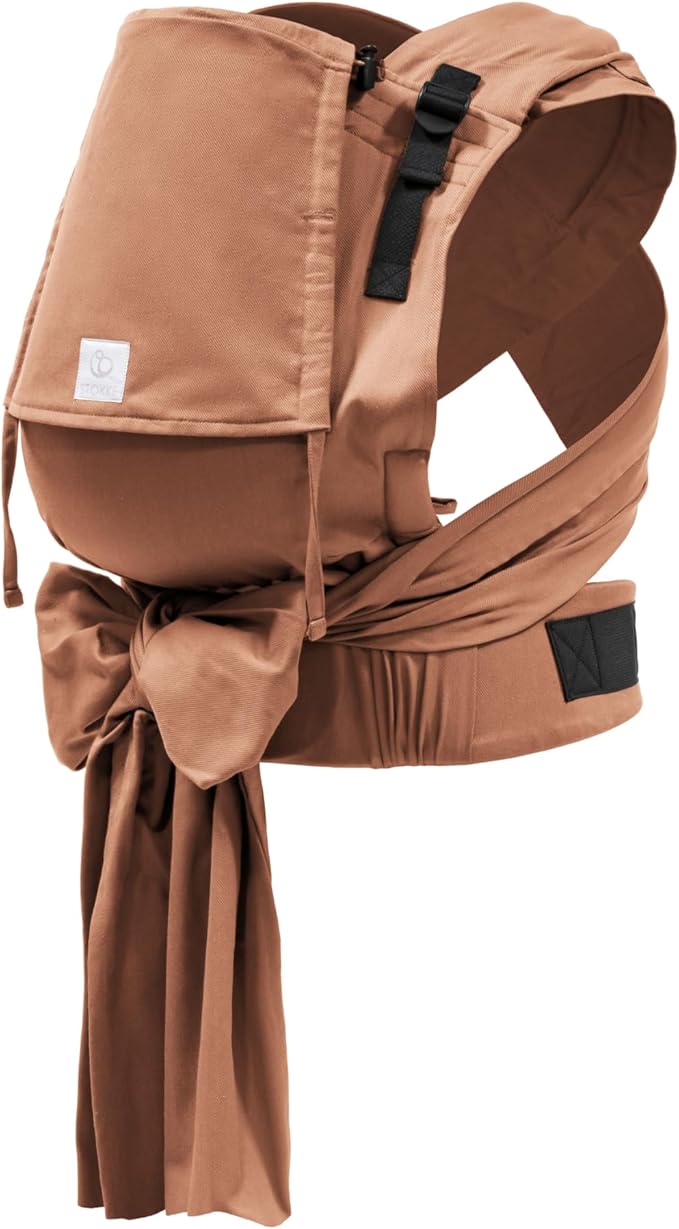
Stokke Limas Plus is a half-buckle carrier with a buckled waist and long spreadable shoulder panels for front and back carry. The fabric panels distribute pressure flexibly but need careful tightening; set seat width, neck support and mode from Stokke's current instructions and the child's development.
Pros
- Wide spreadable shoulder panels combine wrap-like adjustment with a quickly buckled waist.
Cons
- The long panels take more practice and can trail during setup; back carry is not appropriate at every developmental stage.