
Best Baby Carrier for a Newborn: Structured Carrier, Wrap, or Ring Sling?
By Peter CronaLast updated Last checked
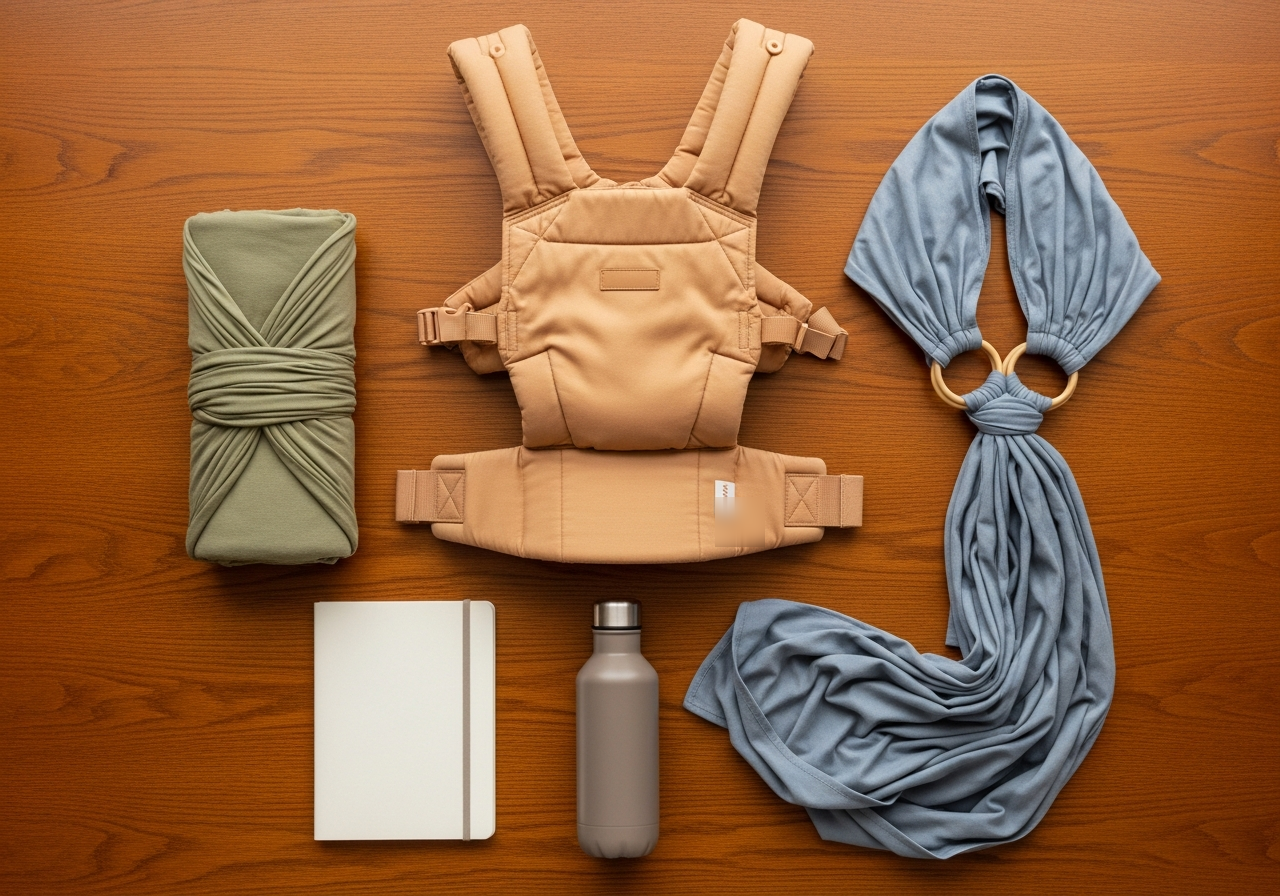
The first newborn carrier decision is usually not about brand. It is about friction. You are trying to get a tiny baby carried safely, without turning every outing into a setup problem. This page is about the first newborn-stage choice: what will actually make the next few months easier.
There is no universal winner. A newborn-friendly structured carrier is usually the best first answer when you want the fastest repeatable setup, easy handoff between adults, and a cleaner path to longer walks. A wrap is usually best when closeness, a softer fit, and newborn adjustability matter more than speed. A ring sling is often useful for short carries and quick in-and-out use, but it is usually not the default first answer for most long newborn wears.
Start with the newborn problem, not the brand
In the first weeks, most families are not choosing for some abstract future version of babywearing. They are choosing for life right now: settling a baby at home, walking through a grocery store, getting out for a nap walk, or doing a short errand without waking the baby fully.
That is why the best answer changes with your real pattern:
- If you want the least fuss when leaving the house, structured usually starts winning.
- If you care most about a soft close fit on a very small baby, a wrap often starts winning.
- If you mostly want a fast short-carry tool for stairs, school pickup, or quick errands, a ring sling can earn its place.
Daily context matters more than many parents expect. Hot weather pushes some families toward less padded fabric. Two-adult households often care more about repeatable adjustment. A parent who already knows they will hate tying fabric before every trip should take that seriously. And if you are early after birth, sore, or recovering from a C-section and simply want less fiddling before you leave the house, that friction usually matters more than whatever carrier seems most future-proof on paper.
When a structured carrier is the better newborn answer
A newborn-friendly soft structured carrier makes the strongest case when you want the easiest setup to repeat every day. Once it is adjusted properly, it is usually quicker to put on, easier to share between adults, and less mentally taxing when you are tired.
This is often the better newborn answer when:
- two adults will trade off often
- you expect frequent errands and regular walks, not just indoor settling
- you already know you want something that can keep making sense after the very smallest stage
- you want less tying, less fabric management, and a clearer routine
That practicality matters. A carrier that you can put on correctly every time is often more useful than a theoretically softer option that you keep postponing because the setup feels like work.
The honest tradeoff is that structured carriers can feel bulkier and less forgiving in the earliest weeks. Not every carrier marketed as newborn-ready is equally convincing on a truly tiny baby. Some feel better once the baby has a little more size and stability. So if you go this route, be stricter about real newborn fit, not just the label on the box.
When a wrap is the better newborn answer
A wrap is often the strongest answer when your priority is the newborn stage itself. It can give a softer, more body-hugging fit, adjust closely around a very small baby, and adapt well to different adult body shapes without relying on a fixed panel shape.
This is often the better newborn answer when:
- closeness is the main goal
- your baby is very small and you want a softer early fit
- you want a carrier that molds more around the baby instead of starting with more structure
- one adult is the main wearer and does not mind learning one setup well
For some families, that softer feel is exactly what makes newborn carrying click. If the baby wants contact and the adult is willing to learn the technique, a wrap can feel calmer and more natural than a padded buckle carrier.
The tradeoff is speed. A wrap can be excellent once you know what you are doing, but it is still slower out the door for many parents. If you already know you will resent tying it on every trip, that is not a small personality quirk. It is a reason not to make it your main first newborn carrier.
When a ring sling is enough, and when it is not
A ring sling makes the most sense when the job is short, frequent, and simple. It is often good for quick in-and-out use, settling a baby for a short walk, carrying through stairs or school pickup, or keeping something lighter and cooler close at hand.
That is the useful version of the ring sling case. The less useful version is treating it like the easiest universal answer for all newborn carrying. For many families, it is not.
The limitation is straightforward: one-shoulder carrying usually becomes the boundary. If you expect long daily wears, longer nap walks, or lots of repeated newborn carrying across the day, a ring sling is often weaker as the only first carrier. It can still be a very good secondary tool. It is just less convincing as the single default answer for most long newborn use.
Safety and fit checks that actually matter
For Great Britain, pair the product manual with the NHS-linked Healthier Together safe sleeping guidance, which includes sling-safety basics.
The practical checks stay simple:
- airway clear
- face visible
- chin not pressed onto the chest
- baby upright and supported
- a fit you can reproduce the same way from the manual
That matters more than marketing words like “ergonomic” or “newborn insert included”. If you cannot get a stable, visible, repeatable fit on your own baby, it is not the right setup yet.
The everyday friction checklist that usually decides it
Ask these in order:
- Do you want the fastest setup or the softest newborn feel?
- Will one adult use it most, or will two adults swap often?
- Are you buying for hot weather and short carries, or for longer daily walks with more support?
- Are you mostly solving quick frequent carries, or longer newborn wears where comfort matters more?
Those answers usually narrow the field faster than comparing brands first.
Common mistakes
- buying for later back carrying when the real need is the next three months
- buying a wrap when you already know you will resent tying it every trip
- buying a larger structured carrier because it looks future-proof even though newborn fit is the real issue now
- treating a ring sling as the easiest universal answer when one-shoulder load and comfort will limit it
What to do next
If you want the broader type comparison first, start with Baby Carriers 101: Where to Start. Then move to our best baby carriers shortlist. If you already know newborn fit is the first filter, compare only the shortlist entries that still make sense for that stage instead of restarting from every carrier on the market.