Best Car Seats in Spain 2026
Looking for the best car seat in Spain? Start with the child's current height, weight, and stage, then check the exact vehicle fit: ISOFIX or belt path, top-tether or support-leg needs, front-seat space, and whether the manual supports the setup you plan to use. Use the shortlist only after those safety checks narrow the field.
Why are scores between 9 and 10?
This is a curated shortlist of strong picks, not a full best-to-worst ranking. Small score gaps usually mean we have slightly more evidence for one model than another, not that the lower-scoring option is a poor choice.
So this is just another affiliate roundup with an arbitrary order?
No. We make these lists good enough that we use them ourselves and recommend them to friends and family. We turn the kind of research careful parents would normally do by hand into a repeatable process. Then we compare the evidence across the markets we cover and rank products with a model that gives more weight to stronger signals instead of simple averages or a fully hand-picked order based purely on editorial preference.
Affiliate Disclosure
We use affiliate links and ads to finance this website. As an Amazon Associate I earn from qualifying purchases.

- Rank #1 Our score: 9.78 / 10
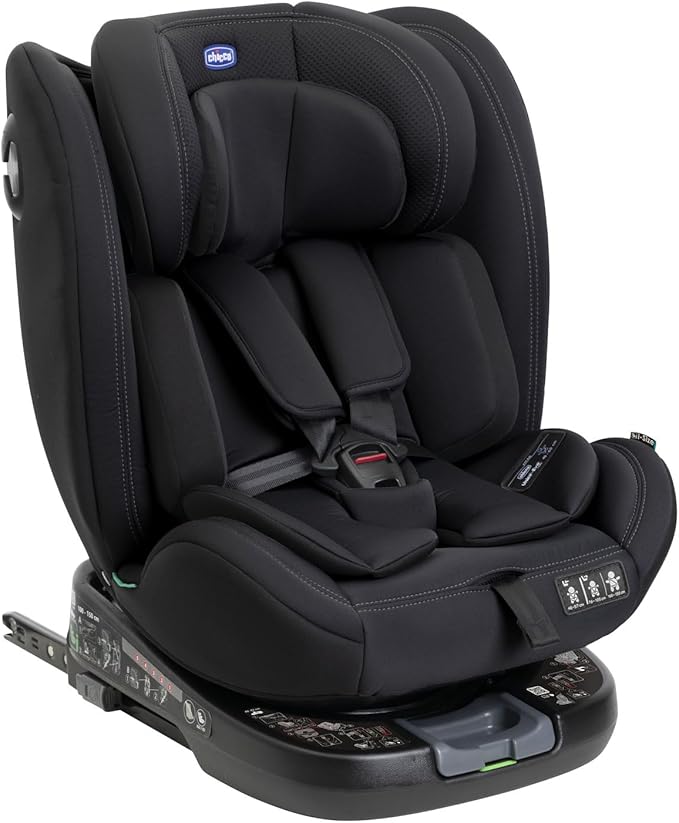
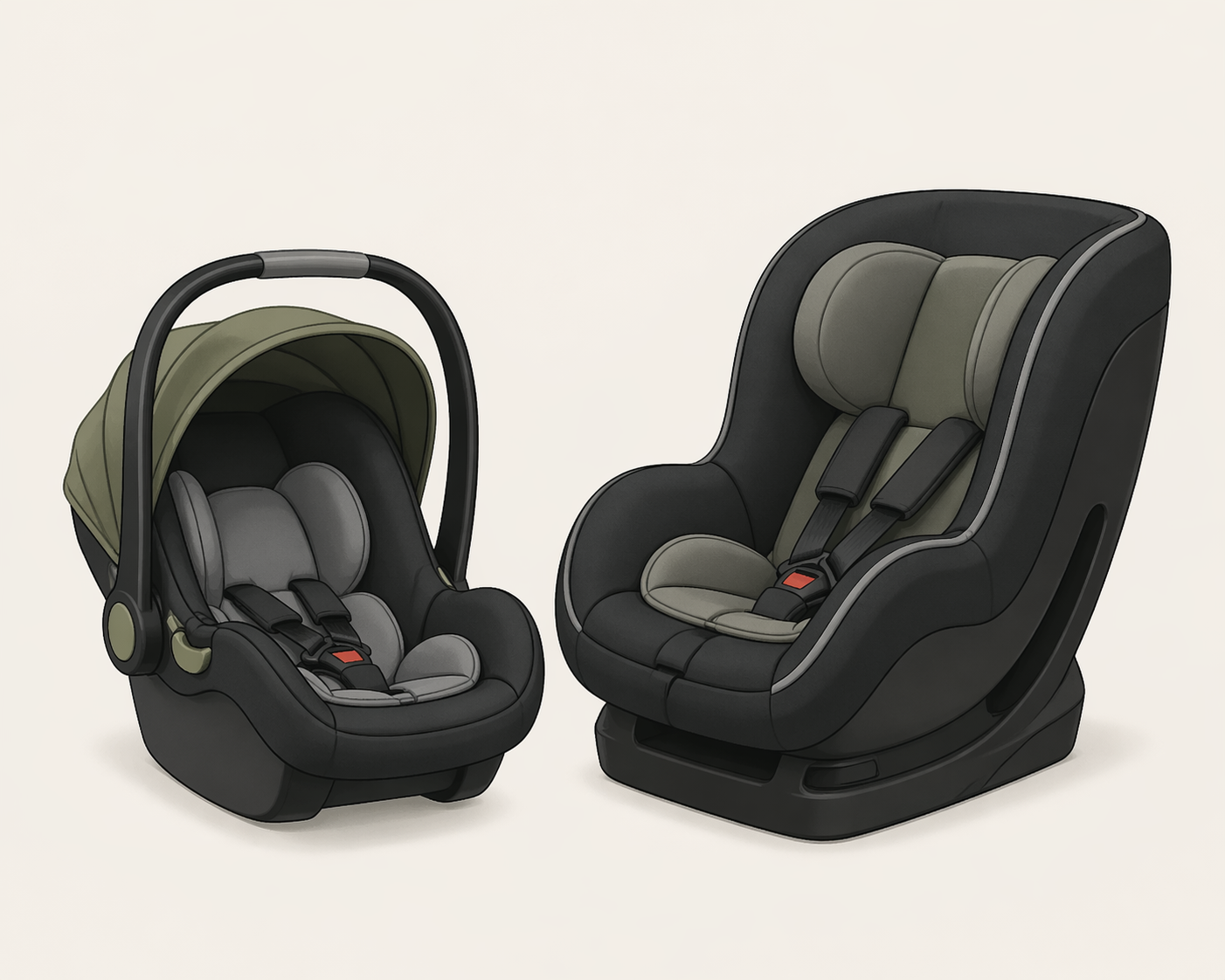
Chicco Unico Evo i-Size
Best: Mid-range
40-150 cm overall; harness limits differ by direction and mode.
Chicco Unico Evo i-Size combines a rotating seat and newborn reducer for 40-60 cm. Rear-facing harness use is 40-87 cm; forward-facing harness use is 76-105 cm, only after 15 months and up to 18 kg. Both harness modes use ISOFIX, top tether and a five-point harness. Booster mode is available from 100-150 cm with the vehicle’s three-point belt; ISOFIX is optional and top tether is not used. The modes overlap from 100-105 cm, so reaching 100 cm does not force an immediate switch.
Pros
- The rotating shell and 40-60 cm reducer support the early setup, while rear-facing harness use continues through 87 cm.
Cons
- Forward-facing harness use is limited to 76-105 cm, only after 15 months, and up to 18 kg; both harness modes require ISOFIX and top tether.
- Rank #2 Our score: 9.64 / 10
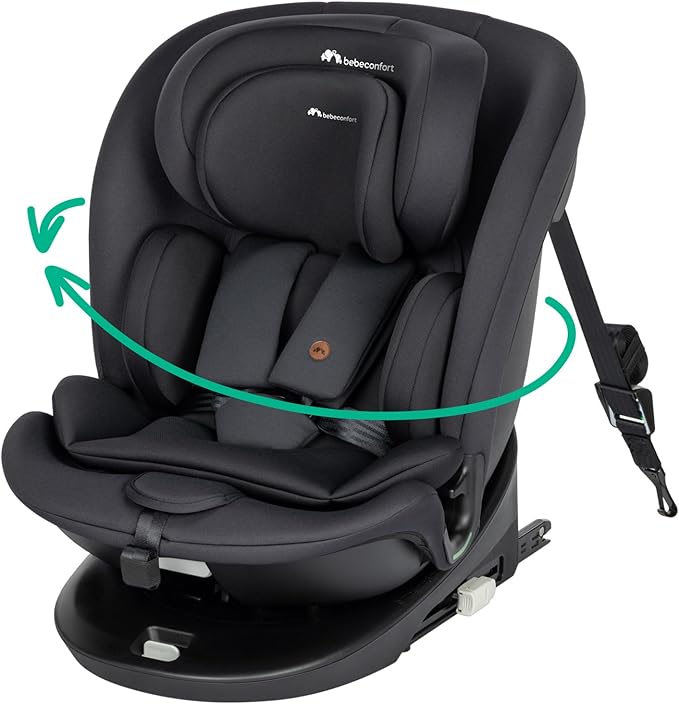
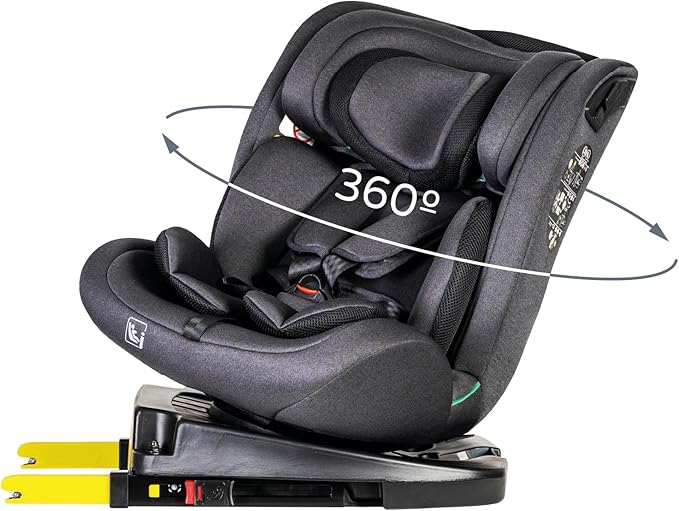
Bebeconfort RevolveFix 360 i-Size
From 40 cm, up to 150 cm (~newborn to 12 years).
Best if you want one rotating ISOFIX seat that covers the whole journey from newborn through booster years without stepping up to premium pricing. The tradeoff is a bulky all-stage shell that makes more sense as a fixed everyday install than as a seat you move often.
Pros
- A very easy all-stage buy to justify if you want one rotating i-Size seat from birth through booster years without paying for a more premium system.
Cons
- The bulky shell is the real tradeoff, so it is a better fixed everyday install than a seat you expect to move between cars often.
- Rank #3 Our score: 9.56 / 10
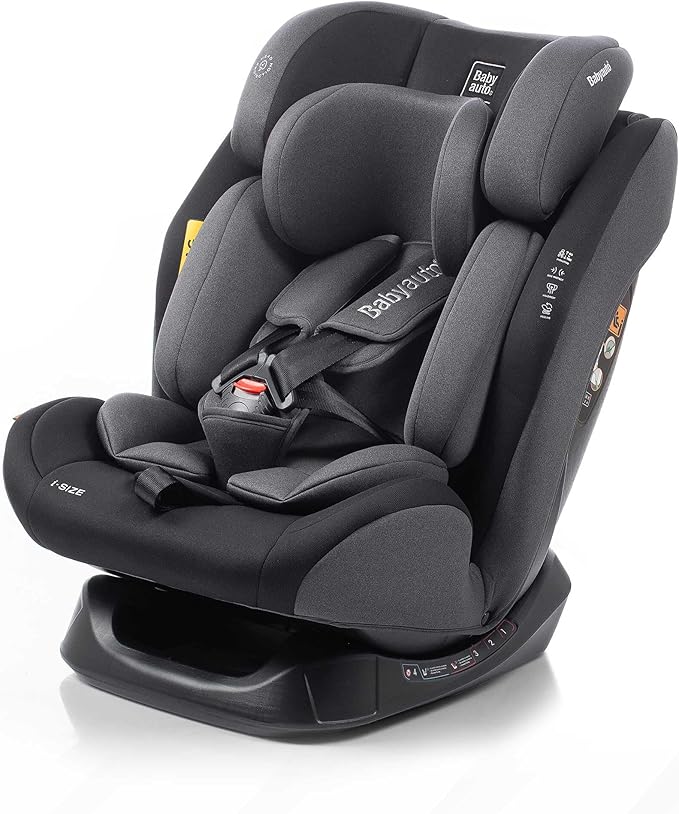
BABYAUTO LOLO
Spanish brand
Best: Affordable
From 40 cm, up to 150 cm (~newborn to 12 years).
Best if you want one seat from birth to 150 cm in a car without ISOFIX, with rear-facing use to 105 cm. The tradeoff is that seat-belt installation takes more care and is less convenient than a well-executed ISOFIX setup.
Pros
- The main reason to shortlist it is simple: it covers the full 40-150 cm journey in cars where ISOFIX is not the deciding factor.
Cons
- A belted all-stage install demands more care and is less convenient than a strong ISOFIX-and-support-leg setup.
- Rank #4 Our score: 9.53 / 10
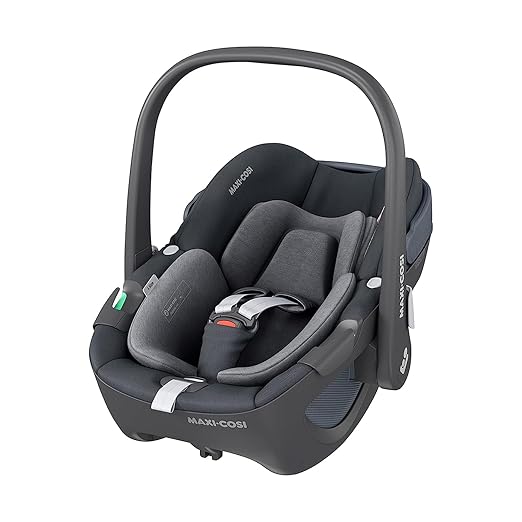
Maxi-Cosi Pebble 360 i-Size
From newborn, up to 83 cm (~newborn to 15 months).
Maxi-Cosi Pebble 360 i-Size is the stronger fit when you want an infant carrier inside Maxi-Cosi’s rotating 360 system. Confirm the FamilyFix 360 base plan before buying, because the rotation benefit depends on that ecosystem.
Pros
- The official Maxi-Cosi page supports the 40-83 cm infant range and the rotating FamilyFix 360 system role.
Cons
- It is a premium ecosystem choice rather than a long-use all-in-one seat, so the base and next-stage seat plans matter.
- Rank #5 Our score: 9.52 / 10
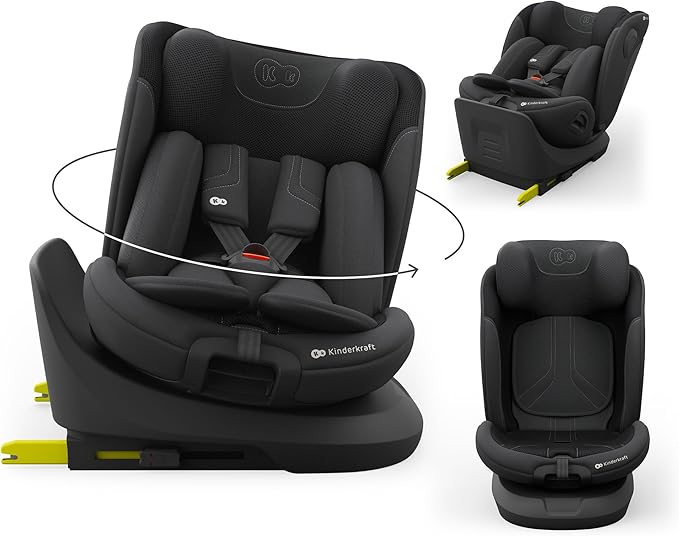
Kinderkraft I-Grow 2 Pro
Best: Extended rear-facing
From 40 cm, up to 150 cm (~newborn to 12 years).
Best if you want a rotating ISOFIX seat with rear-facing to 105 cm and one shell to cover the full journey. The tradeoff is the size and weight typical of a 40-150 cm all-stage seat, so it works best as a main install.
Pros
- Rear-facing to 105 cm, rotation, and full 40-150 cm coverage make it easier to justify if you want one seat for the long family haul.
Cons
- That do-everything brief still creates a large seat that works best as a permanent main install rather than a frequent swap.
- Rank #6 Our score: 9.45 / 10
MS Corfú i-Size
From 40 cm, up to 150 cm (~newborn to 12 years).
Best if you want a lower-cost rotating ISOFIX seat with rear-facing use to 18 kg and enough range to stay in the shortlist through booster years. The tradeoff is that the overall finish and brand confidence sit below the more established leaders.
Pros
- The strongest reason to consider it is value-led rotation: you get ISOFIX, swivel convenience, and a real rear-facing phase without paying premium-brand prices.
Cons
- The lower price comes with weaker brand confidence and a less polished overall package than the category leaders.
- Rank #7 Our score: 9.24 / 10
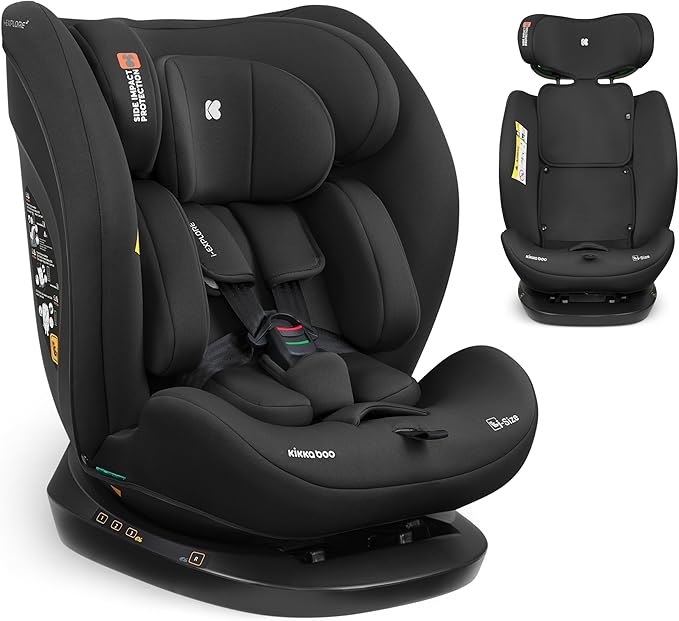
KikkaBoo i-EXPLORE 2
From 40 cm, up to 150 cm (~newborn to 12 years).
Best if you want a lower-cost all-stage seat with genuine rear-facing use to 105 cm but do not need a rotating ISOFIX setup. The tradeoff is a more basic installation and finish than the better-executed 360 seats.
Pros
- It gives real rear-facing to 105 cm without forcing you into the size and price jump of a rotating ISOFIX seat.
Cons
- Belt-based everyday handling and overall finish are still more basic than on the stronger ISOFIX all-stage competitors.