
What We Learned From Actually Using Infant and Toddler Car Seats
By Peter CronaLast updated Last checked

The most useful car-seat lessons in our family did not come from comparing spec sheets. They came from the first ride home from the hospital, from carrying a newborn in summer heat, from reusing the same infant seat for a second child, and from realizing how different the toddler-stage seat felt once our child was bigger.
After actually using car seats with two children, my practical rule is this: choose the stage that fits your child and your local rules first, then pay serious attention to the parts that make correct daily use easier. For us, that meant a newborn seat that felt simple to install while exhausted, easy enough to carry, comfortable enough that both children settled in it, and manageable in warm weather. Brand mattered less than fit, installation confidence, and whether the seat worked on ordinary tired days.
This is not a current review of one exact model. We used an older BeSafe infant carrier-style seat, but I no longer remember the exact model name. From the photos, it looks like the older BeSafe iZi Go family, but I would not buy or recommend an old seat by visual memory alone. We also briefly borrowed a Cybex Pallas-style toddler seat with an impact shield. The visible label supports that product family, but not the exact generation.
That limitation is important. The firsthand value here is not “buy this old model.” It is what real use taught us to check before choosing any infant or toddler car seat now.
For Spain, start with the DGT child-restraint rule, then check that the approved seat fits the child and the rear-seat position you plan to use.
The first ride home changed the question
Our first real use was the hospital ride home with my son. That moment is a bad time to discover that a seat is awkward, confusing, or fussy. You are tired, the baby is tiny, and the car suddenly feels more consequential than it did the day before.
The BeSafe left a strong impression because it did not add much friction at exactly that moment. It felt robust, the installation felt manageable even as first-time parents, and our son settled quickly. That does not prove the seat was safer than another approved seat. It does mean the design made correct use feel reachable on a day when our margin for complication was low.
That is the part I would now take seriously when helping another parent choose. A car seat can look excellent online and still be the wrong buy if the installation route is confusing in your car, the recline is hard to judge, or the harness adjustment annoys you every time you use it.
If you are still choosing the first stage, read Do You Need an Infant Carrier Seat First, or Can You Start With a Longer-Use Rear-Facing Seat? before comparing brands. The first decision is the workflow: carrier convenience now, or a longer-use rear-facing seat that mostly stays installed.
Summer heat was not a small detail
My son was born in summer, and the heat made comfort more concrete than I expected. We had a separate pink 3D mesh-style cooling liner, given to us by my sister. I do not know the exact accessory name now, but the job was clear: create a little more airflow between the child and the seat fabric.
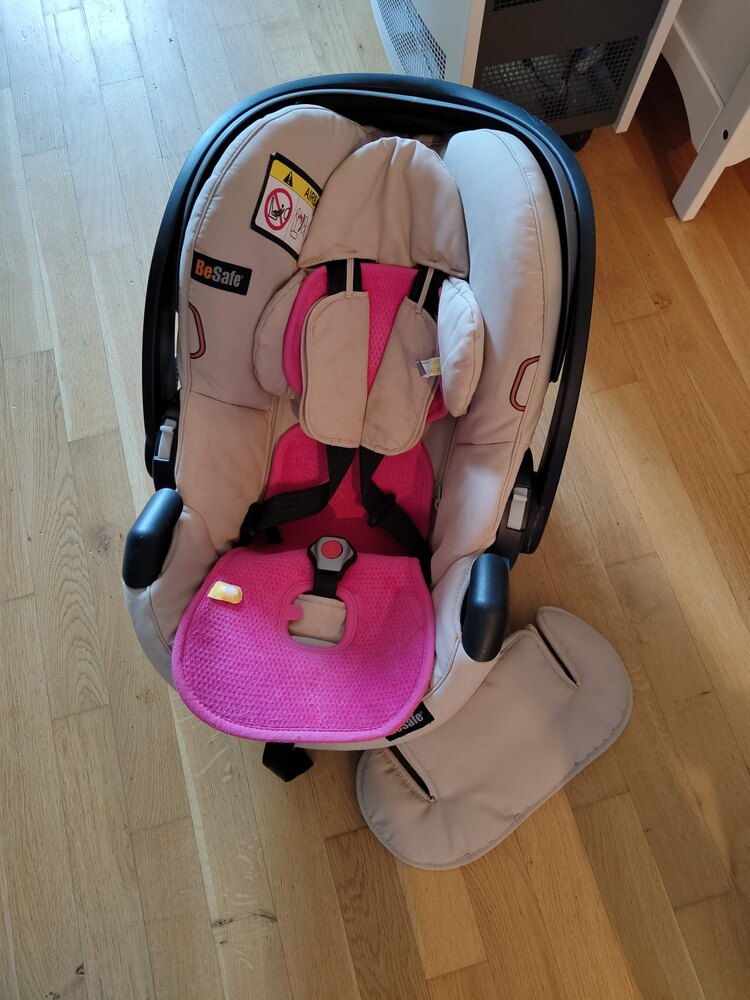
That liner was one of the small things that made the seat easier to live with. It did not change the safety basics, and I would not use that same accessory today unless the seat manual or manufacturer clearly allowed it for the exact model. But it changed how the seat felt in real summer use. A newborn can look perfectly settled one minute and overheated the next, especially when the car has been standing in the sun.
If I were buying again for a summer baby, I would not start by searching for the most heavily padded seat. I would check:
- whether the fabric feels breathable enough for the season
- whether any liner or cover is allowed by the seat manufacturer
- how easy the harness is to adjust over light summer clothing
- whether the car’s shade and ventilation make the rear seat comfortable
- whether I can check the baby easily without disturbing the setup
The caveat is simple: comfort accessories should never become guesswork. If the manual does not allow a liner, insert, or aftermarket pad, I would skip it. Correct fit and correct harness positioning matter more than a cooler-looking setup.
The carrier part mattered outside the car too
One reason infant carrier-style seats remain tempting is that they solve a transfer problem. With a tiny baby, being able to carry the whole seat from car to home can feel like a huge reduction in friction.
For us, that portability mattered most in short, practical moments: the hospital pickup, bringing the baby inside, setting the seat down briefly while getting organized, and moving between house and car without waking a child who had just fallen asleep.

That convenience has a boundary. A car seat is not a routine sleep space outside the car. The AAP safe-sleep guidance warns against routine sleep in sitting devices such as car seats, especially for young babies. So I would treat the carrier function as a transfer tool, not as a reason to let the seat become a crib substitute.
The other boundary is weight. The seat that feels easy with a newborn gets heavy quickly once the baby grows. If you mostly drive from one fixed garage to one fixed destination, a longer-use rear-facing seat may make more sense than paying for portability you will barely use.
Reusing the same infant seat taught us what held up
Our daughter used the same BeSafe seat later, and that second round made the strengths clearer. The seat still felt solid, both children seemed comfortable in it, and the basic routine was familiar by then.
That does not mean old seats should automatically be reused. Before reusing a car seat now, I would check the exact model, manual, expiry or maximum-use guidance, crash history, missing parts, recalls, approval label, and whether the seat is still legal where it will be used. A family hand-me-down is only useful if the history is trustworthy.
In our case, the value was not only financial. Reusing the same seat meant we already knew the harness, handle, carrying balance, and how it behaved in our car. Familiarity made correct use easier, and that matters with a baby.
The second-child lesson was also humbling: we liked the BeSafe partly because it fit our routine. Another family with a smaller car, different climate, or more frequent seat-swapping could reasonably reach a different answer.
The toddler seat felt like a different category
Later, we briefly borrowed a Cybex toddler-stage seat from a friend. The exact generation is not something I can verify now, but the photo shows a Cybex Pallas-style impact-shield seat.
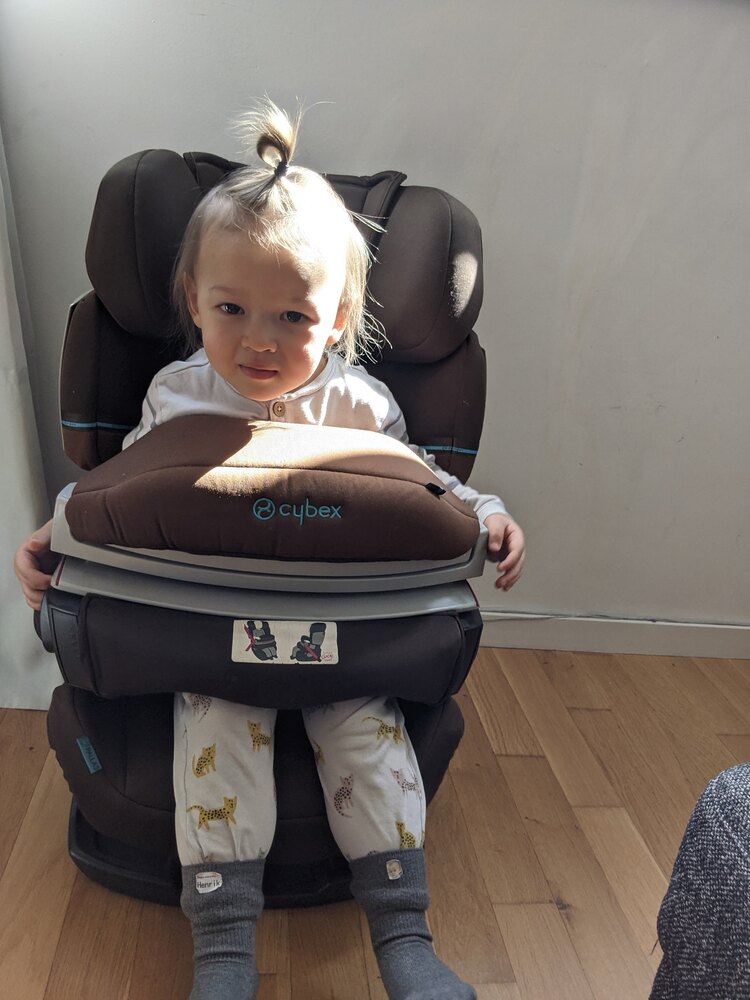
It was immediately obvious that this was not just “the next bigger car seat.” The whole workflow changed. The seat was bulkier, the child sat more upright, and the daily question moved away from carrying and newborn transfers toward fit, space, comfort, and whether the child accepted the restraint style.
Our borrowed experience was positive. It felt substantial, our son seemed comfortable, and we did not find anything obvious to complain about during the limited time we used it. But limited use is limited evidence. I would not turn that into a blanket recommendation for every Cybex Pallas model or every impact-shield seat.
What it did teach was more durable:
- toddler-stage seats can change front-to-back and side-to-side space in the car
- the restraint style has to work for the actual child, not just the parent
- borrowing can be useful because you notice practical fit issues quickly
- a seat that feels easy for one family may still be wrong in another car
If possible, trying a seat in your actual car before buying is more valuable than another hour of reading product listings.
What I would check before buying now
The order I would use now is more disciplined than when we first bought.
1. Start with the current stage
Do not start with brand. Start with the child’s real height, weight, age, and local rule. The right bucket might be an infant carrier-style seat, longer-use rear-facing seat, next-stage harness seat, high-back booster, or an R129/i-Size height-range seat.
If that stage question is still fuzzy, start with Car Seats 101: Where to Start. It keeps the decision anchored to child fit, legal approval, and the actual car instead of vague product labels.
2. Check the car before trusting the listing
The car matters more than parents want it to. Seat angle, buckle access, ISOFIX or seat-belt route, support-leg rules, front-seat space, and whether another child seat has to sit beside it can all change the answer.
Our BeSafe felt easy partly because it worked in the car setup we were using. That is not a universal property of the brand.
3. Treat tired-day installation as a real feature
The safest theoretical seat is not enough if daily use becomes error-prone. Clear belt routing, a harness that adjusts without a fight, a recline indicator you can understand, and a seat that does not make every trip feel like a puzzle are real decision points.
This is especially true for the first hospital ride and the first weeks home. New parents do not need a seat that only feels good in a calm showroom.
4. Be honest about portability
If you will regularly carry a sleeping baby from car to home, the infant carrier route can be genuinely useful. If the seat will mostly stay locked in one car, the carrier advantage may be less important than longer rear-facing use, easier loading, or a more settled fixed installation.
That is why “infant seat or convertible first” is not only a budget question. It is a household workflow question.
5. Do not overlearn from one good brand experience
Our experience made us trust BeSafe more, and the borrowed Cybex left a good impression. That is useful context, but it is not enough to override current fit, current approvals, current manuals, or current model differences.
Brands change products. Seats expire. Regulations change. Cars differ. A good old family experience should make you ask better questions, not skip the checks.
How this changes how I would use our shortlist
I would not open a car-seat shortlist and immediately sort by overall score. I would narrow first:
- choose the stage that fits the child now
- confirm the seat is approved where you live
- rule out seats that do not fit your car or installation route
- check recalls, expiry or maximum-use guidance, and the exact manual if the seat is used or borrowed
- then compare daily-use differences such as easier installation, extended rear-facing room, narrower shell, rotation, or portability
Once that is clear, use our best car seats shortlist as a smaller comparison tool, not as a substitute for the stage decision.
For our family, the strongest lesson from real use was not that one brand is magic. It was that a good car seat has to be correct, legal, and practical at the same time. The BeSafe worked well for our newborn life because it was easy enough to use when we were tired, comfortable enough that both children settled in it, and portable enough for the first stage. The Cybex toddler seat worked well in limited borrowed use because it felt substantial and accepted by our child.
Those are exactly the kinds of details I would look for now: not just what the seat promises, but whether it still works in the ordinary family moments when correct use has to happen without drama.