
Thule Yepp Maxi EasyFit
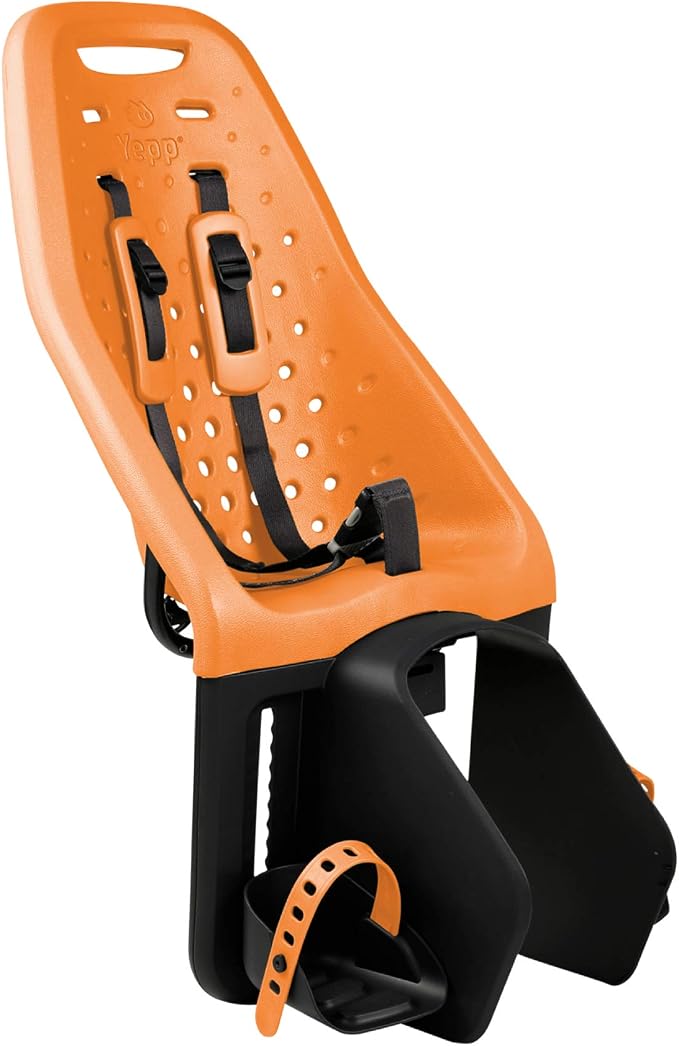
Pros / Cons
Pros
- The rear position leaves the handlebar area clear while carrying a child up to 22 kg.
- EasyFit attaches through a defined carrier interface, avoiding a clamp on the bicycle’s seat tube.
Cons
- A standard rear rack is not enough: the seat needs an EasyFit interface on a carrier rated for at least 25 kg and compliant with ISO 11243.
- A higher-rated carrier does not extend the seat’s 22 kg child-weight limit.
Product Facts
- Mount Type
- Rack mount
- Mount Position
- Rear-mounted
- Product page
- Open product page
- Price/Buy
- Check price at Amazon
Choose the classic Thule Yepp Maxi EasyFit when a child is moving to a rear seat and the bicycle already has a documented EasyFit carrier interface. Consider it from age 3 until the sixth birthday and only while the child remains within 9-22 kg. The rear position keeps the handlebar area clear, and EasyFit uses a defined carrier interface rather than clamping the bicycle’s seat tube. Compatibility decides whether it fits: the carrier must support at least 25 kg and comply with ISO 11243. A rack that merely looks suitable is not enough, and a higher carrier rating never extends the seat’s 22 kg limit. The manual also sets a maximum riding speed of 25 km/h.