
Aprica Kurumu First
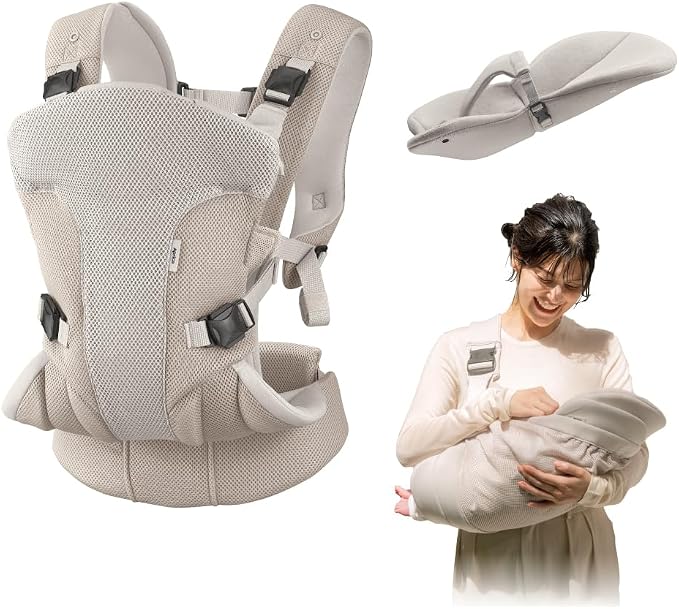
Pros / Cons
Pros
- The dedicated newborn parts come in the box so there is a setup before the later carrier fits.
Cons
- It takes a fitting change and two sets of limits to use the carrier across the full range.
Product Facts
- Type
- Soft-structured carrier
- Carry Positions
- Newborn cradle with hand support, then inward and outward front carry or back carry
- Fit Range
- Newborn cradle requires at least 37 weeks’ gestation and 2.5 kg birth weight. Support the baby by hand. Stop at the first of head control, rolling, 4 months, 60 cm or 7 kg. Later inward and back carry up to 15 kg.
- Product page
- Open product page
- Price/Buy
- Check price at Amazon
Consider Kurumu First if you want a newborn cradle and a later buckle carrier in one set. Aprica defines newborn fit as a birth weight of at least 2.5 kg and at least 37 weeks’ gestation. With or without the sling belt, support your baby by hand and stop the cradle as soon as they roll or gain head control, within the four-month, 60 cm and 7 kg limits. Aprica recommends both hands with the sling belt. Inward upright carry starts at two months and 55 cm, with the neck support until steady head control. Back carry starts at four months after head control. Both end at 36 months or 15 kg. Face out only after independent sitting, from seven to 24 months and up to 13 kg. Japanese SG coverage excludes cushion-only use and inward upright carry past 24 months.