
Budapest With Kids and Grandparents: Our Four-Day, Three-Night Family Trip
By Peter CronaLast updated
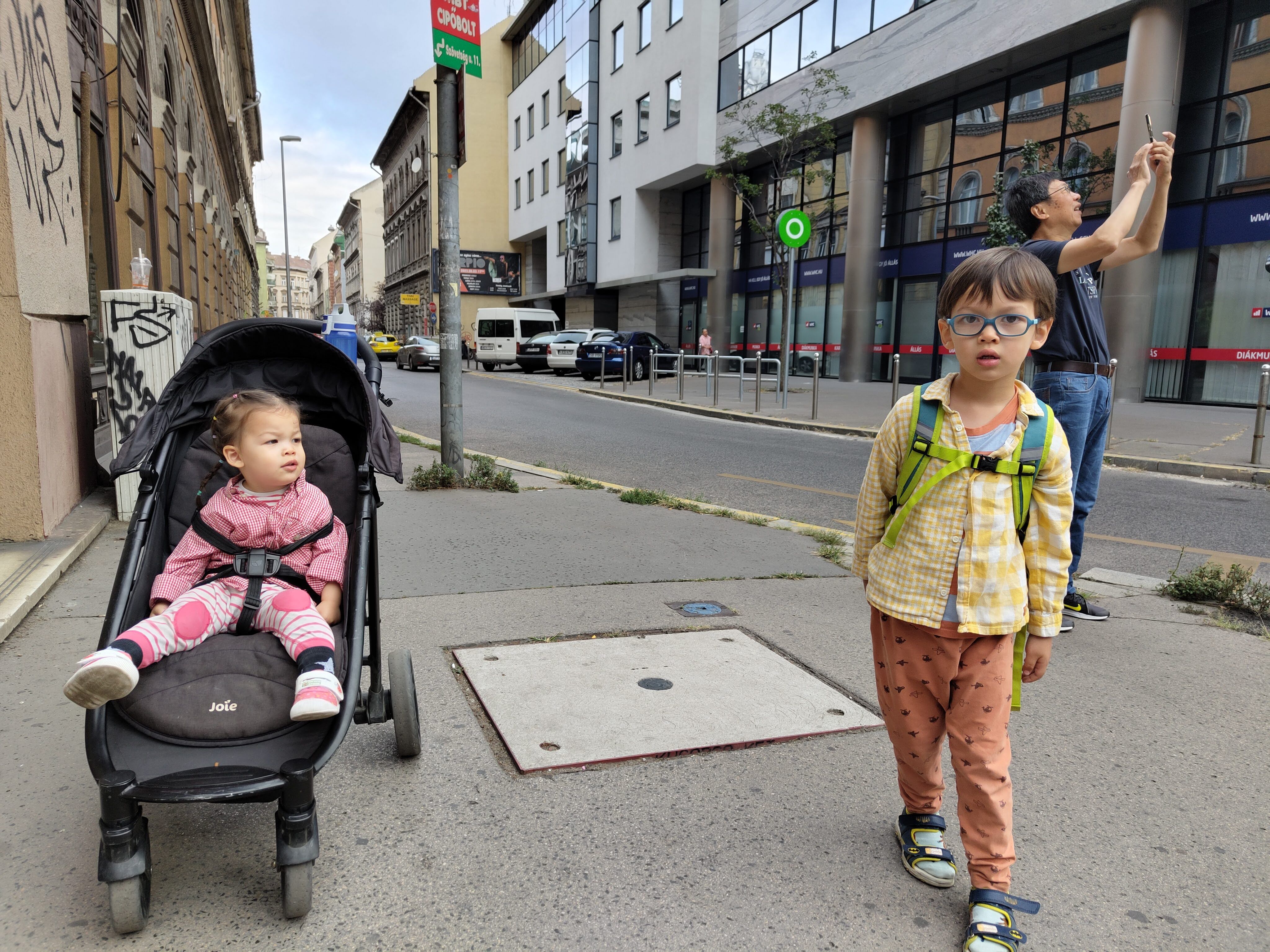
Budapest is a generous city for a family trip, but it is not equally easy on both sides of the river. Pest gave us smooth city walks, markets, open squares, and tram-lined streets that worked well with a pushchair. Buda gave us the bigger views, but also the hills, queues, and route choices that matter when you travel with children and older family members.
We spent four days and three nights there as a family, using one everyday Joie pushchair for our daughter. It is not an ultralight cabin pushchair and not a full-size all-terrain model either. It sits in the middle: stable enough for daily city walks, compact enough for normal pavements, but still a real pushchair rather than a last-resort travel frame.
Budapest is a good four-day family city break if you build the trip around Pest for the easy walking, treat Castle Hill as the one pushchair-complicated section, and save one day for either water or the Danube Bend. A sturdy everyday pushchair worked better for us than a tiny travel pushchair would have, especially on the Visegrad climb, but I would still avoid bringing a very large pushchair unless your accommodation and transport plan are simple.
If you are still deciding what to bring, compare the tradeoffs in Which Travel Pushchair Should You Buy? and Can I Travel with a Pushchair?. Budapest is exactly the kind of trip where the answer is not “smallest possible” or “biggest possible”; it is “stable enough for imperfect streets, manageable enough for a city break.”
Our Four-Day Shape
- Day 1: Pest city walk, St. Stephen’s Basilica, Liberty Square, Central Market, and Liberty Bridge
- Day 2: Buda Castle, Fisherman’s Bastion, and an evening Danube boat
- Day 3: Visegrad as a Danube Bend day trip
- Day 4: Palatinus Baths on Margaret Island
This was not a museum-heavy itinerary. With children and older family members, we cared more about routes, rest points, food, views, and whether the pushchair was helping or becoming another thing to manage.
Day 1: Pest Was the Easy Pushchair Side
Our first useful lesson came quickly: Pest is the side where a normal family pushchair makes the most sense. We walked the central streets, passed St. Stephen’s Basilica, crossed Liberty Square, and continued toward the Central Market Hall without feeling that the pushchair was fighting the city.
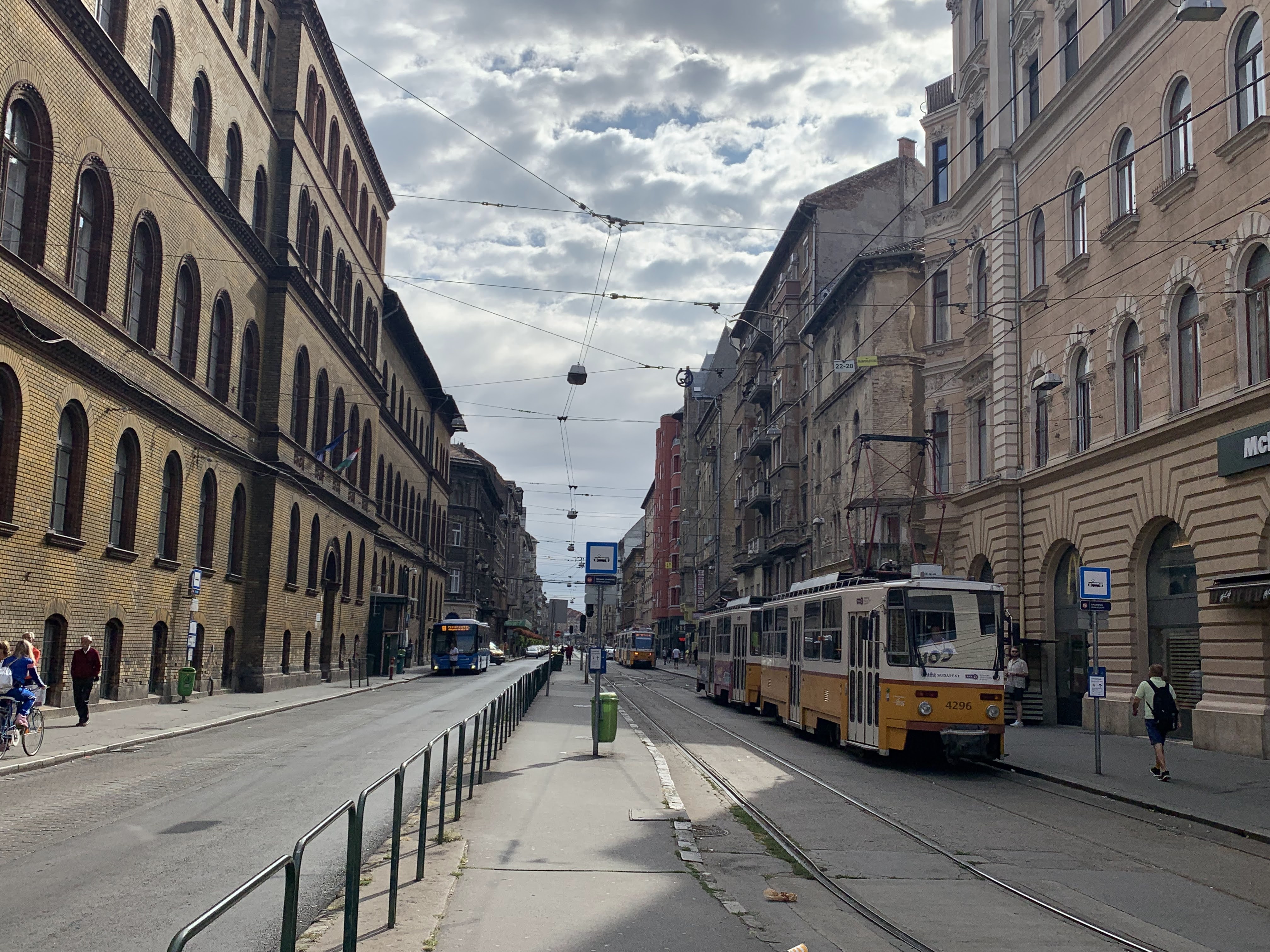
Our daughter stayed in the pushchair for much of the day, which helped the whole group keep a steady pace. The point was not that every pavement was perfect. The point was that the route had enough wide stretches, normal crossings, and natural pauses that we did not have to keep lifting the pushchair or changing plans.
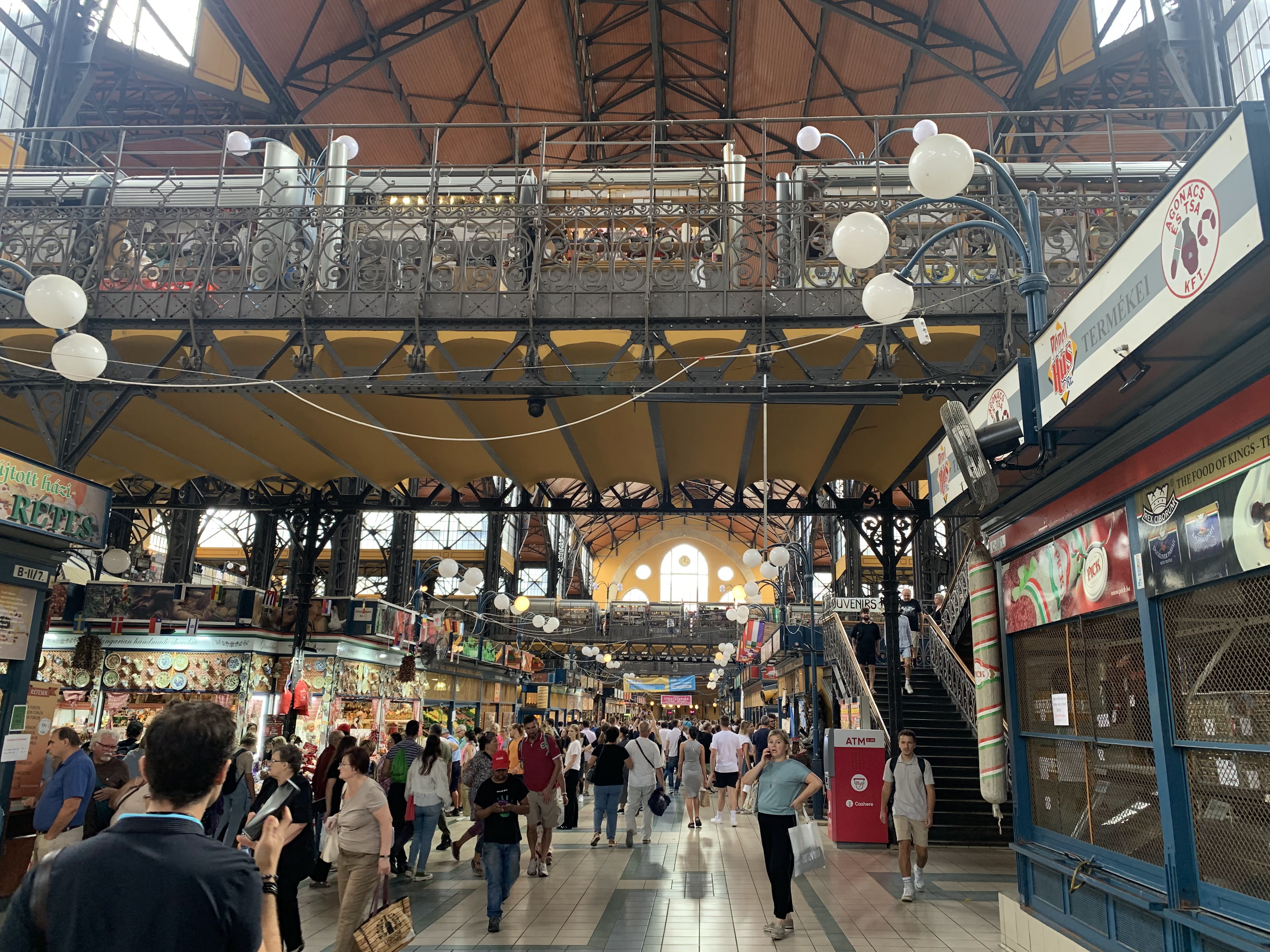
Central Market Hall worked as both a sightseeing stop and a practical family stop. It gave us a covered break, food options, toilets nearby, and a clear place to aim for instead of wandering until everyone was tired.
By luck, we also passed a display of different electric trams on the way. That kind of accidental stop is easy to dismiss when planning, but it matters with children. A five-minute surprise can keep a city walk from feeling like a list of adult buildings.
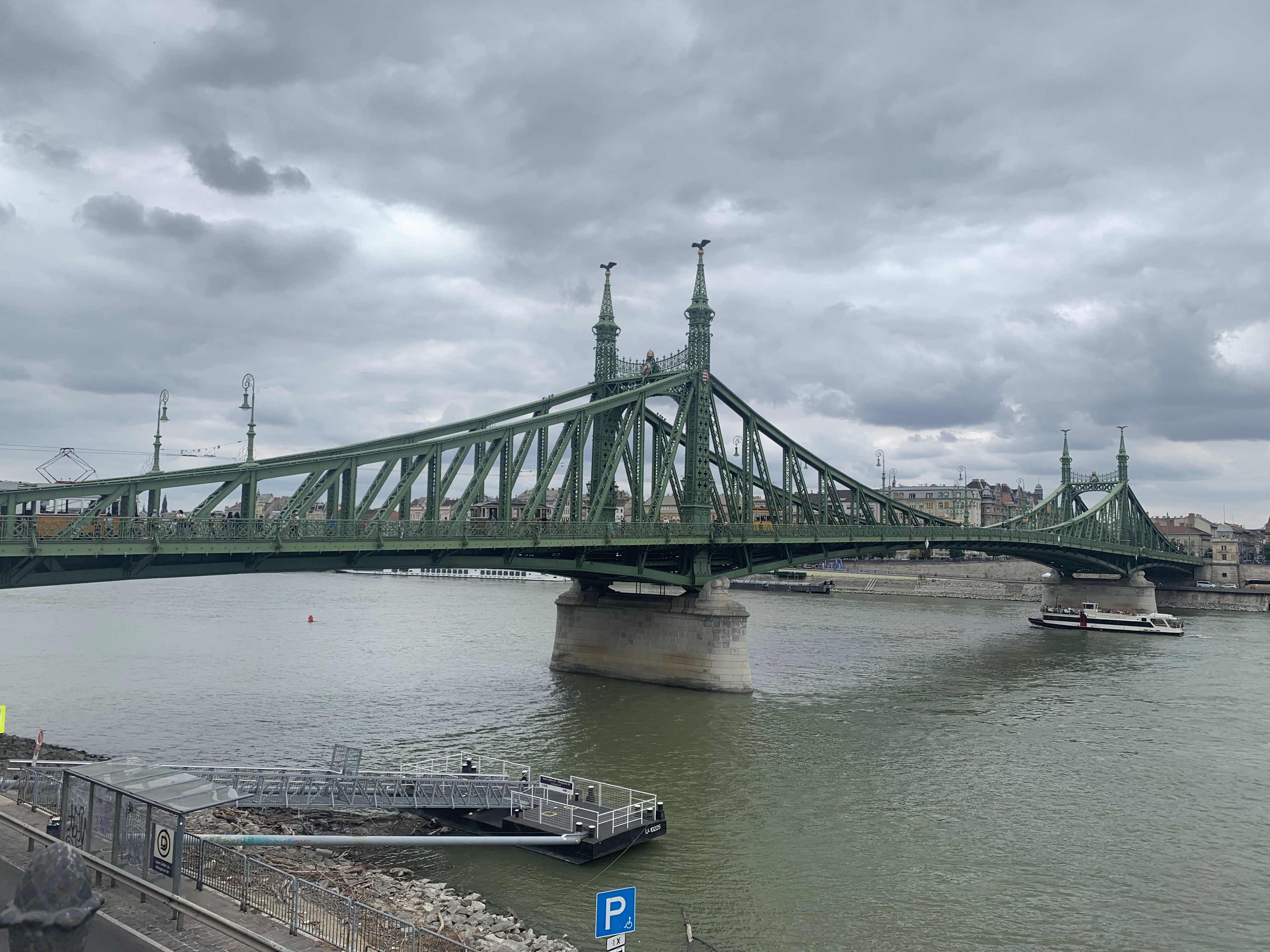
From the market toward Liberty Bridge, the pushchair was still useful. If Budapest were only this kind of terrain, I would say almost any decent travel pushchair is enough. But the next day changed the answer.
Day 2: Buda Castle Was Where the Pushchair Tradeoff Showed
Buda is the more dramatic side, and also the side where a pushchair starts to ask questions. Going up toward Buda Castle on foot with a pushchair is possible, but it is not effortless. If your child can walk some of it, that helps. If your child needs to sit the whole time, the adult pushing will work harder.
The obvious alternative is the Buda Castle Funicular. It is short, scenic, and official, but it did not feel like the best fit for our group that day. The official BKK page lists a journey time of 95 seconds, with departures every 5-10 minutes in normal operation, and separate funicular tickets are required. For a family with small children, the combination of ticket cost, waiting, and the very short ride made us hesitate. Check the current BKK funicular information before planning around it, especially because maintenance closures can apply.
We ended up finding a lift-and-escalator route near Varkert Bazar, which was the most useful practical discovery of the trip. From the funicular ticket office area, we kept walking roughly 300 metres in the Castle Garden Bazaar direction. At the end of a row of buildings, we passed through a brown door, found an elevator, rode to the highest floor, came out near stairs, turned behind the lift exit to another escalator, and then used a second elevator up to Castle Hill.
I would treat this as a helpful workaround, not a guaranteed family promise. It is not obvious the first time, and lifts or escalators can be closed for maintenance. The official Varkert Bazar visitor information also refers to an eastern access point at the top of the elevator, which matches why this route can work, but I would avoid depending on it on a weekend or a tight schedule. If it is running, it can save a pushchair day. If it is not, you need a backup.
Castle Hill and Fisherman’s Bastion connect naturally once you are up there. The walk between them took us about ten minutes at family pace, and it felt much easier than solving the climb from the river.
Fisherman’s Bastion Needs Timing More Than Effort
Fisherman’s Bastion is beautiful, but it is also one of the easiest places in Budapest to turn a child-friendly stop into a crowded photo queue. If you care about photos or calm walking, go early before 8:00 or late after 19:00. We would not build the middle of the day around it with small children unless you are relaxed about crowds.
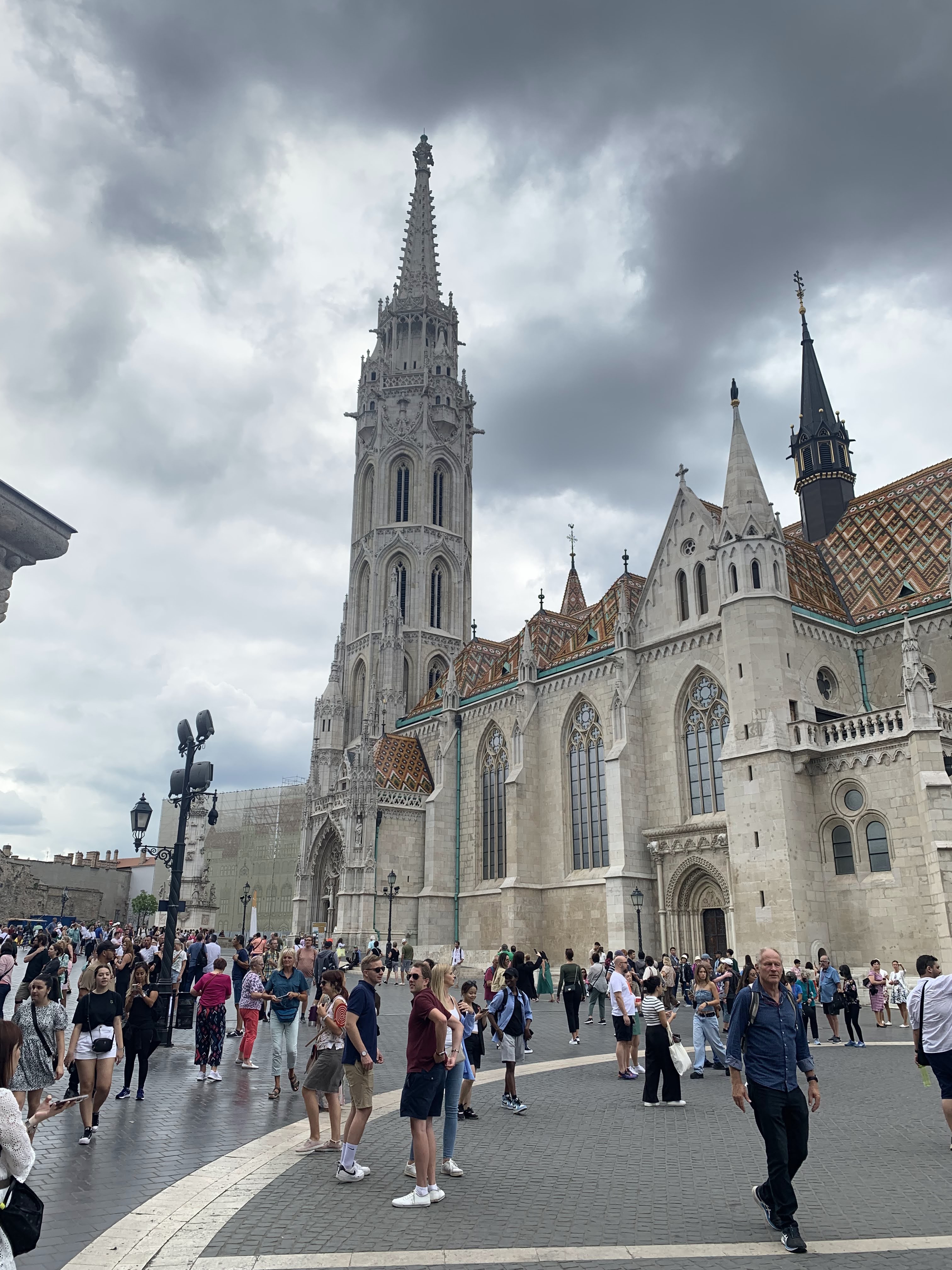
The best part of this area for our family was that the view, church, terraces, and small pauses all sit close together. You do not need a long lecture or a packed ticket plan. Let the children look, walk a little, sit, and move on before the place becomes too dense.
That evening, after returning to Pest, we took a simple Danube boat from around Vigado ter 5. It was not a luxury cruise, which was exactly why it worked for us. Downstairs you could buy a drink; upstairs the view was open and easy. Seeing Parliament and both riverbanks at night was one of the strongest memories of the trip.

Boat services in Budapest change by season, water level, and operator. BKK’s boat page currently points visitors to BKV for tourist boat services, and BKV publishes current riverboat route and tariff details on its official riverboat service page. I would check that page the same day if the boat is a key part of your evening.
Day 3: Visegrad Was Worth It, But Not a Tiny-Pushchair Day
There are several Danube Bend towns close enough to Budapest for a day trip. We chose Visegrad because we wanted a smaller-town day with a view, not another dense city.
The first part was exactly what I hoped for: slow uphill walking, quiet streets, trees, and that small European town feeling where nothing needs to happen quickly. Then I made the day harder by choosing a shortcut because we were short on time and still wanted to reach the top.
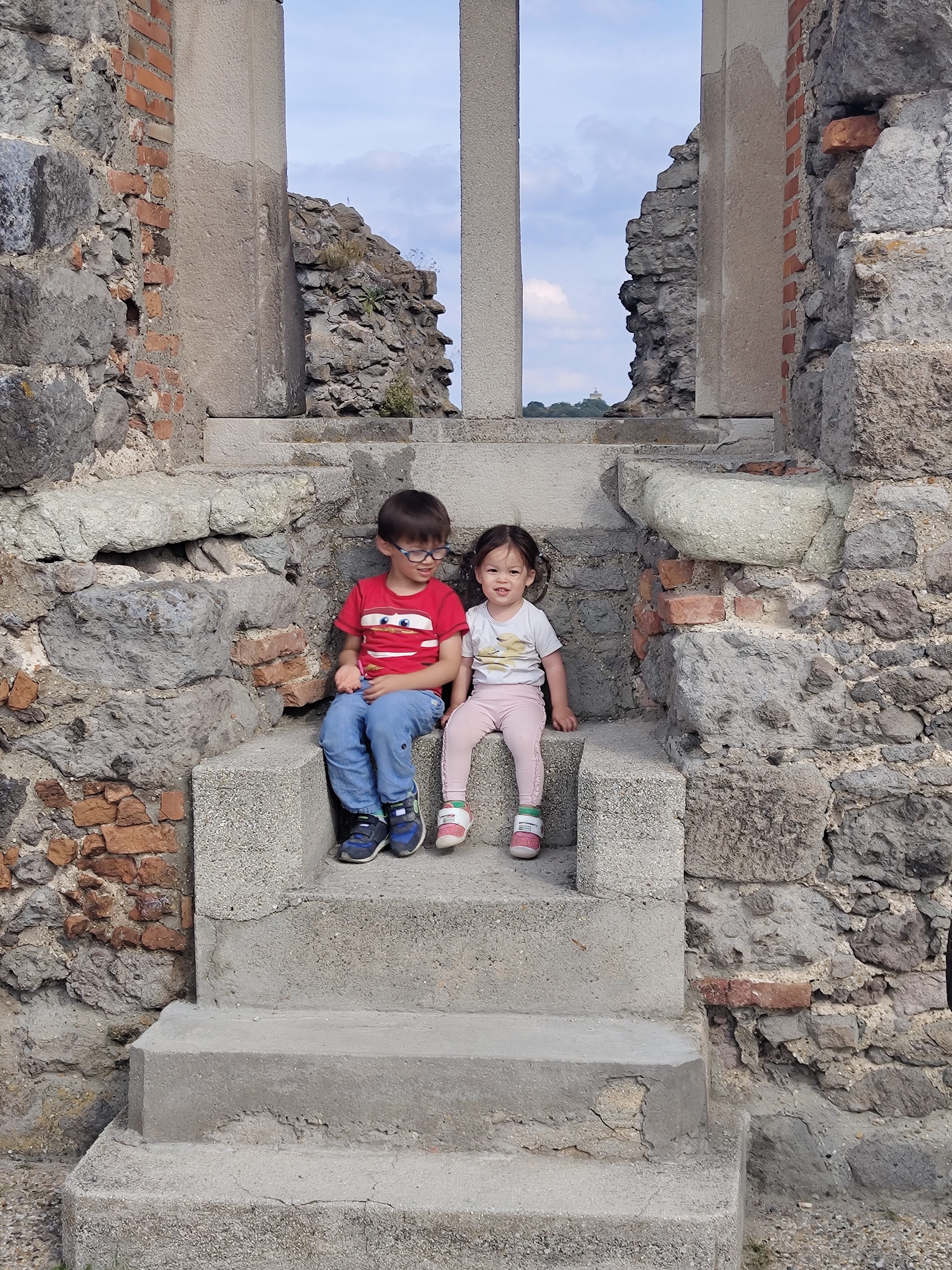
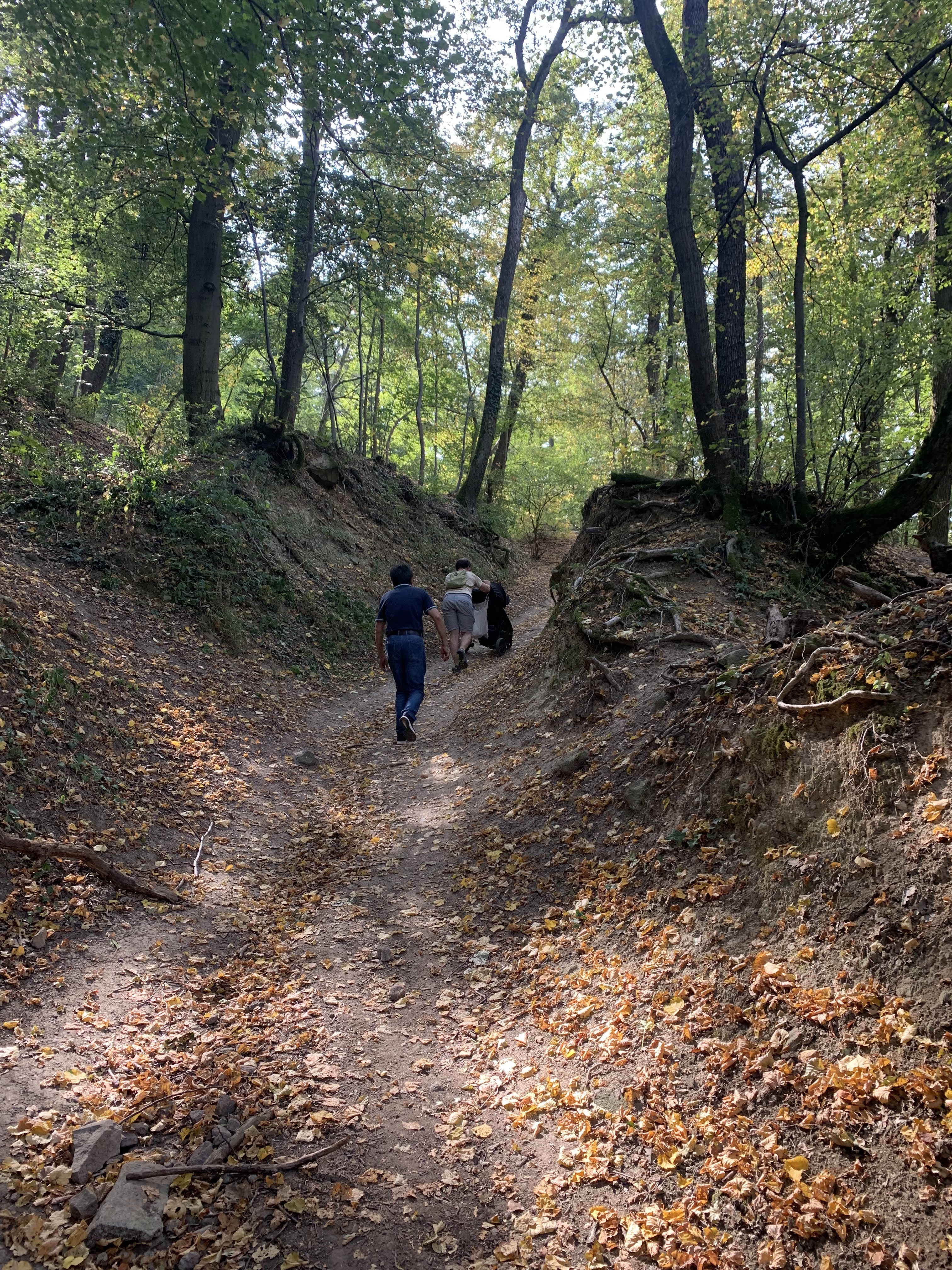
This is where our Joie pushchair mattered. A very light travel pushchair would probably have failed this section or forced us to carry it. Our everyday model was stable enough to keep going, although it was still real work. The view from the top made the climb feel worthwhile, but what I remember most is not only the scenery. It is the experience of solving the route together, with the children, pushchair, and adults all having to adjust.
If you want Visegrad to stay easy, do not copy our shortcut casually. Take the normal route, use local transport where available, or bring a carrier if your child is small enough. A pushchair can help in the town and on gentler paths, but Visegrad is where “compact” and “stable” become a real tradeoff.
Day 4: Palatinus Baths Worked for Every Age
Budapest has many baths, and we chose Palatinus on Margaret Island because it looked like the best all-family option rather than the most iconic adult spa. That was the right choice for us.
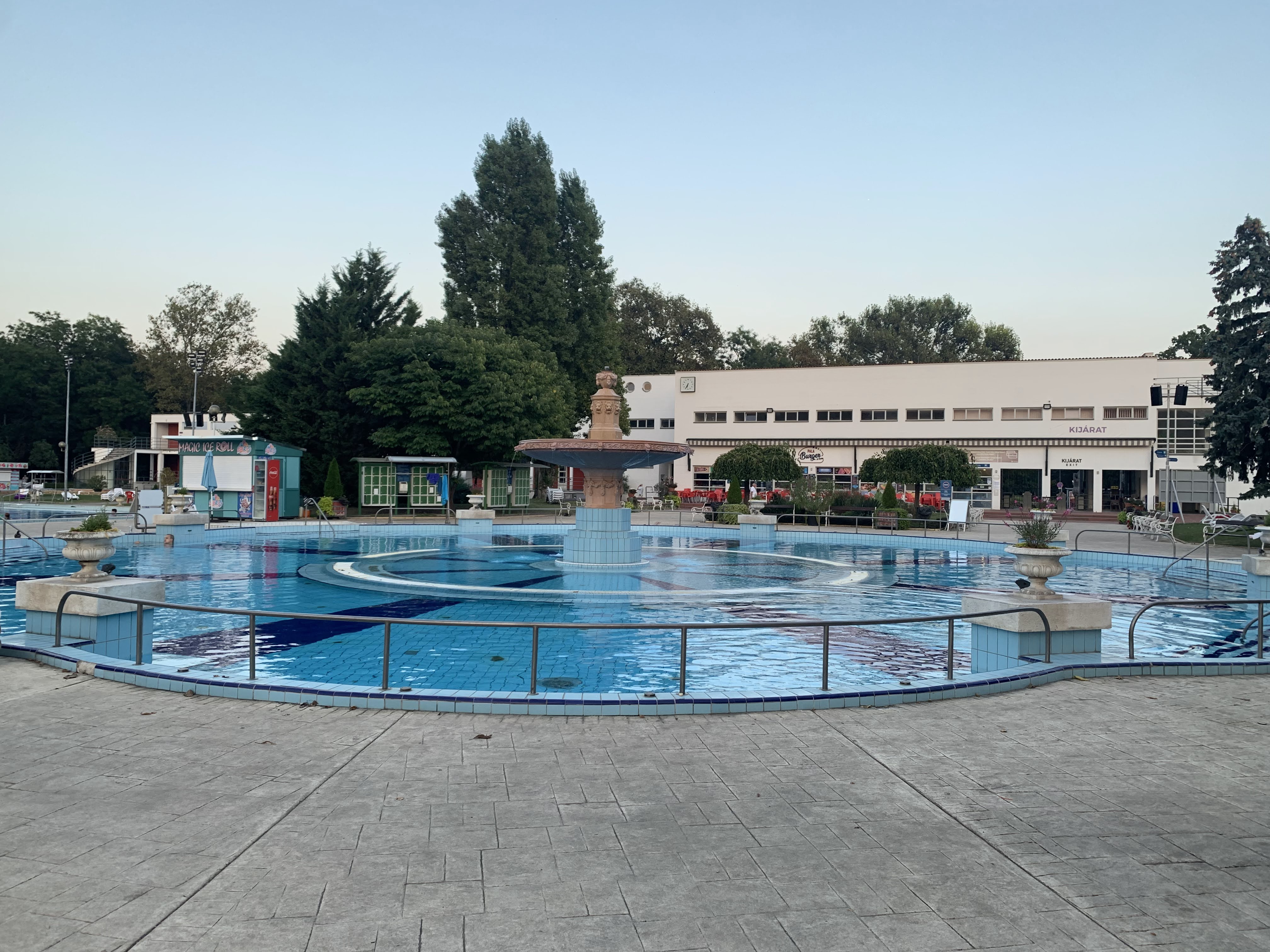
Palatinus is large and practical: indoor and outdoor bathing areas, pools at different temperatures, swimming space, slides, and enough variety that children and older family members did not need the same pace. For us, the outdoor pools alone could have filled the day.
The official Palatinus Thermal and Open-air Bath site lists current opening hours, services, and pool information. Check it before you go, because open pools, lift access, and seasonal areas can change. On our day, the value was simple: everyone could enjoy water in their own way, and nobody had to pretend another long walking route was still a good idea.
Afterward, Margaret Island was a soft landing. A water day followed by an easy island walk gave the trip a calmer ending than another city checklist would have.
The Pushchair Verdict
If I were packing for the same Budapest trip again, I would bring the same kind of pushchair: a stable everyday city pushchair, not the smallest possible travel pushchair and not a heavy full-size model.
The middle category worked because:
- Pest was smooth enough that the pushchair genuinely helped.
- Buda Castle was awkward but manageable with the lift route.
- Fisherman’s Bastion was about timing and crowds, not only terrain.
- Visegrad rewarded stability more than extreme compactness.
- Palatinus and Margaret Island were easier with a pushchair for tired legs and towels.
The pushchair decision would change if you plan to use more taxis, stay directly beside your main sights, or skip the Danube Bend. For a mostly city-only Budapest weekend, a compact travel pushchair may be enough. For our four-day route, I was glad we had something sturdier.
Who This Trip Suits Best
This Budapest itinerary fits families who want a real city break without making every hour cultural homework. It works especially well if you like:
- one easy city-walk day
- one scenic but slightly more complicated hill day
- one nature or small-town day outside the capital
- one full reset day with water
It is less ideal if your family dislikes crowds, needs step-free certainty at every point, or wants every outing to be predictable. Budapest rewarded us, but it rewarded flexibility more than perfection.
Our final takeaway is simple: Pest made the trip feel easy, Buda made it memorable, Visegrad made it feel like an adventure, and Palatinus kept the whole family happy at the end. Four days and three nights were enough, as long as we planned around the actual people travelling with us rather than around a perfect Budapest checklist.