
Do You Need an Infant Carrier Seat First, or Can You Start With a Rear-Facing Seat?
By Peter CronaLast updated Last checked
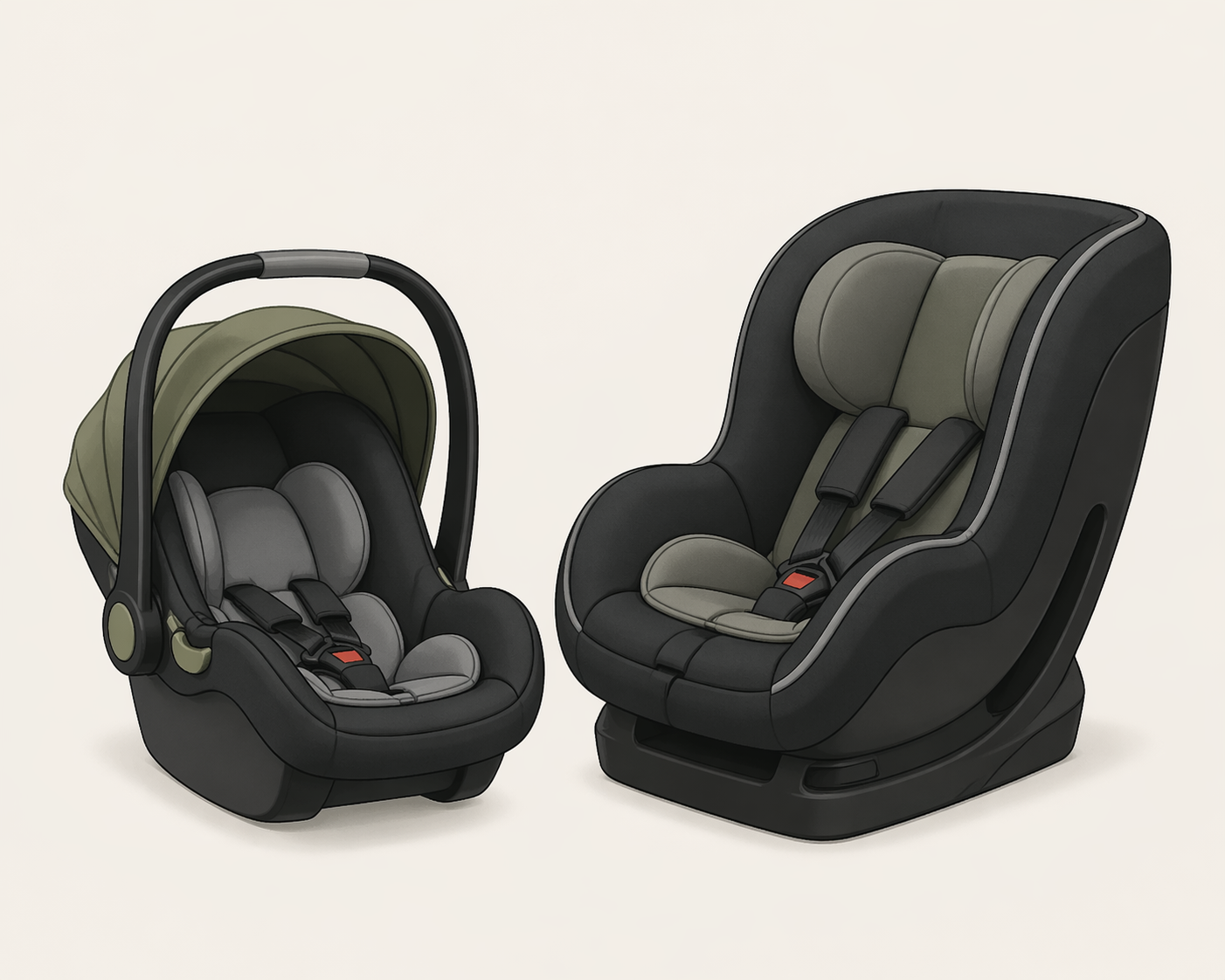
Parents often ask this as a product question, but it is really a workflow question. On the hardest newborn days, what matters more in your own routine: being able to lift a sleeping baby out of the car in the seat itself, or buying one rear-facing seat that stays installed and can cover much more of the early years?
Choose an infant carrier-style seat first if your hardest days involve frequent in-and-out transfers, pushchair click-in use, shared bases across cars, or one adult regularly moving a sleeping newborn from car to house or pushchair. Start with a longer-use rear-facing seat if the seat will mostly stay installed in one main car, you care more about longer rear-facing use and skipping a short infant-only stage, and you can live without the carrier convenience.
Neither route is automatically safer just because of the product label. The safety baseline is simpler than that: the seat has to be approved where you live, fit your child now, fit your car, stay rear-facing within its allowed limits, and be installed and used correctly on ordinary tired days. If you need the stage overview first, read Car Seats 101: Where to Start.
The real tradeoff
In much of Europe, parents are usually deciding between an infant carrier-style seat first or going straight to a longer-use rear-facing seat from birth.
The convenience route helps most when newborn logistics are the real problem. The longer-use route helps most when you would rather avoid one short stage, keep the seat installed, and stretch rear-facing room further from day one.
Use this quick scan:
- choose an infant carrier-style seat first if you will genuinely use car-to-pushchair or car-to-house transfers several times a week
- choose a longer-use rear-facing seat first if the seat will mostly live in one car and you care more about rear-facing runway than carrier convenience
What is actually safe and legal
Both routes can be correct if the seat is approved where you live, fits your child now, fits your car, and stays rear-facing within the seat’s own limits.
In Great Britain, GOV.UK says height-based seats must keep a child rear-facing until they are over 15 months old. That means an infant carrier seat first or a longer-use rear-facing seat from birth can both be correct if the approval, fit, and installation are right.
That is why this is not really a “Which one is safer?” article. It is a “Which one fits our real newborn life without weakening the safety basics?” article.
When an infant carrier-style seat is the better first buy
This route makes the most sense when convenience solves a real repeated problem:
- frequent car-to-pushchair transfers
- one adult often handling pickup or errands alone
- two-car households where an extra base can remove daily friction
- newborn months where click-in travel-system use matters more than stretching the seat for years
The honest tradeoff is that this is usually the shorter route. You will likely need the next seat sooner, and the seat gets heavy fast once the baby is in it.
There is also one important boundary to keep clear: a sleeping baby in a car seat is not a reason to turn that seat into a routine out-of-car sleep space. The AAP safe-sleep guidance warns against routine sleep in sitting devices such as car seats, especially for younger babies, and the ACCC similarly warns against letting babies spend long periods sleeping in car seats outside the drive itself.
When a longer-use rear-facing seat is the better first buy
This route makes the most sense when simplicity and longer use beat transfer convenience:
- one main family car
- fewer trips where the seat itself will be carried around
- parents who would rather carry the baby than carry the seat
- families who care more about longer rear-facing room and one less purchase in the first years
A good birth-fit longer-use rear-facing seat can be the cleaner answer if the seat will stay installed and daily loading is straightforward. It is often easier to justify for families who know they do not want a short infant-only stage.
The honest tradeoffs matter here too:
- these longer-use seats are bulkier
- some use much more front-to-back space in smaller cars
- they are weaker for households that swap seats between vehicles often
The three real-life questions that usually decide it
Will you really use the seat as a carrier several times a week?
If yes, the convenience case for an infant carrier-style seat is real. If no, many families discover they bought the carrier function in theory but mostly left the seat installed anyway.
Will this seat stay in one main car, or move around often?
Seat movement makes convenience features matter more. A fixed one-car setup makes the case for a longer-use rear-facing seat much stronger.
Is your bigger pain point newborn logistics now, or minimizing seat changes later?
If your answer is “newborn logistics now,” buy around that honestly. If your answer is “I want one clear rear-facing setup from day one and fewer changes later,” the longer-use rear-facing route is often the cleaner buy.
Common mistakes
Buying by age labels alone
The useful first check is current fit, not the age on the marketing page.
Assuming “all-in-one” is automatically the smarter value buy
Some families pay for long-span flexibility they never needed, while still getting a bulkier daily setup than they actually wanted.
Underestimating how heavy an infant carrier-style seat becomes with a baby inside
The carrier logic can be great for the right family, but the combined weight stops feeling light very quickly.
Underestimating how much space a longer-use rear-facing seat can take up
This matters most in smaller cars and when the front seats already need to go far back.
Letting sleep convenience drive the purchase
If the hidden reason is “maybe we can leave the baby asleep in it,” stop and separate that from the buying decision. Routine sleep outside the car should not be the deciding logic.
What to check before buying
Child fit now
Use the baby’s real size now, not a rough newborn age label.
Car fit
Check front-to-back room, recline angle, buckle access, and what happens in any second car you actually use.
Approval where you live
In Great Britain, confirm the seat is an approved child car seat for the UK market and read the height-based limits carefully.
Both manuals
Check the seat manual and the vehicle manual, not just retailer copy or a travel-system photo.
How to use our shortlist after this
If the convenience case for an infant carrier-style seat wins, go to our best car seats shortlist and start with the infant filter.
If the longer-use route wins, start with infant plus toddler and compare the seats that cover both stages first.
Only refine further if the main problem is still unresolved:
extended rear-facingif you want more rear-facing runwaynarrowif back-seat space is the real constraintrotationif easier loading is still the daily pain point
Final thoughts
Neither route is the “bad parent” choice. The better first buy is the one that fits your actual car, your real newborn routine, and your ability to keep the child rear-facing and correctly secured on ordinary tired days.
If you are still split, choose the option that removes the more important friction in your own life without weakening the safety basics. That usually leads to a better decision than buying around brand noise, age labels, or a vague fear of making the wrong first move.