
Bike Trailers 101: Where to Start
By Peter CronaUpdated
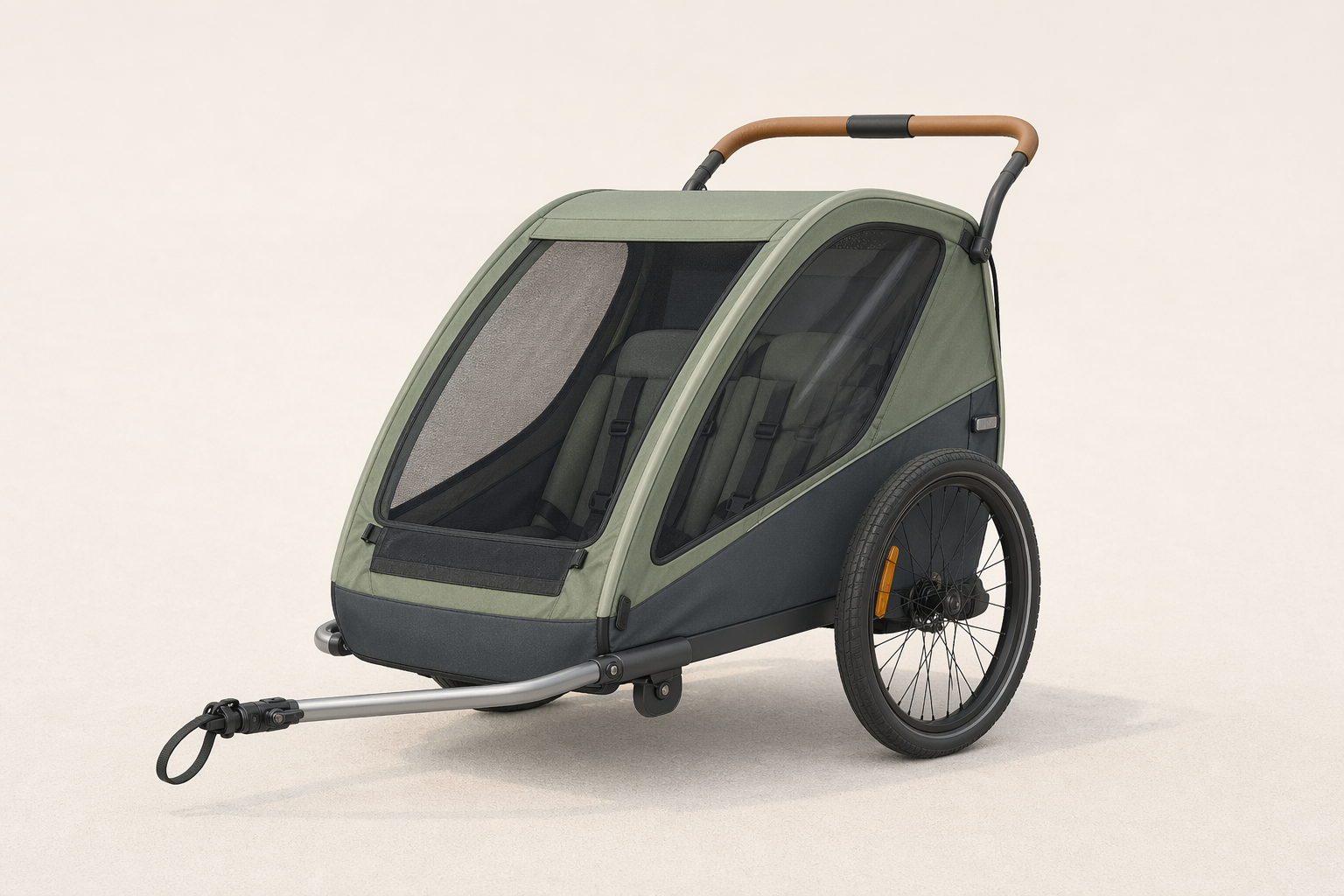
Bike trailers get easier to shop once you stop asking which brand is best and start asking whether a trailer is even the right family-cycling setup for you. Most parents are not really trying to choose between twelve trailer models. They are trying to work out whether they need more stability, weather cover, cargo room, or two-child capacity than a rear child seat usually gives.
Choose a bike trailer when you want a lower, more stable setup, better weather cover, more room for snacks and bags, or space for two children on calmer family rides. Choose a rear child seat when you usually carry one older child on shorter rides, want less to store and lower cost, and do not need a pushchair conversion or enclosed cabin.
Start with the family problem, not the brand
The useful first question is not whether a Burley, Thule, or budget trailer is “best.” It is what kind of riding day you are trying to make easier.
Some families want a calmer way to ride with one child without balancing extra weight high over the back wheel. Some want weather cover and a more sheltered enclosure for longer leisure rides. Some need room for two children plus the practical mess that comes with family outings. Others mainly want a simple, cheap way to take one child to nursery or the park.
Those are not the same buying problem. A trailer is excellent for some of them and the wrong answer for others.
Bike trailer vs rear child seat
When a rear child seat usually wins
A rear child seat usually makes more sense if all of these are true:
- you mostly carry one child
- that child is already solid enough for the seat and helmet rules that apply where you live
- your rides are shorter, lighter, and more about nursery runs or errands than longer outings
- storage space and low cost matter a lot
A rear seat is simpler. It takes up less hallway, garage, and boot space. It is usually cheaper. It also makes more sense if you have to carry the bike up stairs, squeeze through tight sheds, or ride in places where trailer width would be annoying every single day.
When a trailer starts making more sense
A trailer gets more convincing when the rear-seat setup starts to feel too exposed, too cramped, or too limiting. Cycling UK’s family transport guidance and REI’s bike trailer guide both treat trailers as the stronger option when stability, weather cover, luggage room, and family comfort matter more than minimal size.
That is especially true if:
- you want to carry two children
- one child needs a calmer, more sheltered place to sit on longer rides
- you ride in cooler, windier, or changeable weather
- you want enclosed space for jackets, groceries, or day-trip gear
- you want the child weight lower and more separated from the bike itself
The tradeoff is obvious: a trailer is bulkier, wider, and more awkward to store. It also adds towing effort, especially on hills, tighter corners, rougher surfaces, and whenever you are starting and stopping repeatedly.
When a trailer is not the best answer
Do not talk yourself into a trailer if the real friction is already clear. If you live in a small flat, need to lift the bike daily, mainly ride through narrow barriers, or only want quick solo rides with one older child, the “better” family setup on paper can become a worse option in real life.
Choose the right trailer type
Bike-only or lightweight trailer
This is the better starting point if your main goal is towing behind a bike without paying for a lot of extra features you may barely use. A lighter bike-only trailer can make more sense for families who already have a pushchair they like, have simpler storage, or just want the cleanest path to family rides.
The tradeoff is that you get less flexibility off the bike. If school pickup, park walks, or errands regularly continue on foot, a bike-only trailer can feel more limited than it looked at checkout.
Conversion model with pushchair mode
This makes more sense when you genuinely expect to use the trailer in both modes. Many premium trailers are really meant to work both on and off the bike, not just as bike accessories. Thule’s family trailer guide and REI’s buying guidance both treat pushchair conversion, suspension, weather cover, and parking brake quality as meaningful parts of the package.
The mistake is buying a conversion model only because it sounds versatile. If you never plan to push it as a pushchair, that extra complexity, cost, and extra storage space may not pay you back.
Single-seat vs double-seat
A single trailer is usually easier to justify if:
- you only plan to carry one child
- your routes are tighter
- you care a lot about lower towing effort and easier storage
A double trailer is often the smarter buy if:
- you already have two children in range for trailer use
- you expect another child soon enough that rebuying would be annoying
- you want more shoulder room, snack room, and spare gear space even with one passenger
The catch is that a double trailer is not just a single trailer with more room to grow. It is wider, heavier, and more noticeable in storage and towing even on one-child days.
Budget vs premium, and when suspension matters
Budget trailers can make plenty of sense for occasional fair-weather leisure rides on smoother routes. Premium trailers start to make more sense when you care about ride comfort, daily durability, easier conversion, better weather protection, better cabin finish, and cleaner towing on rougher surfaces.
Suspension is one of the clearest dividing lines. It is not magic, but it matters more once rides get longer, surfaces get rougher, or a child will spend enough time in the trailer that small comfort differences stop feeling small.
Safety and fit checks before buying
Child readiness depends on the manual, the child, and local rules
This is not a category where a vague “from baby” promise should decide the purchase. Trailer readiness depends on the exact model, the seat or infant-support accessory, the child’s real stability, and the rules or safety guidance that apply where you live.
Kidsafe ACT is a useful example of why you should stay conservative here: it treats bike seats and trailers as unsuitable before a child is 12 months old and can sit upright unattended. That does not make it the law everywhere, but it is a good reminder to read the manual and local guidance before you let marketing shorthand decide the purchase.
Helmet reality can change the answer
Helmet expectations are not universal. In some places a child in a trailer must wear an approved bicycle helmet; in others the rule is less explicit or the practical debate is more about fit, readiness, and head stability. The safe move is to check both local rules and the trailer manual before you assume anything.
If helmet use is part of your setup, use a real bike helmet that fits properly. NHTSA’s helmet guidance is a good baseline on certification, fit, and why a loose helmet is not good enough.
Harness and weather enclosure basics
The basic safety questions are not glamorous:
- does the harness look secure and repeatable every time
- does the child have enough support to sit well for the whole ride
- does the cabin protect from wind, spray, and road grit without turning hot-weather rides into a heat trap
- do you trust the visibility features such as flag, reflectors, and lights for the routes you really use
Weather cover is one of the strongest reasons to buy a trailer at all. It is also one of the easiest places to overestimate a cheap model. “Enclosed” is not the same as comfortable in rain, sun, wind, and shoulder-season use.
Hitch, axle, and e-bike compatibility
Do not assume every trailer fits every bike. Axle type, dropout shape, hitch design, rear rack interference, and e-bike motor or frame layout can all change the answer. This is one of the most common reasons a promising shortlist turns into a bad buy.
Before you commit, confirm:
- the hitch works with your axle and bike frame
- the manufacturer allows the trailer with your kind of e-bike if you ride one
- you understand any extra adapter requirement before ordering
Route realism matters more than spec-sheet optimism
Parents often underestimate how much daily riding context changes the right answer.
Ask yourself:
- are your routes calm enough that towing a trailer feels realistic
- do your barriers, path widths, and storage doors actually allow trailer use
- are you happy towing the extra width and weight on hills
- do you have a real place to park, fold, or store it
If the honest answer is no, a rear seat or even a different family-cycling plan may be the better buy.
How to use our bike-trailer shortlist
Use our best bike trailers shortlist in this order:
- decide first whether you need a trailer at all
- narrow by single vs double and bike-only vs conversion models with pushchair mode
- then compare comfort, suspension, fold, weather cover, and compatibility inside that smaller group
That order matters more than comparing every trailer on one giant feature list. A good lightweight trailer is not automatically worse than a heavier premium conversion model. It may just fit a different family need.
What a good first buy looks like
A good first buy usually looks boring in the best way. It fits the bike you already own, the routes you already ride, the number of children you actually plan to carry, and the amount of off-bike use you genuinely expect.
It does not need to solve every future scenario. It needs to solve your next year of family riding without creating daily storage, towing, or compatibility friction that makes you stop using it. Once you know the right type, our best bike trailers page is there to help you compare the smaller set that still makes sense.