
BabyBjorn Carrier One Air
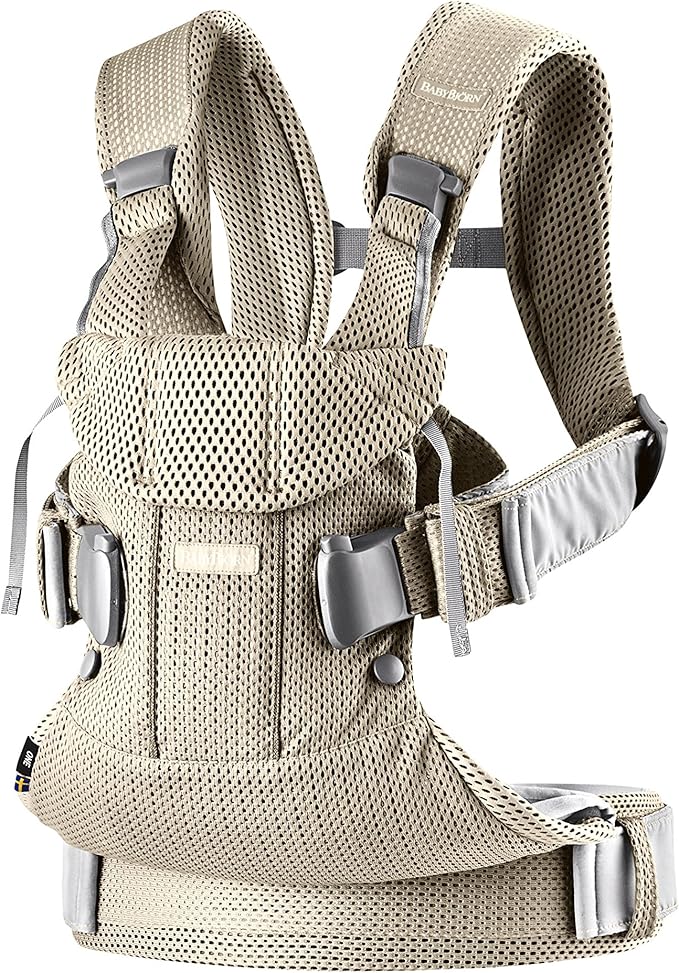
Pros / Cons
Pros
- The mesh body, waist belt and adjustable seat width support more than one carrying stage.
- The front opens fully to lift out a sleeping child without first removing the shoulder straps.
Cons
- Outward carry has a lower 12 kg/26.5 lb ceiling and requires independent head control from at least five months.
- Newborn and later seat settings differ; each caregiver also needs to fit the waist belt and back yoke.
Product Facts
- Type
- Soft-structured carrier
- Carry Positions
- Front and back carry
- Best For
- Longer babywearing runway
- Product page
- Open product page
- Price/Buy
- Check price at Amazon
One Air suits daily walking when you want a mesh carrier with a waist belt and a later back-carry option. Its opening front helps when transferring a sleeping child. The tradeoff is adjustment: seat height, seat width and the adult’s back yoke each need attention. Mesh does not remove the need to watch for overheating.
Start inward-facing at a minimum of 3.5 kg and 53 cm, using the high newborn seat for roughly the first four months and leg straps at 3.5–4.5 kg. Move to the lower baby seat from 62 cm once head control is established. Outward carrying requires independent head control, at least five months, and no more than 12 kg; the stated age range is approximately 5–15 months. Back carrying starts at 12 months, up to 15 kg and 100 cm. For inward carrying, the worldwide One/One Air manual allows 15 kg and 100 cm.
Keep the face uncovered, check every buckle and lock the seat zips as instructed. Never sleep while wearing the carrier or use it for sport. See the One/One Air manual for the applicable configuration.