
Front Seat in Austria? Start With Rear Seats
By Peter CronaLast updated
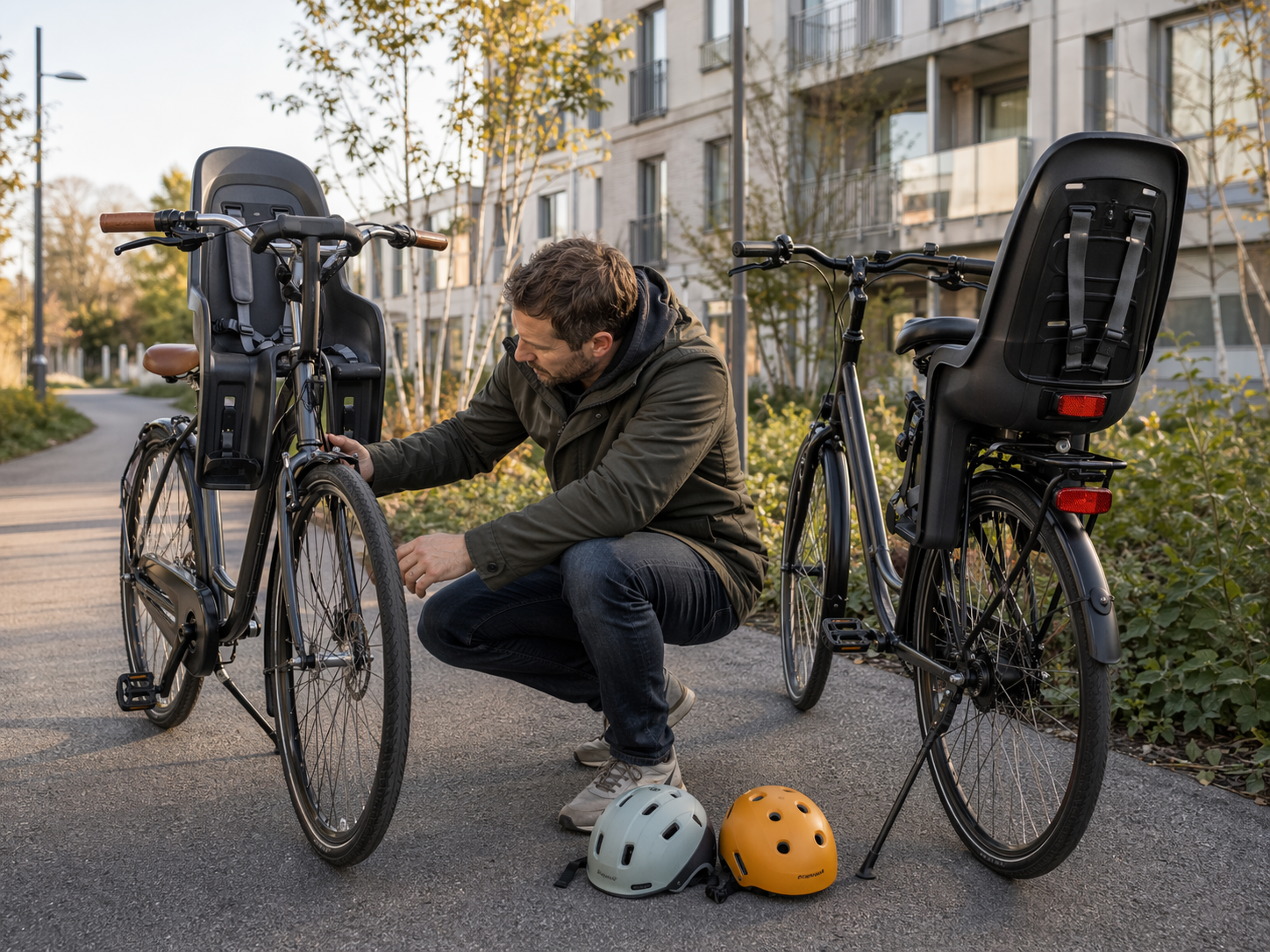
Parents in Austria do not need a normal front-versus-rear shopping contest first. They need to know why the public-road shortlist starts with rear seats, trailers, or suitable cargo-bike setups, then check the safety equipment and bike fit.
In Austria, treat this as a rear-seat, trailer, or suitable cargo-bike decision, not a normal front-seat comparison. Austrian official guidance says a child seat may only be mounted directly behind the saddle; the rider carrying a child must be at least 16; and children under 12 need a bicycle helmet when cycling, riding on a bike, or riding in a trailer. That removes front-mounted child seats from the normal Austrian public-road shortlist.
Use the Austria child-transport guidance, the Austrian bicycle regulation summary, and the official cycling rules as the local baseline before shortlisting gear. Section 6 of the bicycle regulation requires a firm frame connection. ÖAMTC distinguishes integral frame racks from bolted-on racks: only the former can be considered for a rack-mounted child seat in Austria.
Start with the child stage, not the seat marketing
Rear seats, trailers, and suitable cargo-bike setups are not just three versions of the same purchase. They solve different route, storage, and safety-equipment problems.
In Austria, front seats should drop out before the product comparison. The practical shortlist is a rear-mounted seat with the required safety equipment, a trailer that fits your route and storage, or a manufacturer-approved cargo-bike child-transport setup.
Rear seats make the strongest case when you want the narrow bike-mounted option and the frame or rack, harness, leg protection, foot straps, and head support all check out cleanly.
Why front-mounted seats are not the Austrian shortlist path
The front-seat appeal is closeness, but Austrian guidance says child seats must be behind the saddle. For public-road use, do not solve that by buying a front-mounted seat anyway. Use a rear seat, trailer, or suitable cargo-bike setup instead.
When rear-mounted seats are the better answer
Rear-mounted seats usually win when:
- you want the longer stage most families end up needing
- you need a public-road seat path that stays behind the saddle
- you want more room at the bars
- your bike accepts an approved attachment behind the saddle with a firm frame connection
Rear seats are usually the practical default. They are not automatically better, but they cover the everyday family use case more often.
The downside is that the child is further from you, more exposed than in a trailer, and the extra weight sits higher and further back on the bike. Low-speed handling and starts can feel more awkward than parents expect.
The approved rear-seat attachment can settle the decision
Once you lean toward a rear seat, check the position behind the saddle and the firm connection to the frame. A rack-mounted seat requires a rack that is an integral part of the bicycle frame. A bolted-on rack does not qualify.
That is not a minor detail. It is often the actual make-or-break point.
Confirm the complete setup with both the seat and bicycle manufacturers. For rack mounting, check that the rack is an integral part of the frame as well as meeting the seat maker’s width, load and compatibility requirements. For frame mounting, check the approved clamp area, material and clearances; e-bike cables and suspension can rule out a fit.
If your frame shape, approved attachment, or e-bike layout already rules one side out, do not keep treating it like an open comparison.
Handling, storage, and route friction
If you are still torn, ask which annoyance you would rather live with:
- a narrower rear-seat setup with higher weight on the bike
- or a trailer or cargo-bike setup that takes more storage and route width
Also ask:
- are your rides mostly short practical hops
- do you need the longer runway
- would a trailer’s weather cover, storage, and lower child position solve the route better
- does your actual bike make one setup obviously easier
Those questions usually break the tie faster than premium branding does.
Common bad buys
The usual mistakes are predictable:
- keeping a front-mounted child seat on the public-road shortlist even though Austrian guidance puts child seats behind the saddle
- choosing a rear seat without checking its firm frame connection and approved attachment behind the saddle
- treating the rear seat, trailer, and cargo-bike choice as purely aesthetic instead of a route, storage, and safety-equipment decision
- buying by age shorthand instead of child fit, helmet reality, and bike compatibility
What to do next
If you still need the broader setup decision, go first to Child Bike Seats 101: Where to Start.
If you now know which side you want, use our best child bike seats shortlist and compare only the seats that still match that position and your bike. In Austria, that means keeping front-mounted child seats out of the normal shortlist and checking rear-seat safety equipment before buying.