
Can I Travel with a Stroller?
By Peter CronaLast updated
Parents often ask “Can I travel with a stroller?” as if the answer were mainly about rules. In real life, the answer is usually yes. The more useful question is whether the stroller makes this particular trip easier or harder once you factor in folding, carrying, taxis, naps, queues, and tired children.
Yes, you can usually travel with a stroller. The better rule is this: bring one when it solves a real problem such as naps, containment, or long walking days, but think much harder about size and fold than parents often do at first. Many travel problems come not from bringing a stroller, but from bringing the wrong stroller.
If you already know you want a lighter second stroller for flights, trains, or day trips, start with our best travel strollers guide.
When a stroller clearly helps
A stroller is most useful on trips where at least one of these is true:
- your child still naps on the move
- your child can walk, but cannot reliably do airports or long station transfers
- you need containment in crowded places
- adults are already carrying enough bags and do not want to add regular carrying
This was exactly our mistake on our first long-haul family trip to Shanghai. We left our stroller at home, reached Berlin airport, and realized very quickly that “she can walk” was not the same as “this airport is now easy.” We eventually borrowed a stroller after security, and the whole wait improved.
The main question is not permission. It is friction.
Most of the time, operators have some way of handling strollers. The bigger difference between a good travel day and a frustrating one is usually friction:
- How often do you need to fold it?
- Can one adult do that quickly while also holding a child?
- Will it fit in a taxi with luggage?
- Will you resent carrying it on stairs or platforms?
Those are better questions than abstract “are strollers allowed?” research.
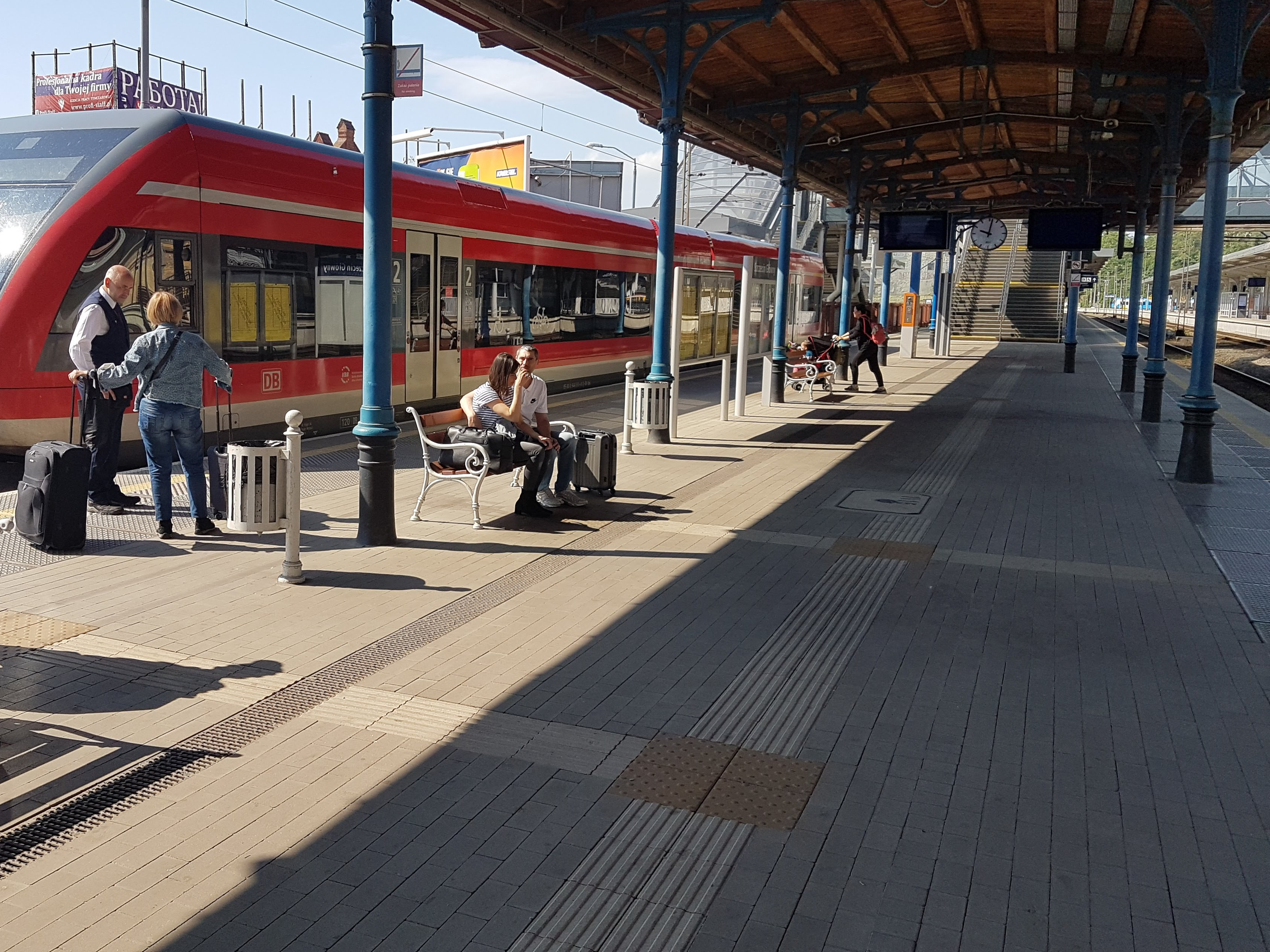
Trains: often easy, until one segment changes
Regional and long-distance trains can be very stroller-friendly when the route stays predictable. On our weekend to Szczecin, the train itself was easy. The awkward variable was the replacement-bus segment in the middle.

That is why train trips reward smaller, easier-to-fold strollers even when the rail part looks generous on paper. A trip can stop feeling easy the moment one staircase, one split train, or one replacement bus enters the plan.
Buses and coaches: assume space is conditional
Buses are where stroller optimism most often runs into reality. We once took a bus from Szczecin to Rewal with a stroller. It worked, but only because the bus was not too crowded and the driver was helpful. The aisle was narrow, and it was easy to imagine the same ride becoming awkward if several families boarded with strollers.
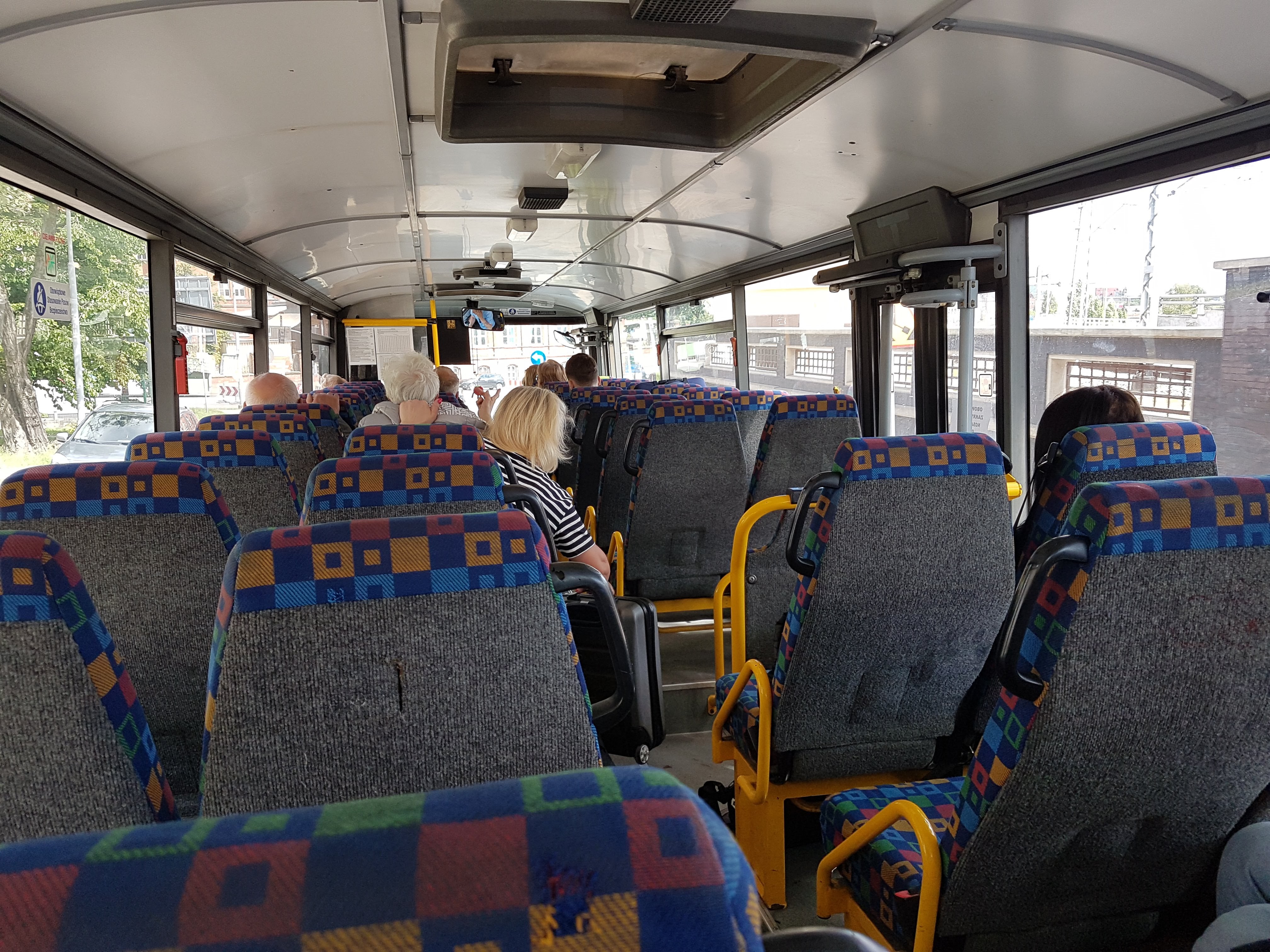
The practical rule is simple: on buses and coaches, assume that your stroller may need to fold, move, or temporarily stop being convenient.
Ferries: often kinder than buses or flights
Large ferries have often been some of the easiest travel segments for us with a stroller. There is usually more room to move, more time to settle, and less pressure to collapse everything quickly.

That does not mean every ferry is effortless. Car decks, small elevators, and boarding transitions can still matter. But ferries are often the transport type where a stroller feels most obviously helpful and least resented.
Airports: this is where containment matters most
Airports are a special case because the stroller is not only for transport. It is also for containment.
You may have a child who can walk perfectly well in a park, but that does not mean the same child is easy to manage around check-in queues, escalators, passport control, gates, and tired waiting. That is why airports often expose the difference between “technically walking” and “practically manageable.”
If your child still needs regular containment, an airport is one of the strongest arguments for bringing a stroller or arranging one at the destination.
When a travel stroller is the smarter answer
A compact travel stroller usually makes more sense than a full-size model when:
- the trip includes flights, coaches, or many transfers
- taxi trunk space is a real issue
- you expect stairs, platforms, or quick boarding moments
- the stroller is mainly there for naps, containment, and backup rather than all-day rough terrain
Our borrowed GB Pockit in Shanghai made this very clear. It was not luxurious, but it solved the real travel problem: tired child, hot city, quick folds, small spaces, easier carrying.
When bringing no stroller is the smarter answer
No stroller can be the right choice when:
- the child is truly beyond needing containment or naps on the move
- the trip is short and low-friction
- a carrier solves the whole problem better
- the route would punish even a compact stroller and you do not need one at the destination
The mistake is not choosing either option. The mistake is choosing based on pride, habit, or wishful thinking instead of on the trip you are actually taking.
Our rule of thumb
Bring a stroller when it meaningfully reduces friction for the family as a whole. Choose a compact one when the route contains uncertainty. Skip it only when you are genuinely sure you will not end up wishing you had one three hours into the trip.
For a firsthand long-haul example, read Our First Long-Haul Family Trip to Shanghai: What Actually Mattered. For a short nearby train example, read Szczecin With Kids by Train: A Low-Pressure Weekend From Berlin.