
Bugaboo Donkey Duo vs Mountain Buggy Nano Duo: Which Double Pushchair Should You Choose?
By Peter CronaLast updated
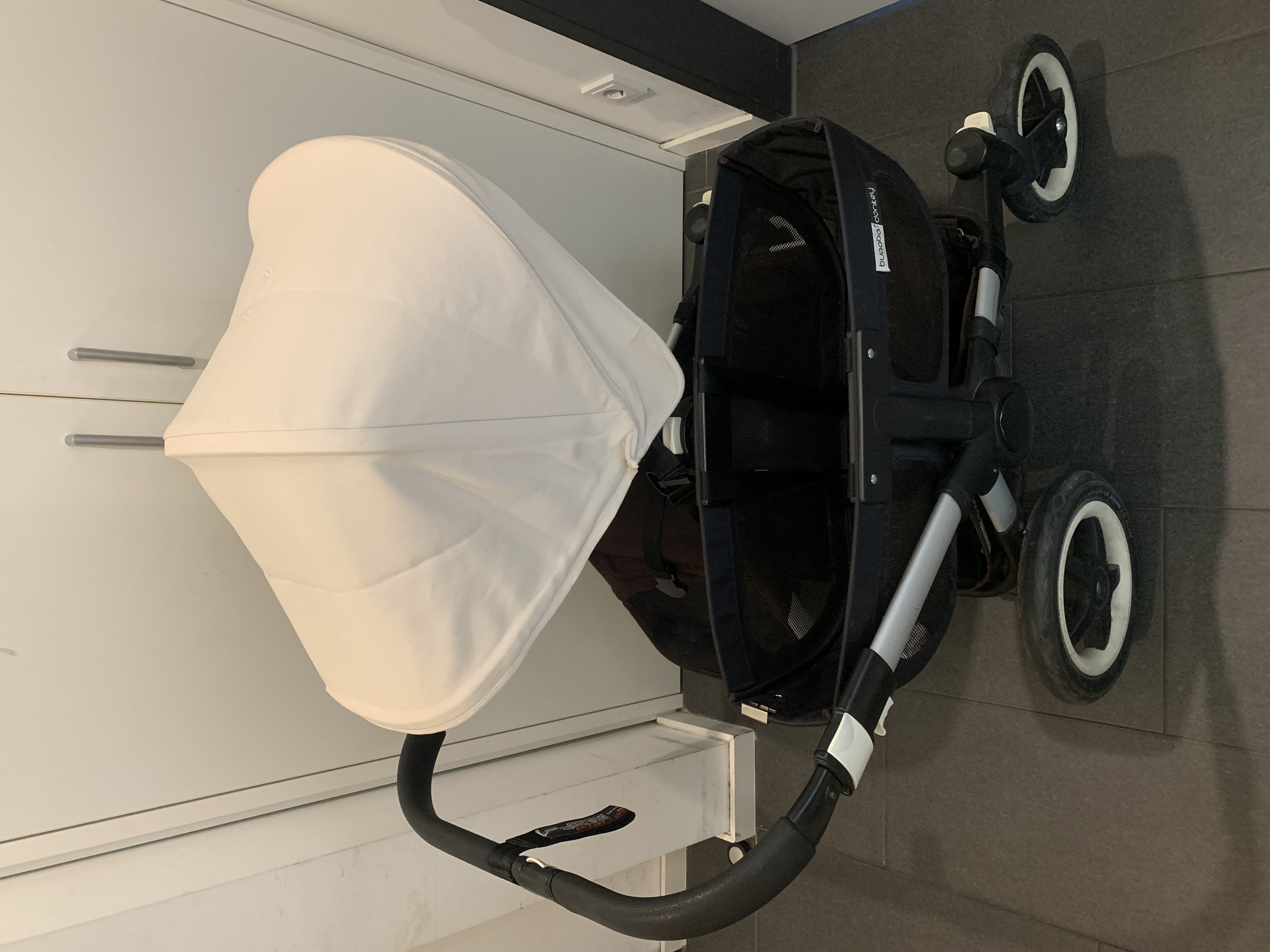
This is not a clean lab comparison. It is the kind of comparison I find more useful as a father: two real double pushchairs, photographed in a hallway, with the marks, bulk, and compromises visible. The Bugaboo here is a Donkey Duo-style setup with one carrycot and one seat. The Mountain Buggy is the Nano Duo, a lightweight side-by-side double that folds down far smaller than it looks when open.
The short version: choose the Bugaboo Donkey Duo if you want one premium double pushchair to handle newborn-plus-toddler life, long walks, groceries, and rougher daily routes. Choose the Mountain Buggy Nano Duo if your bigger problem is folding, lifting, car storage, travel, or keeping a lighter second double for two seated children. I would not call either one the universal winner. The Donkey solves more of everyday family life; the Nano Duo asks much less from your hallway, boot, and arms.
If you are still comparing the whole category, start with our best double pushchairs guide. This page is narrower: it is about the difference between a premium daily side-by-side platform and a travel-leaning side-by-side double.
One naming note matters. Parents often say “Bugaboo Duo”, but Bugaboo’s current family is the Donkey line, with Duo and Twin configurations depending on whether you are carrying siblings of different ages or twins. Mountain Buggy’s Nano Duo is a specific lightweight double. Before buying, check the exact model year, bundle, seat parts, carrycot or cocoon accessories, and manual for the pushchair in front of you.
The fastest way to choose
Choose the Bugaboo Donkey Duo if your daily routine sounds like this: one child still needs a proper newborn setup, the older child still rides often, you walk more than you drive, and storage space at home is annoying but not the main problem. In that life, the bigger wheels, more structured seats, large basket, and premium frame are not decoration. They make ordinary days feel less fragile.
Choose the Mountain Buggy Nano Duo if your routine sounds like this: two children need seats, but the pushchair often has to go into a car, through building doors, into a corner, onto a train, or away for a trip. Mountain Buggy lists the Nano Duo at about 9 kg/19.8 lb with a 73 cm/28.7 in width and a compact fold. That is the reason it exists. It is the double I would think about when the question is, “Can we bring a double without making the whole outing revolve around it?”
First impression: premium family platform vs travel double
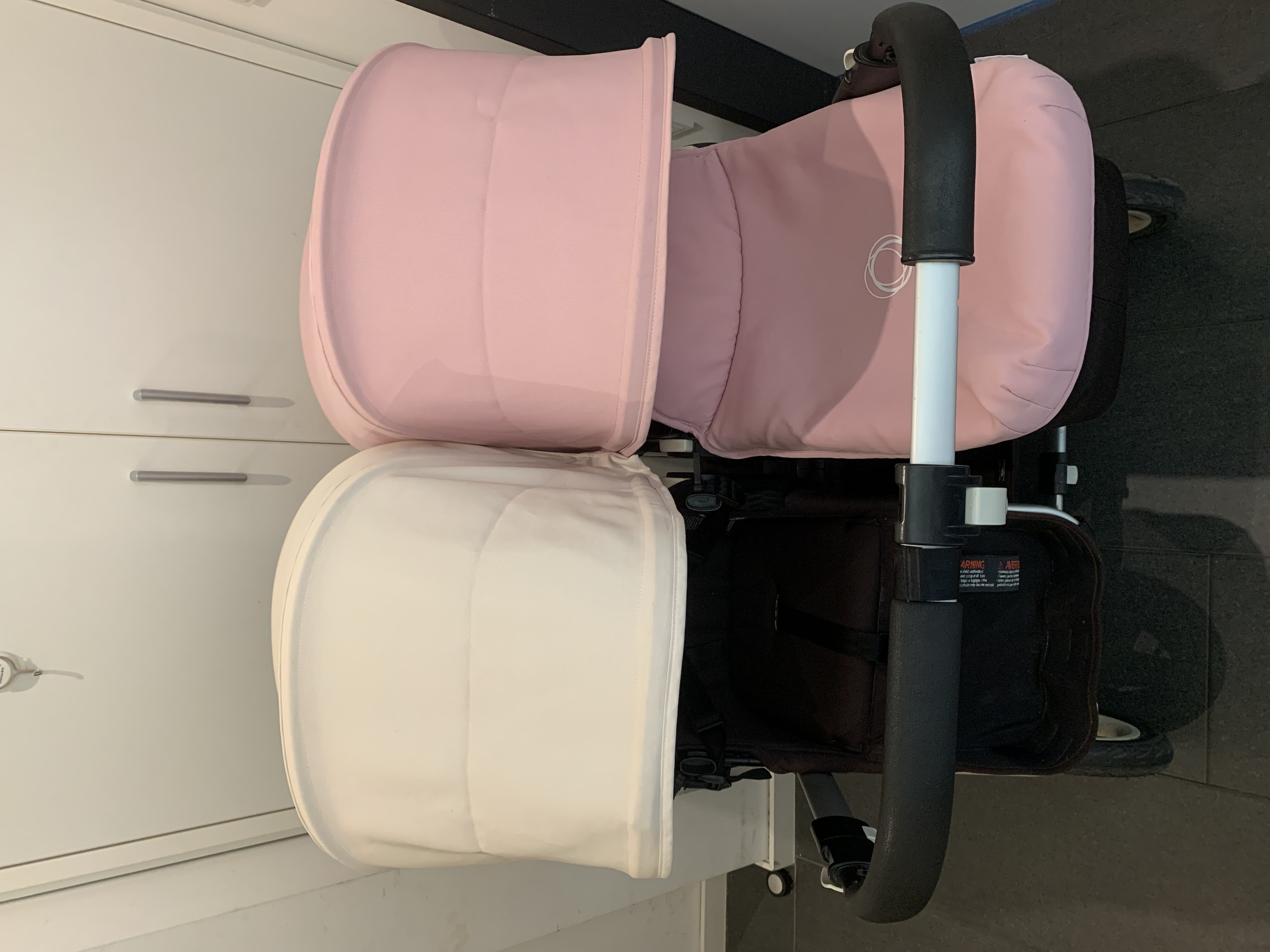
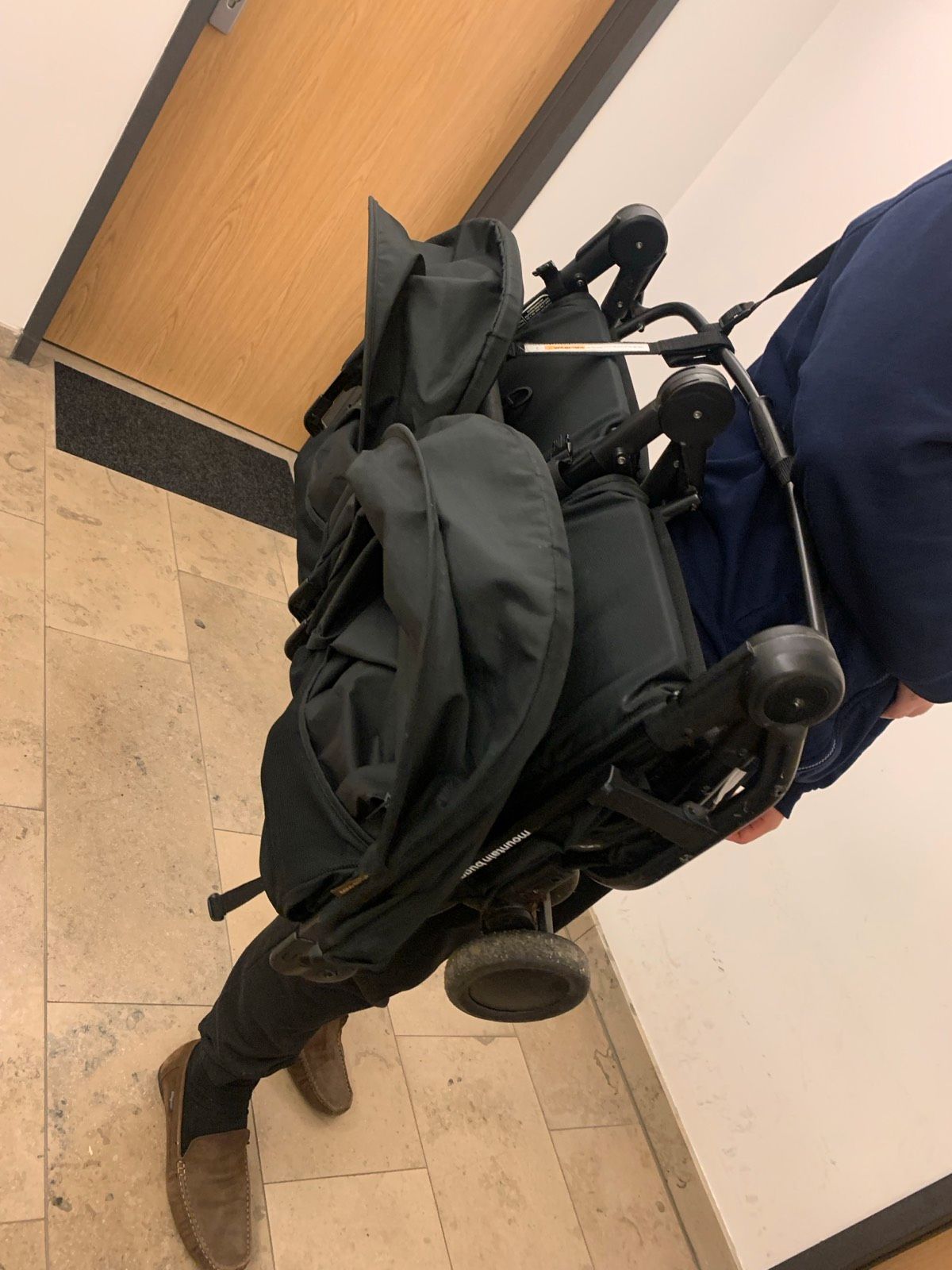
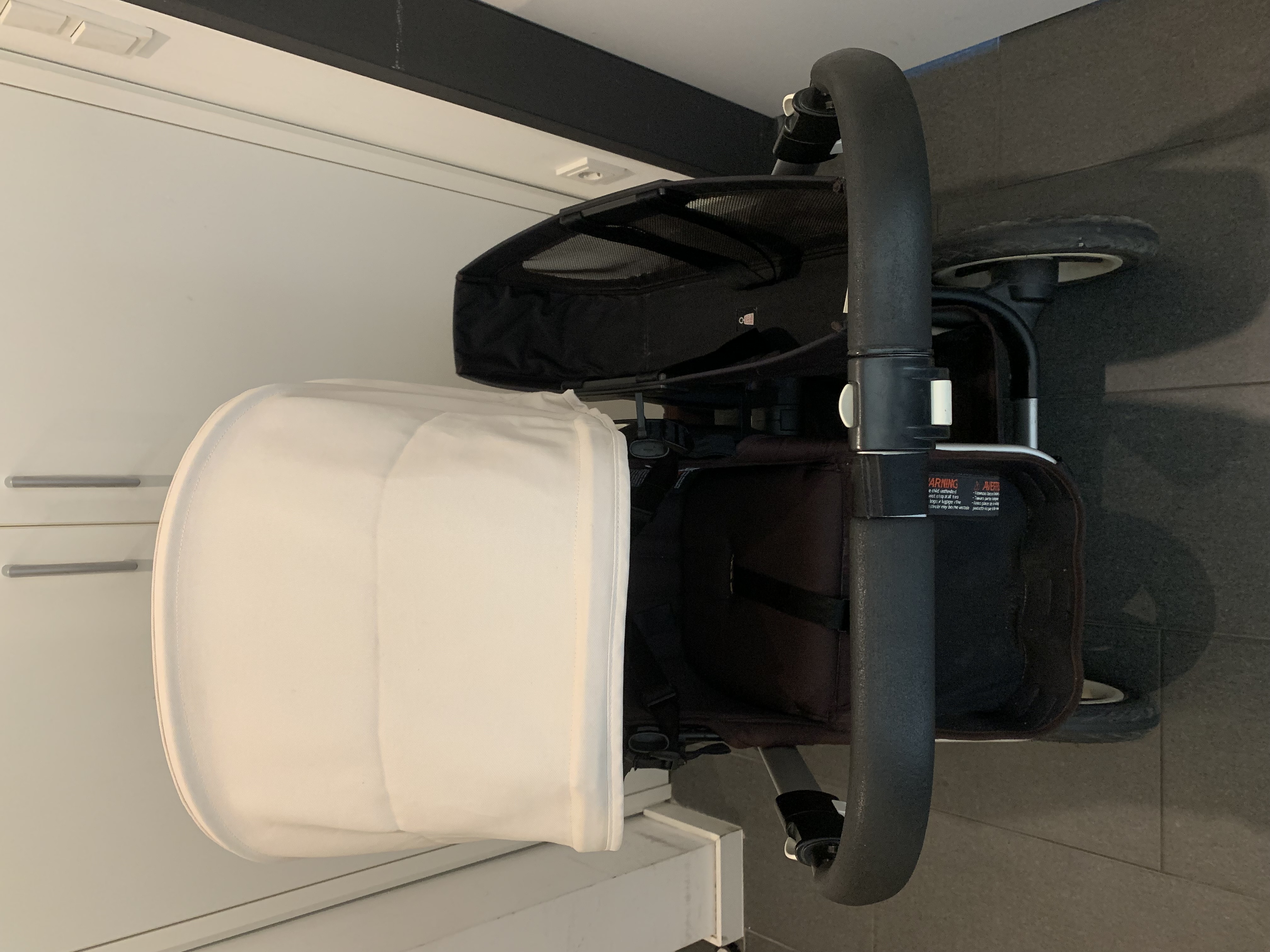
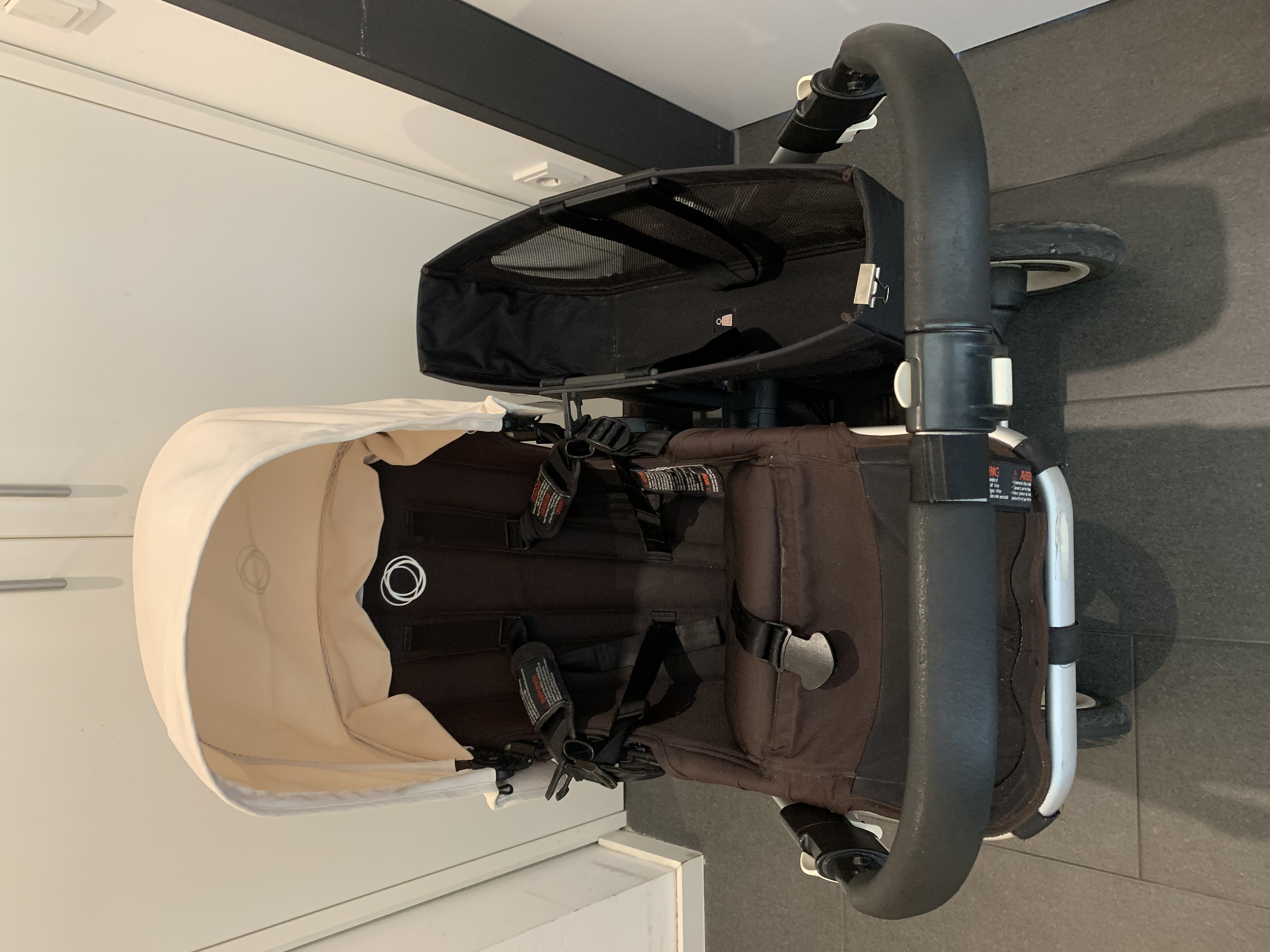
The Bugaboo Donkey Duo looks like a main pushchair from the first glance. The handlebar is broad, the frame is substantial, and the seats sit in a more deliberate parent-facing or world-facing system. In the photos, the carrycot makes its role obvious: this is the pushchair you choose when one child may be tiny and you still want the older child beside them.
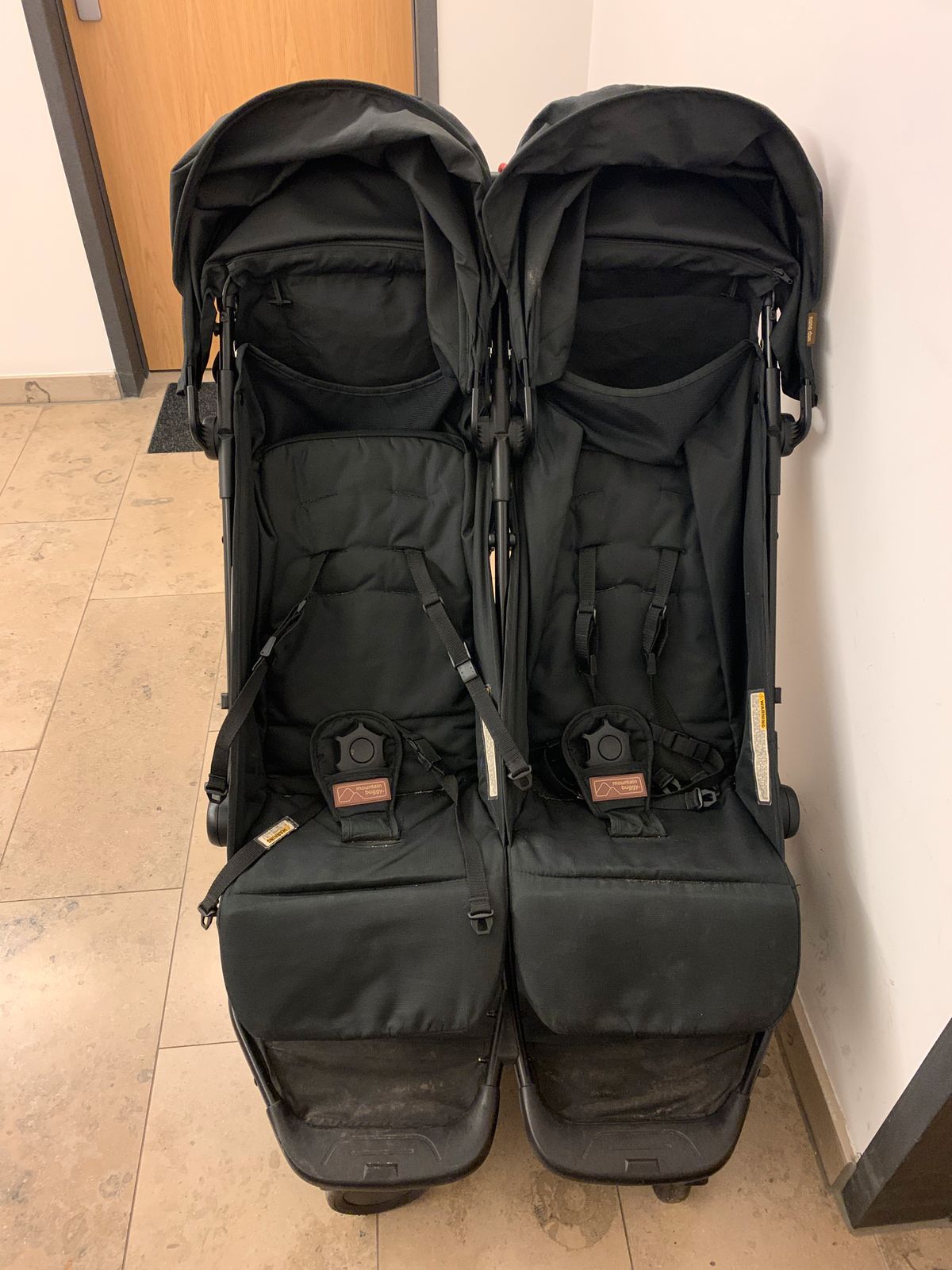
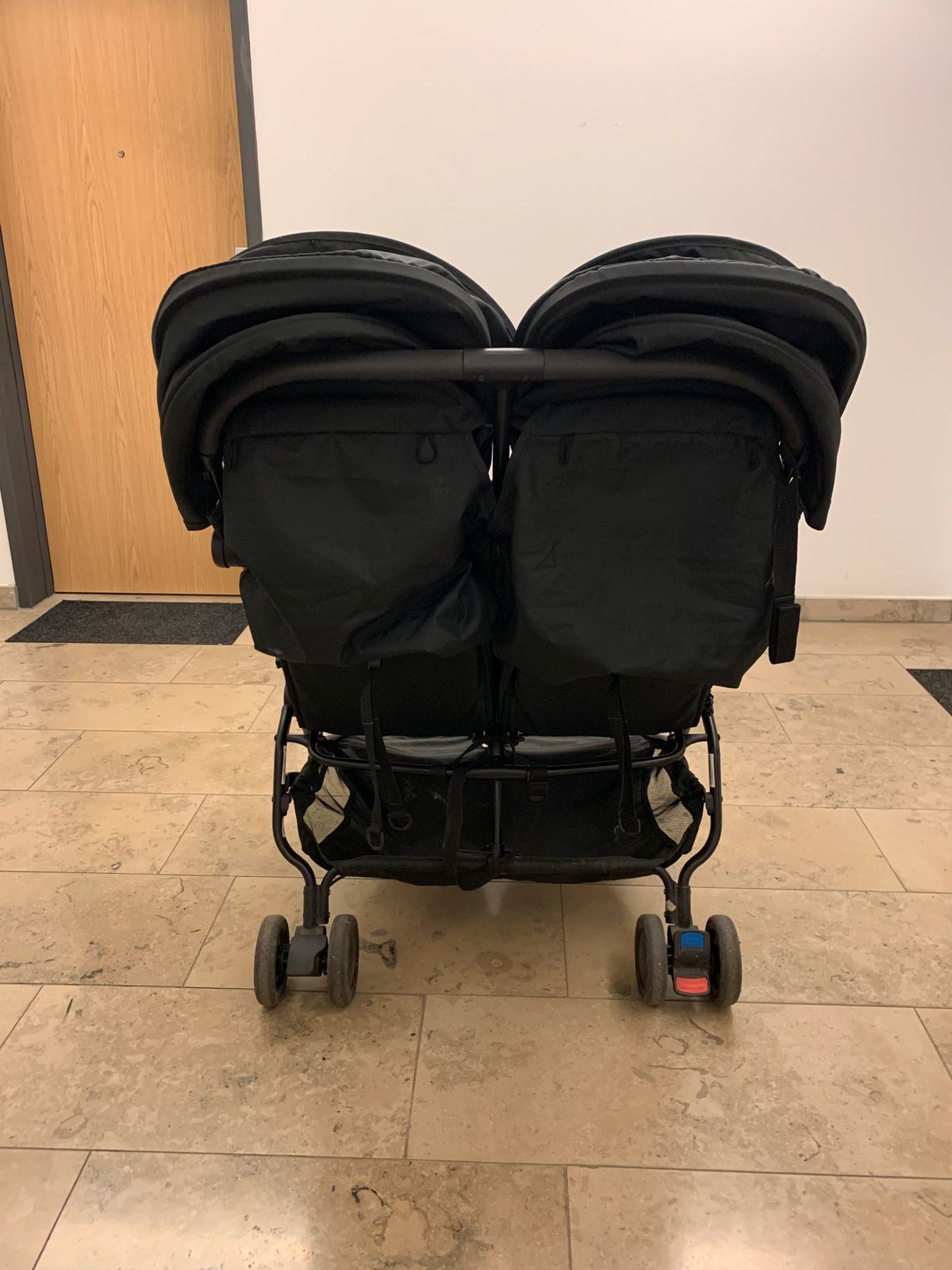
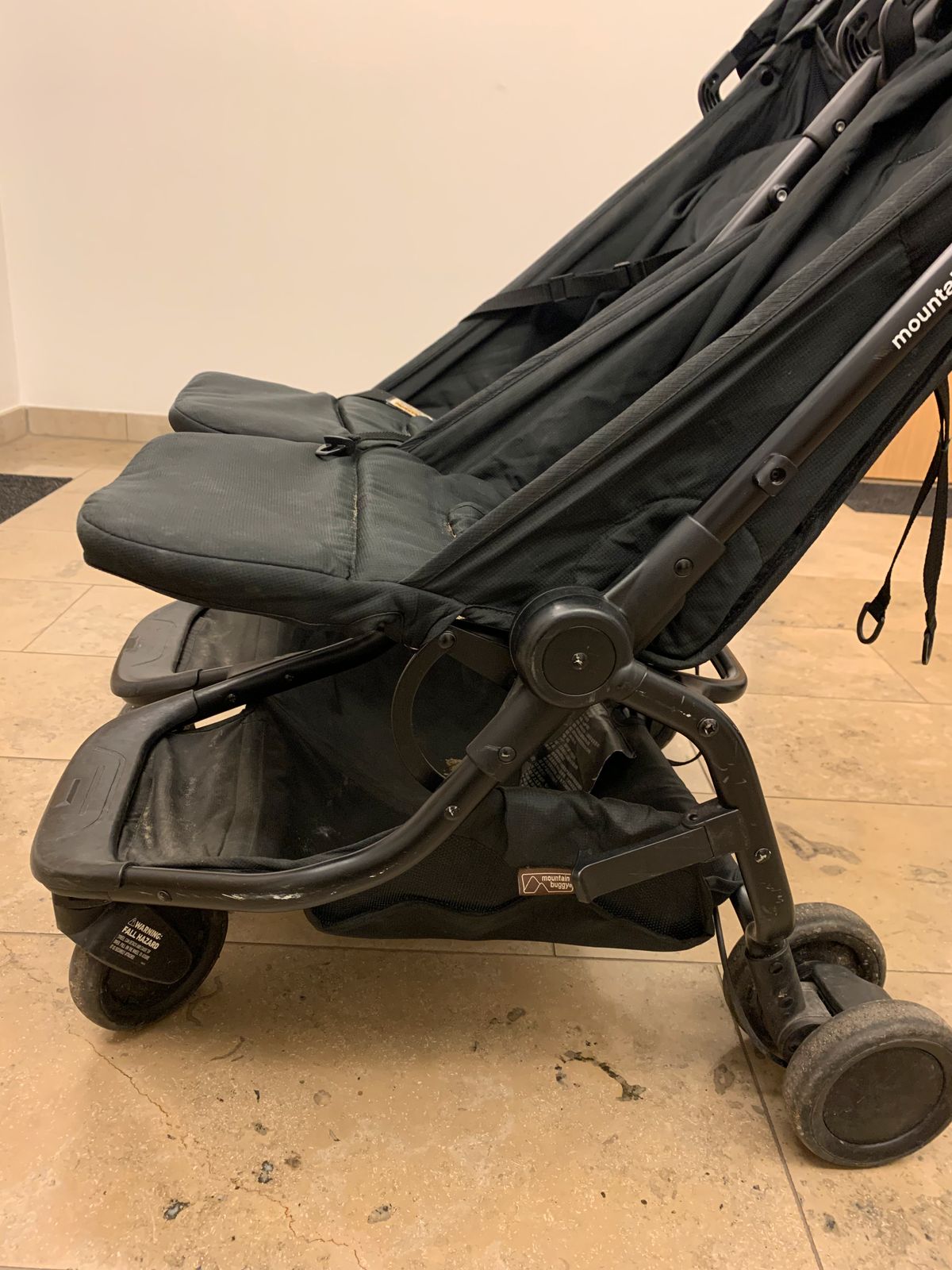
That is a very different proposition from the Nano Duo. The Mountain Buggy looks lower, blacker, lighter, and more folded into itself. Its seats are fabric sling seats rather than modular Bugaboo seats, and its small wheels tell you it is happier on city pavement than on long uneven routes. That is not a flaw. It is the bargain.
Newborn and sibling use: the Donkey has the clearer job
If a newborn is part of the plan, the Donkey Duo is the easier pushchair to understand. A carrycot beside a seat solves a real family stage: baby lying flat, toddler still contained, both visible, one pushchair doing the morning. As a father, that is the setup I would want for nursery pickup, long walks after a rough night, or errands where one child sleeps and the other needs snacks, conversation, and a proper seat.
The Nano Duo can be used from birth only with the right additional newborn setup, such as Mountain Buggy’s cocoon or compatible travel-system accessories. Without that, it is better treated as a seated-child double. That distinction matters because “double pushchair” is too broad. A double for a baby and toddler is not the same purchase as a double for two older toddlers on a city trip.
Fold and carrying: this is where the Nano Duo fights back
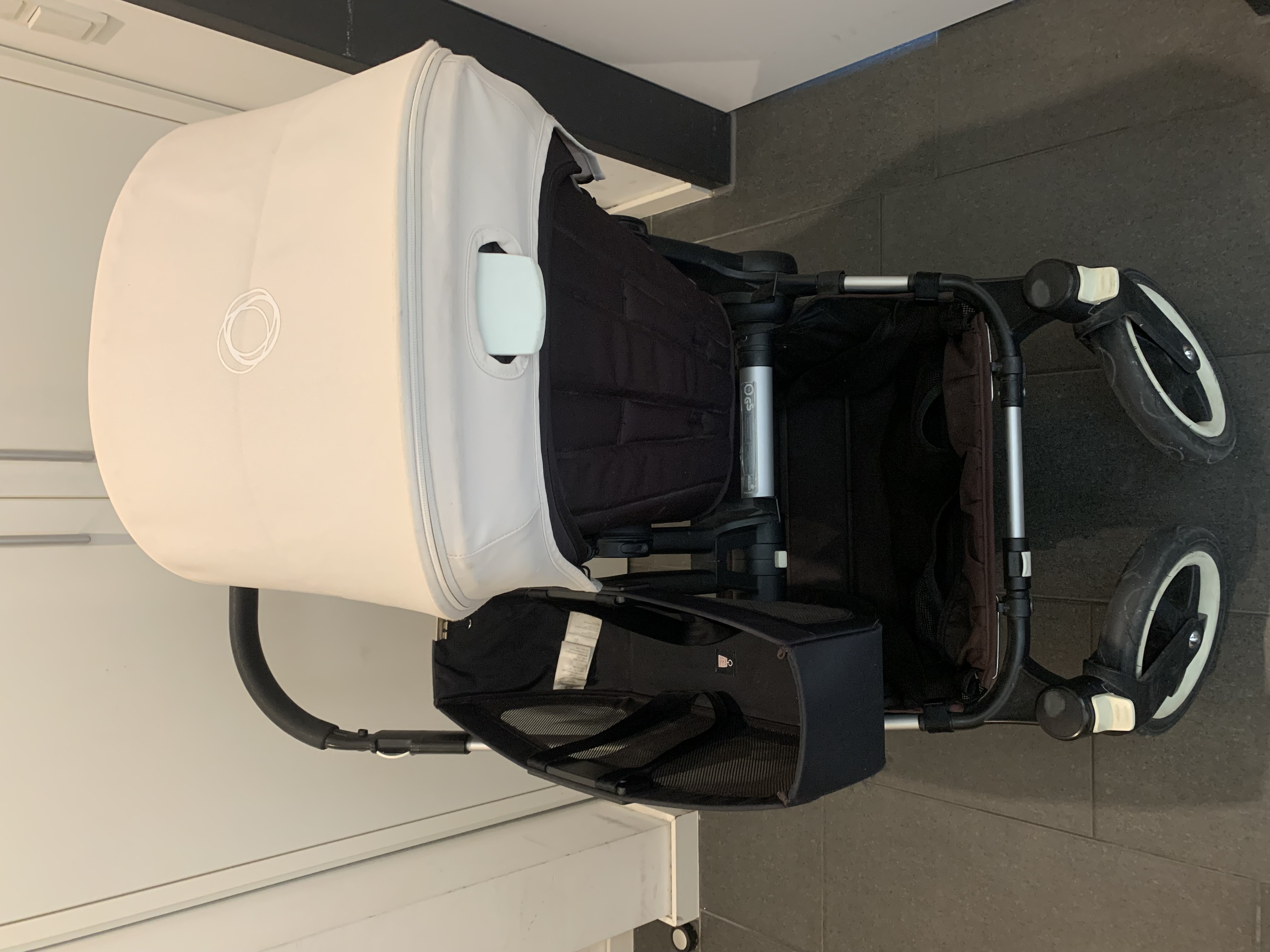
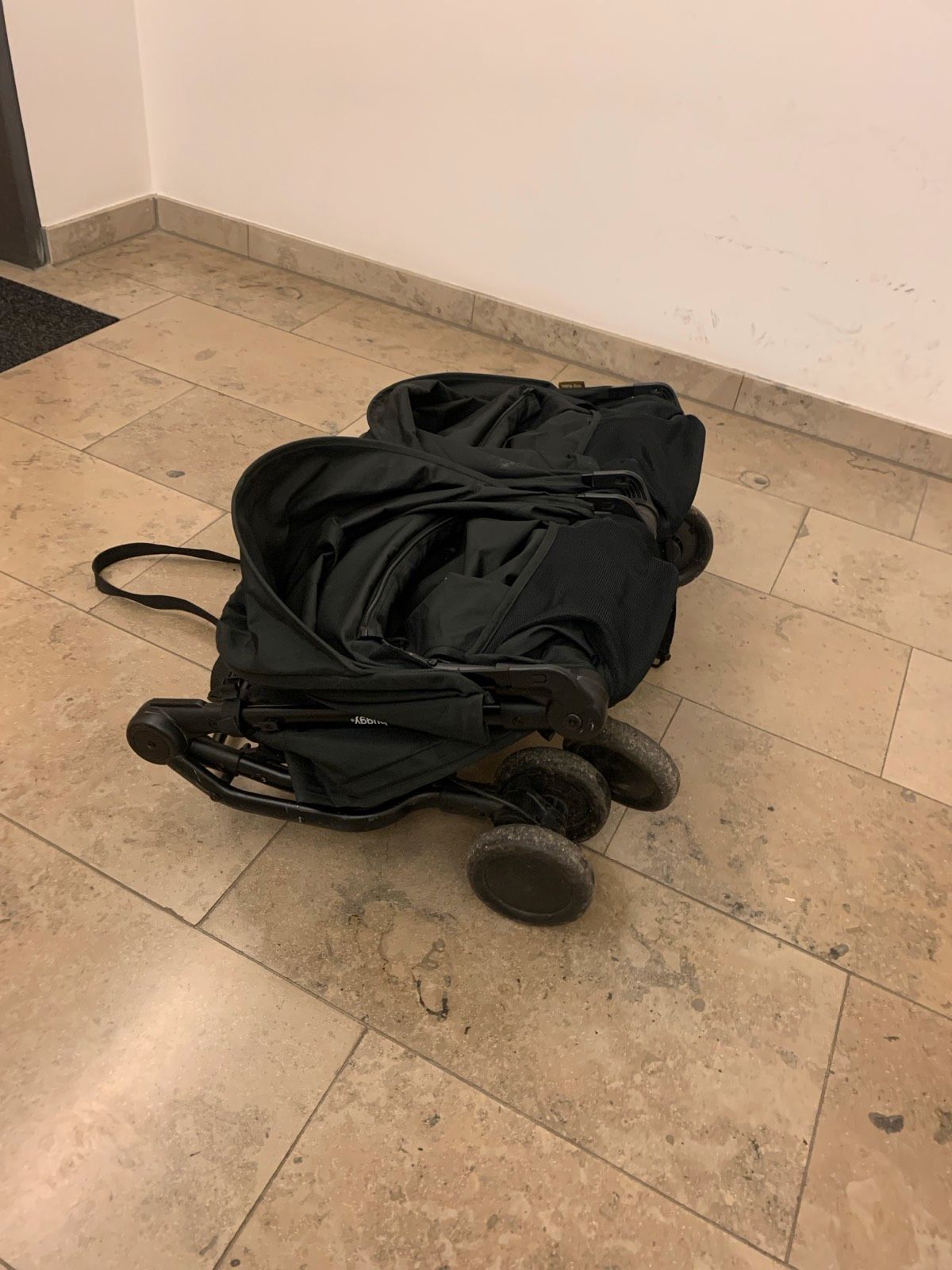
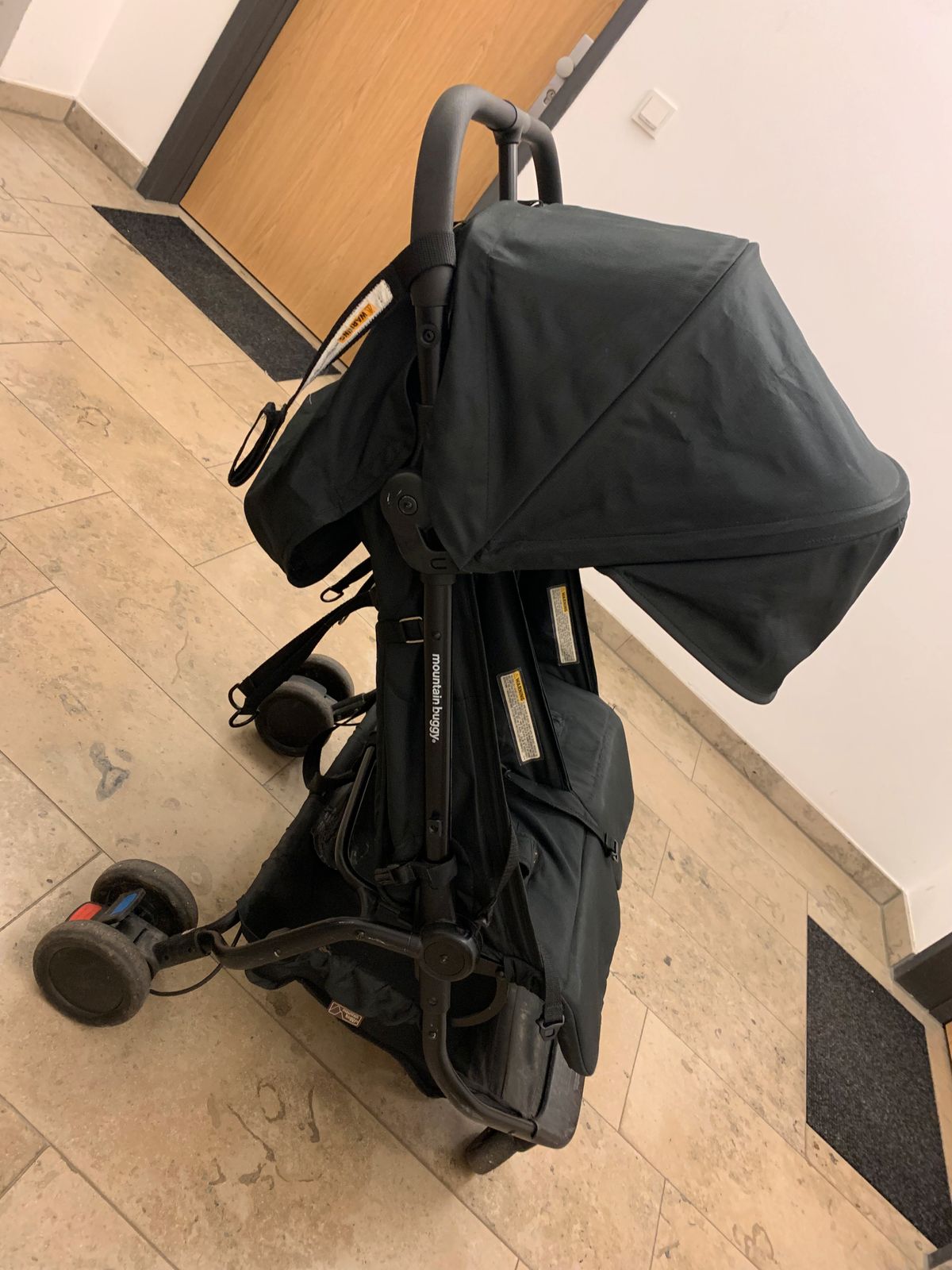
The Nano Duo has the more convincing fold story. One photo shows it folded on the floor; another shows me carrying it. That changes how I think about it. A double pushchair you can actually lift without planning the lift is useful in real family life: car parks, hotel rooms, train platforms, apartment stairs, grandparents’ homes, and the moment when both children are tired but the pushchair also has to disappear.
The Donkey can fold, but it is not trying to be this kind of small. With the Bugaboo, you are buying capability while accepting that the pushchair is a physical object in your life. It needs a place to live. It asks more of the boot. If your daily rhythm includes repeated car loading, the premium ride may not matter enough to offset the handling.
Width and doorways: measure your real bottlenecks
Both are side-by-side doubles, so neither should be bought on vibes alone. Bugaboo lists current Donkey Duo width around 74 cm/29.1 in in duo configuration. Mountain Buggy lists the Nano Duo width around 73 cm/28.7 in. On paper, that sounds almost the same. In real life, the feeling is different.
The Donkey’s width feels more substantial because the whole pushchair is taller, more structured, and more premium-built. It feels like a wide main pushchair. The Nano Duo feels like a low, folding travel double that happens to occupy similar doorway width. That means measuring only the doorway is not enough. Measure the lift, hallway turn, storage corner, car boot, and the place where the pushchair waits while you buckle children in.
Ride and surfaces: the Donkey is calmer; the Nano Duo is more honest
The Donkey is the one I would trust more for long daily walks, uneven pavements, loaded baskets, wet school runs, and the tired parent push. The larger wheels and fuller frame are not subtle in the photos. They are exactly the features that make a double pushchair feel less twitchy when two children move differently.
The Nano Duo is more honest about its limits. The wheels are small, the frame is lighter, and the seats are simpler. I would choose it for city surfaces, travel days, pavements, shops, stations, and short-to-medium errands. I would not buy it expecting the same calm push on rougher daily routes that a bigger premium pushchair gives.
Seats and shade
The Donkey seats feel more like separate pushchair positions. In the photos, the carrycot has its own large canopy and the seat beside it has a more protected shape. That suits mixed-age siblings because each child can have a different setup.
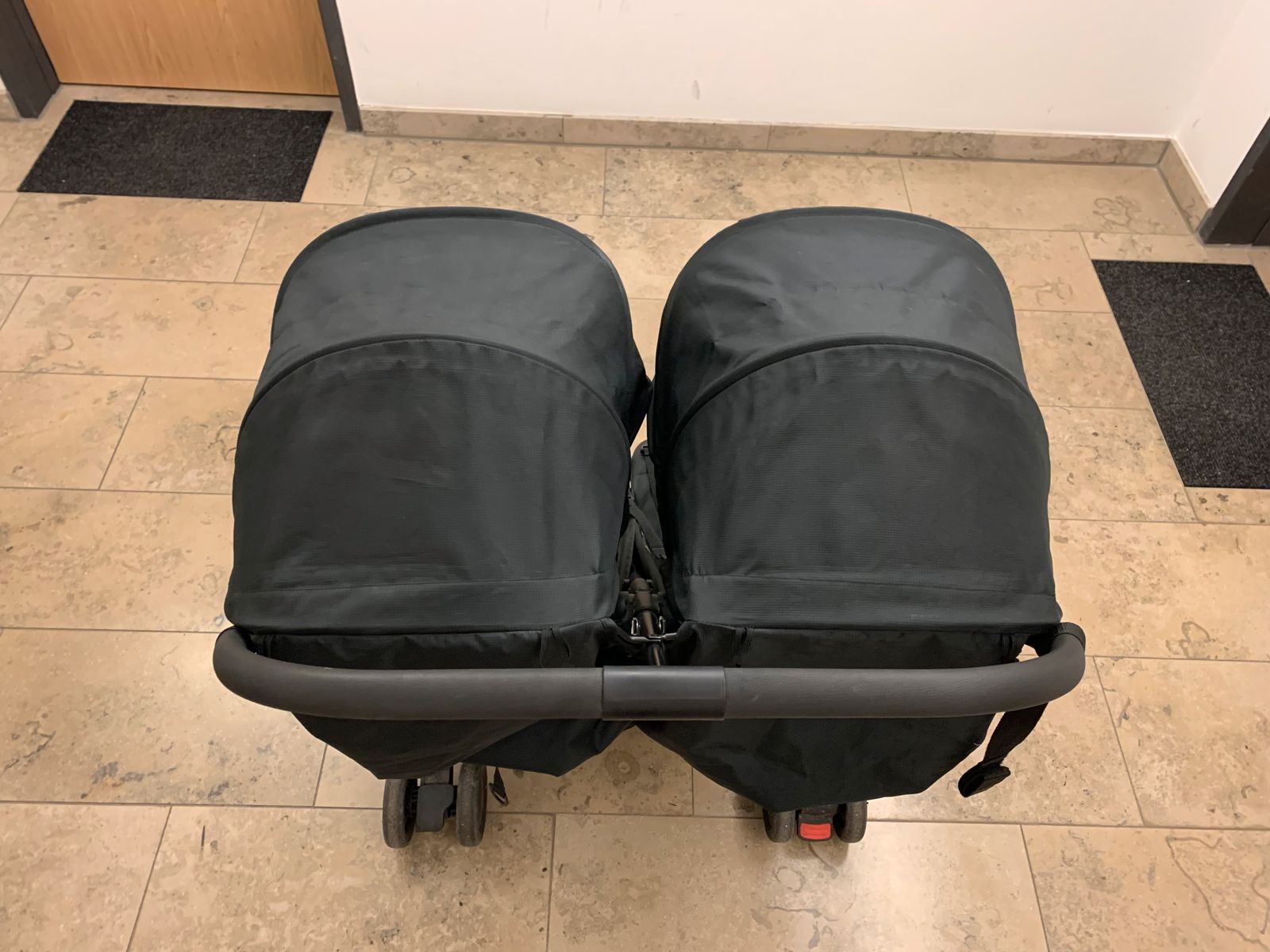
The Nano Duo has two similar seats with individual canopies and harnesses. That is simpler and more symmetrical. It makes sense for twins or two seated children who are in roughly the same stage. I would check shoulder room and seated height carefully with bigger toddlers, because the Nano Duo’s compactness has to come from somewhere.
Storage and everyday mess
This is one of the clearest Donkey advantages. The Donkey is the better pushchair if you regularly carry a changing bag, groceries, rain covers, playground layers, or the random objects children hand you during a walk. The basket and frame feel built around family load.
The Nano Duo has storage, but I would treat it as travel-double storage: useful, not generous. That is fine if the pushchair’s job is movement rather than shopping. It becomes less fine if you expect it to replace a main pushchair for every errand.
The used condition in these photos is also helpful. The Nano Duo wheels are dusty and the lower fabric is marked. The Bugaboo fabric and frame show normal use too. For second-hand buying, that is exactly where I would look: fold, brake, wheel wobble, handlebar play, fabric tears, harness parts, and whether all adapters and seat pieces are present.
Which one would I buy?
If I were choosing one pushchair for a newborn and an older child, and I had the storage space, I would choose the Bugaboo Donkey Duo. It is the more complete family platform. It makes the harder daily problem easier: two children, different stages, bags, weather, longer walks, and a parent who still needs the push to feel calm.
If I already had a main pushchair, or if my double-pushchair need was mostly travel, car trips, grandparents, flights, short errands, or two older children who only need occasional seats, I would look hard at the Mountain Buggy Nano Duo. It gives up the Donkey’s premium, modular feeling, but it gives back foldability and liftability. Those are not small things.
The fairest answer is this:
- choose the Bugaboo Donkey Duo if newborn readiness, mixed-age sibling comfort, storage, and a calmer long-walk push matter most
- choose the Mountain Buggy Nano Duo if fold, carry, lighter handling, travel, and car storage are the bigger daily pain
- buy either one used only after testing the fold, brake, steering, harnesses, wheels, seat recline, and exact included accessories
Final thoughts
The Donkey and Nano Duo are both side-by-side doubles, but they do not solve the same parent problem. The Donkey is a premium answer to “How do I make life with two small children feel manageable every day?” The Nano Duo is a practical answer to “How do I bring two seats without dragging a huge double everywhere?”
That is why I would not choose from the spec sheet alone. I would stand in the place where the pushchair will actually live: the hallway, lift, car boot, nursery entrance, station platform, or storage corner. Then I would ask which compromise will annoy me less six months from now.
For our family, that is usually the real pushchair decision. Not the prettier product. Not the one with the longest feature list. The one that makes the repeated part of family life less tiring.