
How to Choose a Kids Bike Helmet That Actually Gets Worn
By Peter CronaLast updated Last checked
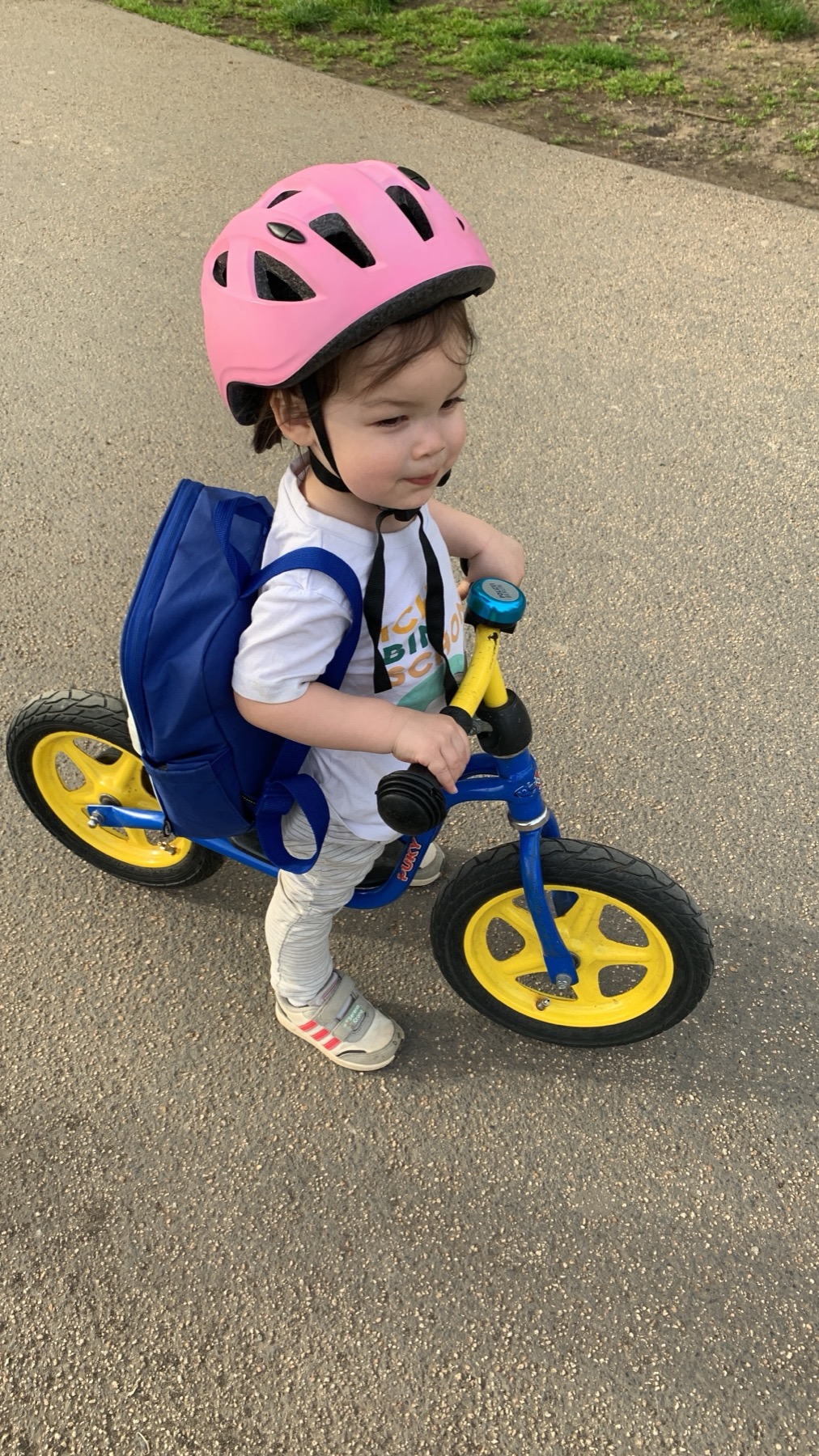
A kids bike helmet looks like a simple purchase until you are the parent fastening it before every ride. The child is growing, the straps twist, the route changes from balance-bike practice to real bicycle riding, and the helmet that looked fine in the shop may not be the one your child tolerates on a warm day outside.
Choose a kids bike helmet by measured fit first, not by age label or colour. Look for the bicycle helmet standard used where you live, make sure the helmet sits level and snug, adjust the side straps and chin strap, then check whether your child will actually wear it. Lights, bright colours, vents, and favourite styling are useful only after the helmet fits correctly and suits the riding stage.
I learned this in a fairly ordinary father-of-two way. My son started with a simple black uvex helmet when he was riding a balance bike. Once he moved to a pedal bike, we changed to a blue helmet with a rear light. My daughter used a simple pink helmet, partly because pink made the helmet easier for her to accept. My son was not picky about helmets. My daughter cared much more about the colour.
That is the useful lesson: the best helmet is not the one with the longest feature list. It is the one that clears the safety basics, fits the child in front of you, and does not create a daily argument before every ride.
If you are already comparing current models, start with our best kids bike helmets shortlist after reading the fit checks below.
Start with the non-negotiables
Before you compare brands, decide whether the helmet belongs in the bicycle-helmet category for your market. Safety labels and standards vary by region, so this is not a place to rely on marketplace titles alone. Look inside the helmet and in the current product documentation for the standard that applies where you ride.
If you are outside the United States, do the same job with your local bicycle helmet standard instead of assuming that a generic skate or scooter listing is enough. The exact label can differ by market, but the parent decision is the same: buy a real bicycle helmet with the correct local approval, then check fit on the child.
Then check condition. A second-hand helmet may look fine and still be a poor choice if you do not know whether it has been crashed, stored badly, or aged out. Health Canada’s helmet safety guidance keeps the advice practical: choose the right helmet type, fit it correctly, and replace a helmet that has been in a crash. In plain buying terms, unclear standards, unknown crash history, damaged foam, damaged straps, or a poor fit should remove a helmet from the shortlist.
Fit is more important than the age range
Children’s helmets are often sold by age range, but age is only a rough shopping shortcut. Head circumference, head shape, hair, winter hats, and the helmet’s adjustment system all change the result.
Use a soft tape measure around the widest part of the child’s head, then compare that number with the helmet’s size range. Do not choose the largest possible size just for growth. A helmet that slides today is not a good trade for extra months later.
A good first fit should look like this:
- the helmet sits level, not tipped far back
- the front edge sits low enough to protect the forehead without blocking vision
- the rear dial or fit band holds the helmet steady before the chin strap is tightened
- the side straps meet below the ears without pulling the helmet sideways
- the chin strap is snug enough that the helmet does not lift, but not so tight that the child refuses it
HealthyChildren’s bicycle helmet advice is a good fit reference because it focuses on the real setup problem: the helmet has to stay correctly positioned, not merely sit on the head for a photo.
At home, the fitting step mattered more with my daughter than with my son. He would usually accept adjustment without much drama. She cared about comfort and colour, so the helmet had to feel right quickly. A technically good helmet that becomes a fight every morning is still a weak everyday answer.
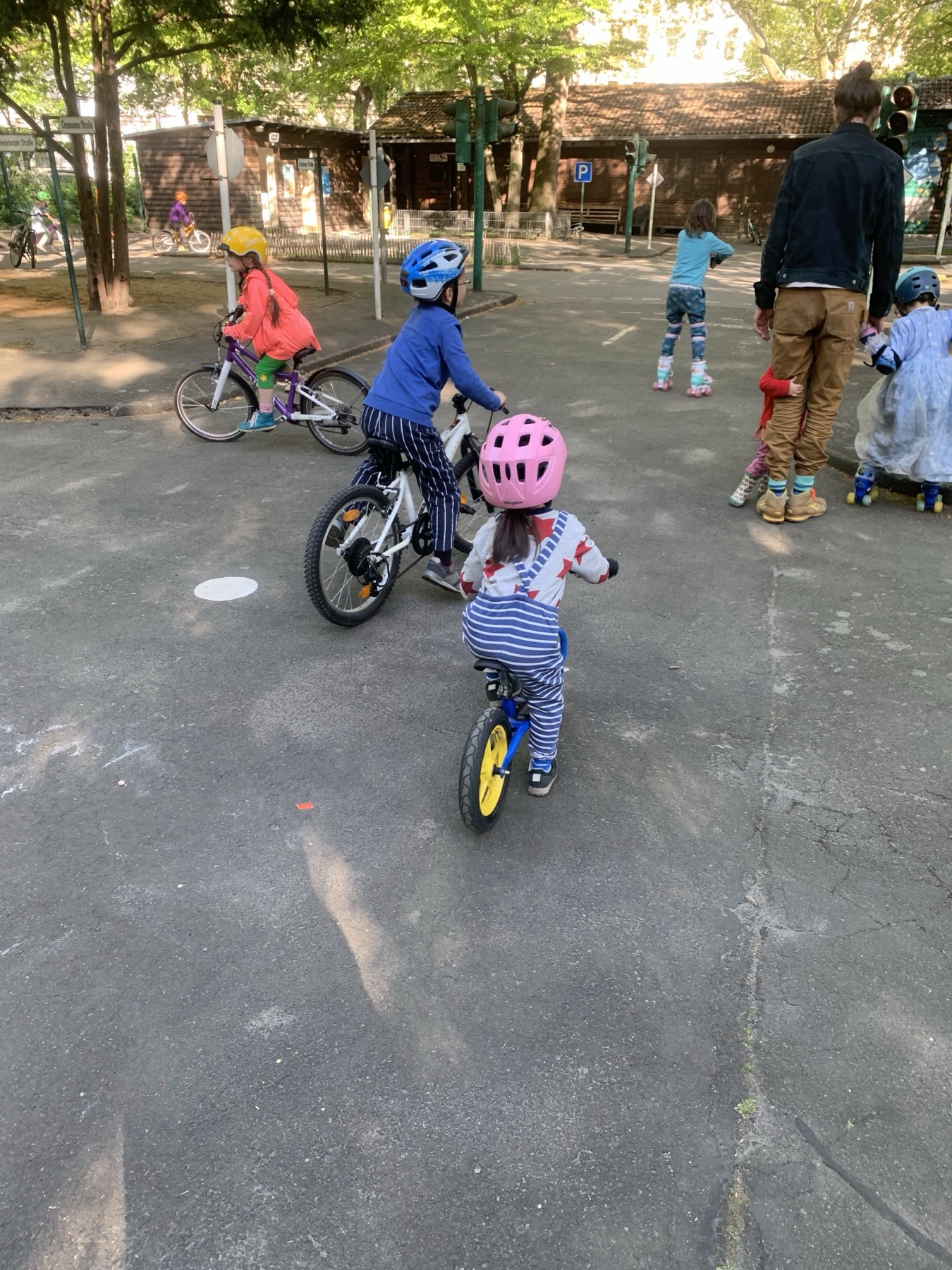
Balance-bike helmet vs bicycle helmet
The balance-bike stage is where many parents are tempted to be casual. The child is small, the route is slow, and the bike has no pedals. But the fall height is still real, and young children do not always put hands out cleanly.
For balance-bike use, I would keep the decision simple:
- choose a real bike helmet, not a dress-up helmet
- keep the fit light and comfortable enough for repeated short rides
- prioritise stable adjustment over extra features
- make sure the child can turn their head and hear you
- avoid a helmet so bulky that it pushes the head forward in a trailer, seat, or pushchair
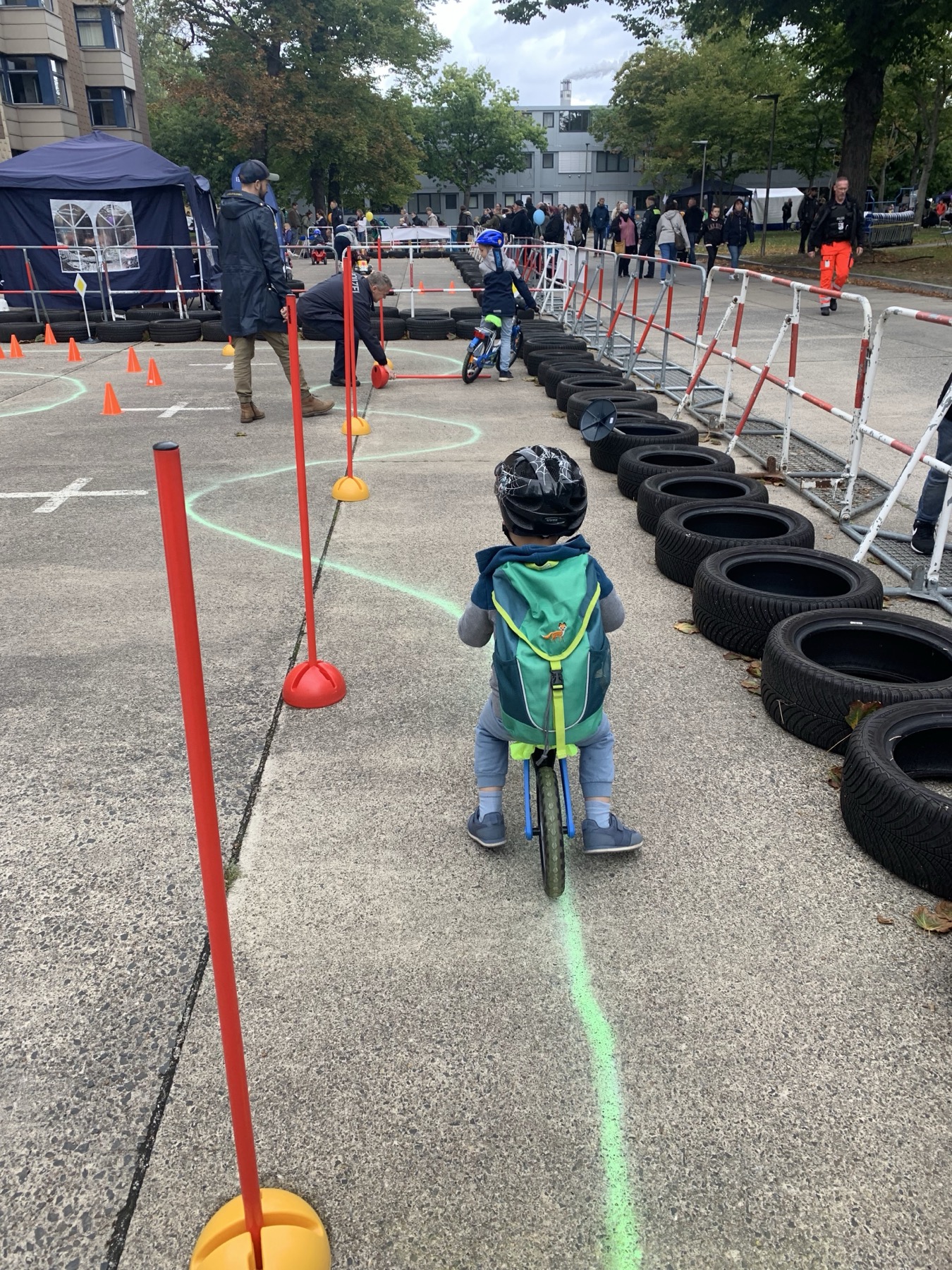
My son’s first black uvex helmet did this job well enough for balance-bike days. It was not a complicated purchase. It gave us a consistent rule: if the bike comes out, the helmet goes on.
That consistency helped later. By the time he moved to a pedal bike, helmet use was not a new negotiation. We were only changing the type of helmet, not introducing the habit from scratch.
When a rear light starts to matter
A rear light on a helmet can be useful, especially once a child moves from slow balance-bike practice to a pedal bike, a school route, dusk rides, or shared paths where adults need the child to be more visible from behind.
That is why my son moved to a blue helmet with a rear light after he changed to a bicycle. The light was not the reason the helmet was safe. It was an extra visibility detail that matched a new riding stage.
Keep that order clear:
- fit and certification come first
- route and supervision come second
- the rear light is a visibility aid, not a substitute for safe routing or a properly fitted helmet
- batteries, charging, and switch logic matter if you expect the light to be used regularly
For a child who rides only in parks during daylight, a light may be less important than ventilation, fit, or acceptance. For a child riding near traffic, in autumn light, or behind an adult bike, visibility details can become more valuable.
Colour is not silly if it solves acceptance
Parents often treat colour as a shallow feature. Sometimes it is. But with young children, colour can be the difference between a helmet that is worn and a helmet that sits by the door.
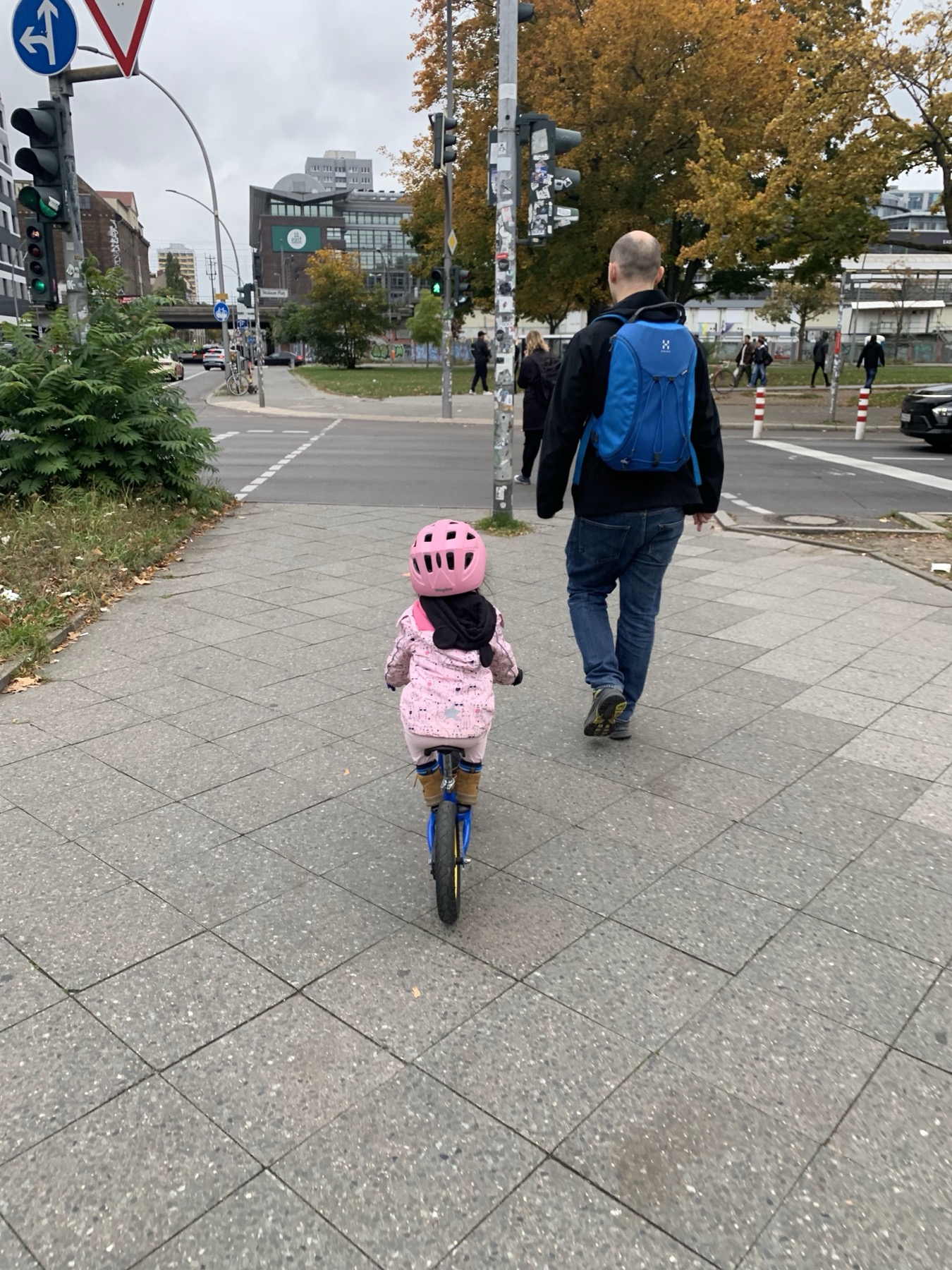
My son did not care much. My daughter liked pink, and the pink helmet made the rule easier to keep. I would not choose a poor-fitting helmet because of colour, but I would use colour as a tie-breaker after the safety and fit checks are satisfied.
This is especially true for children who are sensitive to gear, hair pulling, or transitions. The practical version is:
- let the child choose between two or three helmets that already fit
- avoid giving a choice between one good fit and one bad fit
- check whether ponytails, thick hair, clips, or winter layers change the fit
- repeat the fit check after growth spurts
What I would compare before buying now
If I were buying again, I would compare helmets in this order: standard, measured size, strap setup, ventilation, visibility, then acceptance. That order keeps the serious checks first without pretending children are neutral about what they wear.
The strap setup is the detail I would look at more carefully now. Straps are where many helmets become annoying. If the side straps are hard to position, the buckle pinches, or the chin strap twists, the helmet may be safe in theory and irritating in real life.
Ventilation and weight also matter more than they look. Warm children complain quickly. A lighter, better-vented helmet can make daily use easier, especially in summer or on longer rides.
Visibility belongs after fit, not instead of it. Bright colours, reflectors, and rear lights can help, but they do not make a route safe by themselves.
Where parents get caught
The mistakes are usually ordinary ones. A parent buys by age label, lets the helmet sit too far back because the child finds it more comfortable, or treats a rear light as if it solved route risk. None of those choices is reckless by itself, but each one weakens the real job of the helmet.
The one I would be strict about is impact history. If the helmet has been in a crash or the foam is damaged, replace it instead of trying to judge the inside by eye. With colour and style, I would be more pragmatic: set a firm helmet rule, then choose within the child’s tolerance so the rule survives normal mornings.
The simple buying rule
For a balance bike, quiet bike practice, or a first pedal bike, I would use the same parent rule: buy the helmet that fits correctly today, carries the right bicycle standard for your market, and is acceptable enough that your child will wear it.
After that, match the extras to the stage. A simple helmet can be enough for calm balance-bike practice. A rear light can make sense once the child rides a bicycle in busier settings. A favourite colour can be genuinely useful for a child who resists gear.
That is the quiet middle ground. Do not buy a helmet only because it is cute. Do not buy one only because it looks technical. Buy the one that clears the boring checks and gets worn every time. Then use our kids bike helmet shortlist to compare current options by fit, adjustment, visibility, ventilation, and the details that make daily use easier.