Best Child Bike Seats in Australia 2026
The best child bike seats for families who want a lighter, narrower, and simpler cycling setup than a trailer, but still need the right mount style, child position, and day-to-day fit for real rides.
Why are scores between 9 and 10?
This is a curated shortlist of strong picks, not a full best-to-worst ranking. Small score gaps usually mean we have slightly more evidence for one model than another, not that the lower-scoring option is a poor choice.
So this is just another affiliate roundup with an arbitrary order?
No. We make these lists good enough that we use them ourselves and recommend them to friends and family. We turn the kind of research careful parents would normally do by hand into a repeatable process. Then we compare the evidence across the markets we cover and rank products with a model that gives more weight to stronger signals instead of simple averages or a fully hand-picked order based purely on editorial preference.
Affiliate Disclosure
We use affiliate links and ads to finance this website. As an Amazon Associate I earn from qualifying purchases.
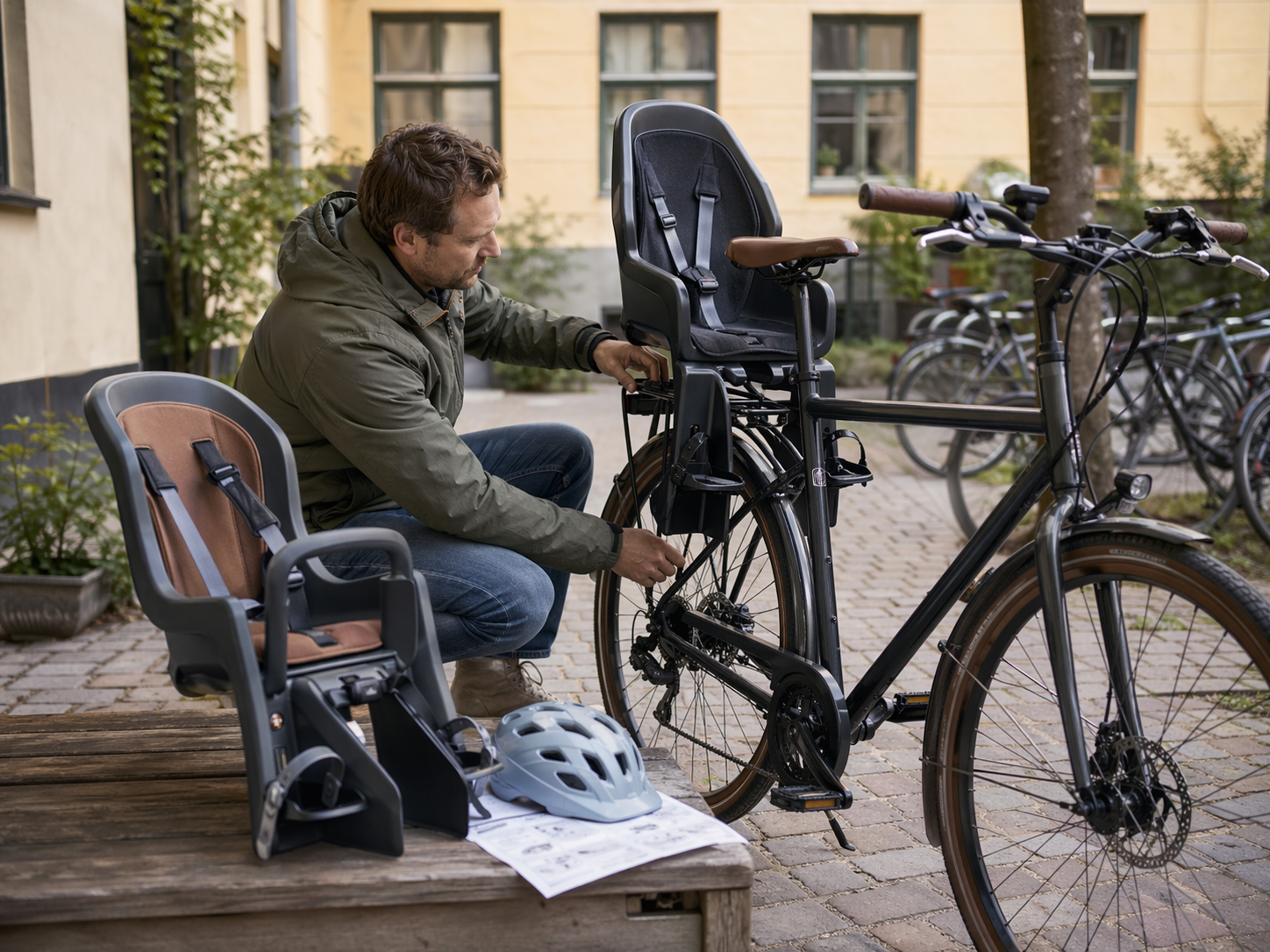
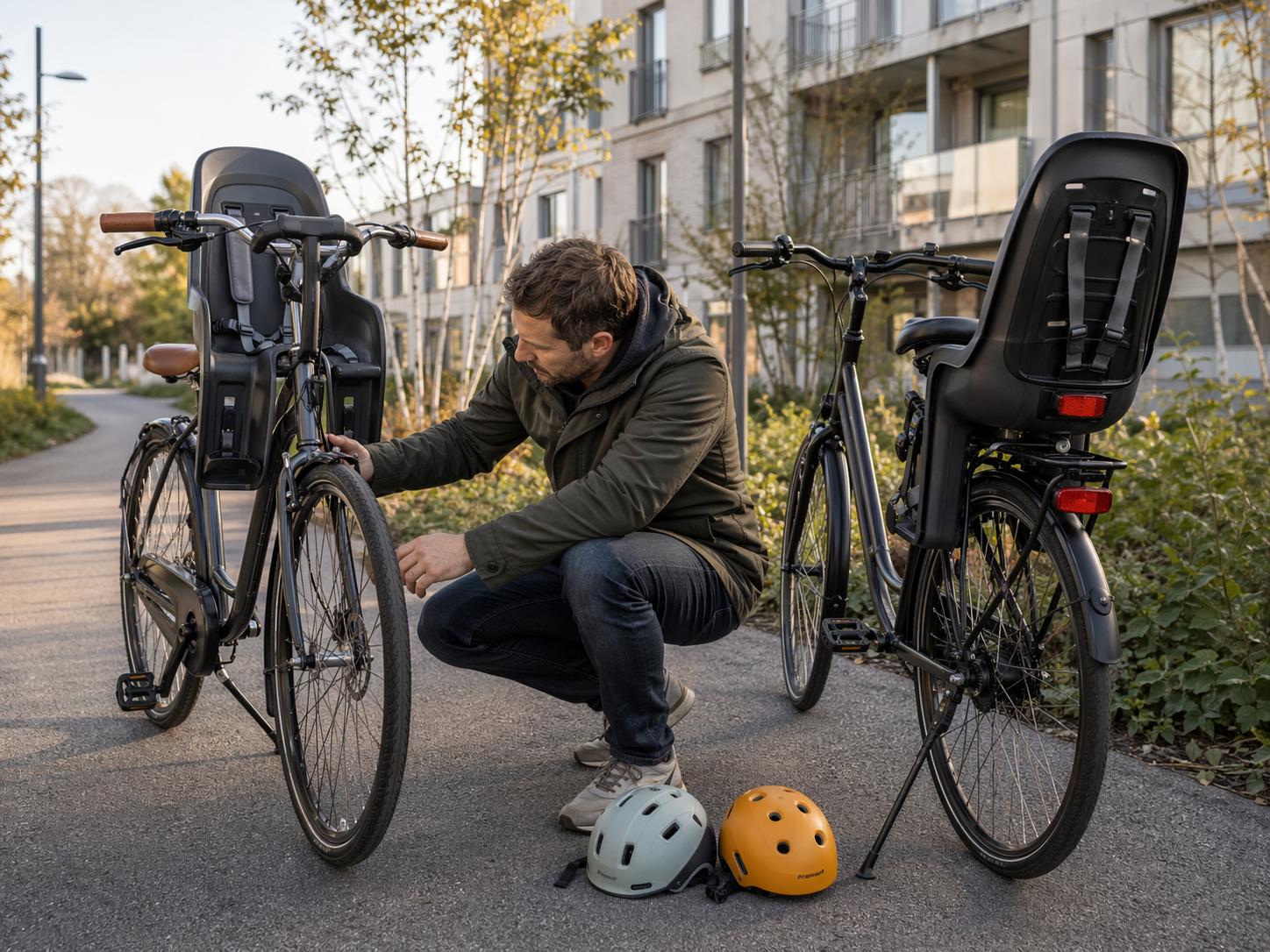
- Rank #1 Our score: 9.79 / 10
UrRider
Best: Premium
UrRider is a folding open front perch for short, calm rides with an alert, steady child around two to six. Check top tube, seat post, cables, steering arc, foot position and knee clearance; a harnessed shell seat is a better fit for younger or sleepy children.
Pros
- The 1.3 kg seat installs and removes without tools and folds compactly for occasional rides.
Cons
- The open perch has no enveloping shell or harness and requires an alert, reliable child plus a precise frame-fit check.
- Rank #2 Our score: 9.68 / 10
Kids Ride Shotgun Pro Seat
Kids Ride Shotgun Pro is an open front MTB perch for an alert child who can actively hold on, with a separate child handlebar included in this offer. Its headset-and-seat-post mount avoids frame contact and accommodates many modern MTBs, but verify steerer, seat-post, knee and e-bike fit against Shotgun's current guide before buying.
Pros
- The Pro mount avoids direct frame contact, and the included quick-release child handlebar gives the passenger a dedicated grip.
Cons
- This is an open perch without the enclosing shell and harness of a commuter child seat, and its steerer and seat-post requirements make it a poor blind buy.
- Rank #3 Our score: 9.68 / 10
Kids Ride Shotgun 2.0 Seat and Handlebar Combo
Kids Ride Shotgun is a front MTB-style seat for confident 2-5 year olds, best when interaction matters more than a harnessed, nap-friendly passenger space.
Pros
- The handlebar combo gives the child a dedicated grip point instead of relying on the adult bars.
Cons
- The extra bar does not change the open-seat safety boundary or the mountain-bike compatibility checks.
- Rank #4 Our score: 9.68 / 10
Kids Ride Shotgun MTB Seat
Kids Ride Shotgun is mainly for short, shared MTB rides with a child who can sit alertly up front; it is not the broadest-fit daily child-seat option.
Pros
- The original MTB Seat keeps the setup simple for compatible analogue mountain bikes.
Cons
- It contacts the bike frame, so paint protection, cable routing, and tube shape matter before the ride quality does.
- Rank #5 Our score: 9.68 / 10
UrRider New Upgrade
UrRider suits families who want a foldable front perch for an alert child, provided the adult bike has the right top-tube and seat-post geometry.
Pros
- The New Upgrade version is the UrRider pick when folding hardware and frequent removal matter.
Cons
- It is still an open perch, so child maturity and bike fit are more important than the upgraded hardware.
- Rank #6 Our score: 9.56 / 10
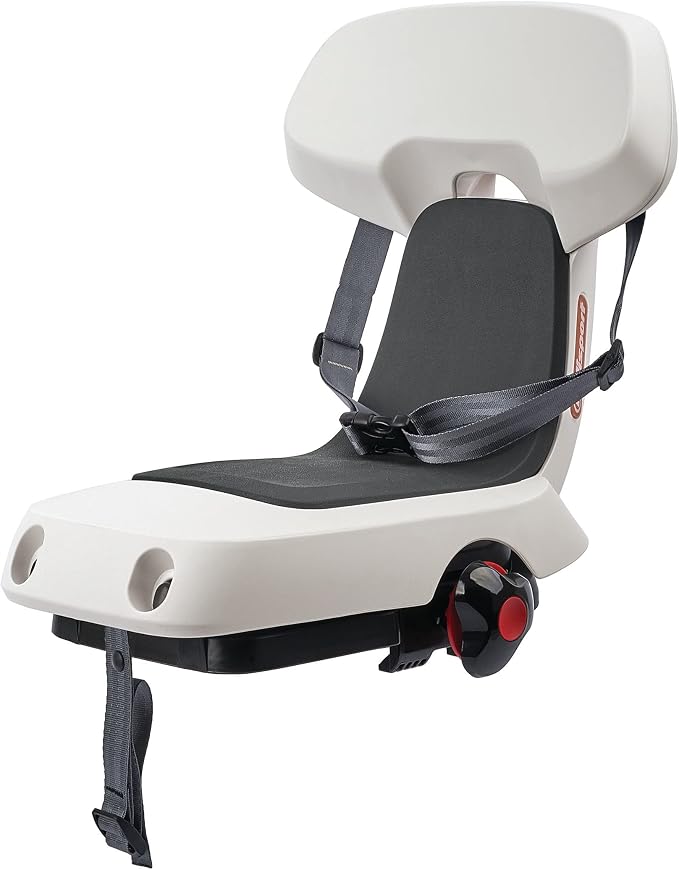
Polisport Guppy Junior
Best: Rear-mounted
Junior stage: over 6 years, at least 110 cm, up to 35 kg. Check the exact CFS kit instructions and a compatible rack rated for at least 38 kg.
Polisport Guppy Junior is a rear rack seat for a child over 6 years and at least 110 cm tall who has outgrown a small toddler shell. Its junior format gives them a backrest, lap belt and separate wheel protection, but needs a compatible rack rated for at least 38 kg. Check the supplied CFS instructions and mounting kit before buying: the child limit is 35 kg, while older manuals and later catalogs differ on wheel and rack dimensions.
Pros
- The junior seat, retractable footrests and supplied wheel guard provide an older child with support after a small toddler shell no longer fits.
Cons
- A standard light-duty rack may not qualify: the maker specifies at least 38 kg rack capacity, and the exact CFS kit’s mounting limits still need checking.
- Rank #7 Our score: 9.55 / 10
CyclingDeal Rear Baby Seat
Australian brand
The CyclingDeal Rear Baby Seat is a practical Australia-focused rear option if you want a simpler seat with local standards language and an easy clamp-on frame fit for everyday neighbourhood rides.
Pros
- CyclingDeal Rear Baby Seat avoids needing a separate rear rack, which helps if your bike frame is compatible.
Cons
- CyclingDeal Rear Baby Seat still needs a careful frame, seat-tube, and heel-clearance check before you buy.
- Rank #8 Our score: 9.54 / 10
Bwcece Rear Child Seat
Bwcece's rear seat is a rack-mounted passenger kit with a lap restraint, surrounding handrail, backrest and foot supports. It extends an existing product identity, but its broad 18-month-to-8-year marketing range is not paired with a clear seat limit; verify the child's fit, rack capacity and all hardware in the supplied instructions.
Pros
- Bwcece Rear Child Seat works best when your bike already has a rear rack that is definitely compatible.
Cons
- The listing says capacity depends on the bike and gives no clear child-seat maximum, so the advertised age span is not an adequate fit boundary.
- Rank #9 Our score: 9.52 / 10
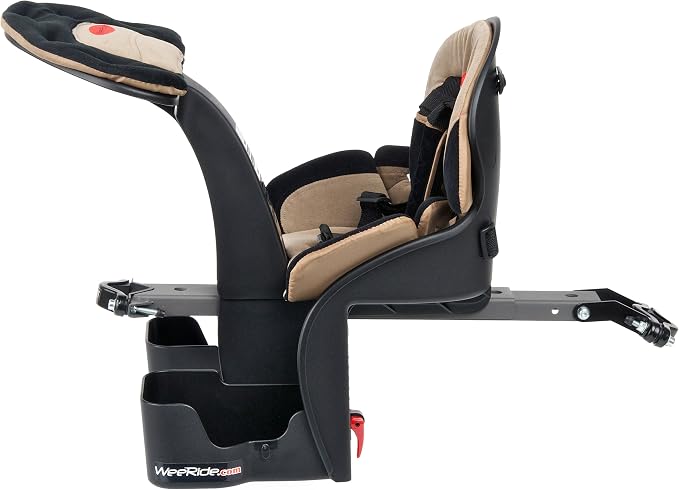
WeeRide Deluxe Kangaroo
The Deluxe Kangaroo keeps your child between your arms, with thicker seat and pedestal padding than the Classic. It suits a child at least 12 months old who can sit upright and hold their head steady in a helmet, up to 15 kg. Its support bar runs from the seatpost to the head tube, so no rear rack is needed, but it takes up pedalling space. The standard front bracket needs 5 mm below the headset; tighter spaces need WeeRide's adaptor. Drop-handlebar racing bikes are excluded.
Pros
- The padded seat and front pedestal give the child a supported place close to the rider, rather than a separate rear-seat position.
Cons
- The mounting bar needs suitable seatpost and head-tube attachment points while leaving at least 45° of steering; drop-bar racing bikes are excluded.
- Rank #10 Our score: 9.51 / 10
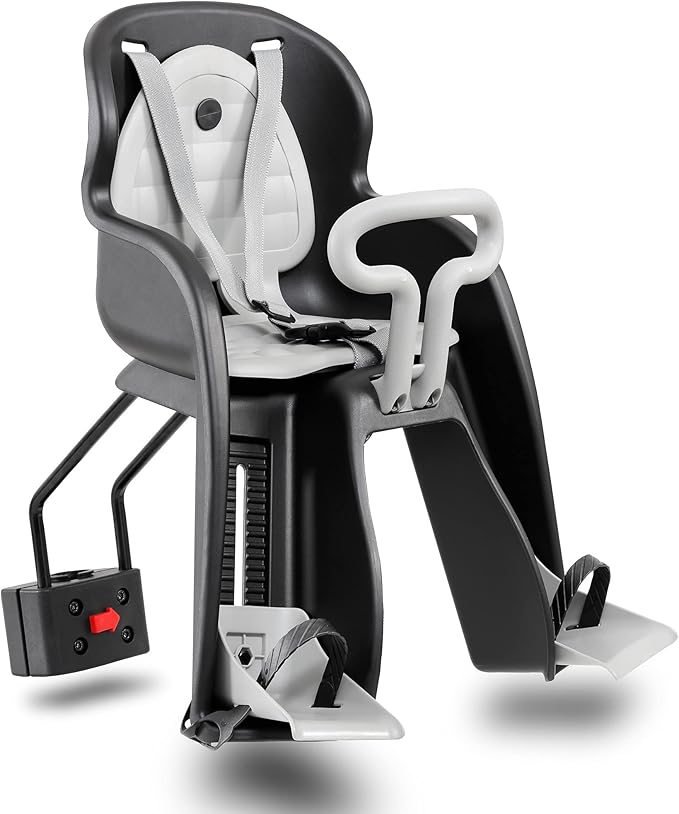
Auwey Front Mounted Child Bike Seat
Auwey Front Mounted Child Bike Seat is a front-mounted child bike seat candidate for adult-bike rides where keeping the child in view matters more than a rear rack setup. Check frame fit, steering clearance, foot support, and child maturity before shortlisting it.
Pros
- Auwey keeps the child in front for parents who want a simple visibility-first seat for slow adult-bike rides.
Cons
- Treat it as a fit-check candidate: the listing trail does not give enough independent detail to assume broad bike compatibility.
- Rank #11 Our score: 9.44 / 10
Burley Dash FM
Burley Dash FM is a rear frame-mounted seat for families who want a daily child carrier without committing to a rear rack. Check seat-tube shape and rear-wheel clearance carefully before buying.
Pros
- Frame mount avoids needing a compatible rear rack.
Cons
- Bike-frame clearance matters more than the age range on the listing.
- Rank #12 Our score: 9.44 / 10
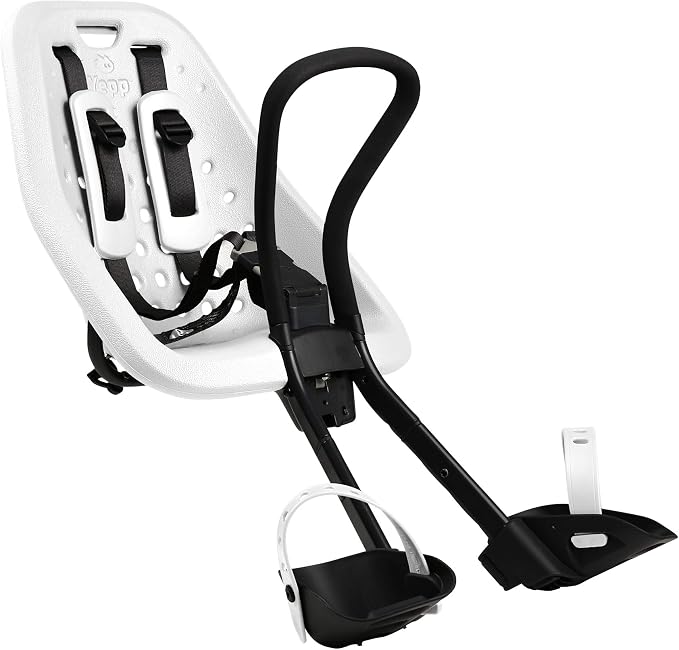
Thule Yepp Nexxt 2 Mini
A front-mounted child seat for keeping a small rider in view. Confirm the exact stem fit, available handlebar space, 15 kg limit, and the child’s ability to sit independently before buying.
Pros
- Front placement makes communication and monitoring easier.
Cons
- The 15 kg limit gives a shorter useful window than many rear seats.
- Rank #13 Our score: 9.40 / 10
GRTLPOK Front Child Seat
GRTLPOK is an open front saddle for an alert 2-5-year-old on a mountain bike with a compatible flat or sloping top tube. Quick release and rubber frame protection simplify removal, but there is no enclosing shell or harness; check top tube, cables, knee room, steering movement and the 21.8 kg limit.
Pros
- Quick release makes the seat easy to remove, while rubber protects a compatible frame from direct metal contact.
Cons
- The open saddle has no shell or harness and only works when child readiness, top tube, cables, knees and full steering clearance all align.
- Rank #14 Our score: 9.40 / 10
CyclingDeal Front Child Seat
Australian brand
The CyclingDeal Front Child Seat is the more interesting Australian seed if you want your child up front on slower, shorter rides and you value visibility and interaction more than maximum long-ride stability.
Pros
- CyclingDeal Front Child Seat keeps the child in view, which can make short, slower rides easier to monitor.
Cons
- CyclingDeal Front Child Seat only works well if the cockpit, rider position, and steering clearance still feel right.
- Rank #15 Our score: 9.40 / 10
Thule Yepp 2 mini
Thule Yepp 2 Mini is the AU front-seat pick for short, interactive rides with a child under 15 kg, as long as stem, knee, cable, and steering clearance all check out.
Pros
- The front position keeps a younger passenger in sight and Thule gives clear 9 month to 3 year, 15 kg fit guidance.
Cons
- It is easy to outgrow and can crowd the rider, so stem fit, steering sweep, cables, and knee clearance are the pre-buy checks.
- Rank #16 Our score: 9.37 / 10
XIEEIX Retractable Front Child Bike Seat
XIEEIX Retractable Front Seat mounts around a compatible mountain-bike crossbar and adjusts its footrests for a small passenger. Measure the crossbar shape and diameter, then check steering, knee and mounting clearance before use.
Pros
- Retractable parts reduce the seat's footprint between rides.
Cons
- It excludes cylindrical crossbars and only fits the listed diameter range.
Local ratings context
If the local Amazon listing has less review depth, this may help: while reviewing this product, we found more rating context on Amazon US. The shortlist also weighs product fit, brand track record, and broader research; when buying, we recommend using your local Amazon store. View Amazon US listing
- Rank #17 Our score: 9.33 / 10
Schwinn Deluxe Child Carrier
Schwinn Deluxe Child Carrier is the AU shortlist fallback for families who want a conventional rear seat and can confirm the rack hardware, bike clearance, and 18.1 kg child limit before buying.
Pros
- Rear seating keeps the cockpit clear and suits slower local rides when the supplied rack setup fits the bike cleanly.
Cons
- The 18.1 kg child limit, rear rack hardware, and heel or suspension clearance all need checking before it is a sensible buy.
- Rank #18 Our score: 9.33 / 10
Thule RideAlong Lite 2 Frame Mount
Thule RideAlong Lite 2 is the rear frame-mounted choice for families who want a contained seat without relying on a rear rack.
Pros
- Rear frame mounting avoids needing a rack and gives a more contained passenger space than open MTB-style front seats.
Cons
- It only makes sense if the frame tube shape, child size, and rear-wheel clearance match Thule’s limits.
- Rank #19 Our score: 9.33 / 10
Thule Yepp Mini
9-15 kg, 9–36 months, up to 93 cm. Under-one use needs a paediatrician’s advice; the child must sit unaided and support their helmeted head. Check the supplied adapter and instructions.
The classic Thule Yepp Mini keeps a small child in front of the rider, with a padded five-point harness and adjustable footrests. Thule specifies 9-15 kg, 9–36 months and a 93 cm height limit; age alone is not enough, and children under one need a paediatrician’s advice. The standard adapter needs a circular 20–28 mm stem and at least 21 mm of mounting height. Confirm unaided sitting, helmeted head support, steering and knee clearance before choosing it.
Pros
- The front position keeps a young child in view, with adjustable harness and foot support for the defined small-child fit range.
Cons
- The 15 kg maximum gives it a short use stage; check weight, height and readiness rather than buying by age alone.