
Baby Carriers 101: Where to Start
By Peter CronaLast updated

Buying a baby carrier gets much easier when you stop asking which brand is best and start asking which type actually fits your family. Most parents are not really looking for “the best carrier.” They are trying to find something that fits a newborn safely, feels comfortable on an adult body, and still makes sense for errands, naps, travel, or warmer weather.
If you are in Australia, start by choosing the right type for your real use, then use the ACCC baby carriers, wraps and slings guide and the product manual to confirm the basics. The practical checks are the same: keep the baby tight, in view, close enough to kiss, chin off the chest, and supported well enough that you can reproduce the fit correctly.
Start with the right carrier type
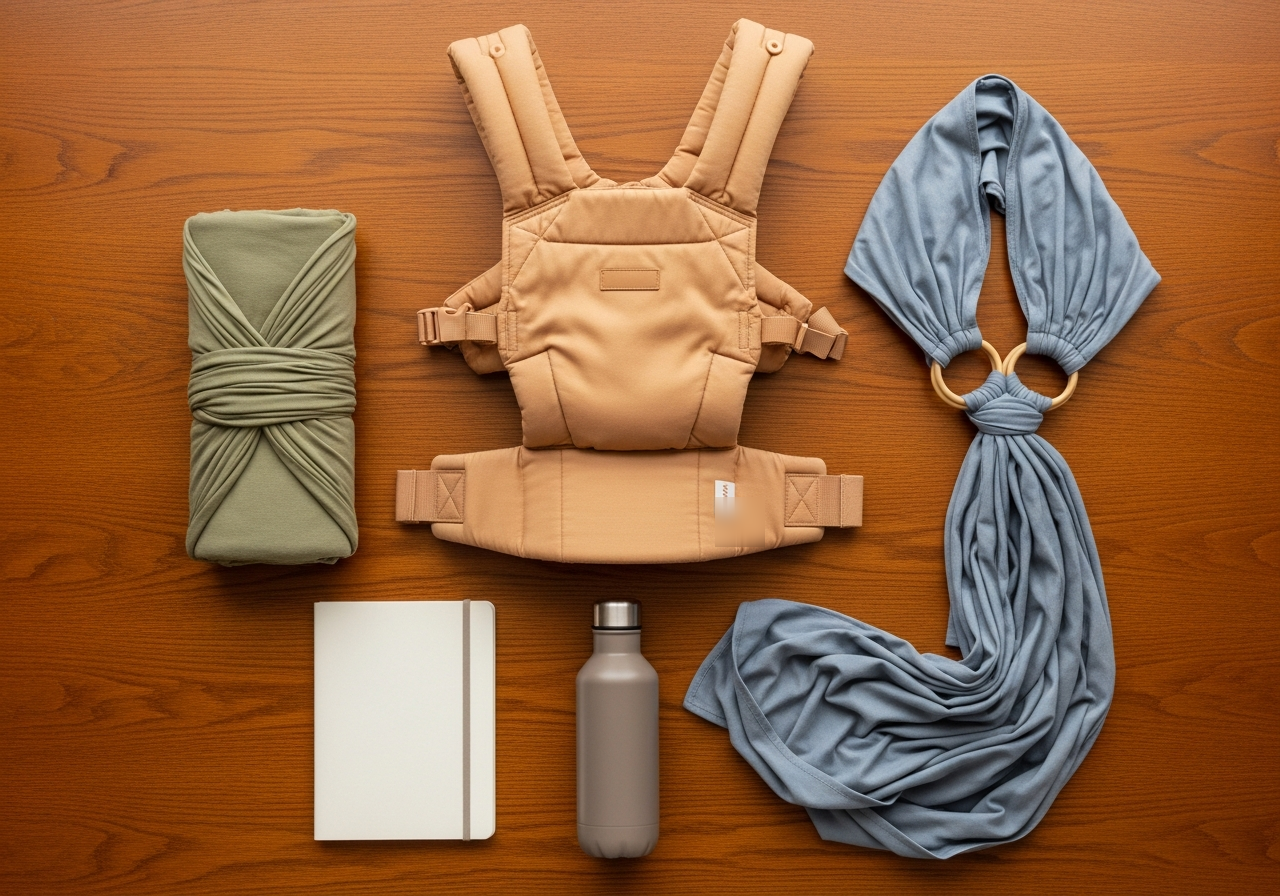
Soft structured carrier
This is the easiest starting point for many families. A soft structured carrier gives you buckles, a shaped panel, and faster repeatable setup once both adults understand the fit. It is usually the strongest option if you want one carrier for frequent errands, longer walks, shared use between adults, or later back carrying.
The tradeoff is that it can feel bulkier and less forgiving than fabric-based options. Some newborn-friendly structured carriers still need a very careful fit check in the first weeks, and not every adult likes the amount of straps, padding, or waistband structure.
Wrap
A wrap makes the strongest case when newborn fit, closeness, and adjustability matter more than speed. It can be a very good answer for a small baby, a parent who wants a softer fit, or a household that wants one carrier style to adapt closely to different body shapes.
The tradeoff is the learning curve. If you know you will get frustrated by tying fabric every time you leave the house, a wrap can be the wrong first buy even if it looks ideal on paper.
Ring sling
A ring sling is usually the quickest fabric option and can make a lot of sense for shorter carries, quick in-and-out use, or parents who know they want something cooler and less bulky than a full structured carrier. It can also be useful later for older babies who want up-down-up-down convenience.
The tradeoff is that weight sits on one shoulder, so it is rarely the best answer for long daily carries if comfort is your main priority.
What actually changes the right choice
Your baby’s current size and stage
Do not buy by a vague age label alone. Some carriers are genuinely easier with a tiny newborn, while others become much more convincing once the baby has better head control and more body length.
The International Hip Dysplasia Institute guidance on spread-squat positioning is a useful reference for understanding supported lower-body positioning, especially in the first months. It should support your decision, not replace the product manual.
Your body and the other adult’s body
If only one adult will carry, a more personal fit can be fine. If two adults will swap often, fast adjustment matters more. That often pushes families toward structured carriers sooner, because wraps and slings are more technique-dependent and more sensitive to individual preference.
Climate and carry duration
Parents regularly underestimate this part. A carrier that feels fine for a quick indoor test can feel too hot, too padded, or too bulky on a real walk outside. If you live somewhere warm, or you expect long summer carries, lighter fabrics and less bulk matter more than the showroom feel.

What problem you are really solving
Some parents want one dependable everyday carrier. Some want a newborn solution for the first months. Some want a compact second carrier for travel. Those are different buying problems, and the same product will not always win all three.
Safety checks worth doing before you buy
A carrier is not a safe sleep surface. If your baby falls asleep while being carried, keep checking the airway and move them onto their back in a crib, cradle or bassinet with a flat, firm, level sleep surface.
Keep the airway clear
The first safety question is always breathing. Babywearing should keep the face visible, the nose and mouth free, and the chin away from being pressed down onto the chest. If the setup looks cute but makes breathing harder to monitor, it is the wrong setup.
Keep the baby supported, not slumped
The carrier should hold the baby’s body close enough and high enough that you can monitor posture easily. A deep sag, loose seat, or unstable head position is not just an adjustment detail. It means the fit is not ready yet.
Practise before the long outing
The smartest place to learn is at home, not in a car park or airport queue. Try the carrier when you are calm, adjust it several times, and make sure the baby still looks supported after a few minutes of movement rather than only in the mirror.
How to use our carrier shortlist
Use our best baby carriers shortlist in this order:
- pick the right type first
- check whether you need newborn fit, back carrying, travel, or hot-weather comfort
- compare only the smaller pool that still matches your real use
That matters more than comparing every popular model at once. A strong ring sling is not “worse” than a strong structured carrier. It is just solving a different problem.
What a good first buy looks like
If you still feel torn between several options, you probably do not need a “perfect” carrier yet. You need one that matches the right type, works with your baby’s current stage, and feels realistic for the days you actually live. Once you know that, our best baby carriers page is there to help you compare only the smaller pool that still makes sense.