
Ergobaby Adapt
Pros / Cons
Pros
- A clean one-carrier option if you want a structured model that can start early and still feel convincing once back carrying matters.
- It is easier to justify than softer newborn carriers when adjustability and a longer useful timeline are the main priorities.
Cons
- It is bulkier and less cuddly in the earliest weeks than the most newborn-first carriers, so it is not the softest start.
- Adapt also makes more sense for families who truly want one longer-range carrier than for those who mainly need a lighter early-month solution.
Product Facts
- Carry Positions
- Front and back carry
- Type
- Soft-structured carrier
- Best For
- One-carrier use from early months
- Product page
- Open product page
- Price/Buy
- Check price at Amazon
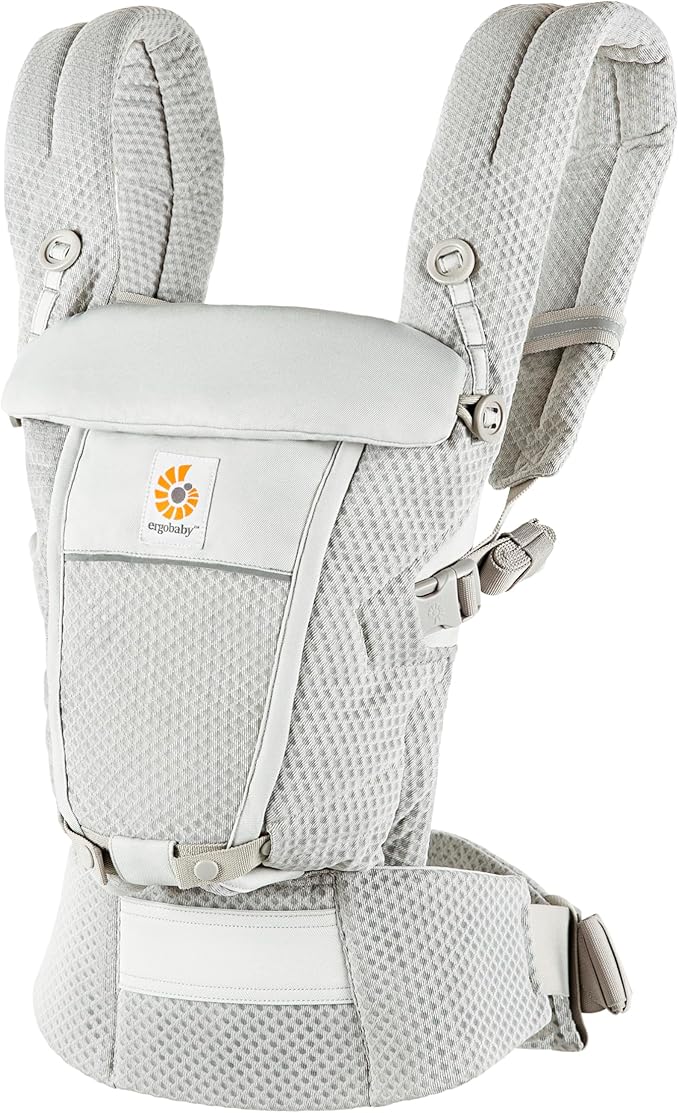
Ergobaby Adapt is a structured carrier for families who want inward-facing front carry first, then hip or back carry as the child develops. Ergobaby lists inward-facing use from 3.2 kg and 50.8 cm up to 20.4 kg. Hip and back positions start only when the child can sit upright unaided and weighs at least 7.8 kg; the maker does not list front-facing-out use. Follow the position-specific manual and check fit rather than using age alone.
The crossable straps and waist support make this a longer-use option, but setup takes more adjustment than a soft wrap. Confirm the selected UK offer’s fabric before comparing mesh, cotton or linen, and do not assume every Adapt listing has the same textile. It suits caregivers who will use the later carry modes; a simpler newborn-first carrier may be easier for a brief early-stage need.