
Nania Dune i-Size
40-150 cm overall; harness stages have lower height and weight limits.
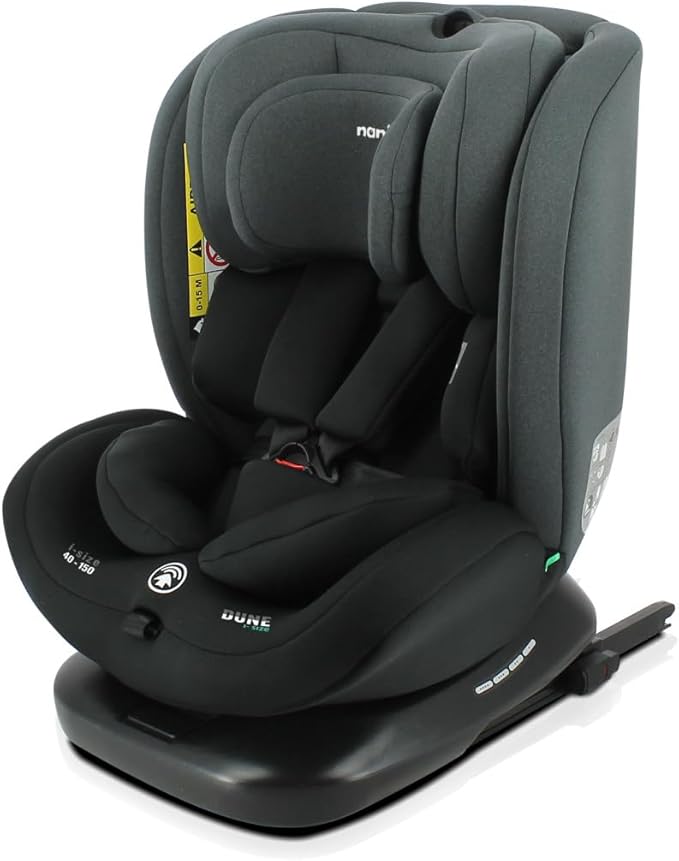
Pros / Cons
Pros
- Rear-facing use spans 40-105 cm, with the rotating shell helping you reach the child while the harness is in use.
- The later booster stage uses the vehicle belt from 100-150 cm, while the harness modes use ISOFIX and top tether.
Cons
- The forward-facing harness stage is limited to 76-105 cm and starts only after 15 months; both harness directions also have a 21 kg maximum.
- At 100 cm the booster becomes an option, not an automatic transition: check the child’s height, weight and belt fit before changing modes.
Product Facts
- Height Range
- 40-150 cm
- Seat Use
- Booster, Infant, Toddler
- Install Method
- Harness: ISOFIX + Top Tether (rear-facing 40-105 cm; forward-facing 76-105 cm); booster: vehicle belt (100-150 cm).
- Rotation
- Yes
- Product page
- Open product page
- Price/Buy
- Check price at Amazon
Nania Dune i-Size covers 40-150 cm, with separate limits for each mode. Rear-facing use is for 40-105 cm and up to 21 kg; the shell rotates in this rear-facing mode to help reach the child. Forward-facing harness use is for 76-105 cm, only after 15 months, and also up to 21 kg. Both harness stages install with ISOFIX and top tether. From 100-150 cm, the seat changes to booster use with the vehicle belt. That range overlaps the forward-facing harness range between 100 and 105 cm, so 100 cm alone does not require a switch. Check the child’s height and weight against the relevant stage, then check that the vehicle belt lies correctly when using booster mode. The broad 40-150 cm range does not mean every mode shares the same limits.