
Kinderkraft NAVA
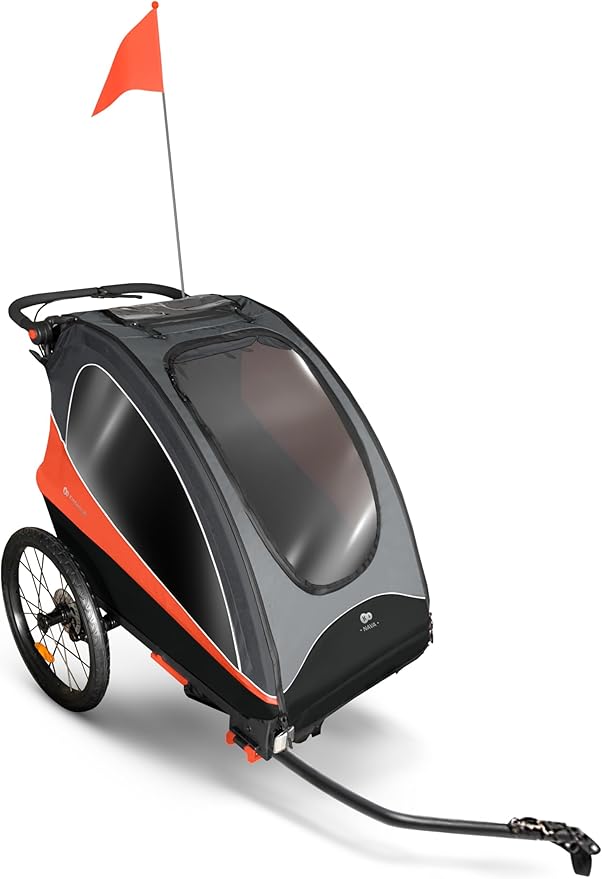
Pros / Cons
Pros
- The trailer and stroller configurations can serve bike trips and everyday walking if you will switch between them often.
- The manual gives a clear per-child stroller-seat limit and the maker states a separate combined child-weight limit for two children.
Cons
- The combined 42.5 kg child limit excludes luggage; the separate 60 kg wording does not settle the full trailer payload.
- The manual prohibits running or skating. Do not use the marketed jogger setup for running until Kinderkraft confirms the warning’s exact scope.
Product Facts
- From Age
- from 6 months (stroller seat)
- Max Weight per Seat
- 22 kg per child; up to 4 years, whichever comes first (stroller seat)
- Max Load
- 42.5 kg combined child weight for two children; excludes luggage
- Seats
- 2
- Use
- Stroller conversion
- Product page
- Open product page
- Price/Buy
- Check price at Amazon
The Kinderkraft NAVA converts between a bicycle trailer and a stroller. Those changes suit families who will use both modes regularly and have room for the frame and conversion parts; occasional tow-only use may not justify the storage and setup. Check the folded dimensions and hitch fit with your bicycle before buying.
The maker states a 42.5 kg combined child-weight limit for two children, excluding luggage. The separate 60 kg maximum-load figure does not establish the full trailer payload. For the stroller seat, the manual allows use from 6 months and up to 22 kg or 4 years per child, whichever comes first. Do not add the per-child limits or luggage to the 42.5 kg child limit.
Kinderkraft markets a jogger setup, but the manual (pp. 38–40) prohibits running or skating and does not grant a jogger-mode exception. Do not run with NAVA unless Kinderkraft confirms that the warning does not apply to the exact jogger configuration.