
What Makes a Stroller a Good Fit for Germany?
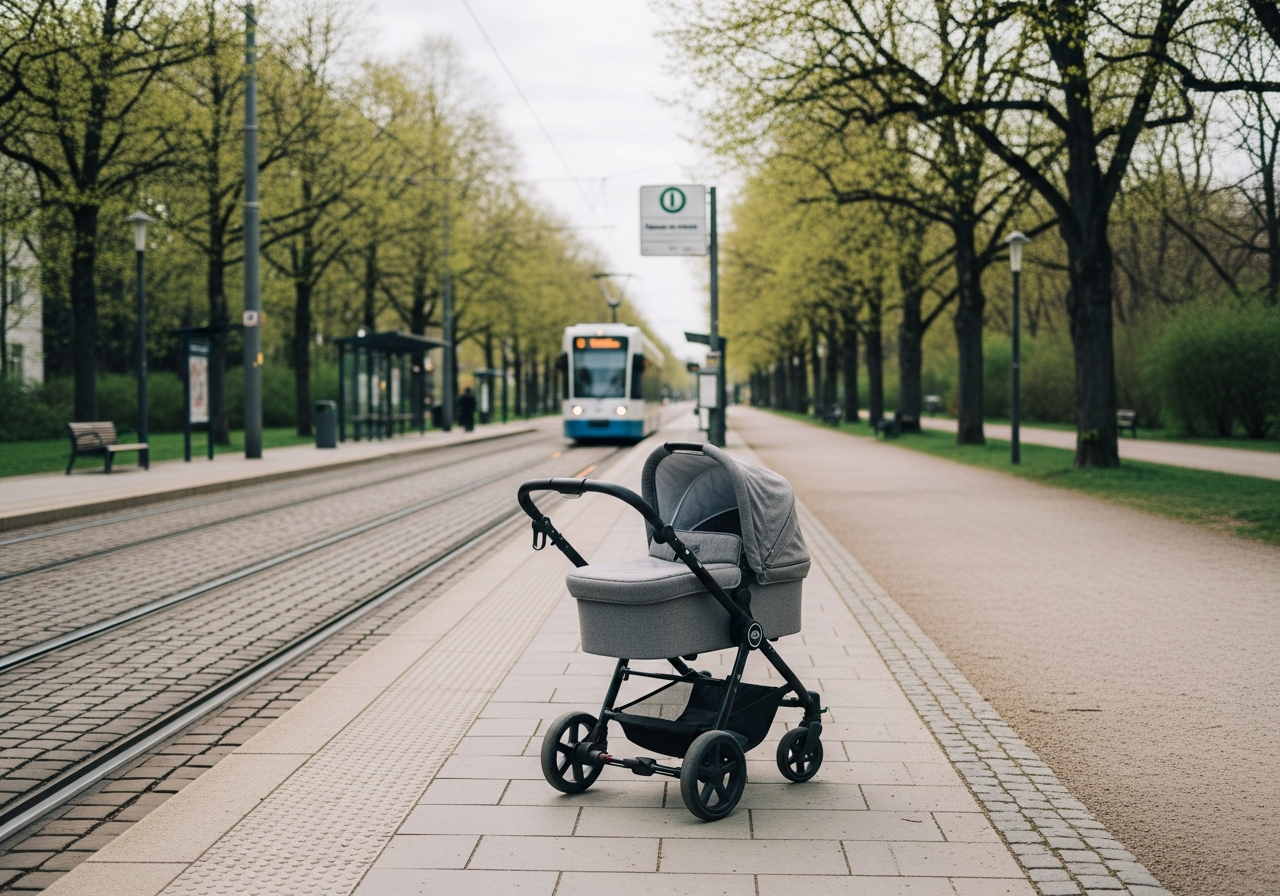
When people search for the best stroller in Germany, they are often really asking a more practical question: what kind of stroller actually works well here? That is a better question, because the right stroller depends on daily life, not just on ratings.
A stroller is a good fit for Germany when it handles rougher pavements well, copes with changing weather, fits your storage and transport situation, and still feels easy to use day after day. The best stroller is usually the one that matches your local routine, not the one with the flashiest feature list.
If you want the broad shortlist first, see our best baby strollers in Germany. If you are deciding for a newborn, also read Best baby strollers in Germany for newborns.
The surfaces matter more than many parents expect
Germany is not one uniform stroller environment. Depending on where you live, you may deal with:
- uneven pavements
- cobblestones
- park paths
- tram tracks
- curbs
- wet winter surfaces
That is why wheel quality and suspension matter so much. A stroller that feels acceptable in a smooth showroom can feel tiring outside.
Storage and stairs matter too
One of the fastest ways to regret a stroller is to buy a model that is too large for your real life. Think through:
- apartment storage
- cellar storage
- narrow hallways
- stairs
- lift size
- car boot space
If using the stroller feels like a lifting problem every day, even a very good stroller can become annoying.
Weather changes the value of features
A stroller for Germany should cope reasonably well with mixed weather. Good canopy coverage, ventilation, and a practical rain-cover setup matter more than they first appear to.
For newborns, we also care a lot about a good bassinet. If your child spends long walks in it, ventilation, mattress quality, and overall comfort are not small details.
Public transport changes the ideal stroller
If you mainly walk and use buses, trams, or trains, maneuverability and manageable size become more important. If you mainly drive, fold quality and boot fit may matter more.
That is why the same stroller can be excellent for one family in Germany and irritating for another.
What a Germany-friendly stroller often looks like
A stroller that fits Germany well often has:
- solid wheels
- good suspension
- a practical bassinet option for newborns
- enough storage for daily errands
- a realistic fold
- sensible weather handling
Notice that none of those are glamorous marketing features. They are practical ones.
When premium makes sense
Premium can make sense in Germany if you walk a lot, care about ride comfort, want a strong bassinet, and expect to use the stroller heavily for a long time. Better suspension and stronger build quality pay off most when the stroller is truly part of daily life.
But premium is not mandatory. A smaller or simpler stroller can still be the right choice if your life depends more on portability than plush comfort.
A simple Germany-specific decision framework
Ask yourself:
- Will I walk a lot on rougher surfaces?
- Do I need a real bassinet?
- Do I store the stroller in a small space?
- Do I drive often or mainly use public transport?
- Am I optimizing for comfort, portability, or a balance of both?
Those answers will narrow the field much faster than a huge comparison table.
Final thoughts
What makes a stroller a good fit for Germany is not one specific brand or one trendy category. It is a stroller that matches your surfaces, weather, storage situation, and transport habits. If you choose with those realities in mind, you are much more likely to end up with a stroller that still feels right after the excitement of buying it is gone.
For brand-specific thinking, read German stroller brands worth considering. For bundle-focused buying, read Are 3-in-1 strollers worth it in Germany?.