
Wagon for Kids or Regular Stroller: Which Should You Choose?
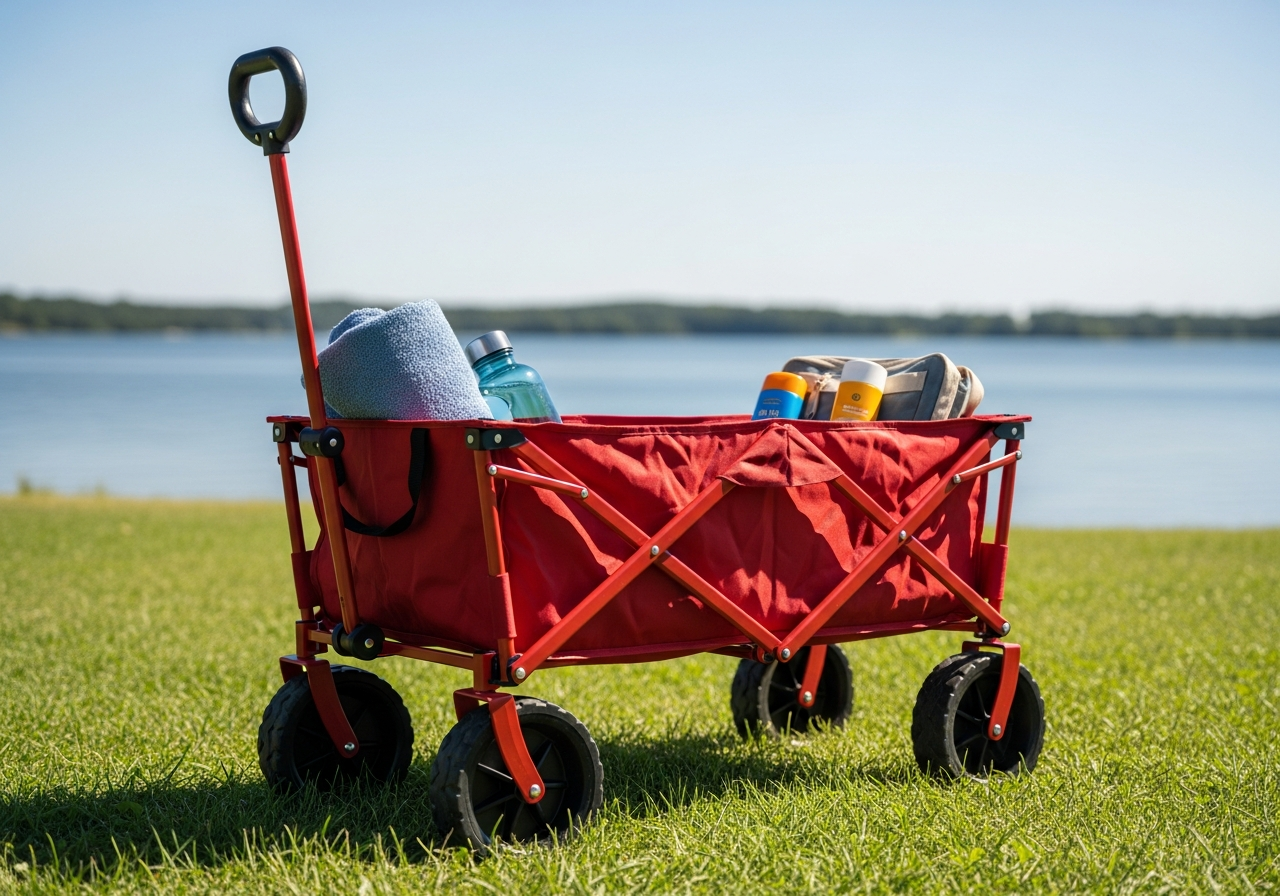
Wagons for kids and regular strollers can both be good purchases, but they are not trying to do the same job. One is usually better when you care most about hauling room, bigger children, and gear-heavy outings. The other is usually better when you need a more normal everyday stroller for errands, tighter routes, naps, and baby use.
A wagon for kids is basically a stroller-style handcart for children and gear, but that does not automatically make it a better family vehicle. For many households it is a useful second solution, not a smarter replacement for a regular stroller.
Choose a wagon for kids if your children are past the baby stage, your hardest days involve hauling older kids plus a lot of gear, and you can live with more bulk at home and in the car. Choose a regular stroller if you still need newborn support, reliable naps, easier steering through tight places, and one main stroller that works for most of the week.
Two good options, but they solve different problems
A wagon can look like an upgrade because it is wider, lower, and easier to imagine loaded with snacks, jackets, beach gear, or two tired children. That is because wagons usually prioritise space, flexible seating, and carrying more children or gear with less packing stress. A regular stroller can look less exciting, but it is usually the easier tool for the routines that happen several times a week: nursery drop-off, grocery runs, narrow shop aisles, quick café stops, lifts, public transport, and car boot loading. Regular strollers usually prioritise push feel, folding convenience, baby support, and getting through normal daily routes without turning every stop into a manoeuvring job.
That is why wagons often work best as outing tools, while regular strollers usually work best as everyday transport. That is the real decision: are you buying for your most frequent routines, or for your heaviest outing days?
Who each option fits best
A wagon is usually the better fit if you need:
less baby-stage dependence, more child freedom, and a better second-vehicle fit
Many families are happiest with wagon ownership only after they already have baby-stage transport covered. If you are past the phase of regular bassinet use, careful recline support, and frequent stroller naps, the trade-offs become easier to accept. This is why wagons so often make sense as a second purchase rather than a first one.
A wagon can feel less like a seat on wheels and more like a playpen on wheels: children have more room to shift around, play with toys, look at books, or stretch out when they get tired, without everything depending on a stroller-style recline. The lower, more open design can also feel more engaging for children because they can see more of what is going on around them instead of spending the whole outing strapped into a tighter seat. If you still need one stroller to cover nearly everything, a regular stroller is usually the safer choice.
gear-heavy outings and all-in hauling for bigger kids
This is usually the clearest reason to move toward wagon logic. If the trips that wear you out most are long outdoor days such as park, beach, zoo, sports, and festival outings, a wagon starts to make practical sense. It is easier to throw in lunch, spare layers, water bottles, and tired kids than it is to keep juggling an underseat basket plus extra bags on the handlebar. This is often the turning point. Once the main question is no longer “where does the baby nap well?” and more “how do we move two bigger kids plus everything they need for half a day out?”, wagon logic gets much stronger.
That is where the all-in hauling advantage starts to matter. A wagon can take picnic blankets, a cooler bag, sun protection, and a pile of toys, while still leaving room for children themselves. Many models can handle two children comfortably, and some can handle even more, with a more open seating layout that lets children face each other and interact instead of sitting in separate stroller-style positions.
better all-terrain performance and longer-term durability
This matters most if your usual routes are not smooth pavement. Many better wagons use larger all-terrain wheels, which can make grass, dirt paths, gravel, or sand much less frustrating than they would be with a narrower-wheeled stroller.
That does not mean every wagon is effortless everywhere, but it does mean the category often makes more sense once the route itself becomes part of the problem. Wagons also tend to feel more structurally robust for older, heavier children, which can make them useful for longer than a typical stroller once baby-stage support is no longer the main priority.
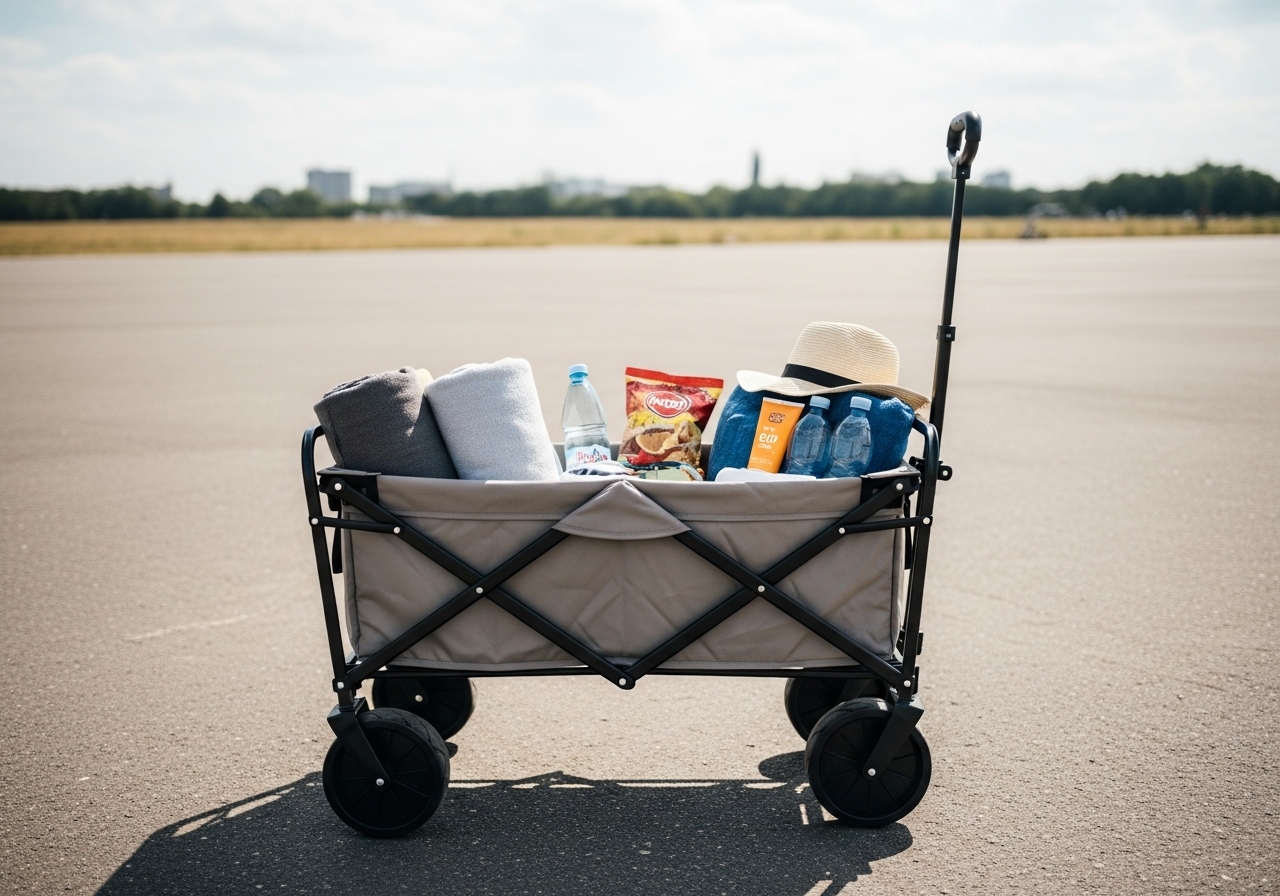
We are more or less at that stage ourselves. The first time a wagon for kids really clicked for us was during an outdoor picnic with friends at Tempelhofer Feld in Berlin. They brought a lot of picnic gear and pulled their child in the wagon at the same time. Tempelhofer Feld is large and very open, so watching them move across it made the use case feel immediately concrete.
At the time our children were still smaller, and we were using a Bugaboo Donkey 5, which is already a large double stroller. Even with that much stroller, once we had two children plus our own picnic things on board, it already felt full and awkward. Compared with our friends’ wagon, the difference was obvious: we were carrying less, yet we had already reached the point where the stroller felt packed out.
That was the moment I started thinking that once the children were a bit older and no longer needed as much stroller support, we should probably get a wagon specifically for outdoor use. It is simply much easier to load. In summer especially, for lake trips or park days, all the water-play gear, sun protection, snacks, and extra odds and ends can just go into the wagon and you can leave straight away, instead of constantly editing the packing list to fit limited stroller space.
There is another benefit that stood out to me. When children get tired, they can sit down and rest in the wagon while you keep moving, instead of turning that moment into another negotiation about walking, stopping, or being carried.
A regular stroller is usually the better fit if you need:
newborn support and frequent naps
This is where a regular stroller still has the clearest advantage. If you are relying on better positioning, a bassinet, or a seat that supports frequent naps well, it is usually the easier and more natural fit. That matters most when the stroller still has to work several times a week, not just on occasional bigger outings.
A stroller’s more enclosed feel and canopy design also tend to work better for children who need to settle and nap while you are out. A wagon is usually much more open, which can make it easier for children to get distracted, and it rarely matches the comfort of a stroller that can recline flat enough for proper stroller sleep.
tight turning, narrow-space access, and easier city movement
This is where a regular stroller starts to win decisively. Once you are dealing with tighter urban spaces, better manoeuvrability matters more than extra room. A stroller, especially a good three-wheel or well-designed four-wheel model, is much easier to turn tightly, much easier to handle one-handed, and much smoother to guide between supermarket aisles, café tables, and other narrow obstacles.
The same goes for the infrastructure around city life. Lifts, revolving doors, buses, train stations, and ticket gates are usually much easier to manage with a stroller-sized vehicle. A wagon can work well outdoors, but in tighter indoor or transit settings it is more likely to feel oversized, awkward to turn, and occasionally embarrassing when it simply does not fit cleanly through the space.
quick folding, easier lifting, and better boot-friendly portability
This is often the deciding factor. If you are regularly going out alone with a child, portability matters more than people expect. A stroller is usually much easier to fold, lift, load into a boot, and bring back out again without turning every stop into a small physical task.
That matters most in the rhythm of normal family life: getting out of the car, doing a quick errand, folding the stroller with one hand while holding a child, and moving on. Even compact car boots can often take a folded stroller while still leaving room for other things. A wagon, by contrast, often stays bulky and heavy even when folded, and usually asks more of both your boot space and your hands. That is why a regular stroller is usually the safer first choice if you want one main vehicle that can cover most trips without friction.
If you have already landed on the regular stroller side of this comparison, the next step is to narrow the type of stroller you actually need. For two children, start with our best double strollers. If you only need one main all-around option, see our best baby strollers.
Trade-offs to consider before you buy
A wagon gives you space, but asks more from your home and car
The extra room is useful, but it often comes with more bulk, more awkward storage, and less graceful daily handling. Think about your hallway, your boot, your lift, and how often you need to fold the stroller quickly with one hand and a child nearby.
A regular stroller is easier to live with, but can run out of room fast
You get better everyday practicality, but less room for gear and less flexibility once children get bigger and outings get longer. The pain point usually appears on long days when the basket is already full and someone still wants to hop in or rest.
Judge by your weekly routine, not your most aspirational outing
If most of your life happens in normal urban or suburban routines, regular stroller logic usually wins. If your hardest recurring days are outdoor, gear-heavy family outings, wagon logic becomes much easier to justify.
A quick checklist to make the right choice
Use this quick test:
- are your children already beyond the stage where strong newborn support and frequent stroller naps matter most?
- do you have at least one outing most weeks where you regularly carry a lot of gear and wish you had more room?
- are parks, beaches, zoos, or sports fields a more important use case than shops, cafés, and quick errands?
- do you have the storage space and car space to live with a bigger, more specialised setup?
If most of those answers are yes, a wagon for kids probably fits better. If most are no, a regular stroller is probably still the smarter choice.
Final thoughts
Neither option is automatically better. A wagon is better at carrying more on bigger days. A regular stroller is better at making normal days easier. Choose based on the routine you actually live with every week, not the version of family life that only shows up in product photos.