
Are Expensive Strollers Worth It?
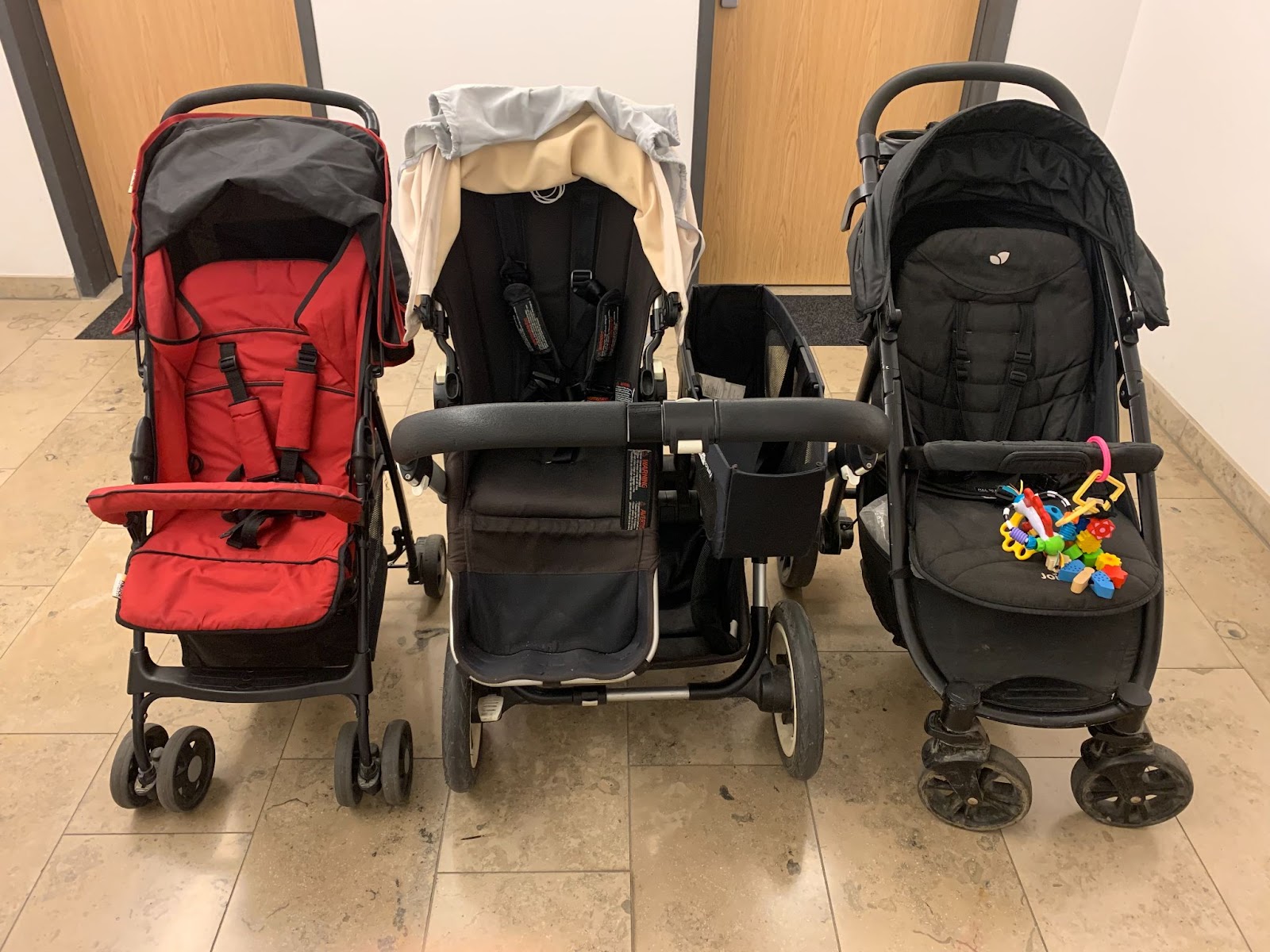
Are expensive strollers worth it? We asked ourselves that before paying up for our own premium stroller. In our case, the answer ended up being yes, but only because we used the stroller a lot, cared a lot about newborn comfort, and expected to keep or resell it well.
Often yes, but only when the more expensive stroller solves a real daily problem. Premium strollers usually win on suspension, build quality, resale value, and newborn comfort, but many families are better off with a good mid-range stroller or a used premium one.
If you first want to understand why stroller prices get so high, read Why are strollers so expensive?. If you want concrete price bands, see How much does a stroller cost?.
The question came first. Later, after owning three very different strollers, Bugaboo Donkey, Joie Litetrax 4, and Hauck Sport Buggy, our answer became much clearer. Together they gave us a clearer sense of what high-end, mid-range, and low-end strollers actually offer in real life. We were happy with all three, but they made sense at different times and for different jobs.
Quick answer: when is premium actually worth it?
Premium is easiest to justify if most of these are true:
- you use the stroller heavily, often every day
- you care a lot about newborn comfort and sleep
- you walk on rough sidewalks, gravel, snow, or park paths
- you want something that folds well and stays pleasant to use for years
- you expect to resell it later and buy from a brand that holds value
Premium is much harder to justify if most of these are true:
- the stroller is mostly for short errands or occasional use
- you mainly need a light second stroller or travel pushchair
- you are on smooth city sidewalks and do not push for long stretches
- the expensive model is not clearly better where it counts
- the biggest difference seems to be styling, not ride quality or durability
For many families, the smartest answer is neither “buy premium new” nor “buy the cheapest option.” It is “buy solid mid-range” or “buy a premium stroller on the used market.”
What does the extra money actually buy?
If you asked me to do a blind test with our three strollers, I am confident I could tell which was high-end, mid-range, and low-end. You can feel that the Bugaboo is built to a higher standard. Our Bugaboo Donkey worked reliably for more than eight years, and the only repair we needed was changing an inner tube after a flat tire.
A smoother ride and easier naps
This was the clearest difference for us. The shock absorption of our strollers tracked price closely. With its excellent suspension and large air-filled wheels, Bugaboo Donkey gave a noticeably smoother ride, even on rougher walks in the forest. That matters a lot with a newborn. Both our children fell asleep and stayed asleep more easily in the Bugaboo than in our cheaper strollers.
If stroller walks are a big part of your day, that difference can become obvious very quickly.
A better newborn setup
While many strollers can technically be used from birth on paper, we think a real bassinet with a roomy, flat surface is one of the strongest arguments for paying more. It is usually more comfortable for the baby and more straightforward for you, especially with a first child.
Bugaboo Donkey also had excellent ventilation. In our experience, premium models often do better here too, sometimes with fabrics or mattress setups that feel noticeably better in warmer weather.
Less daily friction for parents
Some of the premium value is really parent value. Better handling, less rattling, stronger folding hardware, easier curb handling, smoother pushing one-handed for a moment while opening a door, and less general annoyance over time are all easy to underestimate in a showroom and easy to appreciate after months of use.
Better resale value
This is one of the biggest reasons premium can make financial sense. A well-known premium stroller often resells for far more than a cheap one. That means the real cost gap can be smaller than the original retail prices suggest. In our case, that made the expensive stroller much easier to justify.
When expensive is not actually worth it
This is the part many articles gloss over: a high price is not the same thing as high value.
We would be cautious if a stroller is expensive mainly because:
- it looks premium but does not ride clearly better
- the newborn setup is only technically acceptable, not genuinely good
- the brand is weak on resale value
- the upgrade is mostly styling or accessories
- you are paying a lot for features you will rarely use
If you cannot try the stroller in person, focus on the wheels, suspension, fold, ventilation, build quality, and whether the brand has a strong long-term reputation. Unknown brands that mostly look attractive in photos are where we would be most careful.
Does the answer change for a baby versus a toddler?
Yes, quite a lot.
For a baby
This is when premium made the strongest case for us. The main upside was not status. It was a smoother, calmer, more newborn-friendly setup. Better suspension, a proper bassinet, better ventilation, and an overall more stable ride mattered most when our children were smallest.
We would not say every family needs a premium stroller for a baby, but this is the stage where paying more is easiest to defend.
For a toddler
The logic changes. Toddlers usually care less about stroller refinement than newborns do. At that point, the bigger benefit is often for you: easier pushing, less rattling, better rough-ground performance, and less maintenance.
Once our son was old enough, we also bought a cheaper stroller, the Hauck Sport Buggy, for travel. It was much less comfortable for us as parents, but our son barely cared which stroller he was sitting in. That is a useful boundary. Premium still has benefits with a toddler, but they are often more parent-facing than child-facing.
What if your budget is tighter?
If money is tight, we would not jump straight from “premium is nice” to “therefore spend more than is comfortable.” The best value move is often one of these:
- buy a strong mid-range stroller and skip luxury touches
- buy premium used, especially for newborn use
- buy one better main stroller and a cheaper travel pushchair later
We especially recommend checking the second-hand market if you want premium quality without paying full price. This is one of the best areas of baby gear to buy used if the stroller is in good condition and parts are still available.
Final Thoughts
Premium strollers can absolutely be worth it, but mostly when they make everyday life meaningfully easier: smoother naps, better newborn comfort, easier handling, stronger durability, and better resale value. If those things matter a lot in your routine, the higher price can be rational. If they do not, a good mid-range stroller or a used premium stroller is often the smarter buy.
If you want to understand why stroller prices get so high in the first place, read Why are strollers so expensive?. If you want to compare market price bands before deciding, see How much does a stroller cost?.