
Can a Baby Sleep in a Stroller Bassinet Overnight?
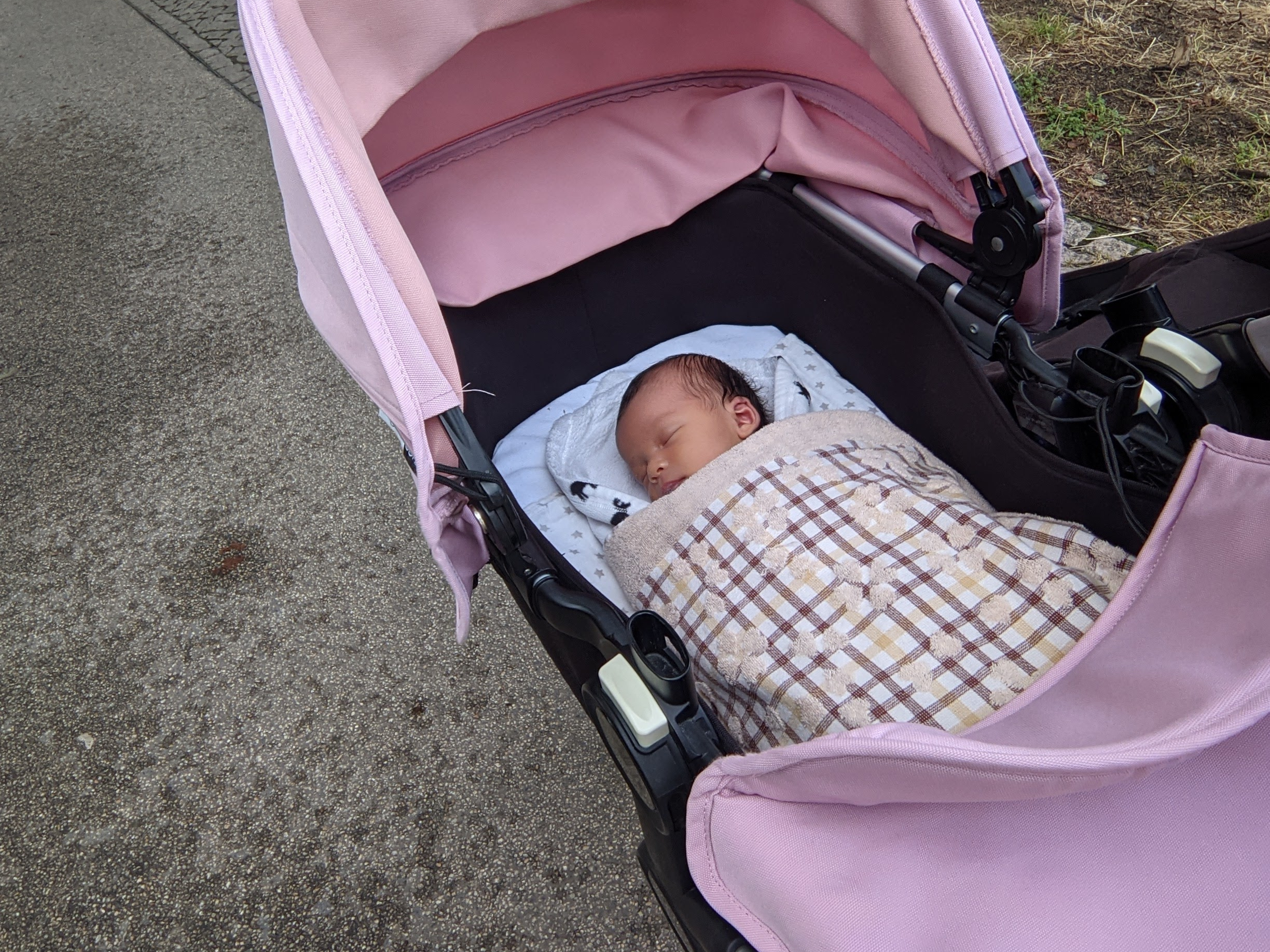
Can a baby sleep in a carrycot overnight? This question usually comes up in a very real moment: you get home from a walk, the baby is finally asleep, and nobody wants to ruin the only calm stretch of the day by moving them. We ran into exactly that ourselves, so we looked closely at what current safe-sleep guidance says and what stroller brands actually approve.
Usually no. A stroller or other sitting device should not be your baby’s regular sleep space. If your baby falls asleep in a stroller, move them to a firm, flat sleep surface as soon as practical. Only treat a carrycot as overnight-safe when the manufacturer explicitly approves that exact bassinet or carrycot setup for overnight sleep.
Quick answer: what should I do if my baby falls asleep in the stroller?
A stroller seat or other sitting device should not be your baby’s regular sleep or nap space. Current American Academy of Pediatrics guidance says that if a baby falls asleep in a stroller or another sitting device, they should be moved to a firm, non-inclined sleep surface as soon as possible.
A flat carrycot is a different question. Some brands explicitly approve certain carrycots for overnight sleep, often with a stand or another specific setup. If that approval is not clearly stated by the manufacturer, treat the carrycot as suitable for walks and supervised naps only, not overnight sleep.
In practice, this is the simplest way to think about it:
- Stroller seat: not an overnight sleep space.
- Flat bassinet without explicit overnight approval: acceptable for walks and supervised naps, but not for a whole night.
- Bassinet or carrycot with explicit overnight approval: only use it overnight in the exact setup the brand describes, including any stand, mattress, airflow, or age limits.
If you want to compare real models, see our overnight-sleep stroller shortlist. If you want a concrete example, UPPAbaby Vista V2 stands out because the manufacturer offers a bassinet stand for overnight sleep.
When can a carrycot count as overnight-safe?
The key question is not whether the bassinet looks flat or roomy enough. The real question is whether it works as a proper sleep space in the exact setup you are using.
The important factors are practical, not just legal:
- a truly flat sleep surface
- a firm, well-fitting mattress
- side height that still keeps the baby safely contained
- stable support that cannot collapse or tip easily
- clear airflow around the baby
- a setup that still works safely as the baby grows and starts pushing up, rolling, or sitting
This is why manufacturer approval still matters, but not because parents should switch their brains off and obey a logo. It matters because those details are model-specific. Two bassinets can look almost identical, yet differ in side height, mattress fit, ventilation openings, stand stability, locking hardware, or the approved way to use them away from the stroller chassis.
So the useful rule is: understand what makes a sleep space safer, and then use the manufacturer’s instructions to confirm whether your exact bassinet actually meets those conditions for overnight sleep.
What current guidance matters most here?
The most useful current reference points we found are the American Academy of Pediatrics safe-sleep guidance and CPSC bassinet guidance.
Taken together, they lead to a practical rule that is easier to remember than a long list of edge cases:
- if your baby is in a stroller seat or another sitting device, move them to a firm, flat sleep space as soon as practical
- if your baby is in a flat bassinet, only treat it as overnight-safe if the manufacturer clearly says so for that exact setup
That distinction matters because current CPSC bassinet guidance defines a bassinet sleep surface as no more than 10 degrees from horizontal. A genuinely sleep-approved bassinet is therefore a different category from a stroller seat, an inclined newborn insert, or a carrycot meant only for transport.
How long can a baby use a stroller bassinet?
For most babies, a carrycot is mainly a newborn solution and is often useful until your child can sit up without help, push up strongly, roll reliably, or is around 6 months old. In our experience, a proper bassinet is especially helpful during those first months because it gives your baby a flat, roomy place to rest while you are out.
We used a Bugaboo Donkey for both our kids, and the same stroller held up very well over time. It came with both a bassinet and a seat, which is fairly common on premium strollers. The bassinet worked well for us, and both of our kids quickly fell asleep in it.
Once your child can sit up without help, starts looking cramped, gets close to the bassinet’s weight or length limit, or is around 6 months old, a bassinet is usually no longer the right fit. At that point your child will often prefer the seat because it is easier to look around, and a nap in a reclined seat is also much more realistic.
How do I make stroller-bassinet sleep safer?
Even in a bassinet, regular supervision matters unless the manufacturer explicitly says the sleep setup is approved for overnight use. A bassinet is smaller than a cot, so poor mattress fit, soft add-ons, or overheating can become problems quickly.
That leaves a practical checklist for parents:
- Use only the mattress and sleep setup the brand specifies for that bassinet or carrycot.
- Keep the sleep surface flat and firm, not padded up with extra liners, nests, pillows, or rolled blankets.
- Follow the brand’s own limits for age, weight, rolling, pushing up, or sitting up.
- If overnight approval depends on a stand or another accessory, use that exact setup rather than improvising on the stroller chassis.
- Keep airflow around the baby clear, especially if you use a canopy or weather cover.
Notice that most of those checks are really about physical safety conditions: flatness, firmness, containment, stability, and airflow. Manufacturer instructions matter because they tell you whether your exact model preserves those conditions overnight, not because approval alone magically makes a bad setup safe.
It also helps if the bassinet can stay reasonably dark and quiet, which is one reason a good canopy matters. If you darken it yourself with a cover, be careful not to reduce ventilation so much that the bassinet gets too warm or the air becomes stale.
What should I do tonight if I am unsure?
If you are not completely sure that your exact bassinet or carrycot setup is approved for overnight sleep, do not treat it as overnight-safe tonight.
The safer default is:
- let the stroller ride end
- move your baby to the firm, flat sleep space you normally use
- check the brand’s instructions later, when you are not trying to decide in the dark while a baby is asleep
That answer can feel annoying in the moment, but it is much better than trying to infer overnight approval from marketing photos or from the fact that the bassinet looks flat enough.
Final thoughts
Babies often fall asleep in strollers, but a stroller should not be their regular sleep space. For most families, the practical answer is simple: stroller seat no, ordinary bassinet not overnight, manufacturer-approved sleep setup maybe yes, but only in the exact form the brand describes. If you are unsure, move your baby to a firm, flat sleep surface as soon as practical and treat that as the safer default.